



Executive Summary
The 2026 CCTV Spring Festival Gala emerged as a pivotal moment for China’s embodied AI industry, with key takeaways for investors and market watchers.
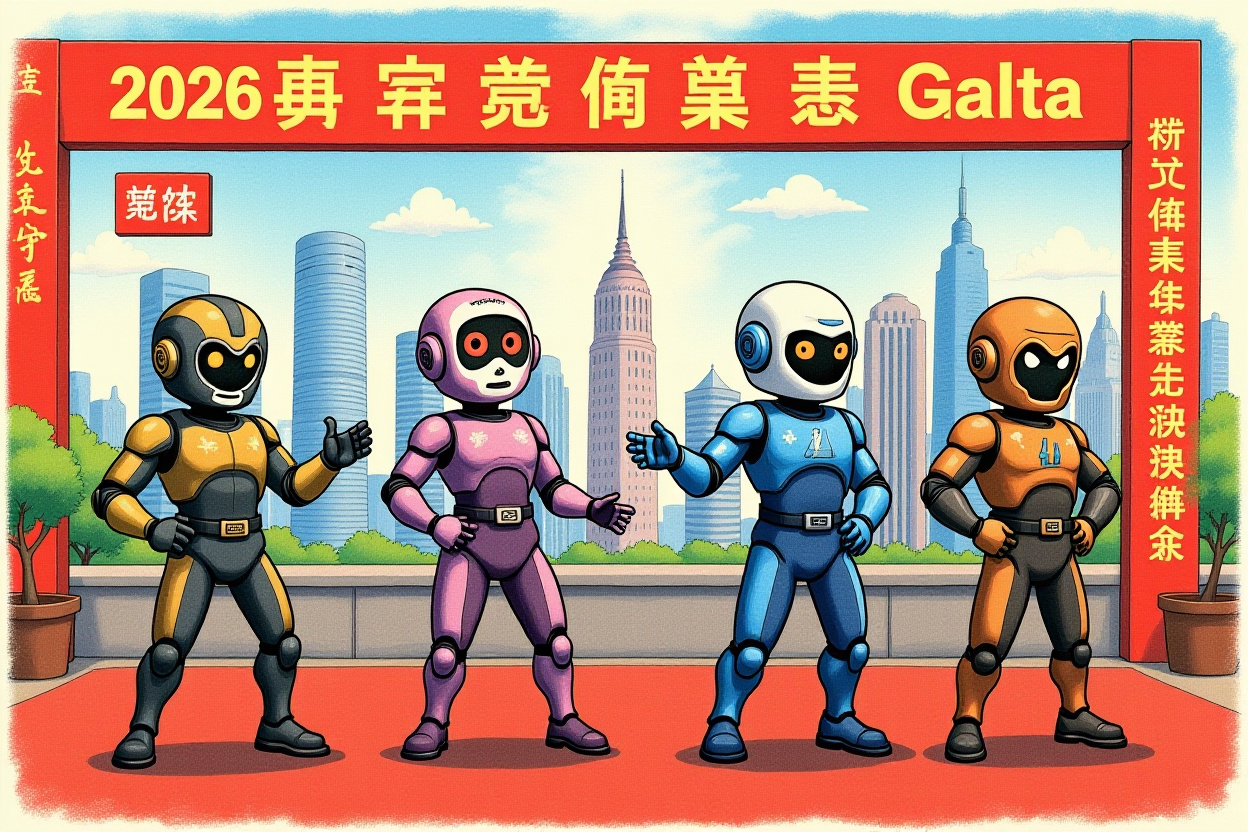
- Four leading embodied AI companies—Magic Atom (魔法原子), Galaxy Universal (银河通用), Yushu Technology (宇树科技), and Songyan Power (松延动力)—showcased their humanoid robots on the national stage, highlighting technological diversity and competitive positioning.
- This platform serves as a critical validation point, accelerating public acceptance and commercial readiness for robotics in industrial, commercial, and domestic applications.
- IDC projects China’s embodied AI robot user spending to reach $770 billion by 2030, with a 94% CAGR, signaling immense growth potential but requiring a shift from performance to practicality.
- Companies must overcome reliability, cost, and integration hurdles to transition from stage demonstrations to real-world deployments, with 2026 marking a industry inflection point toward revenue-driven metrics.
- Investment opportunities abound in supply chains, AI software, and sector-specific solutions, but success hinges on navigating regulatory frameworks and achieving scalable monetization.
The National Stage as a Commercial Catalyst
For decades, the CCTV Spring Festival Gala has mirrored China’s technological ambitions, but in 2026, it transformed into the ultimate testing ground for embodied AI. This annual spectacle, watched by billions, provided a unparalleled showcase for humanoid robots, moving beyond niche demonstrations to a coordinated display of domestic innovation. The inclusion of four key players—Magic Atom, Galaxy Universal, Yushu Technology, and Songyan Power—underscored a strategic push to position China at the forefront of the global robotics race. For institutional investors, this event is not merely entertainment; it’s a live audit of technological maturity and market viability, offering clues into which companies might lead the charge in a sector poised for explosive growth.
Spotlight on Key Players and Strategic Differentiation
The nuanced official titles assigned to each company reveal much about their business models and target markets. Yushu Technology, branded as the ‘Spring Festival Gala Robot Partner,’ leveraged its repeat appearance to solidify brand recognition after a breakout 2025, participating in over 12 major events and 7 dedicated robot competitions. Songyan Power, the ‘Spring Festival Gala Humanoid Robot Partner,’ focused on collaborative performances, such as a skit with veteran actors, emphasizing social integration. Magic Atom, as the ‘Spring Festival Gala Intelligent Robot Strategic Partner,’ highlighted AI-driven capabilities in musical acts, while Galaxy Universal, the ‘Spring Festival Gala Designated Embodied Large Model Robot,’ showcased advanced AI integration in a micro-film. This differentiation signals to investors the varied approaches within embodied AI, from hardware-centric platforms to software-defined solutions, each with distinct paths to commercialization.
Financial Implications and Market Validation
The Gala’s role extends beyond publicity; it acts as a de facto seal of approval from state media, which can unlock corporate contracts, venture capital, and consumer trust. According to IDC data, China’s embodied AI robot market is on a trajectory to hit $770 billion in user expenditure by 2030, fueled by a 94% compound annual growth rate. This projection, cited in industry reports like those from IDC, underscores why the Spring Festival Gala has become a battleground for visibility. For fund managers, the performance serves as a real-time indicator of technical robustness—robots that operate flawlessly under live broadcast conditions demonstrate reliability that can translate to industrial applications. However, the true test begins when the curtain falls, as companies must pivot from showmanship to sustainable revenue models in what is essentially an embodied AI testing ground for real-world adoption.
From Stage to Factory: The First Commercial Hurdle
As the applause fades, embodied AI firms face the sobering reality of industrial deployment, where the embodied AI testing ground shifts from televised stages to factory floors. Manufacturing environments offer the most immediate and lucrative opportunities, with applications in sorting, assembly, loading, inspection, and material handling. China’s manufacturing sector, grappling with labor shortages and rising wages, presents a ready market, but it demands extreme reliability. A robot that stumbles during a dance routine can be edited out; a malfunction on an assembly line can cost thousands per minute in downtime. This transition requires passing rigorous stress tests for durability, precision, and cost-efficiency, often where many prototypes fail.
Industrial Applications and Reliability Benchmarks
Successful integration hinges on overcoming environmental challenges like dust, vibration, and continuous operation. Companies like Yushu Technology have begun piloting robots in logistics hubs, but scalability remains a hurdle. Data from the Ministry of Industry and Information Technology (工业和信息化部) indicates that automation adoption in Chinese factories is accelerating, with robotics penetration expected to double by 2030. For investors, key metrics to watch include mean time between failures (MTBF), total cost of ownership, and return on investment timelines. Firms that secure early industrial contracts—such as partnerships with automotive or electronics manufacturers—will likely attract follow-on funding, as evidenced by venture capital flowing into startups that demonstrate proven use cases beyond stage performances.
Case Studies and Initial Traction
While specific order books are often confidential, industry insiders report that Magic Atom is exploring collaborations with Foxconn (富士康) for assembly tasks, while Songyan Power targets packaging lines in e-commerce warehouses. These moves, if successful, could generate recurring revenue streams and validate technology for broader adoption. The embodied AI testing ground in factories also highlights the importance of modular designs and interoperable software, allowing robots to adapt to diverse tasks without extensive reprogramming. Investors should monitor quarterly earnings reports and regulatory filings from listed counterparts like Siasun Robot & Automation (新松机器人自动化股份有限公司) for trends in automation spending, which can serve as a proxy for the broader embodied AI sector’s health.
Navigating Complex Commercial Environments
Beyond factories, embodied AI must conquer commercial settings such as retail stores, hotels, hospitals, and warehouses—a more dynamic embodied AI testing ground where unpredictability reigns. These scenarios require robots to process visual data, navigate crowded spaces, and interact with humans, testing the limits of computer vision, natural language processing, and decision-making algorithms. A robot that performed a scripted skit on the Gala may struggle with a sudden customer query or an obstructed pathway in a mall, underscoring the gap between controlled demonstrations and real-world utility.
Challenges in Retail, Hospitality, and Healthcare
In retail, robots like those from Galaxy Universal could assist with inventory management or customer service, but they must handle erratic human behavior and cluttered environments. Hospitality applications, such as concierge or delivery bots in hotels, demand seamless human-robot interaction and high hygiene standards. Healthcare poses even stricter requirements for safety and precision, with potential roles in disinfection or patient support. According to a report by the China Association of Automation (中国自动化学会), pilot projects in these sectors are increasing, but widespread adoption awaits cost reductions and performance improvements. For corporate executives, investing in these areas involves assessing not just technology, but also regulatory compliance, data privacy concerns, and integration with existing IT infrastructure.
Integration with AI and Ecosystem Development
The success of commercial robots hinges on embodied AI systems that combine hardware agility with advanced AI models. Partnerships with tech giants like Baidu (百度) or Tencent (腾讯) for cloud AI services can enhance capabilities, as seen in Galaxy Universal’s large-model focus. Moreover, the development of standardized platforms, similar to Android for smartphones, could accelerate adoption by reducing development costs. Investors should look for companies that are building open ecosystems or securing strategic alliances, as these can provide competitive moats in a fragmented market. The embodied AI testing ground in commercial spaces will likely separate winners from losers based on adaptability and user experience, with early adopters in sectors like logistics reaping efficiency gains.
The Holy Grail: Domestic Integration and Consumer Adoption
The final frontier for embodied AI is the home environment—the ultimate embodied AI testing ground characterized by chaos, safety concerns, and cost sensitivity. Domestic robots must operate in unstructured spaces with children, pets, and variable lighting, performing tasks like cleaning, companionship, or elderly care. While this market promises vast scale, it remains years away from maturity due to technical and economic barriers. Consumers demand affordability, simplicity, and absolute safety, criteria that current prototypes often fail to meet at scale.
Technical and Economic Barriers
Key hurdles include sensor miniaturization, energy efficiency, and fall-safe mechanisms to prevent accidents. Cost is a major constraint; high-end humanoid robots can exceed $50,000, far beyond mass-market price points. Companies like Yushu Technology are exploring modular approaches to reduce expenses, but breakthroughs in materials and manufacturing are needed. The National Development and Reform Commission (国家发展和改革委员会) has included service robots in its strategic emerging industries plan, offering subsidies and R&D support, which could lower barriers over time. For fund managers, early-stage investments in component suppliers—such as those producing advanced actuators or LiDAR sensors—may offer indirect exposure to this long-term growth narrative, while avoiding the volatility of pure-play robot makers.
Long-term Market Potential and Demographic Drivers
Demographic trends, including an aging population and rising disposable incomes, could fuel demand for home robots in China. If prices drop below $10,000 and capabilities improve, the addressable market could expand exponentially. However, success requires not just technology, but also compelling use cases and robust after-sales support. The embodied AI testing ground in homes will be gradual, with early products likely targeting niche segments like smart home hubs or educational tools. Investors should track consumer sentiment surveys and pilot program outcomes in cities like Shenzhen or Shanghai, where tech adoption is high, to gauge readiness for broader rollout.
Investment Landscape and Regulatory Environment
The financial ecosystem surrounding embodied AI is heating up, with venture capital, corporate venturing, and public markets all playing roles. In 2025, Chinese robotics startups raised over $2 billion in funding, according to data from Zero2IPO (清科研究中心), reflecting investor appetite for the next big tech wave. However, as the industry moves from hype to reality, valuation metrics are shifting from fundraising milestones to revenue generation and customer retention. This transition makes the embodied AI testing ground of the Spring Festival Gala a critical moment for due diligence, as it separates marketing prowess from operational excellence.
Capital Flows and Venture Funding Trends
Notable deals include Magic Atom’s Series B round led by Sequoia Capital China (红杉资本中国基金), while Yushu Technology is rumored to be exploring an IPO on the STAR Market (科创板) in the coming years. For institutional investors, key factors to evaluate include patent portfolios, management team experience, and go-to-market strategies. The focus should be on companies with clear paths to profitability, such as those targeting high-margin industrial niches or leveraging proprietary AI algorithms. Additionally, the rise of sovereign wealth funds and corporate investors like Huawei (华为) or Xiaomi (小米) entering the space signals broader strategic interest, potentially driving consolidation and partnerships.
Government Policies and Support Mechanisms
Regulatory oversight from bodies like the Cyberspace Administration of China (国家互联网信息办公室) and the Ministry of Science and Technology (科学技术部) will shape the industry’s trajectory. Policies emphasize indigenous innovation and security, with guidelines for data handling and safety standards. The ‘Made in China 2025’ initiative prioritizes robotics, offering tax incentives and research grants, but also imposes export controls on sensitive technologies. Investors must stay abreast of policy shifts, as they can impact supply chains and market access. For example, recent updates to the Catalog of Encouraged Industries for Foreign Investment encourage foreign participation in robotics, but with requirements for local partnerships. Navigating this landscape requires a nuanced understanding of both technological and regulatory risks.
Future Outlook and Strategic Recommendations
As the embodied AI industry evolves, the lessons from the Spring Festival Gala’s embodied AI testing ground will resonate across boardrooms and trading floors. The convergence of performance art and practical application marks a turning point, where companies must deliver tangible value or risk obsolescence. For business professionals and investors, the coming years will be defined by execution rather than experimentation, with winners likely emerging from those that balance innovation with commercialization.
Key Takeaways for Market Participants
First, prioritize companies with proven deployments in structured environments like factories or warehouses, as these offer near-term revenue visibility. Second, diversify exposure across the value chain, from hardware components to AI software platforms, to mitigate single-company risk. Third, monitor regulatory developments closely, as policy support can accelerate adoption but also introduce compliance costs. Fourth, engage with industry conferences and white papers from sources like the China Robot Industry Alliance (中国机器人产业联盟) for forward-looking insights. Finally, remember that the embodied AI testing ground is expanding beyond stages to global markets; companies that export successfully may capture additional growth, albeit amid geopolitical tensions.
Call to Action for Informed Decision-Making
In a sector moving at breakneck speed, passive observation is not an option. Institutional investors should conduct deep-dive analyses on the four Gala participants and their peers, assessing financial health, technology roadmaps, and competitive positioning. Corporate executives in manufacturing or services should pilot embodied AI solutions to drive operational efficiencies, starting with low-risk applications. Fund managers might consider thematic ETFs or dedicated robotics funds for broad exposure, while staying vigilant for market corrections as valuations adjust to reality. As the lights dim on the 2026 Gala, the real work begins—transforming spectacle into substance, with the embodied AI testing ground now set in the global arena. Stay engaged, stay critical, and position portfolios to capitalize on one of China’s most transformative technological shifts.