



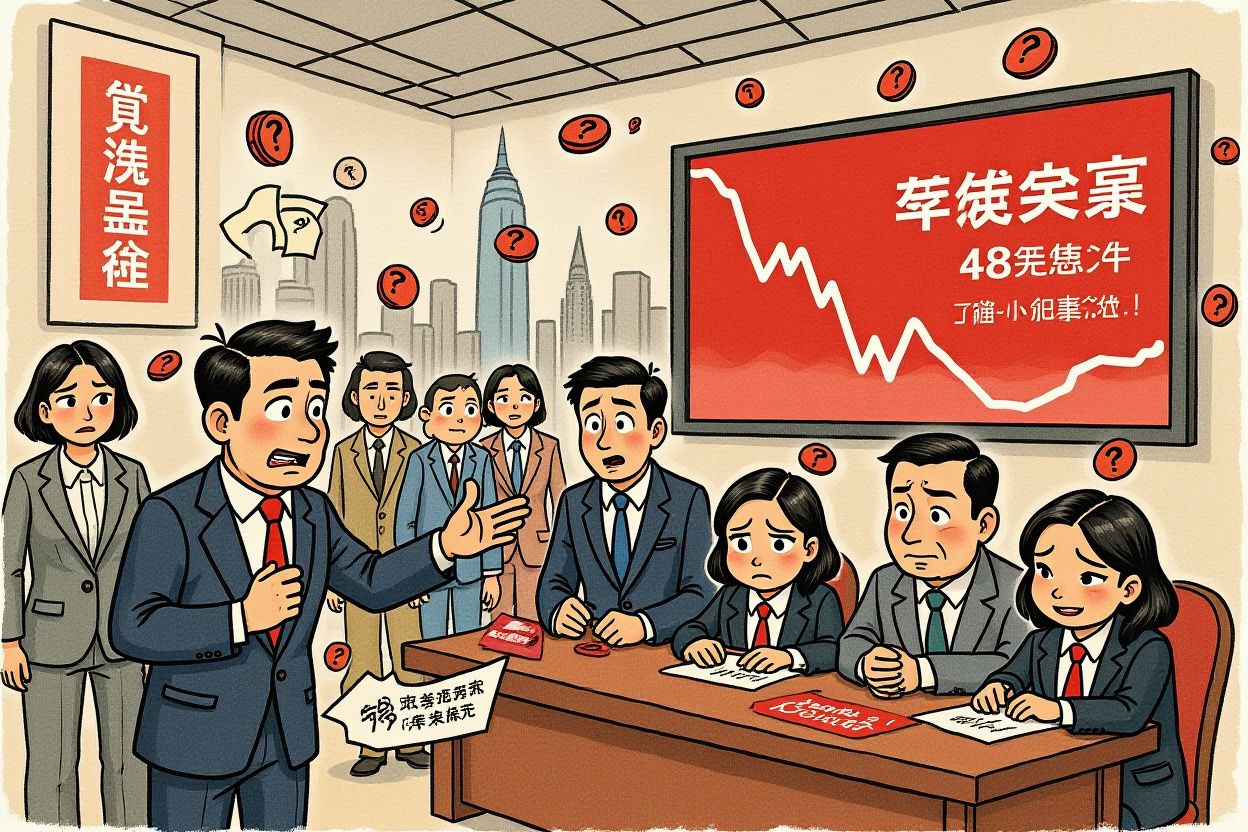
– Cambricon Technologies (寒武纪), a prominent Chinese AI chip designer, experienced a catastrophic loss of approximately 48 billion yuan in market capitalization during a single trading session, underscoring extreme volatility in tech equities.
– The sell-off was precipitated by widespread market rumors concerning potential regulatory investigations and supply chain disruptions, which the company has categorically denied in official statements.
– Despite these denials, the stock price has continued its downward trajectory, reflecting deep-seated investor anxiety and a crisis of confidence in the face of unverified information.
– This incident serves as a stark reminder of the susceptibility of China’s high-growth technology stocks to sentiment-driven swings and the critical importance of transparent communication.
– For global investors, the event necessitates a reevaluation of risk metrics and due diligence processes when engaging with China’s semiconductor and AI sectors.
In a dramatic display of market fragility, Cambricon Technologies (寒武纪) saw an astonishing 48 billion yuan evaporate from its market value in just one day. This precipitous drop has sent shockwaves through the Chinese equity markets, placing the AI chipmaker under an intense spotlight. The focal point of this crisis is the 48 billion yuan market value evaporation, a phrase that now encapsulates the severe punishment meted out to a company once hailed as a national champion in semiconductor independence. As trading screens flashed red, the episode raised urgent questions about the underlying health of China’s tech sector and the perils of investing in momentum-driven names. For institutional investors worldwide, understanding the mechanics of this plunge is not just about one company’s misfortune but about gauging the systemic risks in one of the world’s most dynamic yet unpredictable markets.
Deconstructing the 48 Billion Yuan Market Value Evaporation
The scale and speed of the decline were breathtaking, erasing months of gains in a matter of hours. This 48 billion yuan market value evaporation did not occur in a vacuum; it was the culmination of mounting pressures and a sudden loss of investor patience.
Chronology of a Crash
The selling began in the early morning session on the Shanghai Stock Exchange’s STAR Market (科创板), where Cambricon is listed. Within the first hour, the stock price had breached multiple technical support levels, triggering automated sell orders and amplifying the downward spiral. By the midday break, the stock was down over 18%, and the decline accelerated into the afternoon, ultimately closing with a loss that squarely accounted for the 48 billion yuan market value evaporation. Trading volume soared to more than five times the 30-day average, indicating panic selling rather than reasoned portfolio adjustment.
Immediate Ripple Effects Across Markets</h3
The fallout extended beyond Cambricon. Peers in the semiconductor and AI sector, such as Shenzhen-listed Hisilicon (海思) suppliers and other STAR Market tech firms, saw significant pullbacks. The broader CSI 300 Index (沪深300指数) felt the pressure, with the technology sub-index underperforming. This contagion effect highlighted how a single company's crisis can undermine sentiment for an entire industry segment, especially one as strategically sensitive as semiconductors.
The Rumors and the Rebuttal: Searching for a Catalyst
In the absence of any scheduled major news or earnings report, the market swiftly attributed the crash to a cocktail of circulating rumors. Cambricon’s forceful denial became the central narrative, yet it proved insufficient to stabilize the stock.
Anatomy of the Market Speculation</h3
Unverified reports that spread through trader chat groups and social media platforms primarily suggested two things: first, that Cambricon was facing an imminent regulatory review by the China Securities Regulatory Commission (CSRC 中国证券监督管理委员会) concerning its accounting practices or disclosures; and second, that a key customer, potentially a major smartphone manufacturer or data center operator, was scaling back orders for Cambricon's neural processing units (NPUs). Other whispers pointed to internal management strife or technological roadblocks. The lack of official sources for these claims did little to prevent their adoption as plausible explanations for the 48 billion yuan market value evaporation.
Cambricon’s Official Stance and Communication Strategy</h3
In response, Cambricon issued a clarificatory announcement filed with the Shanghai Stock Exchange (上海证券交易所). The statement, attributed to company spokespeople, read: 'The company's operations are normal, all management personnel are diligently at their posts, and there is no undisclosed material information that should be disclosed according to law.' They urged investors to obtain information from designated disclosure media and not to believe or spread rumors. However, the market's tepid reaction to this denial suggested investors perceived it as generic and lacking in the specific, granular detail needed to rebuild confidence.
Fundamental Vulnerabilities Under the Microscope
In response, Cambricon issued a clarificatory announcement filed with the Shanghai Stock Exchange (上海证券交易所). The statement, attributed to company spokespeople, read: 'The company's operations are normal, all management personnel are diligently at their posts, and there is no undisclosed material information that should be disclosed according to law.' They urged investors to obtain information from designated disclosure media and not to believe or spread rumors. However, the market's tepid reaction to this denial suggested investors perceived it as generic and lacking in the specific, granular detail needed to rebuild confidence.
Fundamental Vulnerabilities Under the Microscope
While rumors provided the spark, Cambricon’s business model and financial metrics offered ample kindling for a sell-off. The 48 billion yuan market value evaporation forced a harsh reassessment of the company’s intrinsic worth.
AI Chip Market Competition and Profitability Challenges</h3
Cambricon operates in the fiercely competitive global AI accelerator market, contending with giants like NVIDIA (英伟达) and advanced domestic players like Huawei's Ascend series. Despite its pioneering status in China, the company has consistently reported net losses, as heavy research and development investments outpace revenue growth. Its dependence on a few large customers, including government and state-owned enterprise projects, creates revenue concentration risks. Analysts had previously flagged high valuations relative to earnings as a concern, making the stock susceptible to a correction.
Financial Health and Cash Burn Analysis</h3
A review of Cambricon's latest quarterly report shows a cash position that, while substantial, is being depleted by operating losses. The company's price-to-sales ratio had been among the highest on the STAR Market, a valuation premised on distant future profits from China's AI boom. The sudden 48 billion yuan market value evaporation acted as a brutal repricing event, aligning the market cap more closely with current financial realities rather than speculative future potential.
Regulatory and Macroeconomic Headwinds
A review of Cambricon's latest quarterly report shows a cash position that, while substantial, is being depleted by operating losses. The company's price-to-sales ratio had been among the highest on the STAR Market, a valuation premised on distant future profits from China's AI boom. The sudden 48 billion yuan market value evaporation acted as a brutal repricing event, aligning the market cap more closely with current financial realities rather than speculative future potential.
Regulatory and Macroeconomic Headwinds
The Cambricon sell-off occurred against a backdrop of heightened scrutiny and shifting global dynamics, factors that compounded investor nervousness.
The Shadow of Chinese Tech Sector Regulation</h3
Over the past three years, Chinese authorities have launched sweeping regulatory campaigns targeting anti-competitive behavior, data security, and erratic market movements in the technology sector. While Cambricon, as a hardware company, has been less directly impacted than internet platforms, the overall climate of uncertainty makes investors jumpy. Any rumor of regulatory attention, whether from the CSRC, the National Development and Reform Commission (NDRC 国家发展和改革委员会), or the Ministry of Industry and Information Technology (MIIT 工业和信息化部), can trigger disproportionate selling.
Global Semiconductor Cycle and Geopolitical Tensions</h3
The global semiconductor industry is facing a cyclical downturn in some segments, with inventory corrections and slowing demand for consumer electronics. Additionally, ongoing U.S.-China tech tensions and export controls on advanced chipmaking equipment create a challenging environment for Chinese designers like Cambricon aiming for technological parity. Investors are increasingly pricing in these long-term geopolitical risks, which may have contributed to the severity of the 48 billion yuan market value evaporation.
Investment Implications and Market Outlook
The global semiconductor industry is facing a cyclical downturn in some segments, with inventory corrections and slowing demand for consumer electronics. Additionally, ongoing U.S.-China tech tensions and export controls on advanced chipmaking equipment create a challenging environment for Chinese designers like Cambricon aiming for technological parity. Investors are increasingly pricing in these long-term geopolitical risks, which may have contributed to the severity of the 48 billion yuan market value evaporation.
Investment Implications and Market Outlook
For professional investors, this episode is a case study in risk management and the interpretation of market signals in Chinese equities.
Technical Analysis and Sentiment Indicators</h3
Chart patterns following the crash suggest the stock has entered a pronounced bearish trend, with moving averages turning downward and momentum indicators like the Relative Strength Index (RSI) showing oversold conditions that may not immediately signal a rebound. The failure of the denial to act as a support catalyst indicates that sentiment, rather than fundamentals, is currently in the driver's seat. Trading data shows a significant increase in short-selling activity and put option volumes in the days surrounding the event.
Strategic Considerations for Portfolio Managers</h3
Forward-looking, investors must separate noise from signal. The key will be Cambricon's next earnings call and any subsequent regulatory filings. Scrutiny should focus on order book visibility, R&D pipeline progress, and management's clarity on growth strategy. The 48 billion yuan market value evaporation may have created a potential entry point for value-oriented investors, but only if accompanied by a convincing narrative shift. Diversification within the tech sector and a focus on companies with stronger balance sheets and proven profitability may be prudent moves in the interim.
Forward-looking, investors must separate noise from signal. The key will be Cambricon's next earnings call and any subsequent regulatory filings. Scrutiny should focus on order book visibility, R&D pipeline progress, and management's clarity on growth strategy. The 48 billion yuan market value evaporation may have created a potential entry point for value-oriented investors, but only if accompanied by a convincing narrative shift. Diversification within the tech sector and a focus on companies with stronger balance sheets and proven profitability may be prudent moves in the interim.
The dramatic events surrounding Cambricon underscore a fundamental truth in Chinese markets: sentiment can override substance in the short term, with devastating speed. The 48 billion yuan market value evaporation is more than a statistical blip; it is a manifestation of deep-seated anxieties about valuation, regulation, and global competition in China's flagship industries. While Cambricon's denials provided a formal rebuttal, restoring investor confidence will require tangible proof of operational resilience and transparent, proactive communication. For the global investment community, this serves as a critical reminder to embed robust rumor-verification protocols and stress-test portfolio holdings against sudden sentiment shocks. Monitor Cambricon's upcoming disclosures closely, but more importantly, let this event refine your approach to navigating the high-reward, high-risk landscape of Chinese technology equities.