



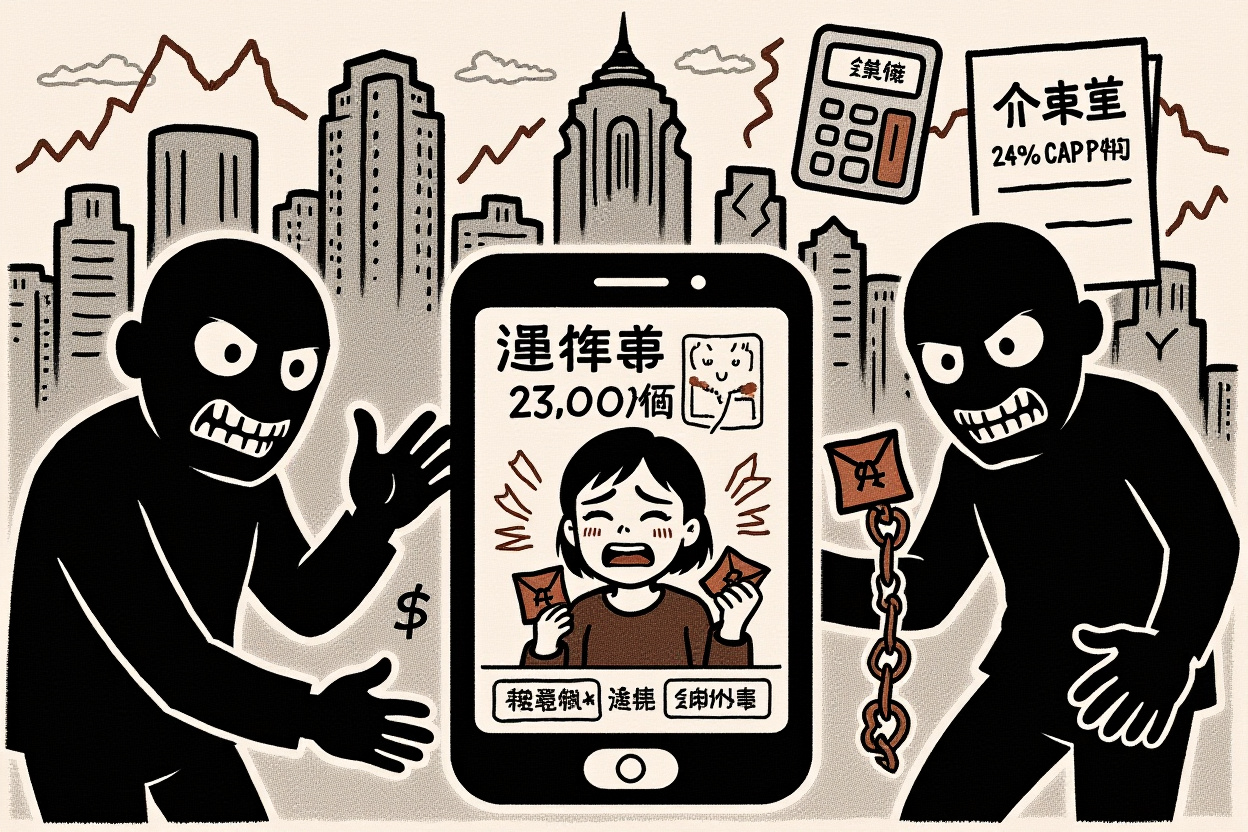
As the Lunar New Year approached, many young Chinese found themselves short on cash for red envelopes, family trips, and festivities. Platforms like Fenqile (分期乐) offered a tempting solution: instant credit with promises of low rates and high limits. But behind the glossy facade of financial technology, a disturbing reality has surfaced. A viral case on Weibo highlighted a borrower, Ms. Chen, who took out 13,674 yuan in loans only to face a repayment total of 26,859 yuan—nearly double the principal. This story underscores how ‘mini-loans’ are ensnaring a generation with deceptive terms and exorbitant costs, raising urgent questions about consumer protection and regulatory oversight in China’s bustling fintech landscape.
Key Takeaways for Market Participants
– The ‘mini-loans’ model, exemplified by Fenqile, often masks true borrowing costs through opaque fees and extended terms, pushing effective annualized rates to the regulatory ceiling of 36%.
– Despite 2025 guidelines capping comprehensive financing costs at 24%, enforcement gaps allow platforms to innovate around rules, continuing to target vulnerable groups like students.
– Consumer complaints on platforms like Black Cat exceed 160,000, citing hidden charges, aggressive collection practices, and privacy violations, indicating systemic risks in the sector.
– For investors, the sustainability of high-interest lending models is under threat as regulators tighten scrutiny, potentially impacting the valuation of listed entities like Lexin Group.
– Financial literacy and transparent disclosure are critical as China’s youth grapple with debt traps, urging stakeholders to advocate for stricter compliance and ethical lending.
The Alarming Case of Borrowing 13,000 to Repay 26,000
The recent social media storm around Fenqile brought to light a pervasive issue in China’s consumer credit market. Ms. Chen, a university student at the time, was enticed by low monthly payments and easy access to funds, borrowing small amounts for daily expenses. However, her debts snowballed due to high interest rates and lengthy repayment periods.
Detailed Breakdown of a Debt Trap
Between 2020 and 2021, Ms. Chen took out five loans totaling 13,674 yuan through Fenqile. These included amounts as small as 400 yuan stretched over 36 months, with annual percentage rates ranging from 32.08% to 35.90%. The sales pitch emphasized ‘low interest’ and ‘monthly payments as low as 18.23 yuan,’ but the long-term cost was staggering. By 2022, she defaulted, and after over 1,000 days of delinquency, the total owed ballooned to 26,859 yuan. This case vividly illustrates how ‘mini-loans’ can transform manageable debt into a crushing burden, often pushing borrowers toward mental health crises and social stigma from aggressive collection tactics.
Regulatory Framework and Its Limitations
Deconstructing the Mini-Loan Business ModelFenqile’s allure lies in its positioning as a convenient, tech-driven solution for young consumers. Its mini-loans offer small amounts with seemingly low periodic payments, but the mechanics reveal a profitability engine built on compounding interest and fee exploitation.
How Fees and Terms Inflate Debt
A visit to Fenqile’s mini-program showcases enticing promises: ‘Borrow up to 200,000 yuan with annual rates as low as 8%.’ Yet, the reality differs sharply. Users report unexpected charges such as 担保费 (guarantee fees) and 信用评估费 (credit assessment fees), which are not prominently disclosed. For example, a borrower from Sichuan paid an extra 1,102.14 yuan in担保费 (guarantee fees) on two loans of 49,880 yuan each, without clear prior notification. These practices effectively push the true cost of ‘mini-loans’ toward the 36%上限 (upper limit), eroding consumer trust and fueling debt cycles. Data from ‘China Consumer’ magazine corroborates this: in one case, a borrower in Hangzhou repaid 12,425.4 yuan on a 10,300 yuan loan, exceeding the contractual amount by 1,782 yuan due to hidden fees.
Data Privacy and Consumer Rights Concerns
The business model extends beyond lending into data exploitation. Upon agreement, Fenqile collects extensive personal information, including ID photos, bank details, income data, and even facial recognition data. This information is shared with third parties like payment processors and credit enhancement agencies, as outlined in its privacy policy. Such practices, investigated by ‘Economic Reference Report,’ raise alarms about consumer control and security, particularly for young users who may not fully understand the implications. The integration of data sharing with aggressive collection—where contacts are harassed—creates a coercive ecosystem that traps borrowers from click to repayment.
The Lingering Shadow of Campus Lending
Fenqile’s roots trace back to its founding in 2013 by肖文杰 (Xiao Wenjie), who built Lexin Group into a Nasdaq-listed entity. Initially, it gained traction through campus lending, targeting students with easy credit for electronics and lifestyle expenses. Despite regulatory crackdowns on ‘校园贷’ (campus loans) in 2016, evidence suggests that ‘mini-loans’ still permeate student populations.
Historical Context and Ongoing Issues
Market Implications for InvestorsRegulatory Evolution and Enforcement ChallengesChina’s regulatory bodies are increasingly focused on curbing excessive financing costs, but the implementation of rules against ‘mini-loans’ remains uneven. The 2025 directives provide a framework, yet local financial authorities struggle with monitoring and enforcement across diverse platforms.
Case Studies of Regulatory Gaps
Expert Insights and Industry ResponseConsumer Protection and Financial Literacy InitiativesAddressing the ‘mini-loans’ crisis demands a multi-faceted approach centered on education and rights awareness. Young consumers, often targeted by aggressive marketing, need tools to make informed decisions and avoid debt spirals.
Strategies for Empowering Borrowers
Role of Technology in TransparencyForward-Looking Insights for StakeholdersThe trajectory of ‘mini-loans’ in China will significantly impact various market participants, from investors to policymakers. As scrutiny intensifies, the sector must evolve toward sustainability and ethics.