



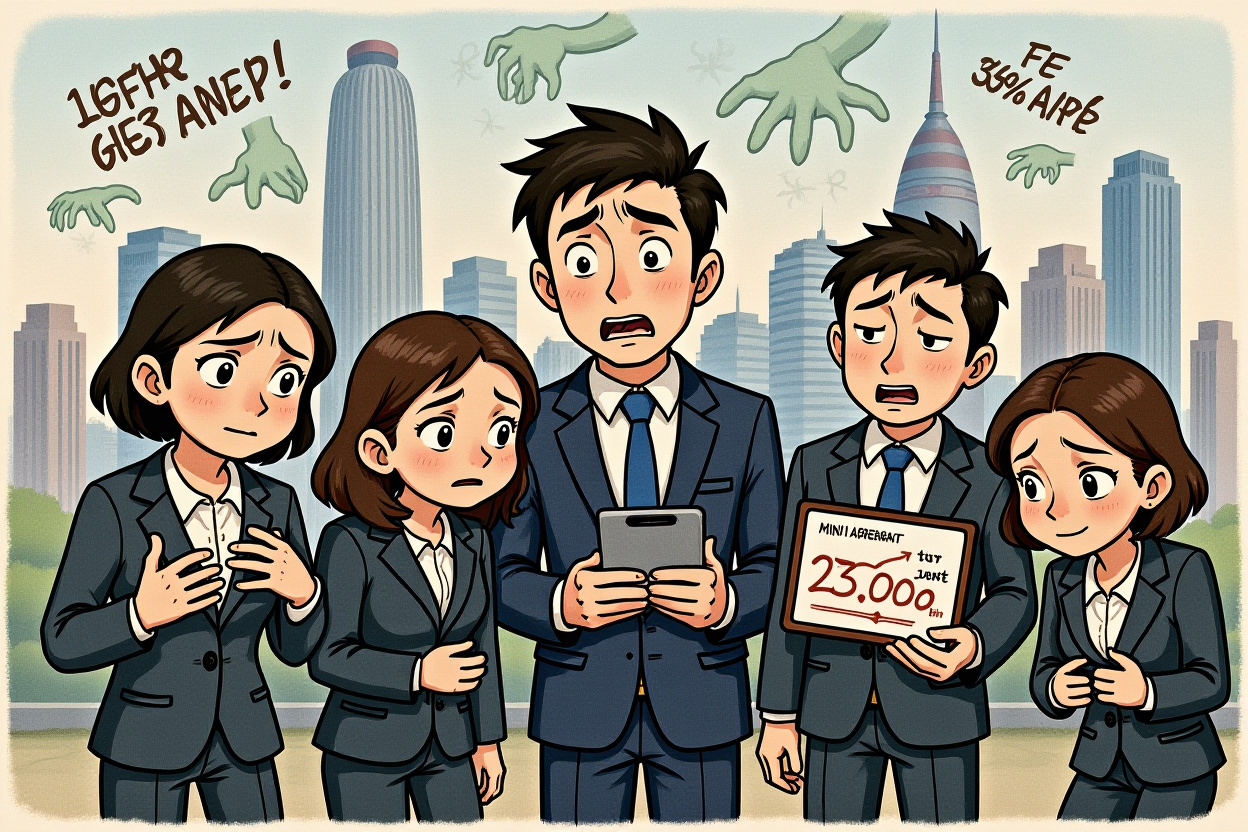
Executive Summary: Key Takeaways on China’s Mini-Loan Crisis
– Mini-loans from platforms like Fenqile (分期乐) are ensnaring young borrowers with effective annualized rates nearing 36%, often doubling debt through opaque fees and extended terms.
– Despite regulatory caps at 24% set by the People’s Bank of China (中国人民银行) and National Financial Regulatory Administration (国家金融监管总局), compliance gaps allow practices like hidden charges and aggressive targeting of students.
– Consumer complaints exceed 160,000 on platforms like Black Cat Complaints (黑猫投诉), highlighting widespread issues with transparency, privacy violations, and violent debt collection.
– For investors, fintech companies relying on high-margin mini-loans face significant regulatory, reputational, and sustainability risks in China’s evolving credit market.
– Urgent calls for enhanced enforcement, consumer education, and ethical lending models are critical to protect vulnerable demographics and ensure market stability.
The Hidden Cost of Convenience: Mini-Loans Unveiled
As Chinese consumers gear up for Lunar New Year expenditures—from red envelopes to family trips—the allure of quick cash through digital lending platforms has never been stronger. Recently, Fenqile (分期乐), a prominent mini-loan provider, promoted credit limit increases up to 50,000 yuan, enticing users with promises of easy access. However, beneath this facade of financial inclusivity lies a troubling reality: borrowers like Ms. Chen, who took out 13,674 yuan in loans, now face repayment demands of 26,859 yuan, effectively doubling her debt. This case, which sparked viral discussion on Weibo (微博), underscores how mini-loans are systematically draining young people’s finances through exorbitant interest rates and predatory practices.
For international investors monitoring China’s equity markets, the proliferation of mini-loans represents both a consumer protection crisis and a pivotal risk factor for fintech stocks. The model thrives on targeting credit-constrained youth with low upfront payments, but leverages extended repayment periods and hidden fees to amplify costs. As regulatory scrutiny intensifies, understanding the mechanics and market implications of these mini-loans is essential for informed decision-making in sectors ranging from consumer finance to technology.
Case Study: Ms. Chen’s Debt Spiral and the Mini-Loan Trap
Ms. Chen’s experience epitomizes the mini-loan dilemma. During her university years, she borrowed five times from Fenqile (分期乐), with amounts as small as 400 yuan stretched over 36 months. The sales pitch emphasized low monthly payments—as little as 18.23 yuan—but obscured the annual percentage rates (APRs) ranging from 32.08% to 35.90%. By 2022, overwhelmed by debt, she defaulted, accruing over 1,000 days of delinquency. The consequences extended beyond finance: aggressive debt collectors harassed her family and friends, exacerbating mental health issues like depression. This pattern is not isolated; it reflects a systemic issue where mini-loans exploit behavioral biases and financial naivety, trapping borrowers in cycles of compounding debt.
Opaque Fee Structures and the Snowball Effect
Fenqile (分期乐) markets itself with appealing slogans like annual rates as low as 8%, but the actual cost often skyrockets due to ancillary charges. Investigations reveal that platforms routinely add membership fees,担保费 (guarantee fees), credit assessment costs, and other nebulous items, pushing comprehensive borrowing costs toward the 36% ceiling. For instance, one complainant on Black Cat Complaints (黑猫投诉) noted in February 2025 that their effective APR reached 36%, well above the 24% regulatory红线 (red line). Another user in January 2025 reported being charged an extra 1,450 yuan for credit evaluation services, distorting the promised interest rates.
Data from media reports further illustrates this opacity. In a case covered by China Consumer (《中国消费者》), a borrower from Hangzhou took a 10,300 yuan loan at a stated 6% APR but ended up repaying 12,425.4 yuan—an overpayment of approximately 1,782 yuan. Similarly, a borrower from Sichuan was charged 1,102.14 yuan in担保费 (guarantee fees) without clear disclosure, buried in lengthy electronic agreements. These practices highlight how mini-loans manipulate transparency to maximize profitability, often leaving consumers unaware of the true financial burden until it’s too late.
Regulatory Landscape: Gaps in Enforcement and Compliance
In December 2025, the People’s Bank of China (中国人民银行) and National Financial Regulatory Administration (国家金融监管总局) jointly issued the ‘Guidelines for Comprehensive Financing Cost Management of Small Loan Companies’ (《小额贷款公司综合融资成本管理工作指引》), which explicitly prohibits new loans with APRs exceeding 24% and mandates a phased reduction to within four times the one-year Loan Prime Rate (LPR) by end-2027. From 2026, violations will trigger corrective actions, suspension of new lending, and dynamic credit reporting management. This regulatory框架 (framework) aims to curb usurious practices, but its effectiveness is hampered by implementation challenges and innovative circumvention by lenders.
New Guidelines and Their Limitations
The 2025 guidelines represent a significant step toward consumer protection, yet mini-loan platforms like Fenqile (分期乐) continue to operate in gray areas. By structuring fees as non-interest components—such as service or担保费 (guarantee fees)—they can technically comply with interest caps while still achieving effective APRs near 36%. Regulatory authorities face difficulties in monitoring these complex cost structures, especially when loans are disbursed through partnerships with licensed institutions like Shanghai Bank (上海银行). This loophole allows the mini-loan business model to persist, exploiting regulatory lag and fragmented oversight across China’s financial ecosystem.
Enforcement Hurdles and Market Realities
Targeting the Vulnerable: From Campus Lending to Consumer ExploitationLexin Group (乐信集团), founded by Xiao Wenjie (肖文杰), built its empire on campus lending, leveraging分期乐 (Fenqile) as a pioneer in student credit. After regulatory crackdowns on校园贷 (campus loans) in 2016, the company rebranded as a fintech firm and went public in 2017. However, evidence suggests that mini-loans still disproportionately target students and young adults, perpetuating the legacy of predatory lending. On Black Cat Complaints (黑猫投诉), over 922 complaints reference campus lending, with reports of promoters setting up booths in universities to solicit loans from financially inexperienced youth.
Privacy Intrusions and Data Misuse
The mini-loan ecosystem extends beyond high interest to pervasive data harvesting. As investigated by Economic Reference News (《经济参考报》), platforms like Fenqile (分期乐) collect extensive personal information—including ID photos, bank details, income data, facial recognition, and location—under broad consent clauses. This data is then shared with third parties such as merchants, payment processors, and credit enhancement agencies, raising severe privacy and security concerns. For consumers, clicking ‘agree’ often means relinquishing control over their financial and personal data, which can be weaponized in debt collection or sold for profit.
Aggressive Collection Tactics and Social Stigma
Complaints detail violent催收 (debt collection) methods, including harassment of family members, colleagues, and even community leaders. Over 20,000 grievances mention threats, public shaming, and通讯录爆破 (contact list bombing), where collectors message everyone in a borrower’s phone contacts. This not only exacerbates mental health issues but also isolates victims, making it harder to seek help. For young borrowers already struggling with debt, such tactics can lead to social ostracization and long-term financial exclusion, undermining the very financial inclusion goals that mini-loans purport to support.
Market Implications for Investors and Fintech Stakeholders
The mini-loan controversy has direct ramifications for China’s equity markets, particularly for fintech companies and their investors. Lexin Group (乐信集团), as the parent of Fenqile (分期乐), faces potential regulatory penalties, reputational damage, and shifts in business model sustainability. Its Nasdaq listing ties it to global investor expectations, where ESG (environmental, social, and governance) factors are increasingly scrutinized. The reliance on high-margin mini-loans could trigger volatility if stricter enforcement materializes or consumer backlash intensifies.
Risks in Fintech Valuation and Due Diligence
Investors in Chinese fintech must reassess risk profiles by examining loan book quality, fee transparency, and compliance adherence. Mini-loans often contribute disproportionately to revenue due to their high yields, but this comes with elevated default risks and regulatory uncertainty. For instance, if the 24% cap is rigorously enforced, platforms might see profitability compression, impacting stock performance. Additionally, as seen with past scandals in peer-to-peer lending, regulatory shifts can lead to sector-wide repricing. Due diligence should include monitoring complaint volumes on platforms like Black Cat Complaints (黑猫投诉) and regulatory announcements from bodies like the National Financial Regulatory Administration (国家金融监管总局).
Opportunities for Ethical Lending Models
Consumer Protection and the Path ForwardAddressing the mini-loan epidemic requires concerted efforts from regulators, industry players, and consumers themselves. The sheer volume of complaints—over 160,000 for Fenqile (分期乐) alone—signals urgent need for reform. Legal recourse exists under China’s Consumer Rights Protection Law (《消费者权益保护法》) and financial regulations, but accessibility remains a challenge for many borrowers.
Strengthening Redress Mechanisms and Transparency
Consumer advocacy groups and media, such as China Consumer (《中国消费者》), play a vital role in exposing malpractices. Platforms like Black Cat Complaints (黑猫投诉) offer a channel for grievances, but systemic solutions require mandatory disclosure of all costs in plain language, standardized APR calculations, and limits on data sharing. Regulatory bodies could enhance enforcement by deploying technology to monitor real-time lending data and imposing stricter penalties for non-compliance. For example, linking lender licenses to complaint resolution rates could incentivize better behavior.
Educating Borrowers and Promoting Financial Literacy
Synthesizing the Mini-Loan Dilemma: A Call for ActionThe mini-loan sector in China stands at a crossroads, balancing innovation with exploitation. Cases like Ms. Chen’s reveal how easy credit access can morph into debt bondage, exacerbated by opaque fees and aggressive collection. Regulatory guidelines provide a framework, but their success hinges on robust enforcement and industry adaptation. For investors, the mini-loan phenomenon underscores the importance of ethical due diligence and long-term sustainability over short-term gains.
Moving forward, stakeholders must prioritize transparent pricing, respect for privacy, and fair treatment of borrowers. Consumers should exercise caution, scrutinizing terms before committing to mini-loans, and seek help from legal aid or consumer hotlines if exploited. Ultimately, fostering a healthy credit ecosystem will require collective action—from tighter oversight to investor advocacy—ensuring that financial technology serves as a tool for empowerment, not entrapment, in China’s dynamic market landscape.