



Executive Summary
This analysis uncovers the precarious reality behind China’s booming online lending sector, focusing on the ‘mini loan’ model that targets young consumers with deceptive promises.
– Platforms like Fenqile (分期乐) advertise accessible credit but bury exorbitant costs in complex terms, with effective annualized rates often nearing 36%, far exceeding regulatory guidelines.
– A detailed case study reveals how a borrower of 13,674 yuan faces a repayment burden of 26,859 yuan, illustrating the dangerous debt snowball effect from prolonged installments and hidden fees.
– Despite clear directives from the 中国人民银行 (People’s Bank of China) and 国家金融监管总局 (National Financial Regulatory Administration) capping comprehensive financing costs, enforcement remains inconsistent, allowing platforms to innovate around rules.
– Fenqile’s historical ties to controversial ‘campus lending’ persist, with evidence of continued targeting of students and use of aggressive, privacy-invasive collection tactics.
– The practices pose significant consumer protection risks, regulatory challenges, and reputational threats to China’s fintech sector, demanding scrutiny from investors and policymakers alike.
The Deceptive Allure of Instant Credit
As Lunar New Year pressures mount for gift-giving and travel, a seductive solution flashes across smartphone screens: instant, low-fuss loans marketed directly to cash-strapped young adults. Platforms like Fenqile (分期乐) promise liberation from short-term budget crunches with slogans of ‘low interest’ and ‘manageable monthly payments.’ Yet, beneath this veneer of financial convenience lies a predatory system. These so-called ‘mini loans’ are designed to trap borrowers in a cycle of debt that can double their original obligation. The recent viral case of a borrower facing a near-200% repayment ratio has thrust this issue into the spotlight, challenging the narrative of benign fintech innovation.
The core appeal of the mini loan model is its perceived accessibility. By breaking down relatively small amounts into lengthy installment plans, the monthly payment appears trivial. However, this structure is the very mechanism that amplifies debt. When a 400-yuan expense is stretched over 36 months, the cumulative interest and fees transform a minor purchase into a significant financial burden. This strategy preys on behavioral biases, emphasizing immediate relief while obscuring long-term costs. For a generation accustomed to digital convenience, the click-to-borrow process is seamless, but the exit ramp is perilously steep.
Case in Point: A Debt That Doubled
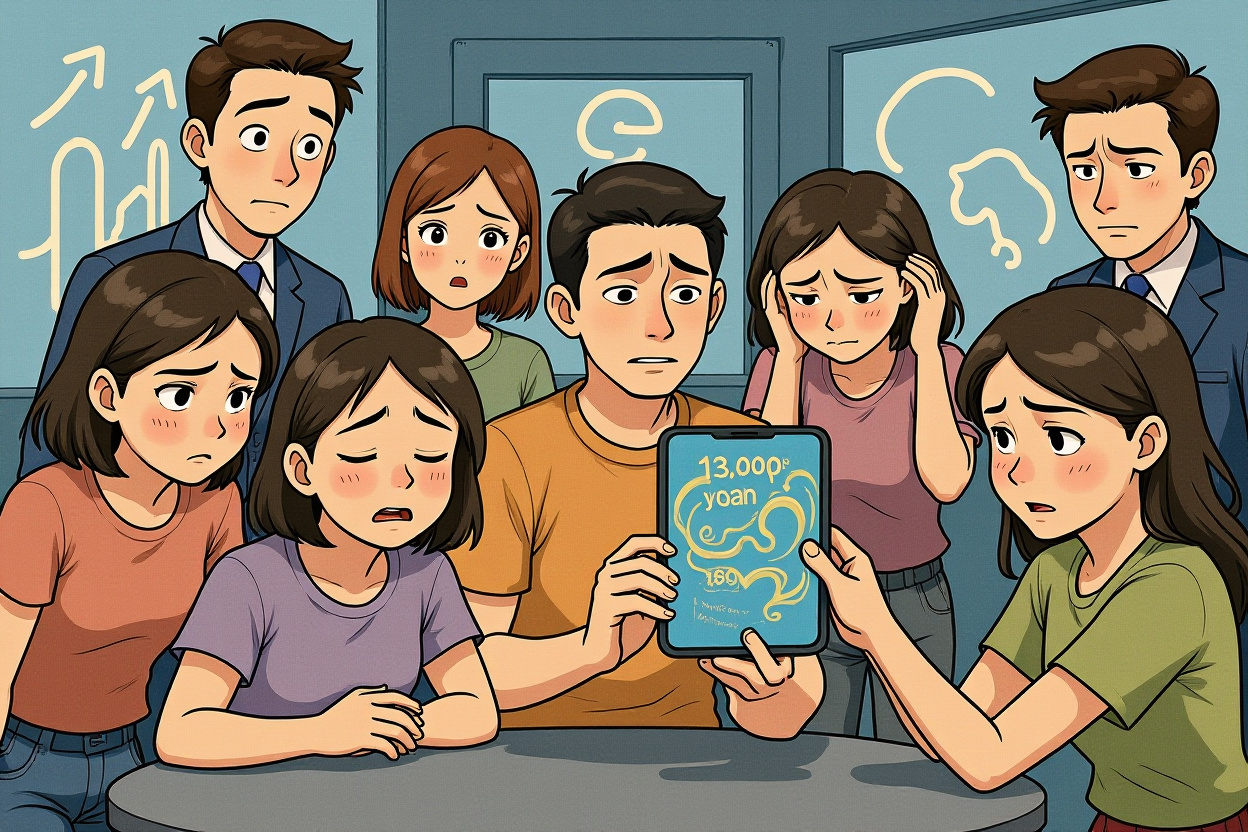
The story of Ms. Chen, widely reported in February, exemplifies the destructive trajectory of these mini loans. While a university student, she took five separate loans from Fenqile between 2020 and 2021, totaling 13,674 yuan. Lured by promotional language of ‘minimum monthly payments as low as 18.23 yuan,’ she agreed to terms spanning 12 to 36 months. The contracts listed annual percentage rates (APRs) between 32.08% and 35.90%. Years later, after struggling with repayments, she discovered her total obligation had ballooned to 26,859 yuan. The psychological toll has been severe, exacerbated by aggressive debt collectors who contacted her family and friends, a practice she says led to depression.
This case is not an outlier but a symptom of a systemic issue. The arithmetic is stark: borrowing at an effective rate of approximately 36% means debt compounds rapidly. Over a three-year period, a loan can easily double. The mini loan structure masks this reality by presenting small, frequent payments, making it difficult for borrowers, especially financially inexperienced youth, to grasp the total cost of credit. This opacity is a fundamental feature of the business model, not a bug.
Opaque Fees and the Regulatory Tightrope
The true cost of a mini loan often lies not in the stated interest rate but in a labyrinth of ancillary charges. Complaints on platforms like the Black Cat Complaint platform (黑猫投诉) – with over 160,000 entries for Fenqile alone – consistently cite mysterious fees for membership, guarantees, and credit assessment. These fees are frequently omitted from upfront disclosures or buried in dense electronic agreements, effectively pushing the comprehensive annualized cost to the legal brink of 36%.
For instance, a complaint from February 12, 2025, alleges a Fenqile loan carried a comprehensive annualized cost of 36%, demanding a refund of all charges above the 24% regulatory ‘red line.’ Another from January 20 details how a ‘credit assessment fee’ was used to levy interest beyond the contracted rate. Media investigations, such as those by 中国消费者 (China Consumer), have documented specific cases where actual repayments significantly exceeded contractually stipulated amounts due to these hidden costs.
Regulatory Frameworks and Enforcement Gaps
In December 2025, the 中国人民银行 (People’s Bank of China) and the 国家金融监管总局 (National Financial Regulatory Administration) jointly issued the ‘小额贷款公司综合融资成本管理工作指引’ (Guidance on the Management of Comprehensive Financing Costs for Small Loan Companies). This directive explicitly prohibits new loans with comprehensive financing costs exceeding 24% per annum. It further mandates that, in principle, all newly issued loans must see their costs reduced to within four times the one-year Loan Prime Rate (LPR) by the end of 2027. From 2026 onward, local financial authorities are instructed to promptly correct violations, halt new lending, and incorporate offenders into dynamic credit reporting management.
Despite this clear regulatory intent, a gap persists between rule-making and on-the-ground enforcement. Lending platforms have become adept at restructuring fees to maintain profitability while technically navigating the rules. The mini loan model, with its extended tenors and layered charges, tests the boundaries of these regulations. The challenge for regulators is to define and police ‘comprehensive financing cost’ in a way that captures all borrower-paid expenses, closing loopholes that allow effective rates to remain punishingly high.
The Unshakable Legacy of Campus Lending
To understand the current predicament, one must examine the origins of companies like Fenqile. The platform is operated by 吉安市分期乐网络小额贷款有限公司 (Ji’an City Fenqile Network Small Loan Co., Ltd.), but its ultimate parent is the Nasdaq-listed 乐信集团 (Lexin Group). Lexin’s foundational growth was fueled by 分期乐 (Fenqile), which pioneered online installment shopping in China. Its early, rapid expansion was inextricably linked to providing credit to university students—a practice that became synonymous with the controversial ‘校园贷’ (campus loan) sector.
Following a regulatory crackdown on campus lending in 2016, Lexin rebranded, expanded its partnership with licensed institutions like 上海银行 (Bank of Shanghai), and went public in 2017, positioning itself as a mature fintech player. However, evidence suggests the platform has not fully shed its past. Searches for ‘分期乐 校园贷’ (Fenqile campus loan) on the Black Cat Complaint platform yield over 922 results, with users claiming they were students when they borrowed and reporting promotional activities on university campuses.
Aggressive Tactics and Privacy Erosion
The methods used to enforce repayment further tarnish the industry’s image. Over 20,000 complaints reference violent collection practices, including harassment of borrowers’ contacts—family, friends, and even employers—a tactic known as ‘爆通讯录’ (blasting the address book). This not only compounds psychological distress but blatantly invades personal privacy. An investigation by 经济参考报 (Economic Reference News) found that upon agreeing to Fenqile’s terms, users surrender a vast array of personal data: ID photos, bank details, income information, facial recognition data, and location history.
This sensitive information is then ‘shared’ with third parties, as outlined in the platform’s privacy policy, including merchants, payment partners, clearing banks, and credit enhancement agencies. From the enticing loan portal to coercive collection and data sharing, a complete control chain emerges. Consumers, from the moment they click ‘agree,’ risk losing autonomy over both their finances and their personal information. This ecosystem makes the mini loan not just a financial product but a tool for pervasive surveillance and social pressure.
Market Implications and the Path Forward
The sustainability of the high-interest mini loan model is under intense scrutiny. For international investors in Chinese fintech stocks, these practices represent a material ESG (Environmental, Social, and Governance) risk and a potential regulatory liability. While short-term profitability from high-margin lending may be attractive, the long-term reputational damage and threat of stricter enforcement could severely impact valuations. Due diligence must now extend beyond user growth metrics to include deep analysis of lending practices, fee transparency, and compliance with evolving Chinese financial regulations.
The sector stands at a crossroads. The original promise of fintech—to democratize credit and serve underserved segments—is being undermined by models that exploit cognitive biases and information asymmetry. The mini loan phenomenon, particularly its impact on young people, is a litmus test for China’s commitment to responsible financial innovation.
Call to Action for Stakeholders
For regulators, the priority must be robust and unified enforcement of existing cost caps, ensuring ‘comprehensive financing cost’ is interpreted broadly and uniformly across jurisdictions. Strengthening disclosure requirements to mandate clear, upfront presentation of all fees in a standardized format is crucial. For consumers, particularly young borrowers, financial literacy education is a vital defense against deceptive lending practices. Understanding annualized percentage rates (APR), the true cost of credit, and the risks of long-term installment plans is essential.
Investors and analysts should pressure publicly traded lenders like Lexin for greater transparency on their asset quality, fee structures, and collection practices. The viability of the mini loan business model depends on its ability to operate within a tightening ethical and regulatory framework. Ultimately, the health of China’s consumer finance market relies on moving away from debt-trapping products and toward solutions that genuinely empower financial well-being. The era of profiting from the systematic draining of young people through mini loans must come to an end.