



Executive Summary
This article delves into the concerning rise of mini loans in China, financial products that offer small, short-term credit but often lead to severe debt cycles. Key takeaways include:
– Mini loan platforms, exemplified by Fenqile, are charging effective annual percentage rates (APRs) nearing 36%, significantly above regulatory caps, trapping borrowers in repayment amounts nearly double the principal.
– Fee structures are frequently opaque, with hidden charges like membership fees,担保费 (guarantee fees), and credit assessment costs inflating the true cost of borrowing, leading to a snowballing debt effect.
– Despite regulatory efforts, such as guidelines from the People’s Bank of China and the National Financial Regulatory Administration, enforcement gaps allow these practices to persist, particularly targeting vulnerable groups like students.
– Consumer complaints are rampant on platforms like Hei Mao, highlighting issues with aggressive debt collection, privacy invasions, and lack of transparency, raising ethical and sustainability concerns for the fintech sector.
– Investors and policymakers must scrutinize the mini loan business model, as it poses risks to financial stability and consumer welfare in China’s evolving credit market.
The Viral Case That Sparked Outrage
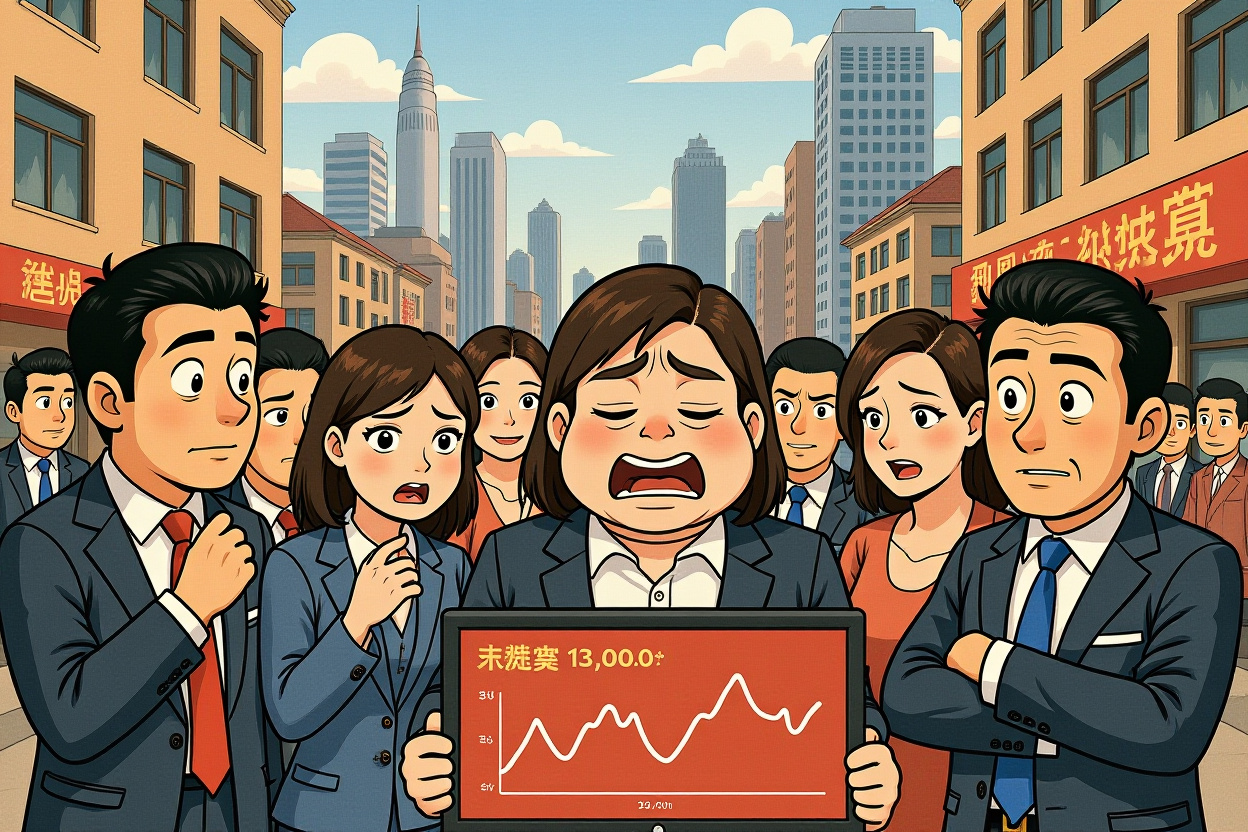
As Chinese families prepared for Lunar New Year celebrations, a social media storm erupted over a mini loan case that laid bare the predatory nature of some lending platforms. The story of Ms. Chen (陈女士), a university graduate, went viral on Weibo in late February, illustrating how borrowing 13,000 yuan could balloon into a 26,000 yuan repayment burden. Her experience underscores the hidden dangers of mini loans, which lure users with low monthly payments but ensnare them in long-term debt.
Ms. Chen’s ordeal began during her college years when she used the Fenqile platform for everyday expenses, including a 400 yuan purchase stretched over 36 installments. Between 2020 and 2021, she took out five loans totaling 13,674 yuan, with APRs ranging from 32.08% to 35.90%. Promised “low interest” and “minimum monthly payments of 18.23 yuan,” she found herself unable to repay by 2022, leading to over 1,000 days of delinquency. The aggressive collection tactics, including notifying her family and friends, exacerbated her financial and psychological stress, a common tactic in the mini loan industry.
Breaking Down the Numbers
The math behind mini loans reveals a alarming reality: by extending repayment terms and layering on fees, platforms can double the effective cost. In Ms. Chen’s case, the total repayment of 26,859 yuan on a 13,674 yuan principal translates to an effective APR approaching 36%, far exceeding the 24% cap suggested by recent regulations. This case is not isolated; it highlights a systemic issue where mini loans, marketed as convenient credit, morph into debt traps through compounded interest and opaque charges.
Opaque Fees and the Snowballing Debt Effect
Beyond the stated interest rates, mini loan platforms often embed additional costs that borrowers may overlook until it’s too late. The Fenqile platform, for instance, advertises “annual interest rates as low as 8%” and “borrow 20,000 yuan for as little as 2.2 yuan per day,” but user complaints reveal a different story. On the Hei Mao投诉平台 (Hei Mao Complaint Platform), over 160,000 complaints cite unexpected fees such as 会员费 (membership fees), 担保费 (guarantee fees), and 信用评估费 (credit assessment fees), which push the comprehensive borrowing cost toward the 36% ceiling.
A closer look at specific cases reveals the extent of this opacity. For example, a borrower from Zhejiang province reported that a 10,300 yuan loan with a contracted 6% APR resulted in actual repayments 1,782 yuan higher than calculated, due to undisclosed charges. Similarly, in Sichuan, a user was charged 1,102.14 yuan in担保费 (guarantee fees) without clear prior disclosure, buried in lengthy electronic agreements. These practices not only violate transparency principles but also exacerbate the debt snowball effect, where small loans balloon into unmanageable sums.
Regulatory Guidelines vs. Market Realities
In response to such issues, regulators have stepped in. On December 19, 2025, the People’s Bank of China and the National Financial Regulatory Authority jointly issued the 小额贷款公司综合融资成本管理工作指引 (Guidelines for the Management of Comprehensive Financing Costs of Small Loan Companies), which prohibit new loans with comprehensive costs exceeding 24% APR and aim to cap them at four times the one-year Loan Prime Rate (LPR) by 2027. However, enforcement remains a challenge, as platforms like Fenqile continue to operate near the legal limits, using fee structures to circumvent intent. This gap between regulation and practice keeps the mini loan ecosystem fraught with risk for consumers.
The Historical Roots: From Campus Loans to FinTech Facades
The mini loan phenomenon has deep ties to China’s controversial campus lending era, with Fenqile’s parent company, 乐信集团 (Lexin Fintech Holdings Ltd.), serving as a prime example. Founded in 2013 by肖文杰 (Xiao Wenjie), Lexin最初 (initially) grew rapidly by targeting university students through its 分期乐 (Fenqile) brand, offering分期购物 (installment shopping) for items like smartphones. This strategy, while profitable, drew regulatory scrutiny after 2016 crackdowns on 校园贷 (campus loans), prompting Lexin to rebrand as a fintech firm and list on Nasdaq in 2017.
Despite this shift, evidence suggests that mini loan platforms have not fully shed their campus origins. Searches on Hei Mao for “分期乐 校园贷” (Fenqile campus loans) yield over 922 complaints, with users reporting that推广人员 (promotion personnel) still operate on campuses, enticing students with easy credit. This persistence highlights the ethical dilemmas in the mini loan sector, where growth often comes at the expense of vulnerable young borrowers who may lack financial literacy.
The Evolution of a Business Model
Lexin’s journey from a campus lender to a publicly traded fintech company illustrates the adaptive nature of the mini loan industry. By partnering with licensed institutions like上海银行 (Bank of Shanghai) for funding, Fenqile positions itself as a service for “credit consumers,” but its core mechanics—high APRs, long tenures, and aggressive marketing—remain unchanged. This evolution raises questions about whether true reform has occurred or if mini loans have merely donned a fintech veneer to attract investors and avoid regulatory blowback.
Privacy Intrusions and Aggressive Collection Tactics
The risks of mini loans extend beyond finance to personal privacy and well-being. Upon using platforms like Fenqile, borrowers must consent to extensive data collection, including姓名 (names), 身份证号码 (ID numbers), 银行卡信息 (bank card details), 人脸信息 (facial recognition data), and 位置信息 (location information). As reported by 经济参考报 (Economic Reference Report), this data is often shared with third parties such as payment processors, credit enhancers, and industry groups, creating vulnerabilities for misuse.
When borrowers default, the consequences are severe. Over 20,000 complaints on Hei Mao describe暴力催收 (violent debt collection) methods, where collectors harass not only the borrower but also their contacts—family, friends, and even colleagues—through爆通讯录 (contact list explosions). This psychological pressure, as seen in Ms. Chen’s case, can lead to depression and social isolation, turning a financial issue into a personal crisis. The mini loan ecosystem thus operates on a cycle of enticement, intrusion, and intimidation, leaving consumers with little recourse.
The Toll on Consumer Trust
The combination of opaque fees, data sharing, and aggressive collections erodes trust in fintech innovations. For international investors, this poses reputational and regulatory risks, as China’s authorities increasingly prioritize consumer protection in the financial sector. The mini loan model, while profitable in the short term, may face sustainability challenges if public backlash and tighter regulations converge, impacting the valuation of companies like Lexin.
Regulatory Scrutiny and the Path Forward
As mini loans continue to draw criticism, regulators are intensifying their focus. The 2025 guidelines represent a step toward curbing excessive costs, but effective implementation requires monitoring at the local level, where小贷公司 (small loan companies) like吉安市分期乐网络小额贷款有限公司 (Jian Fenqile Network Small Loan Co., Ltd.) are registered. Investors should watch for enforcement actions, such as fines or license revocations, which could signal a broader crackdown on predatory lending practices.
For borrowers, awareness is key. Financial education initiatives can help young consumers understand the true cost of mini loans and explore alternatives like traditional bank loans or savings plans. Additionally, using complaint platforms like Hei Mao or seeking legal advice, as highlighted in 南方日报 (Southern Daily) reports, can provide avenues for redress. The case of Ms. Chen shows that even after years of debt, negotiation with platforms may be possible, though it often comes after significant hardship.
Recommendations for Stakeholders
– Investors: Conduct due diligence on mini loan platforms, assessing not only financial metrics but also compliance with regulations and consumer complaint trends. Look for companies that prioritize transparency and ethical lending.
– Regulators: Enhance enforcement of existing caps on APRs and fees, while promoting clearer disclosure requirements. Collaborate with tech platforms to monitor advertising and data practices in the mini loan space.
– Consumers: Scrutinize loan agreements for hidden fees, calculate the effective APR before borrowing, and report violations to authorities like the National Financial Regulatory Administration. Consider building emergency funds to avoid reliance on high-cost credit.
Synthesizing the Mini Loan Crisis
The mini loan phenomenon in China reveals a complex interplay of financial innovation, regulatory gaps, and consumer vulnerability. Cases like Ms. Chen’s, where borrowing 13,000 yuan leads to repaying 26,000 yuan, are symptomatic of a broader issue: products designed for convenience are often structured for profitability at the expense of borrower welfare. With APRs nearing 36%, opaque fees, and aggressive collections, these loans risk draining the financial health of young people, undermining the stability of China’s credit market.
Looking ahead, the sustainability of the mini loan model hinges on stricter enforcement of regulations and a shift toward more responsible lending. International investors and business professionals must factor in these risks when engaging with Chinese equity markets, as consumer protection trends could impact sector valuations. By advocating for transparency and supporting regulatory efforts, stakeholders can help steer the mini loan industry toward a more ethical future, where credit serves as a tool for empowerment rather than entrapment. Take action today by educating yourself on lending practices and urging for robust oversight in fintech investments.