



Executive Summary
– The sudden collapse of Baolide (宝利德), once a leading luxury car dealer in East China, highlights critical vulnerabilities in the automotive retail sector. – Founder Yu Haijun’s (余海军) equity freezes and debt exceeding 1.18 billion yuan precipitated the Baolide collapse, exacerbated by a 2024 vehicle certificate scandal. – Rumors linking Yu Haijun to economist Jin Keyu (金刻羽) have added a layer of controversy, though unverified. – Three failed IPO attempts despite backing from high-profile investors like Ding Lei (丁磊) and Alibaba (阿里巴巴集团) executives underscore deeper systemic issues. – This case serves as a stark reminder for dealers to prioritize cash flow management and adapt to market saturation in China’s luxury auto segment.
From Regional Powerhouse to Empty Showrooms: The Baolide Collapse Unfolds
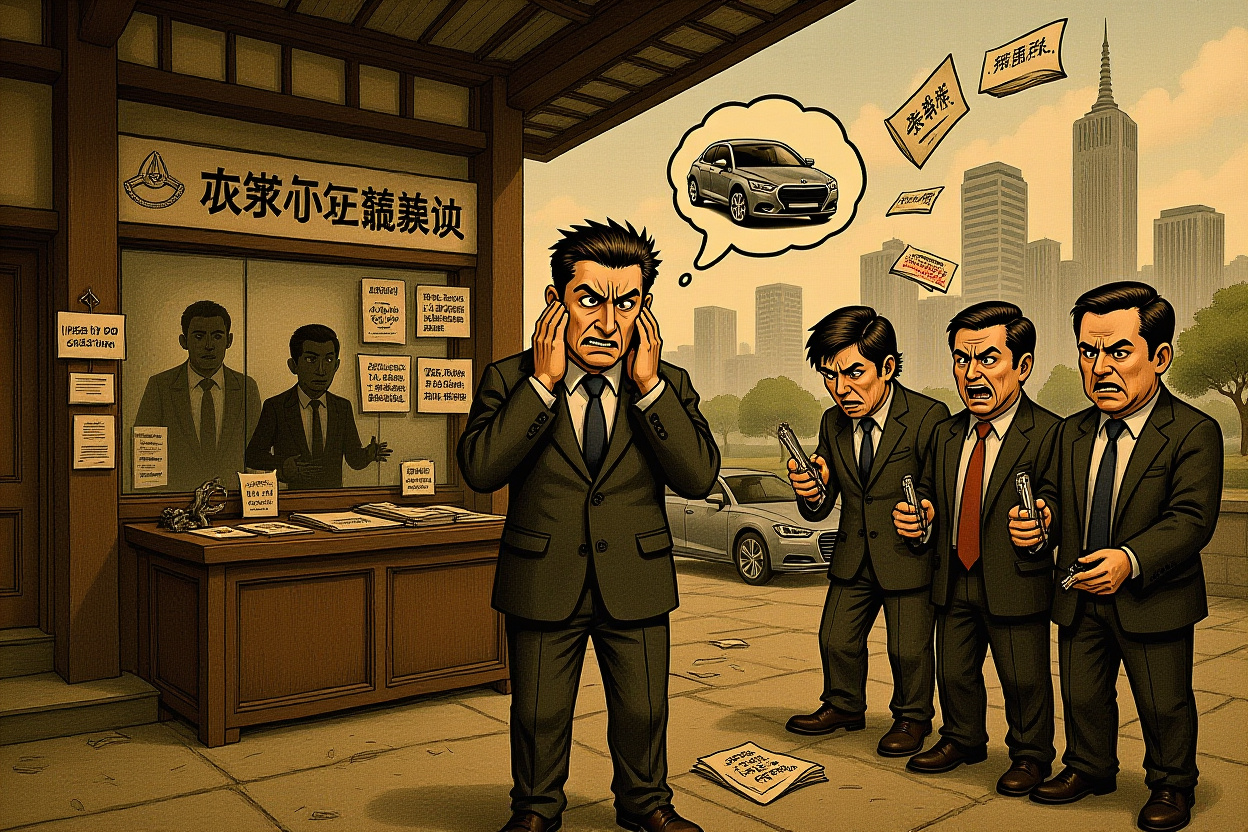
The desolate scene at Hangzhou Xingbaohang Automobile Co., Ltd., a former Mercedes-Benz (梅赛德斯-奔驰) flagship center in Xiaoshan, Hangzhou, epitomizes the dramatic fall of its parent company, Baolide Holding Group (宝利德控股集团). Once bustling with luxury vehicles and affluent clients, the showroom now sits sealed with official notices, its interior stripped and dusty. This visual decay mirrors the operational disintegration of a firm that dominated East China’s premium auto retail for decades. The Baolide collapse did not occur overnight; it was a slow-motion unraveling fueled by financial missteps and market pressures, now culminating in bankruptcy proceedings that have sent shockwaves through the industry. For global investors monitoring Chinese equities, this saga offers a cautionary tale on the risks within the consumer discretionary sector, especially as economic headwinds persist. The focus on the Baolide collapse reveals how even established players can falter when governance and liquidity management fail.
A Legacy Built on Luxury Brands
Founded in 2001 by entrepreneur Yu Haijun (余海军), Baolide carved a niche by catering to high-net-worth individuals, amassing a client base of nearly 600,000. With headquarters in Hangzhou’s West Lake District, the company secured exclusive authorizations for top-tier brands like Rolls-Royce, Porsche, Audi, and Lincoln, alongside strategic partnerships that made it a formidable force. Its accolades included rankings in China’s Top 500 Private Enterprises and Zhejiang’s Top 100 Companies, signaling its erstwhile market strength. However, this rapid expansion through brand acquisitions and store networks sowed the seeds for future strain, as the capital-intensive model required constant cash infusion to sustain operations.
Early Warning Signs in Debt and Legal Troubles
Long before the bankruptcy filing, Baolide’s financial health was deteriorating. Corporate records from Qichacha (企查查) show: – Three instances as a被执行人 (enforced person), with涉案金额 (involved amounts) reaching 43.66 million yuan. – Two restrictions on high consumption, and 24 equity freezes on company assets. Founder Yu Haijun (余海军) faced even graver personal liabilities, with 208 high-consumption restrictions and over 1.18 billion yuan in涉及金额 (related amounts), painting a picture of escalating distress that foreshadowed the broader Baolide collapse.
The 2024 Crisis: Vehicle Scandals and Cash Flow Catastrophe
The tipping point arrived in September 2024, when customers at Baolide’s Jaguar Land Rover stores in Shaoxing and Changsha, along with a Mercedes outlet in Jiaxing, discovered they could not register newly purchased vehicles. Investigations revealed that Baolide had mortgaged vehicle合格证 (certificates of conformity) to banks for loans but failed to redeem them after receiving full customer payments. This left owners with expensive “ornaments”—cars legally undrivable for months—and ignited widespread consumer outrage. The scandal ripped away any remaining facade of stability, exposing severe liquidity shortages. As complaints surged, Baolide initially pledged to overcome challenges, but its promises proved hollow when national客服热线 (customer service hotlines) went dead in July 2025 and stores shuttered nationwide. This sequence of events marked a definitive point in the Baolide collapse, eroding trust and accelerating the downward spiral.
Bankruptcy Filing and Court Intervention
By August 2025, Baolide Holding Group admitted inability to repay debts, prompting a破产申请 (bankruptcy application) to the Hangzhou Intermediate People’s Court. On September 5, 2025, the court formally accepted the case, appointing Zhejiang Hangtianxin Law Firm and Zhejiang Puhua Certified Public Accountants as破产管理人 (bankruptcy administrators). This legal step formalized the Baolide collapse, initiating asset liquidation and creditor negotiations. For stakeholders, the move underscored the systemic failure to address earlier red flags, such as the 2024 certificate scandal that had already signaled impending doom.
The Jin Keyu Connection: Unverified Rumors Amid Financial Ruin
As the Baolide collapse dominated headlines, speculative reports emerged linking Yu Haijun (余海军) to prominent economist Jin Keyu (金刻羽). Online claims suggested an improper relationship and even a secret child, with anecdotes about a lavish 2022 “shareholder分红会 (dividend meeting)” in Hangzhou’s Qiandao Lake area allegedly serving as a满月宴 (full-month celebration) for their daughter. Jin Keyu (金刻羽), a Harvard-educated economist and former Davos Global Young Leader, has not publicly addressed these allegations, which remain unsubstantiated. While such gossip may distract from core financial issues, it highlights how personal scandals can amplify reputational damage during corporate crises, further complicating the Baolide collapse narrative for investors assessing governance risks.
Impact on Corporate Reputation and Investor Confidence
Regardless of veracity, the rumors have fueled media frenzy, potentially deterring any last-ditch rescue efforts or asset sales. In China’s business landscape, where guanxi (relationships) often influence deals, such associations can erode trust with partners and financiers. For international observers, this aspect of the Baolide collapse serves as a reminder to scrutinize not just balance sheets but also the personal conduct of key executives, as it can affect brand equity and recovery prospects.
Failed Ambitions: IPO Disasters and High-Profile Investor Losses
Baolide’s aspirations for an initial public offering (IPO) repeatedly crumbled, reflecting deeper operational flaws. Between 2015 and 2023, the company cycled through three major underwriters—Haitong Securities (海通证券), China Merchants Securities (招商证券), and Guotai Junan Securities (国泰君安证券)—each terminating辅导 (guidance) after failed attempts. Despite being listed as a key拟上市企业 (prospective listed company) in Hangzhou, regulatory hurdles and internal weaknesses blocked its path to the A-share market. This track record of IPO failures now appears prophetic, hinting at the underlying issues that would culminate in the Baolide collapse.
Notable Backers Left Holding the Bag
Even without a public listing, Baolide attracted significant private investment. From 2020 to 2022, its subsidiary Zhejiang Baolide Co., Ltd. raised 1.327 billion yuan from eight investors, including: – Internet mogul Ding Lei (丁磊) of NetEase (网易), who invested nearly 1 billion yuan. – Tonghuashun (同花顺) chairman Yi Zheng (易峥). – Alibaba (阿里巴巴集团) executives like Wu Yongming (吴泳铭), Sun Lijun (孙利军), Zhang Maosong (张茂松), and Zhang Jianfeng (张建峰). – Former Alibaba executive Hu Xiaoming (胡晓明) via Hangzhou Zhouxuan Equity Investment. Baolide’s website once listed core partners such as NetEase, Alibaba, and Hillhouse Capital (高瓴资本), but this star-studded support could not avert the Baolide collapse. As the company buckled under industry downturns and fierce competition, these investors faced substantial losses, illustrating the perils of betting on firms with shaky fundamentals.
Broader Implications for China’s Auto Dealership Sector
The Baolide collapse is not an isolated incident but a symptom of wider challenges in China’s automotive market. Luxury car sales have slowed due to economic cooling and increased competition from electric vehicle (EV) brands, squeezing traditional dealers. Dealerships that relied on aggressive expansion and brand stacking, without robust risk controls, are particularly vulnerable. The case underscores urgent lessons for industry participants navigating this transition.
Key Takeaways for Dealers and Investors
– Cash Flow Management: Baolide’s practice of mortgaging vehicle certificates for short-term liquidity, without redeeming them, exposed a critical failure in working capital oversight. Dealers must maintain transparent financial practices and avoid over-leverage. – Adaptability to Market Shifts: The luxury segment’s saturation requires innovation, such as embracing digital sales or servicing EVs, to stay relevant. Baolide’s rigid model contributed to its downfall. – Regulatory Compliance: Increased scrutiny from bodies like the China Banking and Insurance Regulatory Commission (CBIRC) (中国银行保险监督管理委员会) means dealers must adhere strictly to consumer protection laws to avoid legal blowback. – Due Diligence: For investors, the Baolide collapse highlights the need to assess not just growth metrics but also debt levels, governance structures, and market positioning before committing capital.
Navigating the Aftermath and Future Outlook
As bankruptcy administrators oversee asset sales and creditor repayments, the remnants of Baolide serve as a stark benchmark for the industry. The Baolide collapse may prompt regulatory reforms, such as stricter oversight on vehicle certificate抵押 (mortgages) or enhanced disclosure requirements for dealerships. For competitors, this creates an opportunity to capture market share, but also a warning to fortify their own financial health. Investors should monitor similar high-debt firms in the consumer discretionary space, as economic uncertainties could trigger further distress. The story of Baolide—from regional titan to bankrupt entity—reinforces that in today’s volatile markets, resilience hinges on prudent management and adaptive strategies. For those engaged in Chinese equities, it is a call to action: prioritize fundamental analysis over hype, and always prepare for the unexpected twists in corporate narratives.