



Executive Summary
This analysis delves into the burgeoning crisis faced by owners of vehicles from bankrupt Chinese electric vehicle (EV) manufacturers, exploring the financial, regulatory, and market implications for stakeholders in China’s equity markets.
- Over 30 major Chinese EV makers have collapsed in the past decade, leaving behind an estimated million-plus “orphaned electric vehicle owners” with scant aftermarket support, escalating maintenance costs, and voided warranties.
- Owners are pioneering self-repair networks via online communities and third-party shops, highlighting a failure in regulatory enforcement of spare parts mandates and exposing vulnerabilities in China’s rapid EV innovation cycle.
- The crisis has spawned a niche second-hand market where deeply discounted vehicles from defunct brands attract bargain hunters, albeit with high risks, reflecting skewed consumer behavior amid market consolidation.
- Investors in Chinese automotive equities must now factor in brand sustainability and aftermarket liabilities, as these orphaned electric vehicle owners episodes signal deeper systemic risks in the capital-intensive EV sector.
- Regulatory gaps, particularly the unenforced 10-year spare parts rule, demand urgent reform to ensure orderly market exits, protecting consumers and stabilizing investor confidence in China’s EV boom.
The Silent Crisis of China’s Orphaned Electric Vehicle Owners
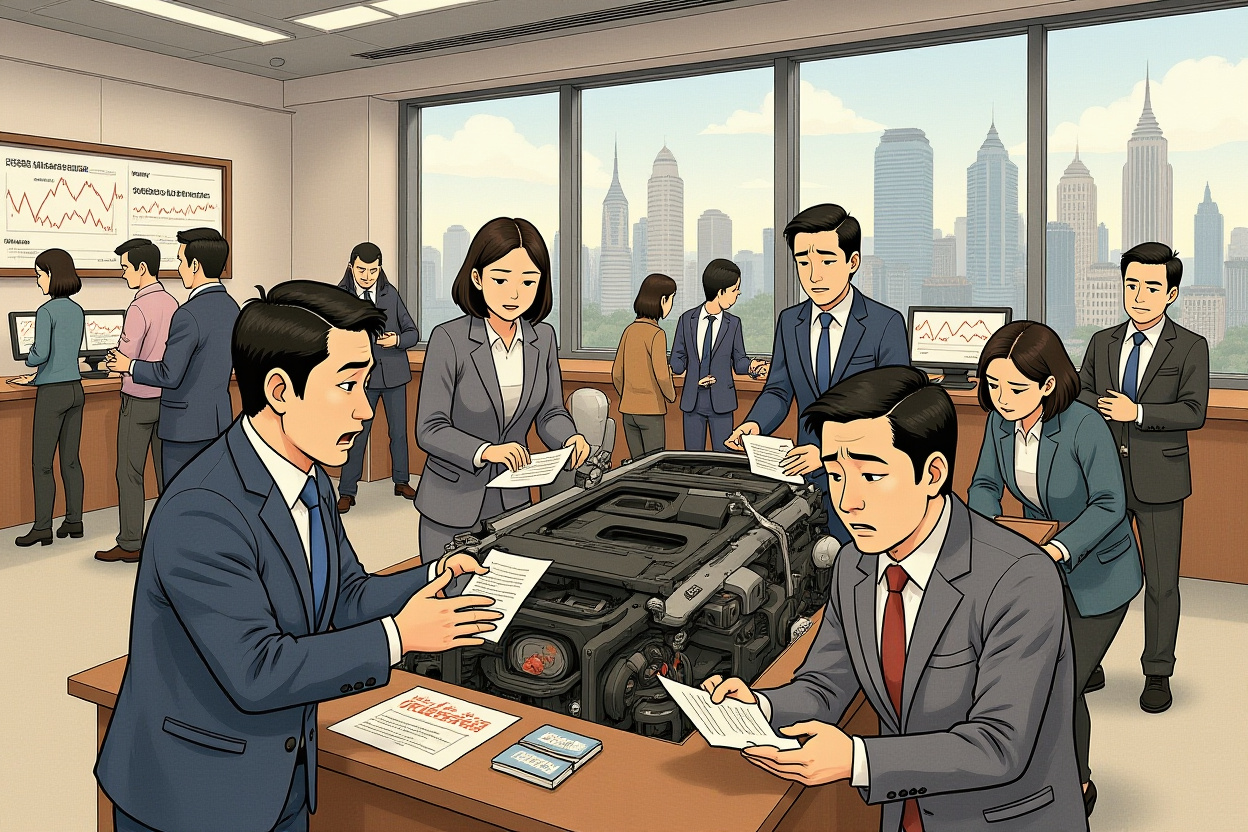
The meteoric rise and brutal fallout in China’s electric vehicle sector have left a hidden casualty: the millions of owners whose cars outlived their makers. As over 30 large automakers, from fledgling startups to once-celebrated brands, have shuttered operations since 2015, a sprawling fleet of vehicles remains on the roads without official support. These orphaned electric vehicle owners now navigate a post-apocalyptic aftermarket where repairs are DIY endeavors, parts are scavenged from salvage, and every drive is a gamble. For institutional investors and corporate executives monitoring Chinese equities, this phenomenon isn’t merely a consumer headache—it’s a stark indicator of the fragile ecosystem underpinning China’s EV revolution, with ripple effects on brand valuation, regulatory trust, and market stability. The plight of these orphaned electric vehicle owners underscores a critical lesson: in the race for innovation, exit strategies are as vital as entry plans.
Quantifying the Abandoned Fleet: A Million Vehicles in Limbo
Industry estimates suggest that bankruptcies have stranded well over a million vehicles across China, with brands like 哪吒汽车 (Neta Auto), 威马 (WM Motor), and 高合 (HiPhi) representing significant portions. Neta Auto alone sold approximately 500,000 units before its 2025 bankruptcy filing, while WM Motor moved 110,000 cars prior to its 2022 collapse. These numbers, though small compared to giants like 比亚迪 (BYD), translate into concentrated hardship for owners in urban and suburban enclaves. The scale exacerbates aftermarket voids, as low production volumes for each model—often in the tens of thousands—deter third-party suppliers from developing compatible parts. For equity analysts, this fragmentation signals inefficiencies in China’s EV supply chain, where rapid model iterations and small batch sizes amplify risks for consumers and investors alike when failures occur.
Case Studies in Collapse: From Neta to HiPhi
Examining specific failures reveals the multifaceted challenges facing orphaned electric vehicle owners. Each brand’s demise has unique contours, but common threads of broken promises and logistical nightmares weave through their stories.
Neta Auto: The Battery Warranty Debacle
Neta Auto’s bankruptcy in 2025 left 500,000 owners grappling with immediate aftershocks. Within a year, reports surfaced of severe battery degradation—vehicles with 30,000 kilometers seeing range halve—and denied warranty claims. Owners were forced to pay out-of-pocket for repairs, with battery pack fixes costing 20,000 RMB or more. Compounding this, Neta’s data centers went offline, cutting remote services and basic telematics, effectively stranding owners in analog mode. This case highlights how orphaned electric vehicle owners bear the brunt of corporate insolvency, with lifetime battery guarantees rendered meaningless. For investors, it underscores the liability risks embedded in aggressive sales tactics reliant on long-term promises.
WM Motor and HiPhi: The Parts Drought and Insurance Crisis
WM Motor’s 110,000 vehicles faced nationwide network disconnections in 2023 after unpaid service bills, while insurers promptly raised premiums or denied coverage altogether, citing an inability to source parts for claims. HiPhi, with 20,000 luxury EVs delivered, presented a different challenge: its complex designs—featuring gull-wing doors and advanced LED fronts—required specialized tools and proprietary components, making external repairs nearly impossible. These examples illustrate how orphaned electric vehicle owners confront not just financial strain but also safety hazards, as deteriorating vehicles become road risks. From a market perspective, this erodes consumer confidence in new EV brands, potentially dampening demand and affecting stock valuations for entire sectors.
The Regulatory Void: Unenforced Rules and Market Realities
China’s regulatory framework theoretically safeguards consumers, but enforcement gaps have left orphaned electric vehicle owners in the lurch. The 《汽车品牌销售管理实施办法》 (Automobile Brand Sales Management Implementation Measures) mandates that manufacturers ensure at least 10 years of spare parts supply and after-sales service post-discontinuation. However, as bankruptcies mount, this rule is often ignored, with defunct companies lacking funds or incentives to comply. The 中国银行保险监督管理委员会 (China Banking and Insurance Regulatory Commission) has noted rising complaints but offered little recourse. This regulatory shortfall not only harms consumers but also signals to investors that policy risks abound in China’s EV market. Without robust enforcement, the cycle of abandonment threatens to repeat, undermining the stability prized by institutional players in Chinese equities.
Contrast with the Fuel Vehicle Era: Stability vs. Chaos
In the燃油车时代 (fuel vehicle era), dominant players like 大众汽车 (Volkswagen) and 丰田汽车 (Toyota) operated with decades-long model cycles and massive volumes, fostering mature aftermarkets where parts were cheap and widely available. Today’s新能源时代 (new energy era) is characterized by rapid迭代 (iteration) and niche models, with core三电系统 (three-electric systems) involving complex, supplier-held technologies. This shift means that orphaned electric vehicle owners cannot rely on the organic aftermarket growth seen with combustion engines. For financial professionals, this highlights a structural vulnerability: China’s EV innovation speed outstrips its capacity for sustainable aftermarket support, a factor that must be priced into automotive stock assessments.
The Rise of Self-Repair Networks: Community Ingenuity
Faced with institutional failure, orphaned electric vehicle owners have launched grassroots自救 (self-rescue) movements, transforming adversity into opportunity. Online forums on platforms like微信 (WeChat) and百度贴吧 (Baidu Tieba) buzz with repair tutorials, part-swapping advice, and crowdsourced diagnostics. Tech-savvy owners share guides on resetting fault codes or replacing air filters, while others scour二手平台 (second-hand platforms) like闲鱼 (Xianyu) for拆车件 (salvage parts) or cannibalized test vehicles. This DIY ethos has even birthed specialized third-party repair shops—”Neta專修” (Neta Specialists) or “WM Motor專修” (WM Motor Specialists)—that cater exclusively to defunct brands, filling the void left by defunct dealerships. These communities exemplify how orphaned electric vehicle owners are mitigating risks through collective action, but they also reveal the market’s failure to provide formal solutions. For investors, this signals potential niches in aftermarket services, though regulatory uncertainty may cap growth.
Sourcing Parts: From Scavenging to Substitution
Owners have become adept at finding alternatives, identifying通用零件 (universal parts) across brands—for instance, using heating elements from其他厂商 (other manufacturers) in Neta models. When proprietary components like HiPhi’s headlights (once resold for 50,000 RMB) are unavailable, owners opt for仿制件 (imitation parts) or meticulous repairs. This resourcefulness underscores a broader trend: orphaned electric vehicle owners are driving innovation in China’s gray-market aftermarket, but it remains a patchwork solution. Equity analysts might view this as a cautionary tale for brands relying on unique designs, as post-collapse part scarcity can tarnish legacy brand equity and deter future consumers.
The Bargain Hunters: Deep Discounts and Second-Hand Markets
Paradoxically, the crisis has spawned a vibrant market for deeply discounted vehicles from bankrupt makers. Prices for new-old-stock or low-mileage used cars have plummeted: HiPhi models originally priced at 600,000 RMB now fetch 180,000-200,000 RMB, while WM Motors sell for as low as 60,000 RMB—a fraction of their launch tags. These “bargain EVs” attract risk-tolerant buyers, often younger demographics seeking premium features at budget prices. Data from二手車商 (used car dealers) indicate that HiPhi sales can hit 20 units monthly post-collapse, and极越 (JiYue) sightings have increased despite the brand’s demise. This trend reflects a perverse market efficiency, where orphaned electric vehicle owners’ misfortunes create opportunities for others. For financial professionals, it highlights consumer behavior shifts and potential undervaluation in distressed assets, though with caveats about long-term viability and part availability.
Investor Implications: Gauging Risk in EV Equities
The experiences of orphaned electric vehicle owners serve as a real-time stress test for China’s EV sector. Investors in automotive stocks must now scrutinize not just sales figures and tech specs but also aftermarket preparedness and regulatory compliance. Brands with robust service networks and scalable part commonality—like比亚迪 (BYD) or蔚来 (NIO)—may command premium valuations as safe havens. Conversely, smaller players face heightened scrutiny, as their failure could trigger liabilities that ripple through supply chains and consumer trust. The中国人民银行 (People’s Bank of China) and中国证券监督管理委员会 (China Securities Regulatory Commission) have flagged these risks in recent reports, urging better oversight. For fund managers, incorporating these factors into due diligence can mitigate exposure to the next wave of orphaned electric vehicle owners scenarios.
Forward Outlook: Towards a Mature Market Exit
The saga of orphaned electric vehicle owners is more than a consumer rights issue—it’s a pivotal moment for China’s automotive evolution. As the market consolidates, stakeholders must advocate for reforms that ensure体面的死亡 (dignified exits) for failing brands. This could involve strengthened enforcement of the 10-year spare parts rule, perhaps through escrow accounts or industry consortiums, as seen in more mature markets like the欧盟 (European Union). Additionally, encouraging aftermarket innovation via subsidies for third-part维修商 (repair shops) could buffer shocks. For international investors, these steps would signal greater market resilience, enhancing the appeal of Chinese EV equities. The call to action is clear: regulators, manufacturers, and financial actors must collaborate to protect the orphaned electric vehicle owners of today and prevent future cohorts, fostering a sustainable ecosystem where innovation doesn’t come at the cost of consumer welfare.
In summary, the plight of orphaned electric vehicle owners reveals critical fissures in China’s EV boom—from regulatory lapses to aftermarket failures. By heeding these lessons, stakeholders can drive towards a more stable and investor-friendly automotive landscape, where growth is matched by responsibility.