



The High-Speed Autopilot Failure That Went Viral
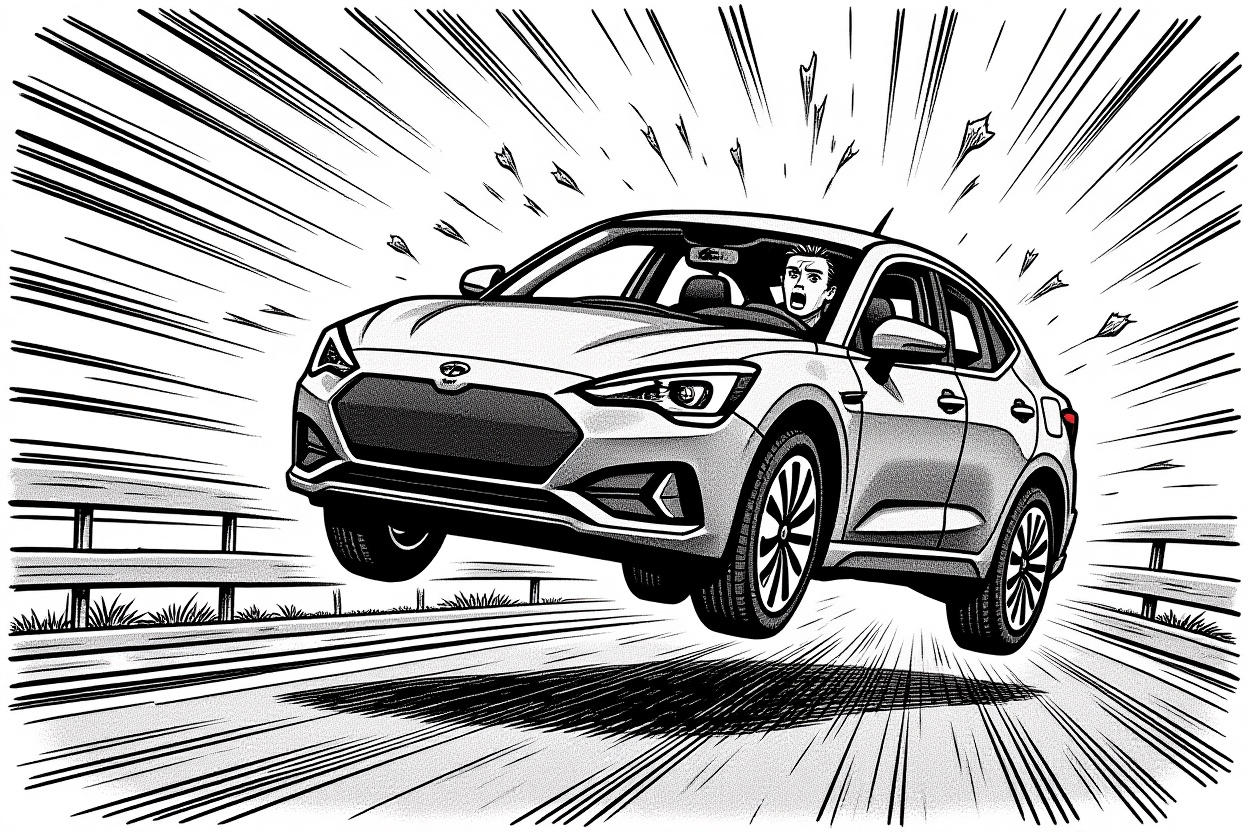
A chilling dashcam video circulated across Chinese social media on August 10th, capturing every terrifying moment when an Avatr 12 sedan’s advanced driver assistance system (ADAS) catastrophically failed during highway travel. Automotive blogger Tim Ying (影总Tim) shared footage showing the luxury electric vehicle maintaining approximately 100 km/h while inexplicably veering into a truck escape ramp instead of following the curved highway lane. The vehicle remained under Navigation Cruise Assist (NCA) control until impact despite the driver’s frantic last-second intervention, launching airborne before smashing front-first into the runoff area. Miraculously, while the front end sustained heavy damage, the cabin structure protected occupants from serious injury. This incident involving Huawei’s cutting-edge ADS technology raises urgent questions about the limitations of current autonomous systems.
Key Incident Details
- – Occurrence date: August 10, 2024
– Vehicle: Avatr 12 electric sedan
– ADAS system: Huawei ADS with 3-lidar configuration
– Speed: Approximately 100 km/h (62 mph)
– Damage: Severe front-end collision damage
Note: Video content originally published on Dafeng Hao, a self-media platform under Phoenix News, which states it only provides information storage services.
Anatomy of the Crash: Frame-by-Frame Analysis
The 42-second viral footage reveals multiple critical failures in the Avatr 12’s autonomous operation. At the 0:18 mark, the highway clearly curves left while the escape ramp continues straight ahead – a design intended for runaway trucks. Despite visible lane markings and highway geometry, the Huawei ADS-driven vehicle maintained its trajectory toward the ramp. Sensor data displayed on-screen confirmed the system remained actively engaged in NCA mode throughout the approach.
Driver Intervention Timeline
- – 0:31: Vehicle crosses solid white line into escape lane
– 0:33: Driver visibly grabs steering wheel
– 0:35: Brake lights activate
– 0:37: Front wheels leave pavement
– 0:39: Vehicle becomes airborne
This sequence demonstrates the frighteningly narrow margin for human intervention during high-speed ADAS failures. Despite the driver’s prompt reaction, physics prevented avoidance at 27.8 meters per second. The collision impact compressed the front crumple zones, shattered lighting assemblies, and deployed airbags, though the battery compartment and passenger cell remained intact – a testament to Avatr’s structural safety engineering.
Huawei ADS Technology: Capabilities and Limitations
The Avatr 12 features Huawei’s flagship ADS 2.0 system, marketed as China’s most advanced consumer autonomous driving technology. This sophisticated hardware suite includes three 96-line lidar units, six millimeter-wave radars, thirteen cameras, and twelve ultrasonic sensors, creating a 360-degree real-time perception field. Unlike camera-dependent systems, lidar provides precise depth mapping regardless of lighting conditions, theoretically enabling robust performance in complex scenarios like highway interchanges and urban navigation.
System Specifications
- – Processing power: 400 TOPS MDC computing platform
– Sensor fusion: Lidar/radar/camera data integration
– OTA updates: Remote improvement capability
– Claimed functionality: Highway NCA, city NCA, automated valet parking
However, this incident reveals significant limitations in Huawei’s perception algorithms. Escape ramps present unique challenges: their positioning adjacent to highways, unusual slope gradients, and infrequent use create edge cases that may not be adequately represented in training datasets. The system likely misclassified the ramp as a continuation of the highway due to similar pavement characteristics and absence of obstacles. This failure mode highlights how even the most advanced ADAS can be confused by uncommon road geometries. For more technical specifications, visit Huawei’s official ADS page.
Driver Monitoring Systems: The Critical Safety Net
This crash underscores why manufacturers emphasize that advanced driver assistance systems require constant human supervision. The Avatr 12 employs multiple driver monitoring features including:
- – Infrared camera-based attention tracking
– Hands-on-wheel sensors
– Auditory and haptic escalation alerts
Despite these safeguards, the narrow 4-second window between system failure and irrecoverable trajectory demonstrates why the Society of Automotive Engineers maintains that Level 2 automation requires full driver engagement. Data from the Insurance Institute for Highway Safety indicates drivers using partial automation become complacent after just 30 minutes of continuous operation, with attention wandering significantly more than during manual driving.
The Human Factor in ADAS Safety
Multiple studies confirm humans require 1-2 seconds to recognize automation failure and another 1-3 seconds to physically intervene – meaning at 100 km/h, a vehicle travels 55-110 meters before corrective action begins. This exceeds the Avatr’s 35-meter emergency braking distance. The incident exemplifies why automakers must design more effective driver engagement protocols and why regulatory bodies increasingly mandate direct driver monitoring systems for all Level 2 vehicles.
Industry Implications for Autonomous Development
This high-profile failure arrives during China’s aggressive push toward vehicle automation, with the Ministry of Industry and Information Technology targeting 50% penetration of L2/L3 vehicles by 2025. Huawei’s ADS represents China’s most ambitious attempt to surpass Western autonomous technology, making this incident particularly significant. Industry analysts highlight three critical development challenges exposed:
- – Edge case recognition: Handling rare scenarios like escape ramps
– Sensor fusion reliability: Ensuring consistent interpretation across lidar, radar, and cameras
– Failure mode management: Graceful degradation when systems reach operational limits
Recent ADAS recall data from the National Highway Traffic Safety Administration shows sensor misinterpretation accounts for 34% of incidents, second only to software glitches. As automakers expand operational design domains, comprehensive real-world validation becomes increasingly vital. Huawei and Avatr engineers will likely scrutinize this event to improve object classification algorithms and emergency maneuver protocols.
Essential Safety Protocols for ADAS Users
This harrowing incident provides critical lessons for all drivers using partial automation:
Pre-Drive Checklist
- – Verify sensor cleanliness (especially lidar windows)
– Confirm latest software updates installed
– Review known system limitations in owner’s manual
Operational Best Practices
- – Maintain hands in quarter-to-three position
– Continuously scan road ahead (not infotainment screens)
– Disable system during adverse weather or complex interchanges
– Practice manual driving weekly to maintain skills
Manufacturers emphasize that advanced driver assistance systems function as co-pilots, not replacements for attentive human operators. The Avatr collision demonstrates why drivers must remain psychologically engaged even during extended highway cruising. Regular safety training, like Tesla’s in-app tutorials or BMW’s driver academies, significantly improves intervention readiness.
Navigating the Future of Vehicle Automation
The Avatr 12 incident serves as both cautionary tale and catalyst for improvement in autonomous driving development. While Huawei’s ADS represents remarkable technological achievement, this failure highlights the persistent challenges in real-world deployment. As vehicles become increasingly automated, manufacturers must prioritize comprehensive edge case testing and transparent driver education about system limitations. For consumers, this event reinforces that no commercially available system offers full autonomy – constant vigilance remains essential. We encourage drivers to share their ADAS experiences with regulatory agencies to help shape future safety standards, and urge automakers to view such incidents not as setbacks, but as vital learning opportunities on the path toward truly safe autonomous transportation.