



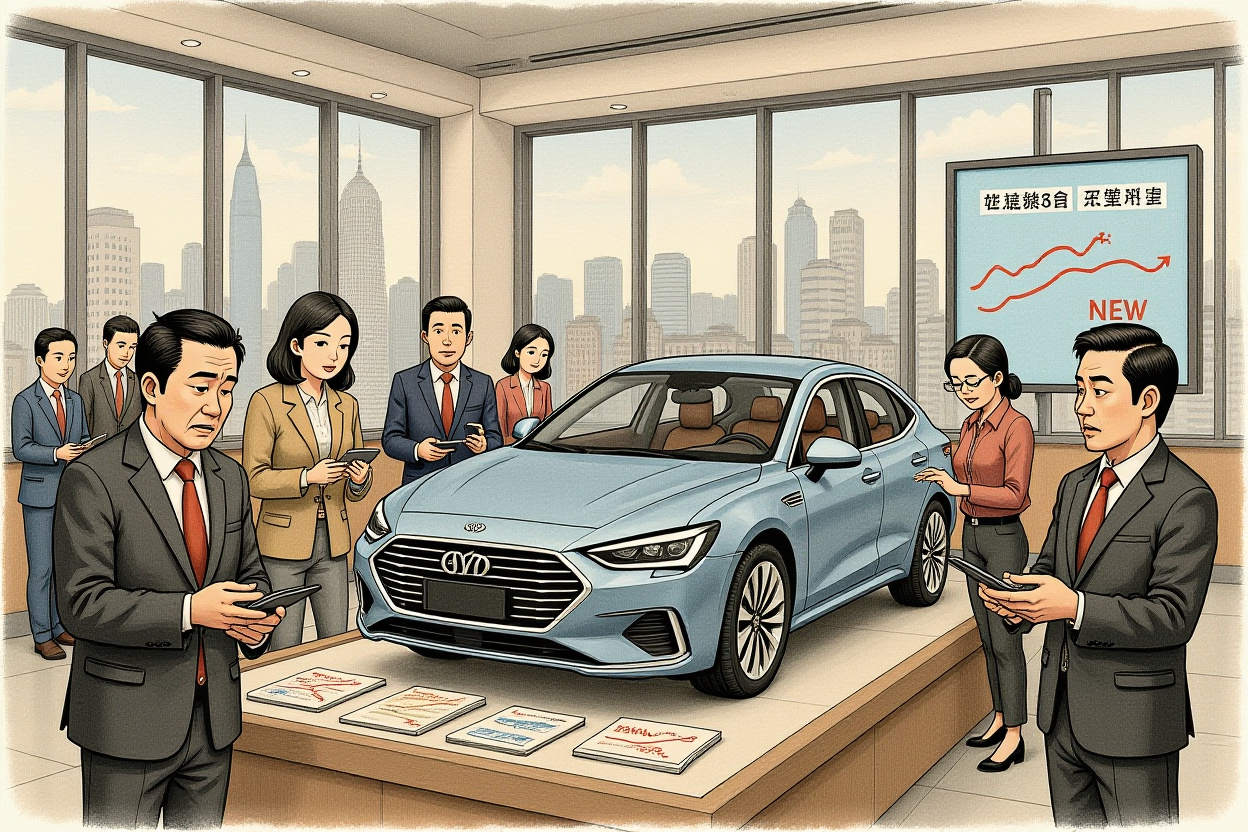
The first half of 2025 has proven challenging for China’s automotive retail sector, as leading dealership groups grapple with falling revenues and shrinking profits. Intensifying competition, uneven consumer spending recovery, and widespread price wars have created a difficult environment where selling more vehicles doesn’t necessarily translate to higher income or improved margins. Against this backdrop, new energy vehicles have emerged as a vital source of growth and differentiation.
Market Pressures Squeeze Dealer Performance
Data from the China Automobile Dealers Association (CADA) reveals a troubling picture: only 30.3% of dealers met their sales targets in H1 2025, while 52.6% operated at a loss. Perhaps most strikingly, 74.4% of dealers experienced price inversion—selling vehicles below invoice price—highlighting the extreme pressure to prioritize volume over profitability.
Volume Over Value Strategy Backfires
The widespread use of discounting and promotional campaigns has led to an industry-wide phenomenon where unit sales may grow, but revenue and net income continue to decline. This ‘volume over value’ approach has particularly impacted premium and mass-market brands alike, as manufacturers and dealers compete for a smaller pool of willing buyers.
Leading Dealer Groups Report Sharp Declines
Zhongsheng Holdings (00881.HK), one of China’s largest automotive retail groups, reported a 6.2% year-on-year decrease in revenue, totaling RMB 77.322 billion, while net profit attributable to shareholders plummeted 36% to RMB 1.011 billion. The group’s new vehicle sales declined by 1.7%, with average selling prices continuing to fall since 2024.
Yongda Auto and Meidong Auto Also Struggle
Yongda Auto (03669.HK) saw revenue drop 12.8% to RMB 27.072 billion and recorded a net loss of RMB 3.33 billion, a dramatic reversal from a profit of RMB 110 million in the same period last year. Similarly, Meidong Auto (01268.HK) reported a 4.9% decline in revenue and a net loss of RMB 815 million, nearly 30 times larger than its loss in H1 2024.
New Energy Vehicles Become a Critical Growth Channel
Amid widespread challenges, new energy vehicles have become a central focus for dealers looking to stabilize and grow their businesses. Brands like AITO, Li Auto, NIO, and BYD are increasingly featured in dealer portfolios, attracting younger, tech-savvy consumers and helping offset declines in traditional fuel vehicle sales.
Dealers Invest in NEV Networks and Services
Yongda Auto, for example, reported a 49% increase in independent new energy vehicle sales, reaching 10,312 units. The group opened seven new NEV-dedicated showrooms, including five Harmony Smart Driving (鸿蒙智行) stores, and secured authorization for 30 NEV brands. Zhongsheng Holdings also highlighted the contribution of AITO, which delivered 11,000 vehicles in the first half and helped improve overall new car gross margin by 0.6 percentage points.
After-Sales and Service Remain Profit Stabilizers
While new car sales have struggled, the after-sales segment continues to serve as a reliable profit center for major dealers. Servicing, maintenance, and parts sales provide steadier income and higher margins, insulating retailers from the volatility of vehicle sales.
NEV Servicing Gains Traction
Notably, servicing for new energy vehicles is becoming an increasingly important part of the aftermarket business. Yongda reported that NEV maintenance revenue grew 75.8% year-on-year to RMB 216 million, with average per-vehicle output value rising 16.5% to RMB 3,447—significantly outperforming the industry average.
Outlook: Continued Challenges and Strategic Shifts
Most major dealer groups expect competitive pressures to persist throughout the remainder of 2025. Price wars are likely to continue, and manufacturers will keep prioritizing market share over short-term profitability. However, dealers that successfully adapt to the electric transition and strengthen their customer service capabilities are best positioned to navigate the turbulence.
Emphasis on Customer Retention and Loyalty
As the market shifts from new car sales to a retention-focused model, leading dealers like Zhongsheng are emphasizing the importance of a large and loyal customer base. Higher retention rates translate to more stable after-sales revenue and greater cross-selling opportunities for insurance, financing, and accessories.
The automotive retail sector in China is undergoing its most significant transformation in decades. Traditional dealership models are being upended by electrification, digital retail, and changing consumer behaviors. While current financial results reflect a period of difficulty, dealers that embrace new energy vehicles, invest in digital tools, and prioritize customer experience are likely to emerge stronger. For industry observers, investors, and consumers, the message is clear: the future of auto retail is electric, connected, and customer-centric.