



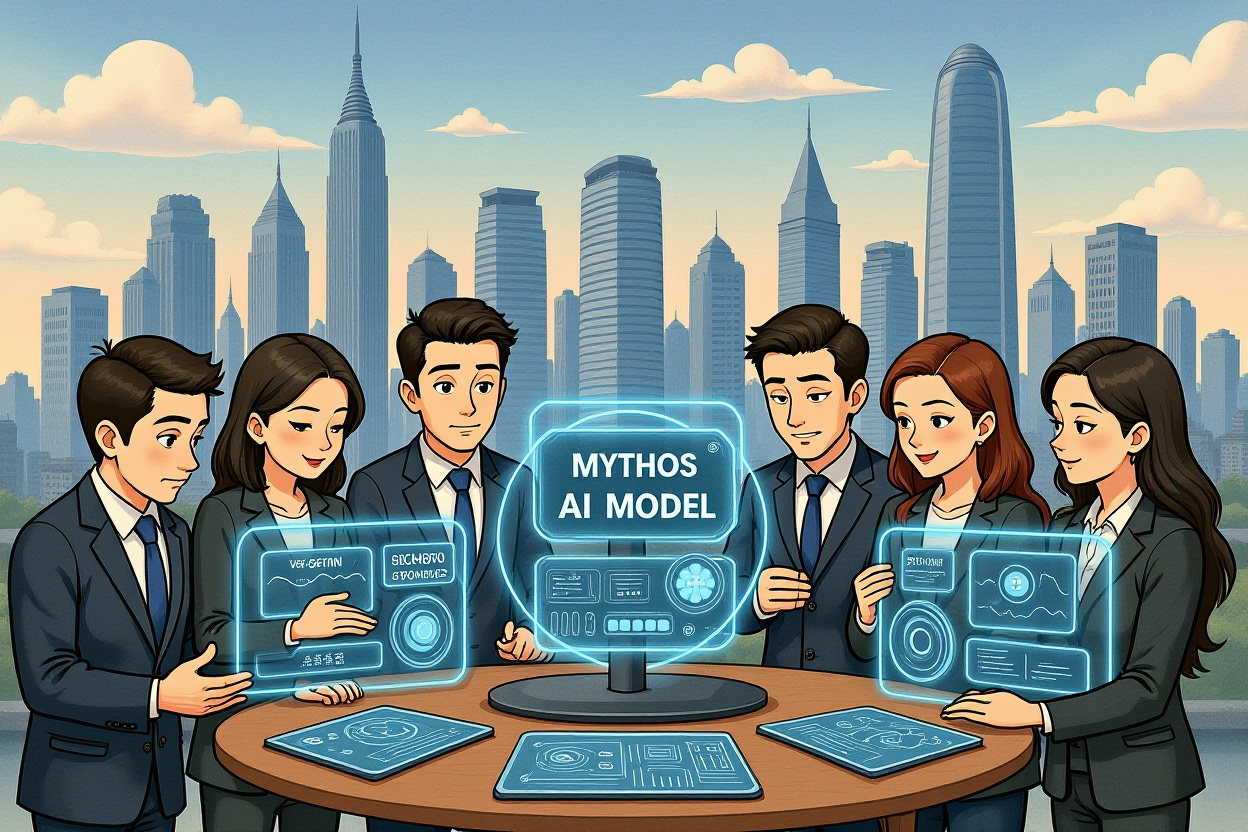
Executive Summary: Key Takeaways on Anthropic’s Mythos AI Model
In a strategic move that underscores the escalating AI arms race in cybersecurity, Anthropic has introduced the Mythos AI model, a tool so potent it remains off-limits to the public. Here are the critical insights for investors and professionals monitoring the Chinese equity and global tech landscapes:
– Targeted Defense Initiative: The Mythos AI model is being previewed exclusively to approximately 50 critical infrastructure entities, including tech titans like Amazon, Microsoft, Apple, and Google, aiming to preemptively harden systems against AI-driven cyber threats.
– Unprecedented Efficiency Anthropic claims the Mythos AI model operates with 10 times the efficiency of prior AI systems in identifying software and hardware vulnerabilities, significantly lowering the cost and time of discovery.
– Controlled Access Due to Power: Due to its formidable capabilities in both finding and exploiting vulnerabilities, Anthropic has no current plans for a public release, highlighting the dual-use dilemma and inherent risks of advanced AI.
– Market Implications: This development signals a pivot in AI investment themes from general-purpose models to specialized, high-stakes security applications, with potential ripple effects across cybersecurity stocks, regulatory frameworks, and infrastructure spending globally.
– Forward-Looking Warning: Industry experts, including Anthropic’s Logan Graham (洛根·格雷厄姆), caution that the lag between vulnerability discovery and exploitation is vanishing, urging preparedness for a new era of instantaneous cyber threats.
The AI Cybersecurity Arms Race Enters a New Phase
The battlefield of artificial intelligence is rapidly shifting. No longer confined to conversational agents or content creation, the forefront of competition now extends deep into the realm of cybersecurity defense and offense. This week, AI startup Anthropic made a seismic announcement that could redefine how critical infrastructure is protected. The introduction of the Mythos AI model marks a deliberate, calculated move to harness AI’s power for defensive purposes before adversarial actors can wield similar capabilities. For global investors, particularly those with exposure to Chinese tech equities and international cybersecurity markets, this evolution demands close attention. The Mythos AI model isn’t just another product launch; it’s a bellwether for where capital and innovation are flowing in the AI sector.
The narrative around AI has been dominated by large language models (LLMs) like GPT-4 or Anthropic’s own Claude. However, as these systems grow more sophisticated, their potential for misuse in cyber attacks has escalated, prompting a defensive countermeasure. Anthropic’s strategy with the Mythos AI model is preemptive: deploy cutting-edge AI to find and patch vulnerabilities faster than malicious actors can exploit them. This ‘fight fast with fast’ approach, as some analysts term it, underscores a critical trend. The convergence of AI and cybersecurity is creating both immense risks and opportunities, influencing investment theses from Silicon Valley to Shenzhen. Understanding the implications of the Mythos AI model is essential for any professional navigating today’s volatile markets.
Why Anthropic is Restricting Access to Mythos
Anthropic’s decision to limit the Mythos AI model to a select group of companies is rooted in a profound caution. According to company statements, the model’s proficiency in identifying and, critically, exploiting software flaws is so advanced that unrestricted release could pose significant security threats. Logan Graham (洛根·格雷厄姆), head of the Frontier Red Team at Anthropic, articulated this concern clearly. He noted that while the Mythos AI model is a powerful defensive tool, its capabilities mirror those that could be used offensively, making responsible deployment paramount. This controlled preview, dubbed Project Glasswing, is framed as a defensive bulwark. By partnering with key infrastructure guardians first, Anthropic aims to fortify systems before equivalent AI tools potentially fall into less scrupulous hands.
This approach reflects a broader industry reckoning with AI’s dual-use nature. As AI systems approach or surpass human-level performance in tasks like code analysis, the line between defender and attacker blurs. For investors, this signals a market where AI safety and security features become premium differentiators. Companies that can demonstrate responsible AI governance, as Anthropic is attempting with the Mythos AI model, may garner trust and regulatory favor, impacting valuations in the competitive AI landscape. The move also hints at future business models where access to the most powerful AI is gated, creating exclusive ecosystems around security-critical applications.
Decoding the 10x Efficiency Claim of the Mythos AI Model
At the heart of Anthropic’s announcement is a staggering performance metric: the Mythos AI model is approximately ten times more efficient than previous AI models in the cost-effective discovery of vulnerabilities. But what does this mean in practical terms? Efficiency here is measured by the computational and temporal resources required to identify a significant software or hardware flaw. For context, Anthropic’s earlier model, Claude Opus 4.6, demonstrated remarkable prowess by uncovering more high-risk vulnerabilities in the Firefox browser over two weeks than are typically reported globally in two months. The Mythos AI model builds on this, optimizing the process to achieve results with a fraction of the effort.
This leap in efficiency isn’t merely incremental; it’s transformative for cybersecurity operations. Traditionally, vulnerability discovery relies on a combination of automated scanners and human expertise, a time-consuming and expensive endeavor. The Mythos AI model, by contrast, can rapidly analyze vast codebases, simulate attack vectors, and pinpoint weaknesses that might elude conventional methods. For the 50 preview partners, this translates to faster patching cycles, reduced exposure windows, and potentially lower cybersecurity insurance premiums. From an investment perspective, such efficiency gains can disrupt the cybersecurity market, favoring firms that integrate advanced AI into their threat detection suites and putting pressure on legacy providers.
Benchmarking Against Predecessors and Human Capability
To appreciate the advance embodied by the Mythos AI model, one must look at the trajectory of AI in cybersecurity. Industry research, including studies from institutions like Stanford University, has shown AI systems steadily closing the gap with human experts in vulnerability discovery. However, the true game-changer is the compression of the timeline from discovery to exploitation. AI can not only find flaws but also rapidly develop proof-of-concept exploits, a capability that the Mythos AI model reportedly excels at. Logan Graham (洛根·格雷厄姆) emphasized this point, warning that the historical lag between finding a bug and weaponizing it is dissolving.
Anthropic’s internal benchmarks suggest that the Mythos AI model operates on a different curve. Where previous models might require extensive fine-tuning and computational hours to locate critical vulnerabilities, Mythos achieves similar outcomes with dramatically reduced input. This efficiency is quantified in terms of ‘cost per vulnerability found,’ a metric crucial for organizations managing sprawling digital infrastructure. For example, if a traditional AI model costs $X to find one high-severity bug, the Mythos AI model accomplishes the same for $X/10. This economic advantage could accelerate the adoption of AI-driven security tools, particularly among resource-constrained sectors, and drive M&A activity as larger tech firms seek to acquire similar capabilities.
The Dual-Use Dilemma: When Defense Tools Could Become Offensive Weapons
The development of the Mythos AI model thrusts the dual-use dilemma of artificial intelligence into sharp relief. In cybersecurity, the same tool that patches vulnerabilities can, with slight modification, be used to exploit them. Anthropic’s cautious stance—withholding public release—acknowledges this inherent risk. As AI capabilities advance, the barrier to launching sophisticated cyber attacks lowers, potentially enabling a broader range of actors, from state-sponsored groups to criminal syndicates. This reality has profound implications for global security and, by extension, financial markets. Investors must consider how the proliferation of such technologies might affect sectors reliant on digital stability, from finance and healthcare to energy and telecommunications.
Research corroborates this concern. Studies, including those from Stanford University, have demonstrated AI’s growing proficiency in exploiting real-world network vulnerabilities. The Mythos AI model, while designed for defense, exemplifies how the underlying technology can be a double-edged sword. For Chinese equity markets, where tech firms are deeply integrated into global supply chains and digital infrastructure, the rise of AI-powered cyber tools necessitates a reassessment of risk profiles. Companies with robust cybersecurity postures and investments in AI defense may be better positioned to withstand emerging threats, potentially becoming attractive holdings. Conversely, firms with exposed systems could face increased operational and reputational risks, influencing stock performance.
Regulatory and Ethical Crossroads
The restricted deployment of the Mythos AI model also highlights the regulatory vacuum surrounding advanced AI. Governments worldwide are grappling with how to govern such powerful technologies without stifling innovation. In China, regulatory bodies like the Cyberspace Administration of China (CAC) have been proactive in setting standards for AI security and data protection. Anthropic’s approach may prompt similar discussions in other jurisdictions about mandatory safety protocols for high-risk AI models. For institutional investors, tracking these regulatory developments is crucial, as they can dictate market access, compliance costs, and competitive dynamics.
Ethically, the concentration of powerful AI like the Mythos AI model in the hands of a few corporations raises questions about equity and access. Will smaller nations or companies be left vulnerable if they cannot afford or access such defensive tools? This tension could spur public-private partnerships or international cooperation frameworks, creating investment opportunities in firms that facilitate secure AI sharing or governance platforms. The narrative around the Mythos AI model thus extends beyond technology into geopolitics and ethics, factors that increasingly influence capital flows in today’s interconnected markets.
Investment Implications: Navigating the New AI Cybersecurity Landscape
For fund managers and corporate executives, the unveiling of the Mythos AI model serves as a clarion call to reevaluate portfolios and strategies. The AI revolution is entering a more specialized, security-intensive phase. Investment themes should now account for the growing demand for AI-driven defense solutions. Publicly traded cybersecurity firms that are developing or integrating similar AI capabilities may see increased investor interest. Conversely, companies that are slow to adapt their security infrastructure could be perceived as higher risk, especially in sectors like cloud computing, IoT, and critical infrastructure.
In the context of Chinese equities, this trend intersects with national priorities. China’s focus on technological self-reliance and cybersecurity, as outlined in initiatives like the Cybersecurity Law and the New Generation Artificial Intelligence Development Plan, means domestic AI and security firms could experience tailwinds. Companies such as Huawei (华为), Tencent (腾讯), and Alibaba Cloud (阿里云) have been investing heavily in AI research and security. The emergence of tools like the Mythos AI model could accelerate competitive pressures, driving further R&D spending and potential collaborations or rivalries with Western firms. Investors should monitor earnings calls and regulatory filings for mentions of AI security investments and partnership announcements.
Sector-Specific Opportunities and Risks
– Cybersecurity Software Providers: Firms offering AI-enhanced vulnerability management, threat intelligence, and incident response platforms stand to benefit. Look for companies with strong patents in AI for security and partnerships with cloud providers.
– Critical Infrastructure Operators: Entities in energy, finance, and telecommunications may need to increase CAPEX on cybersecurity, affecting their financials. However, those that proactively adopt advanced tools like the Mythos AI model could achieve cost savings and resilience premiums.
– AI Chip and Hardware Manufacturers: The computational demands of models like Mythos fuel demand for high-performance semiconductors. Companies in this supply chain, from NVIDIA to specialized Chinese chip designers, could see sustained growth.
– Insurance and Risk Management: The evolving threat landscape impacts cyber insurance models. Insurers that leverage AI for risk assessment may gain an edge, while premiums could rise for sectors deemed vulnerable.
The Mythos AI model, by setting a new benchmark, effectively raises the bar for the entire industry. As Logan Graham (洛根·格雷厄姆) warned, other vendors will likely develop comparable capabilities within years. This impending proliferation means that first-mover advantages may be temporary, but the overall market for AI cybersecurity tools is poised for expansion. Investors should diversify across the value chain, from pure-play security software to enabling hardware and services.
Strategic Preparedness for a World Without Vulnerability Lag
The most profound insight from the Mythos AI model saga is the urgent need for strategic preparedness. Graham’s warning that we must prepare for a world where vulnerability discovery and exploitation occur nearly simultaneously is not speculative; it’s a logical endpoint of current trends. For business leaders and investors, this translates into actionable steps. Organizations should audit their cybersecurity postures, investing in AI-augmented defense systems and fostering cross-industry information sharing. From an investment standpoint, allocating capital to firms that are building resilient, adaptive security architectures is prudent.
Furthermore, engagement with regulatory developments is essential. As governments craft rules for AI safety, proactive dialogue can shape frameworks that balance innovation with security. For those involved in Chinese markets, understanding the directives from bodies like the Ministry of Industry and Information Technology (MIIT) regarding AI security standards will be key. The Mythos AI model, in its restricted glory, serves as a case study in responsible innovation under uncertainty. It challenges the market to think beyond short-term gains to long-term stability.
Call to Action for Global Investors and Executives
The announcement of the Mythos AI model is a pivotal moment in the convergence of AI and cybersecurity. It underscores a shift from theoretical risk to tangible, high-stakes application. For sophisticated market participants, the call to action is clear: deepen your expertise in AI cybersecurity trends, reassess exposure to sectors based on their digital resilience, and stay abreast of regulatory shifts that could alter competitive landscapes. Consider increasing allocations to ETFs or stocks focused on cybersecurity and AI infrastructure, particularly those with a global footprint that includes partnerships in key regions like Asia.
Engage with management teams on their AI security strategies during investor meetings. For corporate executives, prioritize partnerships with AI security innovators and invest in upskilling teams to handle advanced threats. The era of passive cybersecurity is over; active, AI-powered defense is now a boardroom imperative. The Mythos AI model may be too powerful for public release today, but its implications are already reverberating through markets worldwide. By acting now, investors and leaders can position themselves not just to defend against coming threats, but to thrive in the new landscape they herald.