



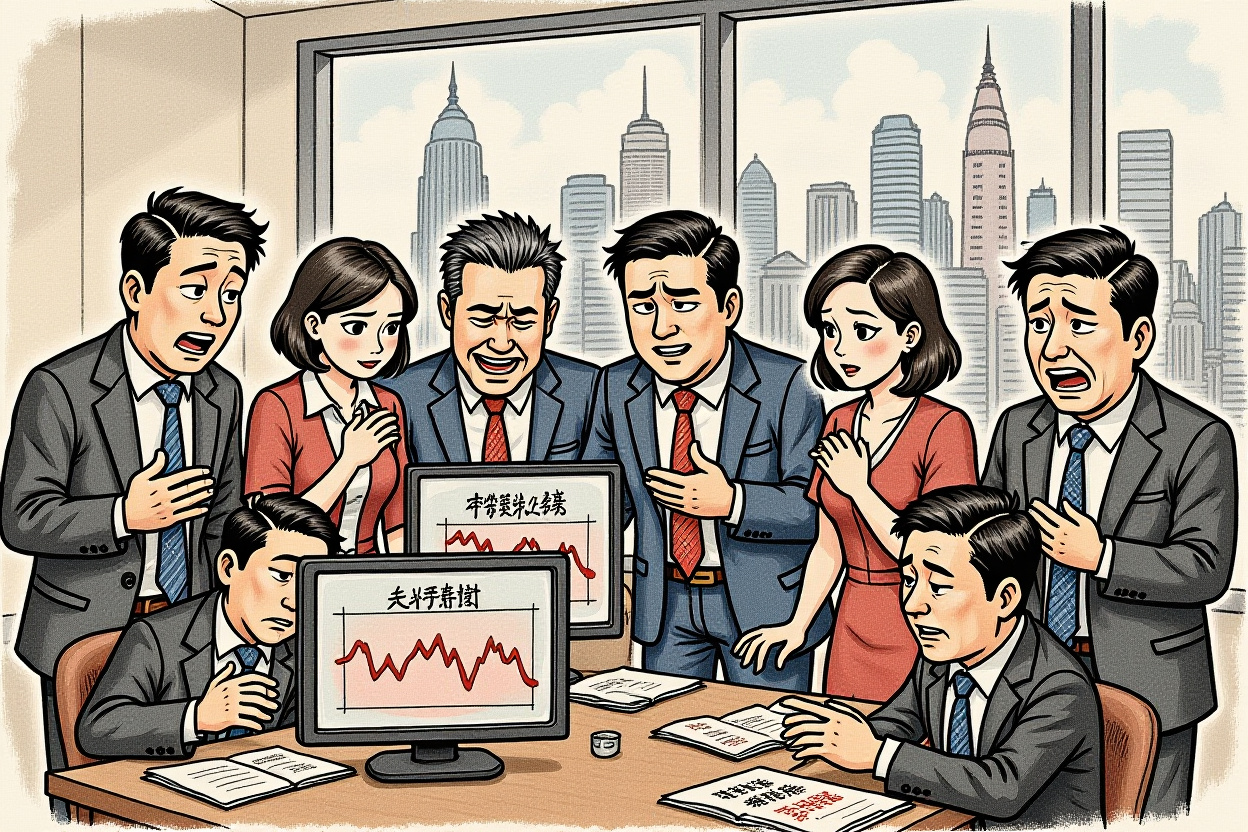
Executive Summary
– The recent overseas trip by Aier Eye Hospital’s (爱尔眼科) Dean Pan has sparked significant controversy, highlighting acute corporate governance vulnerabilities within one of China’s leading healthcare providers.
– Immediate market repercussions included a sharp decline in Aier’s stock price, shedding light on investor sensitivity to executive misconduct and reputational damage in the Chinese equity markets.
– This incident serves as a critical case study for institutional investors on the importance of integrating Environmental, Social, and Governance (ESG) factors, particularly governance oversight, into their due diligence processes for Chinese companies.
– Regulatory scrutiny from bodies like the China Securities Regulatory Commission (CSRC 中国证监会) is expected to intensify, potentially leading to stricter enforcement actions and reforms in corporate disclosure requirements.
– The Aier Eye Hospital overseas trip incident underscores a broader trend in China’s capital markets, where individual executive actions can rapidly translate into systemic financial risks, demanding enhanced risk management strategies from global investors.
A Scandal Erupts: The Overseas Trip That Rocked a Healthcare Giant
The foundation of investor trust in any publicly traded company is built on the integrity of its leadership. When that trust is breached, the financial consequences can be immediate and severe. This was starkly demonstrated in recent weeks as news broke regarding an overseas trip undertaken by Aier Eye Hospital’s Dean Pan (潘院长), an event that has been widely criticized in domestic media as a severe lapse in judgment and propriety. The Aier Eye Hospital overseas trip incident rapidly evolved from a personal misstep into a full-blown corporate governance crisis, sending shockwaves through the healthcare sector and rattling institutional investors who have heavily backed China’s private medical services growth story. For a company of Aier’s stature—a bellwether in the Shenzhen Stock Exchange (深圳证券交易所) and a component of several major indices—such an episode forces a fundamental reassessment of operational oversight and risk exposure.
Timeline and Nature of the Controversy
While specific details of Dean Pan’s itinerary remain partially obscured, reports from outlets like Phoenix Net (凤凰网) suggest the trip involved activities or associations perceived as conflicting with his professional duties and the company’s ethical standards. The narrative, often summarized by the pointed phrase “losing face,” implies a disregard for corporate and social responsibilities expected of a high-profile executive in China’s tightly scrutinized business environment. The lack of immediate, transparent communication from Aier Eye Hospital’s management exacerbated the situation, allowing speculation to fuel market anxiety. This sequence of events—from the trip’s occurrence to the delayed corporate response—perfectly encapsulates the governance gaps that can plague even the most successful Chinese enterprises during overseas expansions or executive travels.
Immediate Market Reaction and Shareholder Fallout</h3
The financial markets reacted with notable speed. Aier Eye Hospital's stock (SZSE: 300015) experienced heightened volatility, with sell-offs intensifying as the story gained traction on social media and financial news platforms. Analyst reports quickly revised short-term price targets, citing increased reputational risk premiums. This market response serves as a clear indicator: in today's digitally connected world, an executive's personal conduct is inextricably linked to corporate valuation. The Aier Eye Hospital overseas trip incident thus became a liquidity event, testing the conviction of long-term institutional holders and providing a stark reminder of the event-driven risks inherent in emerging market equities.
Dissecting Corporate Governance at Aier Eye Hospital
To understand the full impact of the Aier Eye Hospital overseas trip incident, one must examine the underlying governance structures at the company. Aier Eye Hospital, like many rapidly growing Chinese firms, has expanded its operational footprint dramatically, both domestically and internationally. However, this growth has not always been matched by proportionate strengthening of internal controls and supervisory mechanisms. The incident involving Dean Pan suggests potential weaknesses in the chain of command, approval processes for executive travel, and the board’s ability to monitor senior management conduct.
Historical Context and Board Oversight</h3
A review of Aier's recent history reveals prior, though less sensational, governance questions. These have included related-party transaction disclosures and the alignment of minority shareholder interests with those of the controlling stakeholders. The board of directors, chaired by founder Chen Bang (陈邦), is now under the microscope for its role in overseeing executive behavior. Key questions for investors include: Did the board have clear policies regarding executive travel and conflict-of-interest declarations? Was there a failure in the risk management committee's mandate? The Aier Eye Hospital overseas trip incident forces these governance frameworks from the background into the forefront of investment analysis.
The Role of Independent Directors and Audit Committees
In theory, independent directors and audit committees serve as critical checks on management. In practice, their effectiveness in Chinese companies can vary. For Aier, the effectiveness of these governance bodies in preempting or managing this crisis will be a key area for shareholder engagement. Institutional investors, particularly foreign funds, are likely to increase pressure for greater board independence and more robust ethical compliance programs. This incident may accelerate calls for adopting international governance standards, even as the company operates within China’s unique regulatory landscape.
Financial and Investment Implications
Beyond the headlines, the Aier Eye Hospital overseas trip incident has concrete financial ramifications. For fund managers and analysts covering the Chinese healthcare sector, this event necessitates a recalibration of risk models and valuation assumptions.
Impact on Valuation Metrics and Analyst Sentiment
– Stock Performance: Following the news, Aier’s price-to-earnings (P/E) ratio contracted relative to sector peers, as the market priced in higher uncertainty and potential regulatory costs.
– Earnings Forecast Revisions: Several brokerages have issued notes cautioning about near-term headwinds, including possible disruptions to management focus, increased legal and public relations expenses, and a potential slowdown in patient acquisition due to reputational harm.
– Credit and Liquidity Concerns: While Aier maintains a strong balance sheet, bondholders and credit analysts are monitoring for any impact on the company’s cost of capital or access to financing, especially for its ambitious expansion plans.
The incident underscores a critical lesson: non-financial risks, particularly those tied to governance and reputation, can materially affect financial performance and investor returns. The Aier Eye Hospital overseas trip incident is a textbook case of how ESG factors transition from abstract concepts to tangible line items on an income statement.
Regulatory Repercussions and Compliance Costs
The China Securities Regulatory Commission (CSRC 中国证监会) and the Shenzhen Stock Exchange (深圳证券交易所) maintain strict rules on information disclosure and corporate conduct. While no formal investigation has been announced at the time of writing, the scandal increases the likelihood of regulatory inquiries. Potential outcomes include:
– Mandatory corrections or clarifications via public announcements on the official designated disclosure media.
– Fines or sanctions against the company or individual executives for failing to disclose material information in a timely manner.
– Increased scrutiny in future regulatory approvals, such as for mergers and acquisitions or fundraising activities.
These actions would directly increase compliance costs and administrative burdens, further weighing on profitability.
Broader Market Context and Sector-Wide Lessons</h2
The Aier Eye Hospital overseas trip incident does not exist in a vacuum. It reflects broader tensions within China's corporate ecosystem, where breakneck growth can sometimes outpace the development of robust ethical and governance infrastructures. This is particularly pertinent in the healthcare sector, which operates under intense public scrutiny due to its social impact.
Parallels in Chinese Corporate History</h3
Similar governance failures have plagued other Chinese giants. For instance, the scandal surrounding Kangmei Pharmaceutical's (康美药业) financial fraud highlighted catastrophic internal control failures. While the Aier case is different in nature—centered on executive conduct rather than accounting fraud—the market's punitive response follows a familiar pattern. Investors are increasingly applying a "governance discount" to companies perceived as having weak oversight, a trend that is reshaping capital allocation across Chinese equities.
Implications for International Investor Sentiment
Similar governance failures have plagued other Chinese giants. For instance, the scandal surrounding Kangmei Pharmaceutical's (康美药业) financial fraud highlighted catastrophic internal control failures. While the Aier case is different in nature—centered on executive conduct rather than accounting fraud—the market's punitive response follows a familiar pattern. Investors are increasingly applying a "governance discount" to companies perceived as having weak oversight, a trend that is reshaping capital allocation across Chinese equities.
Implications for International Investor Sentiment
For global institutional investors, such incidents reinforce the perceived complexity and risk of investing in China. They highlight the importance of on-the-ground due diligence, active engagement with management, and a deep understanding of cultural and regulatory nuances. The Aier Eye Hospital overseas trip incident may lead some investors to tighten their ESG screening criteria or increase their weighting of governance factors in stock selection models for Chinese healthcare and consumer-facing companies.
Strategies for Investors Navigating Governance Risks</h2
In light of the Aier Eye Hospital overseas trip incident, sophisticated investors must refine their approaches to identify and mitigate similar risks in their portfolios. Passive ownership is no longer sufficient; active stewardship is paramount.
Enhanced Due Diligence and Active Ownership
– Governance Audits: Investors should conduct thorough reviews of board structures, executive compensation plans, and internal control systems before investing. Questions about executive travel policies and ethical training programs may now become standard.
– Engagement Channels: Establishing direct communication lines with independent directors and company secretaries can provide early warnings of potential issues. The goal is to move beyond periodic earnings calls to substantive dialogues on risk management.
– Proxy Voting and Shareholder Resolutions: Using voting power to support proposals that strengthen board accountability and transparency is a direct way to influence corporate behavior.
Integrating ESG into Core Investment Analysis
The Aier Eye Hospital overseas trip incident is a potent reminder that ESG, especially the “G,” is a financial imperative. Investors should:
– Utilize specialized ESG ratings and research from providers like MSCI or Sustainalytics, while also conducting independent verification.
– Monitor social media and local news sources for early signs of reputational issues, as these often precede official disclosures.
– Consider the stability and track record of the founding team and key executives as a critical factor in long-term investment theses.