



Executive Summary
This article delves into the burgeoning trend of AI writers in China’s online literature market, examining their impact on creativity, earnings, and industry dynamics. Key takeaways include:
– AI writers can generate content at unprecedented speeds, with some individuals reportedly earning over $1,000 monthly, but this AI-generated content often lacks emotional depth and originality, raising concerns about quality.
– Major platforms like Tomato Novel (番茄小说) and Jinjiang Literature City (晋江文学城) are implementing strict policies to regulate AI-assisted writing, balancing innovation with the preservation of human creativity.
– Industry experts, including authors and scholars, argue that AI cannot replicate the ‘human touch’ essential for compelling storytelling, emphasizing the irreplaceable role of human experience and intuition.
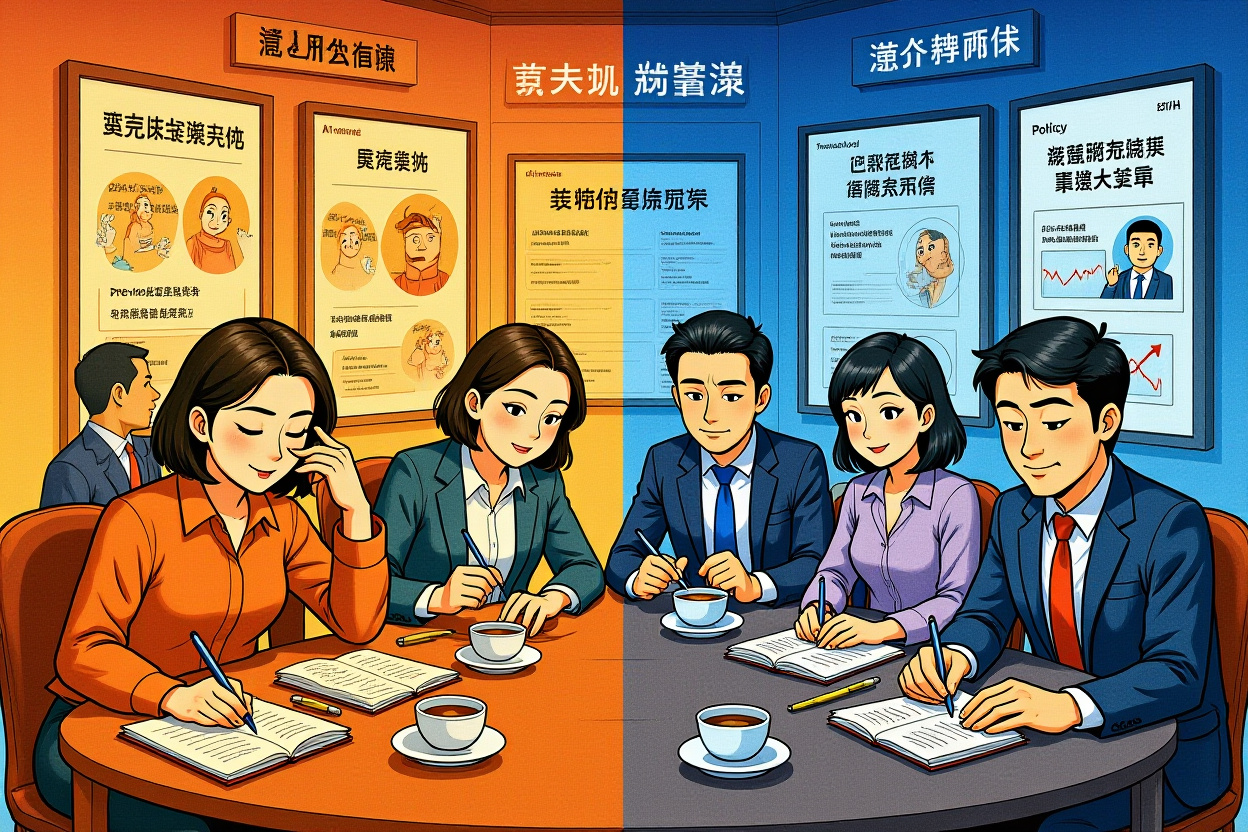
– The future of online literature may see a bifurcation between mass-produced AI content and human-authored works, with implications for new writers and market competition.
– As AI technology evolves, stakeholders must navigate ethical and practical challenges to ensure that AI-generated content enhances rather than diminishes literary value.
The Rise of AI Writers in China’s Online Literature Scene
In the fast-paced world of Chinese online literature, a silent revolution is underway. AI writers, powered by advanced large language models, are entering the fray, promising rapid content creation and lucrative earnings. Posts on social media platforms boast titles like ’28-year-old AI writer, how to earn over ten thousand monthly’ and ‘How to write a million-word novel in less than a day using AI,’ garnering thousands of likes and comments. This trend highlights the growing fascination with AI-generated content, but beneath the surface lies a critical question: can machines truly replicate the human touch that defines great literature?
The allure is undeniable. For aspiring writers, AI tools offer a shortcut to productivity, potentially bypassing years of honing craft. However, as online literature author Wei Ying (魏颖), who started writing part-time in college, notes, many tutorials are mere clickbait. She emphasizes that successful writing requires originality and a pursuit of quality, not just volume. This tension between efficiency and artistry sets the stage for a deeper exploration of AI’s role in creative industries.
Efficiency vs. Quality: The AI Advantage in Speed
AI’s primary strength lies in its ability to churn out text at speeds unimaginable to human writers. Mao Zhihui (毛志慧), Vice Chairman of the Jiangxi Online Writers Association, has been writing since 2014, amassing over 16 million words. He recalls that in the early days, producing a few thousand words daily was an achievement, but now, many authors push beyond 10,000 to 20,000 words. Yet, even these feats pale before AI’s capabilities. Mao observes that AI can generate tens of thousands of words in minutes, enabling what he calls ‘industrialized production.’ This efficiency is driven by generative AI models that have rapidly evolved, leading to platforms like Tomato Novel experiencing a surge in new book submissions, with daily首秀 (debut) numbers skyrocketing from hundreds to over 5,000 in a month.
Entrepreneurs are capitalizing on this. Tang Aiping (唐爱平), an internet technology veteran, developed ‘Tang Ku’ (唐库), an automated novel-generation platform that claims to produce 5 million words in 48 hours. Users input core settings, and the platform handles everything from world-building to chapter output. With over 6,000 authors using it, Tang Ku exemplifies the commercial potential of AI-generated content. However, as editors like Qiao Huan (乔欢) note, this influx has led to a flood of submissions, with 20-30% showing signs of AI polishing, ranging from short stories to lengthy works.
Market Response: Platform Policies and Detection Mechanisms
Online literature platforms are reacting swiftly to the rise of AI writers. Tomato Novel, for instance, issued a公告 (announcement) earlier this year, addressing滥用 (abuse) of AI for bulk creation of low-quality, homogenized content. The platform处置 (sanctioned) 855违规账号 (violating accounts) through technical monitoring, manual review, and reader reports. Similarly, Jinjiang Literature City has taken a conservative stance. Hu Huijuan (胡慧娟), Vice President of Beijing Jinjiang Original Network Technology Co., Ltd., recalls that in early 2025, the company added AI-assisted writing clauses to its reporting center and issued a试运行公告 (trial operation announcement). Their policy allows only limited辅助 (assistance), such as proofreading or naming, but prohibits narrative generation, ensuring that AI-generated content does not dominate their原创 (original) ecosystem.
To maintain quality, platforms employ AI detection tools. Qiao Huan explains that works with AI content below 20% may be overlooked, but those exceeding 40% are rejected outright. Editors also rely on keen eyes to spot ‘cyber artifacts’—text with fixed prompt痕迹 (traces) or机械的采集用语 (mechanical phrasing) that lack the nuance of human expression. This multi-pronged approach underscores the industry’s cautious embrace of AI, balancing innovation with the need to preserve the human touch that readers crave.
The Limitations of AI-Generated Content: Why It Often Lacks Soul
Despite its speed, AI-generated content frequently falls short in capturing the essence of compelling storytelling. As Mao Zhihui points out, AI struggles with long-form narratives. When instructed to produce works exceeding 200,000 words, logical errors arise, with later plots contradicting earlier ones or containing glaring flaws. This limitation stems from AI’s reliance on probability-based predictions from vast corpora, which yields ‘neat, correct’ but ultimately ‘mediocre’ output. For readers, the experience can be likened to eating预制菜 (pre-made dishes)—convenient yet lacking the freshness of厨师现炒 (chef-cooked meals).
This absence of soul is not just a technical issue but a creative one. AI lacks genuine emotional resonance and the ability to innovate beyond existing patterns. In online literature, where trends shift rapidly—from ‘waste退婚流 (divorce flow)’ to ‘self-interested protagonists’—AI often recycles outdated tropes. Mao illustrates this with battle scenes: AI might generate clichéd action sequences from five or ten years ago, devoid of the人性博弈 (human博弈) and character growth that define modern网文 (online literature). Thus, while AI can assist with修饰 (polishing) tasks like summarizing past events or generating names, it cannot craft plots that resonate on a deeper level.
Expert Insights: The Irreplaceable Human Touch
Prominent voices in literature reinforce this view. Nobel laureate Mo Yan (莫言) shared in a public article last year that while AI excels at信息搜索 (information retrieval) and文笔 (writing style), it lacks true thought and creativity. He noted that AI can mimic经典文学作品 (classic literary works) or his own style, but the content remains shallow and unoriginal. Mo Yan emphasizes that文学创作 (literary creation) must be grounded in现实生活 (real life) and个人经验 (personal experience), with writers maintaining主导地位 (dominance) over AI tools.
Similarly, Xu Miaomiao (许苗苗), Director of the Network Literature Research Center at Capital Normal University, argues that the notion of ‘AI enabling everyone to write novels’ contradicts the spirit of网络文学创作 (online literature creation). She believes that current AI, based on data algorithms, can only replace平庸的作品 (mediocre works), not produce true literary masterpieces that超越常规作品 (surpass conventional pieces). This perspective highlights a core tension: AI-generated content may cater to mass tastes through endless imitation, but it fails to evoke the心灵震颤 (tremors of the soul) that human artistry can inspire.
Case Studies: Author Experiences with AI Collaboration
Some authors are experimenting with AI as a辅助工具 (auxiliary tool), but with clear boundaries. Mao Zhihui describes his approach: he meticulously plans world architectures and chapter outlines in his mind, using AI only for总结性辅助 (summarive assistance), such as recapping配角经历 (supporting character experiences) or searching for names. He asserts that AI cannot凭空创造 (create out of thin air) moving plots. This collaborative model shows potential, but it requires human oversight to ensure quality. For instance, in generating武功功法 (martial arts techniques) or法宝功能 (treasure functions), AI can suggest names, but the creative essence must come from the author.
On the other hand, platforms like Tang Ku aim to automate more. Tang Aiping is optimistic about AI eventually replacing human writers, predicting that within three to four years, AI could generate创作灵感 (creative inspiration). However, current outputs remain ‘AI味过于明显 (too明显的AI flavor),’ necessitating human polishing for longer works. This dichotomy illustrates the ongoing evolution of AI-generated content, where技术智慧 (technological wisdom) is advancing, but the human touch remains a benchmark for excellence.
Industry Dynamics: Platform Strategies and Ethical Dilemmas
The online literature market is in a state of rapid迭代 (iteration), driven by reader demands and technological shifts. Mao Zhihui observes that reader tastes are insatiable, constantly pushing authors to innovate new流派 (genres). In this environment, AI-generated content poses both opportunities and threats. Platforms face a choice: embrace short-term流量诱惑 (traffic诱惑) from low-cost AI content or uphold the核心价值 (core value) of human creators. Last year, Tomato小说 sparked controversy by adding an ‘AI training supplementary agreement’ to its contracts, requiring authors to consent to their works being used for AI training. After backlash from创作者们 (creators) who saw this as turning their成果 (achievements) into ‘fertilizer’ for machines, the platform offered an opt-out clause, demonstrating the ethical tightrope walked by industry players.
Other platforms, like Jinjiang Literature City, prioritize原创性 (originality). Hu Huijuan states that most authors and readers are not yet receptive to AI创作 (AI creation), and the platform will not引入 (introduce) AI tools into the创作领域 (creative domain) anytime soon. Instead, they are exploring training a专属 ‘晋江风格AI’ (exclusive ‘Jinjiang-style AI’) for审核 (review) and网站管理工作 (website management tasks). This cautious approach reflects a broader industry sentiment: while AI-generated content can augment processes, it should not compromise the human touch that defines literary appeal.
Market Segmentation: The Potential for AI-Driven Niches
Despite reservations, pure AI-generated content is finding a market. Xu Miaomiao suggests that盈利模式 (profit models) for online literature platforms could change under AI’s冲击 (impact), depending on消费者选择 (consumer choices). If AI网文 (AI online literature) captures reader attention, it might reshape industry格局 (landscape). Even if it doesn’t分流 (divert) top authors or知名IP (well-known intellectual properties), it could increase competition for new writers, pitting them against not only平庸的作者 (mediocre authors) but also ‘虽然平庸但产出量无限’ (‘mediocre but infinitely productive’) AI systems. This scenario echoes science fiction writer Liu Cixin’s (刘慈欣) prediction that AI might eventually replace human literary creation on a large scale, with未知结果 (unknown outcomes) in 10 to 20 years.
From a commercial perspective, Tang Aiping’s Tang Ku platform focuses on热门排行榜 (hot排行榜) trends, advising authors to ‘write what’s popular.’ This data-driven approach aligns with AI’s strengths in pattern recognition, but it risks homogenizing content. As Qiao Huan比喻 (metaphorically) puts it, reading AI-generated works is like consuming预制菜—efficient yet lacking the authenticity of human-crafted stories. Thus, the industry may see a bifurcation: mass-market AI-generated content for quick consumption versus premium human-authored works that offer deeper engagement and the irreplaceable human touch.
Future Outlook: Balancing Technology with Human Creativity
Looking ahead, the trajectory of AI in online literature hinges on technological advancements and cultural acceptance. AI models are improving, with potential to become more sophisticated AI Agents (人工智能体) that could surpass human capabilities in某些方面 (some aspects), as Tang Aiping believes. However, the key challenge remains integrating AI without eroding the emotional and creative essence of storytelling. For writers, this means leveraging AI as a tool for efficiency—such as for大纲生成 (outline generation) or润色 (polishing)—while retaining control over narrative depth and character development. As Mao Zhihui notes, AI currently excels only in修饰层面 (cosmetic levels), and human intuition is crucial for crafting compelling plots.
For platforms and investors, the focus should be on fostering ecosystems that value quality over quantity. This might involve:
– Developing robust AI detection systems to maintain content standards.
– Encouraging hybrid models where AI assists human writers, rather than replacing them entirely.
– Investing in education and resources to help writers adapt to technological changes while honing their unique voices.
– Monitoring regulatory developments, as bodies like the国家新闻出版署 (National Press and Publication Administration) may issue guidelines on AI-generated content.
Ultimately, the human touch in literature—rooted in lived experiences, emotional intelligence, and creative risk-taking—is what resonates with readers. While AI-generated content can augment the industry, it cannot replicate the soul of storytelling. As the market evolves, stakeholders must prioritize authenticity, ensuring that technology enhances rather than diminishes the art of writing. Readers and authors alike should advocate for platforms that uphold these values, supporting initiatives that celebrate human creativity in the digital age.