



Executive Summary
Key takeaways and market implications for investors and professionals in Chinese equity markets and technology sectors:
- AI writers are rapidly entering China’s online literature market, with some generating monthly revenues exceeding 10,000 yuan, driven by social media hype and platform incentives.
- Despite high output efficiency, AI-generated content often lacks the essential ‘human touch,’ leading to quality issues, reader dissatisfaction, and strict rejection policies from major platforms like Jinjiang Literature City (晋江文学城).
- Traditional human authors, such as Mao Zhihui (毛志慧), emphasize that AI struggles with long-form narrative consistency and emotional depth, limiting its role to辅助 tasks like summarization and naming.
- Regulatory and platform responses are evolving, with some embracing AI for流量 gains while others impose bans on high-concentration AI content, highlighting a tension between short-term profitability and long-term creative value.
- The future of network literature may see a bifurcation: AI could dominate mediocre, mass-produced works, but human creativity will remain crucial for premium IP and innovative storytelling, affecting investment in tech and media stocks.
The AI Writing Phenomenon: Hype, Reality, and Market Disruption
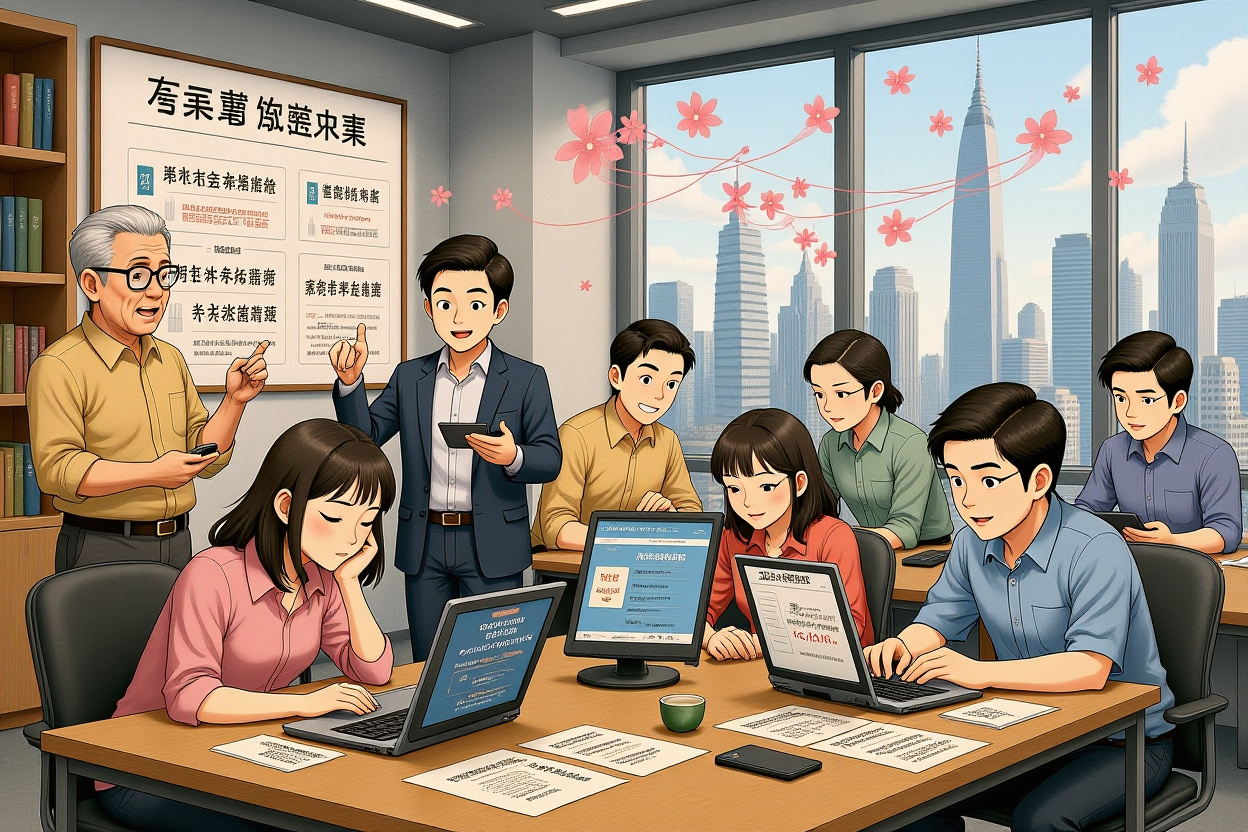
In China’s vibrant online literature ecosystem, a silent revolution is underway. Generative AI tools promise aspiring writers a fast track to fame and fortune, with viral social media posts touting monthly incomes over 10,000 yuan for AI-assisted创作. This trend taps into the booming digital content market, valued at billions of yuan, where platforms compete for user engagement. However, beneath the surface, a critical question looms: can algorithms truly replicate the ‘human touch’ that defines compelling storytelling? As AI permeates creative industries, understanding its implications is vital for investors monitoring tech innovations and cultural shifts in Chinese equities.
The allure is undeniable. Posts on platforms like Weibo and Xiaohongshu boast titles like ’28-Year-Old AI Writer: How to Earn Over 10,000 Yuan Monthly’ and ‘Craft a Million-Word Novel in Under a Day with AI.’ These claims, often accompanied by thousands of likes and comments, reflect a growing fascination with automation in creative work. Yet, for seasoned authors like Wei Ying (魏颖), who has earned significant版权收入 from her web novels, the reality is starkly different. She notes that most online tutorials are mere clickbait, and AI-generated works frequently lack soul, leading to platform rejections. This disconnect between hype and substance underscores the need for a nuanced analysis of AI’s role in network literature.
Platform Adoption and the Emergence of AI Studios
Major online literature platforms are cautiously integrating AI. Tomato Novel (番茄小说), known for free content, has seen a surge in ‘debut works’ due to AI, with daily listings jumping from几百 to over 5,000 in a month, as reported by ‘Web Novel Big Data.’ This influx stems from AI’s ability to produce text rapidly, challenging human authors who pride themselves on writing thousands of words daily. Meanwhile, entrepreneurial ventures like Tang Ku (唐库), developed by Tang Aiping (唐爱平), offer fully automated novel generation, claiming to produce 5 million words in 48 hours. With over 6,000 authors using the platform, primarily for short stories, this signals a shift toward industrial-scale content production. However, editors like Qiao Huan (乔欢) report that 20-30% of submissions are AI-polished, with platforms employing detection tools to filter out high-concentration AI content, often rejecting works with over 40% AI generation.
Efficiency Versus Creativity: The Core Dilemma for Authors and Platforms
AI’s primary advantage lies in its unmatched efficiency. Human authors, such as Mao Zhihui (毛志慧), Vice Chairman of the Jiangxi Online Writers Association, describe grueling routines of writing 8,000 to 20,000 words daily to stay competitive. In contrast, AI can generate tens of thousands of words in minutes, enabling a ‘industrialized’ output that dwarfs human effort. This has led to what insiders call a ‘content流量 war,’ where platforms face a choice: embrace low-cost AI content for short-term traffic or uphold quality standards by supporting human creators. For instance, Tomato Novel recently cracked down on 855 accounts abusing AI for bulk, low-quality works, highlighting the risks of unregulated automation.
The Human Cost and Creative Limitations
Despite its speed, AI falters in creative depth. Mao Zhihui (毛志慧) explains that for long-form novels exceeding 200,000 words, AI often produces logical errors and inconsistent plots, ‘like a donkey’s lips不对 horse’s mouth.’ He uses battle scenes as an example: while human authors weave emotional stakes and character growth, AI defaults to clichéd templates from years past, lacking nuance. Similarly, Tang Aiping (唐爱平) admits that current AI excels in short stories but requires human polishing for longer works due to an overly mechanical ‘AI flavor.’ This limitation echoes broader concerns in creative industries, where the ‘human touch’—encompassing empathy, originality, and cultural context—remains elusive for machines. As platforms like Jinjiang Literature City (晋江文学城) resist AI integration, favoring human creativity, the market may segment into quality-driven and quantity-driven niches.
The ‘Human Touch’: Why AI Falls Short in Literary Artistry
At the heart of the debate is the ‘human touch’—the intangible essence that transforms text into literature. AI, built on probabilistic models from vast data, tends to produce ‘competent but平庸’ content, as noted by experts. Hu Huijuan (胡慧娟), Vice President of Beijing Jinjiang Original Network Technology Co., Ltd., compares reading AI-generated stories to eating ‘pre-made dishes’ from an assembly line: they satisfy basic cravings but lack the chef’s personal flair. This absence of genuine emotion and wisdom fails to resonate with readers seeking emotional fulfillment through追更 and feedback. For authors, the creative process itself—a journey of imagination and expression—is irreplaceable by algorithms.
Insights from Literary Figures and Industry Leaders
Prominent voices reinforce this view. Nobel laureate Mo Yan (莫言) experimented with AI poetry, finding it adept at mimicking style but devoid of true thought and innovation. He argues that literature must root in real-life experience, with AI as a mere tool. Similarly, Xu Miaomiao (许苗苗), Director of the Capital Normal University Network Literature Research Center, contends that AI can only replicate平庸 works, not超越 conventional masterpieces. She warns that the notion ‘AI enables everyone to write novels’ contradicts the spirit of network literature, which thrives on individual voice and community interaction. On the investment front, these perspectives suggest that companies prioritizing human-centric content may yield sustainable value, whereas those over-relying on AI risk commoditization.
Regulatory Landscape and Platform Strategies in the AI Era
China’s online literature platforms are navigating a complex regulatory environment, balancing innovation with content integrity. Jinjiang Literature City (晋江文学城), a pioneer since 2003, has implemented strict AI policies since early 2025. Its guidelines permit only limited辅助, such as proofreading or name generation, while banning AI from narrative plotting. Hu Huijuan (胡慧娟) states that the platform will not introduce AI tools for创作 anytime soon, focusing instead on using AI for administrative tasks like审核. This conservative stance contrasts with Tomato Novel’s initial move to include an ‘AI training supplement’ in author agreements, which sparked backlash for potentially using works as ‘fertilizer’ for machine learning. After author protests, the platform added an opt-out clause, reflecting ongoing tensions over intellectual property and ethical AI use.
Market Implications and Investor Considerations
For institutional investors, these dynamics signal both risks and opportunities. The rise of AI writers could disrupt traditional revenue models, potentially reducing costs for platforms but also diluting brand loyalty if quality declines. Platforms that successfully integrate AI while preserving the ‘human touch’ may gain a competitive edge in user retention and IP development. Moreover, regulatory shifts—such as potential guidelines from the National Copyright Administration (国家版权局)—could impact tech stocks in the media sector. Monitoring platforms’ AI adoption rates and author compensation trends is crucial for assessing long-term viability in Chinese equity portfolios.
Future Outlook: Will AI Reshape the Network Literature Industry?
The trajectory of AI in online literature hinges on technological advancement and consumer choice. Optimists like Tang Aiping (唐爱平) predict that within three to four years, AI could generate creative inspiration, evolving into true AI Agents that surpass human authors in various aspects. Conversely, skeptics point to inherent limitations: AI’s reliance on existing data makes it prone to producing derivative work, stifling innovation. Xu Miaomiao (许苗苗) envisions a possible market split where AI content attracts readers seeking quick entertainment, but human-authored works dominate premium segments. This bifurcation could reshape industry盈利模式, affecting everything from advertising revenue to licensing deals for adaptations into film and games.
Expert Predictions and Long-Term Scenarios
Sci-fi author Liu Cixin (刘慈欣) has publicly speculated that AI might replace a significant portion of human literary创作 in 10-20 years, though顶尖 works may remain human-dominated. This uncertainty underscores the need for adaptive strategies. For new authors, competition will intensify not only with peers but with ‘infinitely productive’ AI, as Xu Miaomiao (许苗苗) notes. Investors should watch for emerging platforms specializing in AI-generated content, which could capture niche markets but face scalability challenges. Ultimately, the ‘human touch’ may become a premium differentiator, much like artisanal products in a mass-market economy. Companies that leverage AI for efficiency while championing human creativity—such as through hybrid models where AI assists in brainstorming or editing—could thrive in this evolving landscape.
Synthesizing the AI-Writer Ecosystem: Key Takeaways and Forward Guidance
The influx of AI writers into China’s online literature market presents a multifaceted narrative of innovation and tradition. While AI offers unprecedented efficiency, enabling some to earn over 10,000 yuan monthly, it consistently lacks the ‘human touch’—that blend of emotional depth, cultural insight, and creative spark that defines memorable literature. Platforms are responding with varied policies, from strict bans to cautious integration, reflecting broader debates over quality versus quantity. For human authors, AI serves best as a辅助 tool for tasks like summarization, not as a replacement for core storytelling.
Looking ahead, stakeholders must navigate this terrain with care. Authors should embrace AI for productivity gains but guard against over-reliance that compromises originality. Platforms ought to invest in detection technologies and transparent guidelines to maintain reader trust. Investors are advised to diversify across tech and media sectors, focusing on companies that balance AI innovation with human-centric values, as these are likely to sustain growth amid regulatory and market shifts. By prioritizing the ‘human touch,’ the industry can harness AI’s potential without sacrificing the soul of storytelling—a lesson relevant for global markets observing China’s digital transformation.