



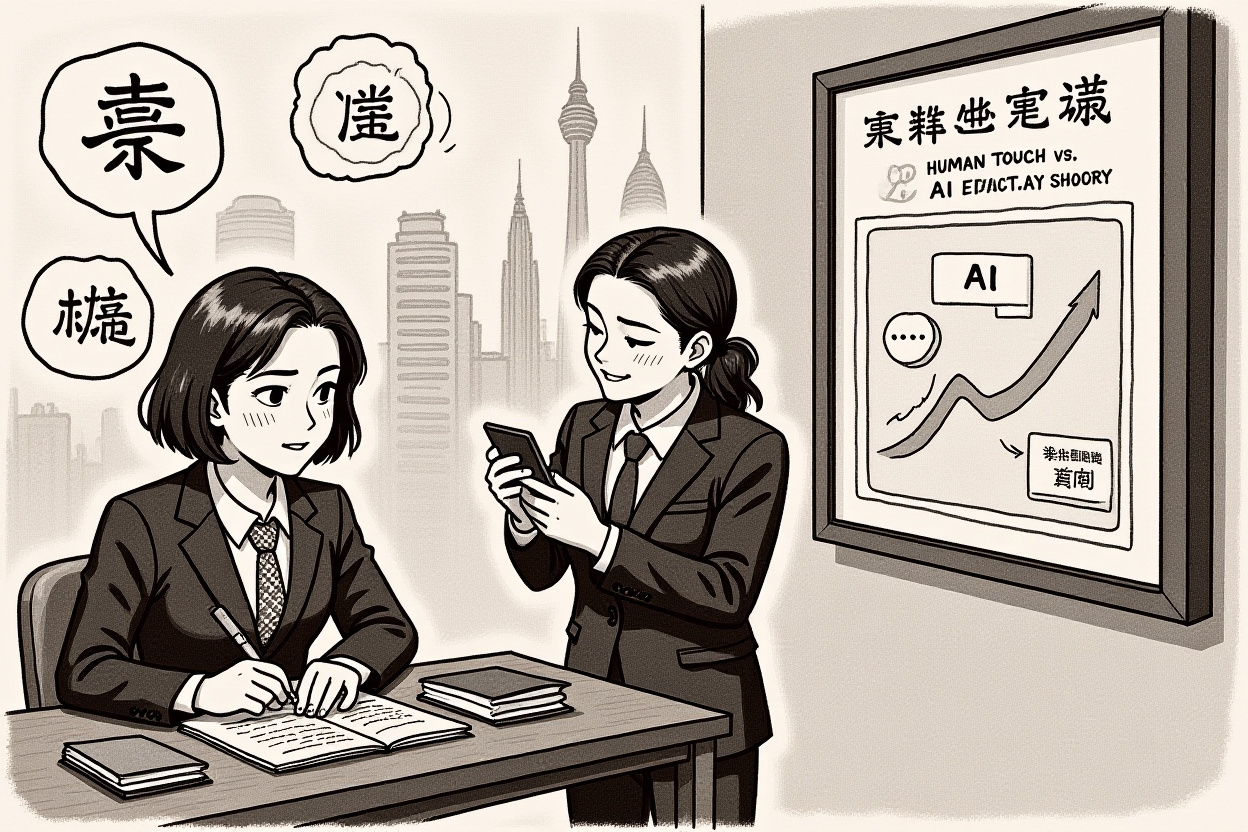
– The rapid adoption of AI writing tools is disrupting China’s web novel industry, posing challenges to traditional revenue models and creator ecosystems.
– While AI enables massive content output at low cost, quality concerns and lack of ‘human touch’ limit its commercial viability and reader engagement.
– Major platforms like Jinjiang Literature City (晋江文学城) and Tomato Novel (番茄小说) are implementing strict AI content policies, affecting market dynamics and investment strategies.
– Expert opinions diverge: some predict AI will dominate bulk content creation, while others emphasize the irreplaceable role of human creativity in premium IP development.
– Investors should monitor regulatory shifts, platform adaptations, and technological advancements to identify opportunities in AI-driven content and related tech sectors.
The AI Writing Revolution: Efficiency, Market Penetration, and Initial Financial Disruption
The landscape of Chinese web literature is undergoing a seismic shift, driven by the proliferation of generative AI tools that promise to democratize writing and scale content production. For financial professionals and investors monitoring the Chinese equity markets, particularly in the technology and media sectors, this trend represents both a disruptive force and a potential growth vector. The core question revolves around whether AI can replicate the ‘human touch’—that intangible quality of emotional depth, creative originality, and cultural nuance—that has long been the bedrock of successful web novels and their associated intellectual property (IP) value.
Unprecedented Productivity and the ‘Volume Over Value’ Model
The allure of AI writing is rooted in its staggering efficiency. Traditional web novel authors, such as Mao Zhihui (毛志慧), Vice Chairman of the Jiangxi Online Writers Association, have honed their craft over years, with daily outputs now reaching 10,000 to 20,000 characters. In contrast, AI platforms like Tang Aiping’s (唐爱平) ‘Tang Ku’ claim to generate 5 million characters for a full-length novel in just 48 hours. This industrial-scale production is reshaping content supply dynamics:
– Platform metrics reflect this influx: Tomato Novel (番茄小说), a free-to-read platform under ByteDance, experienced a surge in daily ‘first show’ titles from a few hundred to over 5,000 in a month, largely attributed to AI-generated submissions.
– Startup activity is booming: entrepreneurs are launching dedicated AI writing studios and platforms, targeting aspiring authors with promises of passive income through bulk publishing.
However, this volume-centric approach often sacrifices quality. Early AI-generated works are frequently flagged by editors for being ‘mechanically assembled,’ lacking coherent long-form narratives. As Mao Zhihui notes, AI struggles with logical consistency beyond 200,000 characters, resulting in plot holes and repetitive tropes. For market analysts, this indicates that while AI may flood the lower tier of the market with commoditized content, it currently fails to compete in the premium segment where the ‘human touch’ commands higher reader loyalty and monetization potential.
Market Response: Platform Policies and Initial Financial Repercussions
Major web novel platforms have been forced to react swiftly to the AI deluge, implementing policies that directly impact revenue streams and creator economies. Their responses vary, reflecting divergent strategic visions for the industry’s future.
– Tomato Novel (番茄小说) initially grappled with ‘low-quality AI floods,’ taking action against 855 accounts for bulk-producing unreadable content. It also faced backlash for a controversial ‘AI training clause’ in author contracts, which it later amended, highlighting ongoing tensions over IP rights and data usage.
– Jinjiang Literature City (晋江文学城), represented by Vice President Hu Huijuan (胡慧娟), has adopted a conservative stance. Its guidelines strictly limit AI to auxiliary tasks like proofreading and name generation, prohibiting AI from driving narrative plots. Hu emphasizes that the platform’s long-term value lies in original human creativity, not algorithmic output.
From an investment perspective, these policies create a bifurcated market. Platforms tolerating AI content may see short-term traffic boosts and cost savings, but risk brand dilution and reader churn. Those championing human authors, like Jinjiang, position themselves as quality custodians, potentially attracting premium advertising and IP development deals. The financial performance of parent companies, such as China Literature (腾讯阅文集团) for Qidian or ByteDance for Tomato Novel, could increasingly hinge on how effectively they navigate this ‘human touch’ imperative.
Financial Anatomy of the Web Novel Sector: Revenue Streams Under AI Pressure
China’s web novel industry is a multi-billion yuan market, integral to the broader digital content and entertainment equity universe. Its revenue models—including pay-per-chapter, subscriptions, advertising, and IP licensing—are now being stress-tested by AI’s incursion. Understanding these mechanics is crucial for institutional investors assessing the sector’s resilience and growth prospects.
Traditional Monetization vs. AI-Driven Disintermediation
Human-authored web novels typically generate revenue through a layered ecosystem:
– Direct reader payments: Platforms share revenue with authors based on chapter purchases or subscriptions. Top authors like Wei Ying (魏颖) can earn tens of thousands of yuan from copyright income.
– Advertising: Free platforms like Tomato Novel rely on ad-supported models, where content volume directly correlates with ad inventory and click-through rates.
– IP licensing: The most lucrative stream involves adapting successful novels into films, games, and merchandise. This depends entirely on the story’s unique appeal and ‘human touch,’ which builds fan communities.
AI threatens to compress this value chain. By drastically reducing content creation costs, AI could depress pricing for bulk writing, squeezing mid-tier author incomes. However, as editor Qiao Huan (乔欢) observes, platforms are rejecting ‘high-concentration’ AI works (above 40% AI content) because they fail to engage readers, suggesting that the premium for authentic creativity may actually rise. For investors, this implies a potential market polarization: a low-margin, high-volume segment dominated by AI, and a high-margin, loyalty-driven segment anchored by human creators.
Investment Flows and Valuation Considerations in AI Content Tech
Venture capital and corporate investments are increasingly flowing into AI writing technologies. Startups like ‘Tang Ku’ are attracting funding based on scalability promises. Meanwhile, large tech firms are integrating AI tools into their content platforms to enhance efficiency.
– Data from industry reports indicates growing M&A activity in natural language processing (NLP) firms specializing in Chinese text generation.
– Publicly listed companies in the AI and cloud computing sectors, such as SenseTime (商汤科技) or Baidu (百度), may benefit from increased demand for large language model (LLM) services tailored for creative industries.
However, valuations must account for regulatory risks. The Cyberspace Administration of China (国家互联网信息办公室) has been tightening oversight over online content, including algorithms. AI-generated works that propagate homogeneity or low-quality information could face stricter scrutiny, impacting platform operations and, by extension, related stock performances. The ‘human touch’ in content moderation and cultural alignment becomes a critical compliance factor, often better managed by human editors.
The Human Touch Debate: Creativity, Culture, and Commercial Viability
At the heart of the financial calculus lies a cultural and creative debate: can AI truly emulate the human experiences and emotional resonances that drive reader attachment and commercial success? Insights from authors, scholars, and industry leaders provide a nuanced perspective essential for forecasting market trends.
Literary Perspectives on AI’s Limitations and Potential
Prominent voices emphasize the irreplaceable role of human insight. Nobel laureate Mo Yan (莫言), in a noted essay, experimented with AI poetry generation and concluded that while AI excels at mimicry and information synthesis, it lacks genuine thought and creativity rooted in lived experience. Similarly, sci-fi author Liu Cixin (刘慈欣) has speculated that AI might eventually replace a significant portion of literary creation, but acknowledges that top-tier works remain beyond current capabilities.
In the web novel context, Xu Miaomiao (许苗苗), Director of the Network Literature and Art Research Center at Capital Normal University, argues that ‘AI letting everyone write novels’ contradicts the spirit of online literature, which thrives on individual expression and innovation. She believes AI can only replicate平庸 (mediocre) works, unable to produce groundbreaking literature. This scholarly view reinforces the idea that the ‘human touch’ is not merely a stylistic preference but a core component of artistic and commercial value.
The ‘Pre-made Dish’ Phenomenon and Consumer Preferences
Editor Qiao Huan offers a vivid analogy: reading AI-generated novels is like eating a ‘pre-made dish’—predictable, uniform, and lacking the chef’s personal flair. This resonates with consumer behavior trends in China’s entertainment market, where audiences increasingly seek authentic, immersive experiences.
– Market data shows that web novels with strong character development and emotional arcs generate higher reader retention and payment conversion rates.
– Platforms that curate for quality, like Jinjiang, report stable premium subscriber bases, whereas those flooded with AI content see higher bounce rates.
For corporate executives and fund managers, this underscores the importance of consumer sentiment analysis. The ‘human touch’ translates directly into key performance indicators (KPIs) such as lifetime value (LTV) and net promoter scores (NPS). Investing in communities and creator ecosystems that foster this authenticity may yield sustainable returns, even as AI tools proliferate.
Regulatory Framework and Ethical Imperatives in AI Adoption
The integration of AI into creative industries operates within a complex regulatory environment in China. Government bodies like the National Copyright Administration (国家版权局) and the Ministry of Industry and Information Technology (工业和信息化部) are shaping policies that will influence market outcomes and investment risks.
Intellectual Property Challenges and Platform Liabilities
AI writing raises thorny IP questions: who owns the copyright to AI-generated text? If AI is trained on existing human-authored works, does this constitute infringement? The controversy around Tomato Novel’s ‘AI training clause’ exemplifies these dilemmas.
– Legal experts note that current Chinese copyright law protects works created by humans, leaving AI output in a gray area. This uncertainty could deter high-stakes IP investments.
– Platforms are deploying AI detection tools to screen submissions, but as Hu Huijuan mentions, human editors’ ‘poisonous eyes’ remain crucial for identifying AI’s telltale lack of ‘human touch.’
For institutional investors, these factors necessitate due diligence on platform compliance strategies and legal safeguards. Companies with robust IP governance and transparent AI use policies may be better positioned to mitigate litigation risks and maintain stakeholder trust.
Ethical Considerations and Market Trust
Beyond regulation, ethical concerns impact brand equity and market stability. The widespread use of AI without disclosure could erode reader trust, leading to reputational damage for platforms. Industry associations, such as the China Writers Association (中国作家协会), are beginning to discuss ethical guidelines for AI in creation.
– Initiatives like Jinjiang’s public consultations on AI rules demonstrate a proactive approach to maintaining community trust.
– Conversely, platforms that prioritize short-term gains from AI content may face backlash, affecting their social license to operate and, ultimately, their valuation.
Investors should monitor ESG (Environmental, Social, and Governance) metrics related to content authenticity and creator welfare. The ‘human touch’ extends to ethical business practices, which can influence long-term shareholder value in socially conscious markets.
Future Trajectories: Strategic Forecasts for Investors and Industry Stakeholders
Looking ahead, the evolution of AI in web novels will likely follow a hybrid path, with significant implications for portfolio allocation and corporate strategy in Chinese equities. Technological advancements, consumer adoption rates, and regulatory developments will be key drivers.
Technological Roadmaps and the Quest for Authentic AI
AI developers like Tang Aiping are optimistic, predicting that within three to four years, AI could generate creative inspiration, moving beyond mere text assembly to become true ‘AI agents.’ However, current limitations in long-form coherence and emotional depth suggest that breakthroughs are needed.
– Investment in multimodal AI, combining text with emotional analysis or cultural context modeling, could enhance the ‘human touch’ in generated content.
– Companies specializing in AI for vertical applications, such as creative writing, may become attractive acquisition targets for larger tech conglomerates seeking to dominate content ecosystems.
For fund managers, this signals opportunities in AI research and development (R&D) sectors, as well as in platforms that effectively integrate AI as a collaborative tool for human authors, rather than a replacement. The synergy between human creativity and AI efficiency could unlock new business models.
Actionable Insights and Market Positioning Recommendations
Based on the analysis, several strategic actions emerge for financial professionals:
– Diversify investments across the content value chain: consider equities in AI tech providers, platform operators with strong curation capabilities, and IP development firms.
– Monitor quarterly reports from listed companies like China Literature (0772.HK) for disclosures on AI content ratios, author ecosystems, and regulatory compliance costs.
– Engage with management teams on their AI strategies, emphasizing the balance between scalability and the preservation of ‘human touch’ for sustainable growth.
– Explore thematic funds focused on the convergence of technology and creativity in emerging markets, where China’s web novel industry serves as a leading indicator.
The enduring appeal of stories with a genuine ‘human touch’ suggests that while AI will transform production economics, human creativity will remain the ultimate scarce resource. By understanding this dynamic, investors can navigate the volatility and capitalize on the evolution of China’s digital content markets.
The rise of AI writing in China’s web novel sector is a microcosm of broader technological disruption in creative industries. For financial market participants, the key takeaway is that value accrues not just to those who harness efficiency, but to those who champion authenticity. As platforms and regulators grapple with AI’s implications, the ‘human touch’ will continue to be a critical differentiator in content quality, reader loyalty, and IP valuation. Investors are advised to conduct thorough due diligence, prioritize companies with clear ethical frameworks, and stay attuned to consumer preferences for authentic narratives. The future belongs to those who can blend algorithmic power with human insight, creating a new paradigm for profitable and culturally resonant content.