



Executive Summary
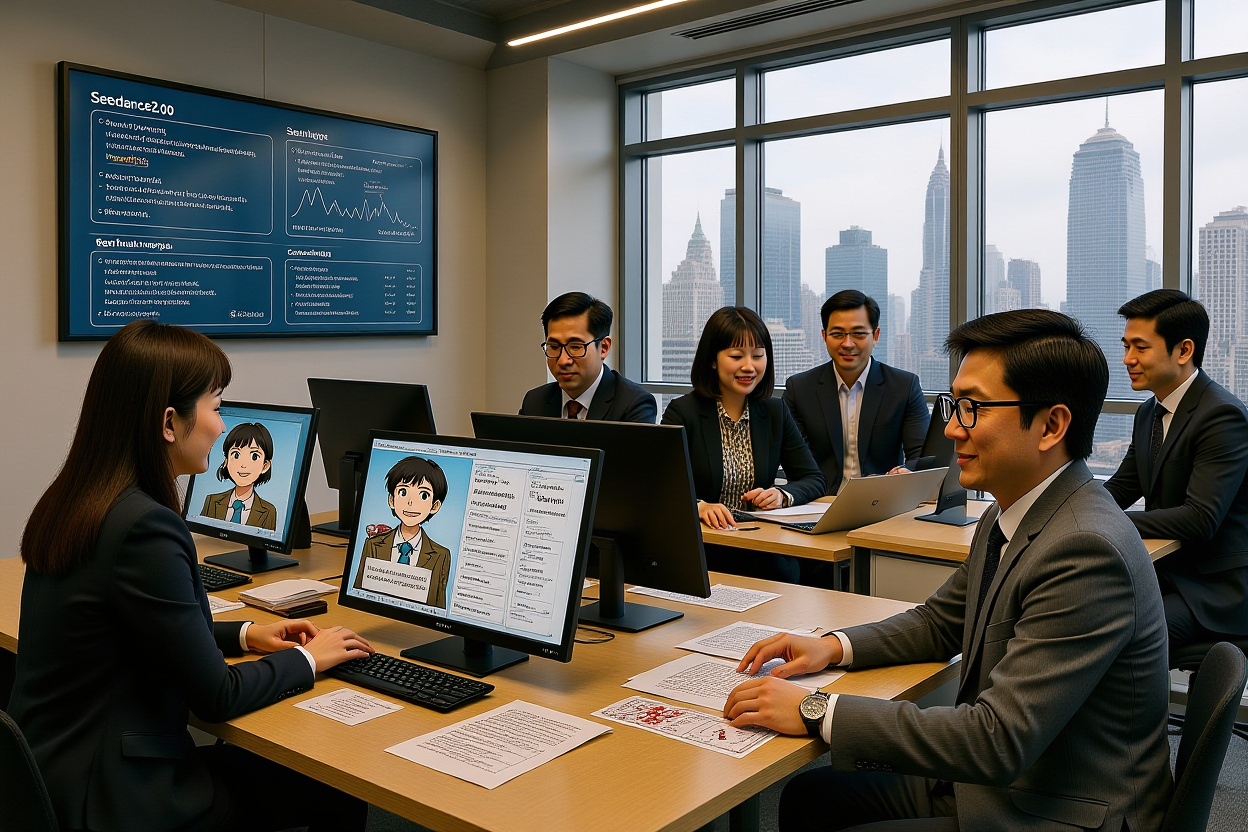
The rapid emergence of AI Manga Dramas is reshaping China’s digital entertainment landscape, creating new investment opportunities while displacing traditional production roles. Here are the key takeaways:
– AI Manga Dramas, leveraging multimodal large models, have spawned a content boom valued at over 20 billion yuan, with platforms like ByteDance’s Red Fruit Manga achieving 10 million DAU in months.
– Production costs have plummeted from 8,000-10,000 yuan per minute to hundreds of yuan, driven by tools like Seedance2.0, enabling vocational school graduates to outcompete BFA-trained directors.
– The industry is experiencing hyper-growth and consolidation, with companies like Soy Sauce Animation scaling to 1,200 employees and monthly revenues exceeding 50 million yuan, while traditional short-drama firms face losses.
– Technological advancements are accelerating content cycles, with AI Manga Dramas evolving from crude “sand sculpture” versions to sophisticated simulation human dramas in under a year, mirroring historical media disruptions.
– Investors should monitor platforms like ByteDance, Tencent, and Baidu, which are aggressively acquiring content, and consider the long-term viability of AI-driven production models amid rapid innovation.
The Dawn of a New Content Era
The clock is ticking on traditional film production as AI Manga Dramas surge from niche to mainstream in China’s entertainment sector. What began as an experimental fusion of AI and manga has exploded into a multi-billion-yuan industry, upending established hierarchies and creating a fertile ground for agile startups. For international investors eyeing Chinese equity markets, this trend represents more than just a tech novelty; it’s a seismic shift in content creation, distribution, and monetization, with ripple effects across media, technology, and consumer stocks. The rise of AI Manga Dramas underscores how China’s tech ecosystem is leveraging artificial intelligence to democratize production, challenge incumbents, and capture underserved audiences, offering a compelling case study in disruptive innovation.
At the heart of this transformation are individuals like Huang Haonan (黄浩南), founder of Soy Sauce Animation (酱油动漫), who embodies the grassroots entrepreneurship fueling the boom. With a vocational school background and no family support, Huang pivoted from web novels to short dramas before hitting gold with AI Manga Dramas, growing monthly revenue to over 50 million yuan by late 2025. His story reflects a broader narrative: that AI is lowering barriers to entry, allowing newcomers to compete with established players like Beijing Film Academy graduates. For business professionals, this signals a reallocation of capital toward AI-driven content ventures, with platforms and producers racing to scale amid fierce competition.
Market Explosion: From Fringe to Mainstream
The AI Manga Drama sector has transitioned from obscurity to a high-growth market in under two years, driven by technological advances and platform adoption. Data from industry trackers like DataEye-ADX reveals that monthly releases soared to over 13,000 titles by late 2025, rivaling the annual output of traditional short dramas. This growth is not accidental; it’s fueled by strategic moves from tech giants and a hungry audience for cost-effective, engaging content.
Platform Wars and User Acquisition
ByteDance has been a pivotal player, quickly integrating AI Manga Dramas into its ecosystem. Its Red Fruit Manga platform (红果漫剧) saw daily active users surpass 10 million within three months of launch, a testament to the model’s viral potential. According to sources close to ByteDance, the company reorganized its short drama copyright center under Zhang Chao (张超), who oversees Tomato Novel and Red Fruit Short Drama, to streamline operations and capitalize on synergies. This agility allowed ByteDance to set industry standards, offering electronic contracts that are signed in days versus weeks, thereby accelerating content acquisition.
Other major platforms have followed suit. Tencent, Baidu via its subsidiary Qimao (七猫), and Kuaishou are all investing heavily, creating a competitive landscape where production companies like Soy Sauce Animation and Minglu Animation (鸣鹿动画) are courted with lucrative deals. For instance, Baidu’s alleged poaching of Soy Sauce Animation employees with tenfold salary offers highlights the fierce talent wars, though Huang Haonan later clarified it as individual employee actions. From an investment perspective, this competition drives valuation uplifts for top producers and underscores the strategic importance of content IP in China’s digital economy.
Economic Drivers and Revenue Models
The business model of AI Manga Dramas mirrors that of short dramas, with 80% or more of revenue dedicated to advertising and user acquisition. However, the lower production costs—enabled by AI—improve margins and allow for rapid experimentation. A case in point is the AI-generated series “Xing’an Ling Guishi” (《兴安岭诡事》), which garnered over 50 million views on Douyin and rumored revenues in the tens of millions, demonstrating the profit potential. Platforms typically acquire content through upfront payments or revenue-sharing, with premium simulation human dramas commanding higher rates.
For institutional investors, key metrics to watch include:
– Daily active users (DAU) on platforms like Red Fruit Manga, indicating market penetration.
– Production cost per minute, which has dropped from thousands to hundreds of yuan due to AI tools.
– Return on investment (ROI) for top titles, such as the 3x ROI achieved by Heya Manga Drama’s (鹤芽漫剧) “Pansi Dong Sujin Chuan” (《盘丝洞素锦传》) without paid promotion.
These factors collectively enhance the appeal of AI Manga Dramas as a scalable, high-margin segment within China’s broader entertainment and tech sectors.
Technological Enablers: The AI Backbone
The proliferation of AI Manga Dramas is inextricably linked to advancements in multimodal large models, which have reduced dependency on human expertise and slashed production timelines. Tools like Seedance2.0, launched in early 2026, have been game-changers, allowing users to generate 10-second videos with coherent dialogue, scenes, and character consistency from brief text prompts for as low as 10 yuan. As Feng Ji (冯骥), producer of “Black Myth: Wukong” (《黑神话:悟空》), noted, this marks the end of AIGC’s “childhood era,” signaling maturity in AI-driven content creation.
Cost Reduction and Efficiency Gains
Before AI integration, traditional dynamic manga production cost 8,000-10,000 yuan per minute and required specialized teams. Now, with models like Seedance2.0, Kling 2.0, and Google DeepMind’s Veo, costs have plummeted. Jiang Yigi (姜奕祺), former AI expert at Alibaba DAMO Academy and now CEO of Sansheng Qingying (三生清影), explains that these models have solved challenges like audio-visual synchronization and long-video generation, making high-volume output feasible. For example, the price of using Kling dropped from 1 yuan per second in early 2025 to 0.5 yuan by late 2025, further lowering barriers.
This efficiency translates to organizational changes. Companies like Heya Manga Drama and Soy Sauce Animation have restructured, eliminating roles such as storyboard directors—often graduates from prestigious film schools—and replacing them with AI tools operated by vocational trainees. Liu Wei (刘伟), founder of Minglu Animation, recounts how Seedance2.0 forced his team to discard a week’s work and start afresh, as AI-generated content surpassed manually refined versions in quality and cost. For investors, this highlights the disruptive potential of AI across labor markets, with implications for staffing costs and operational scalability in content firms.
The Human Element: Labor and Skill Shifts
Paradoxically, the AI Manga Drama boom has created a labor-intensive industry reliant on low-wage workers. Soy Sauce Animation expanded from dozens to over 1,200 employees in half a year, hiring vocational school graduates with salaries averaging 3,000-4,000 yuan per month. These “card drawers” or “抽卡师” input prompts into AI models, requiring minimal training but benefiting from technological leaps. As Seedance2.0 reduces the need for manual tweaking, however, job roles are evolving, with some positions becoming redundant.
Meanwhile, high-value roles like script editors command premiums, with Huang Haonan offering million-yuan salaries to attract top talent. This dichotomy reflects a broader trend in China’s tech-driven markets: while AI automates certain tasks, it amplifies demand for creative and strategic inputs. For corporate executives, this means balancing cost savings with investment in core competencies, such as story development and platform relationships, to sustain competitive advantage.
Investment Landscape: Opportunities and Risks
The AI Manga Drama sector presents compelling opportunities for savvy investors, but it also carries risks tied to rapid technological change and market saturation. As platforms vie for dominance, production companies are securing forward contracts, with some like Heya Manga Drama signing annual agreements worth 10 million yuan with Volcano Engine (火山引擎) for API access. This underscores the capital intensity and strategic bets involved.
Key Players and Market Dynamics
From a financial perspective, the ecosystem includes:
– Content Producers: Soy Sauce Animation, Minglu Animation, and Heya Manga Drama, which are scaling rapidly and attracting venture interest.
– Platforms: ByteDance’s Red Fruit Manga, Tencent’s offerings, and Baidu’s Qimao, which are driving user growth and content acquisition.
– Technology Providers: Companies behind models like Seedance2.0 and Kling, which benefit from licensing fees and compute demand.
According to industry insiders, the total addressable market for AI Manga Dramas could reach 200-300 billion yuan, with simulation human dramas expanding into longer-form content and potentially challenging traditional film and TV. For fund managers, this suggests diversification into Chinese tech stocks with exposure to AI and entertainment, as well as direct investments in high-growth startups.
Regulatory and Competitive Considerations
Investors must also navigate regulatory nuances. China’s content landscape is subject to oversight by bodies like the National Radio and Television Administration (国家广播电视总局), which may impose guidelines on AI-generated media. Additionally, the fear of missing out (FOMO) is palpable, with traditional short-drama giants like Tinghua Island (听花岛) entering the AI Manga Drama space to hedge against decline. This influx could lead to oversupply and margin compression, as seen in the short-drama sector where 90% of companies faced losses by early 2025.
Risk factors include:
– Technological obsolescence: As models evolve, early movers may lose edge if they fail to adapt.
– Content quality concerns: Crude AI outputs may alienate audiences, necessitating continuous improvement.
– Platform dependency: Producers reliant on single platforms for distribution face concentration risks.
Thus, a balanced portfolio approach, focusing on companies with strong IP, technological moats, and diversified revenue streams, is advisable.
Future Outlook: Evolution and Lessons Learned
The trajectory of AI Manga Dramas offers insights into the future of content creation and its intersection with technology. Historical parallels, such as Hollywood’s response to TV in the mid-20th century, provide context: while TV initially threatened cinema, it spurred innovation and new artistic movements like the French New Wave. Similarly, AI Manga Dramas may not eradicate traditional film but could coexist, pushing both sectors toward higher quality and creativity.
Predictions for Market Maturation
Industry experts like Xiao Chuan (小川), a former short-drama head at a top internet firm, anticipate a cooling period after the initial frenzy, where focus returns to content substance. Already, trends are shifting from quantity to quality, with simulation human dramas gaining traction for their realism and appeal to broader demographics. Platforms are experimenting with 120-minute不分集 formats, indicating a blurring line between short and long-form content.
For forward-looking guidance, consider:
– Monitoring adoption of new tools like ByteDance’s Xiaoyunque Agent (小云雀Agent), which lowers user barriers and could democratize production further.
– Assessing mergers and acquisitions, as larger tech firms may consolidate top producers to secure supply.
– Evaluating international expansion potential, as AI Manga Dramas could tap into global markets with localized content.
The AI Manga Drama phenomenon is more than a passing trend; it’s a testament to China’s ability to harness technology for industrial transformation. As Jiang Yigi notes, when technology levels the playing field,核心竞争力 (core competitiveness) shifts to产能 (production capacity) and成本 (cost efficiency), but ultimately, enduring value may lie in storytelling and brand building.
Synthesis and Strategic Insights
The rise of AI Manga Dramas encapsulates a broader narrative of disruption in China’s entertainment and tech sectors. By enabling low-cost, high-volume content production, AI has empowered a new class of entrepreneurs and workers, while challenging traditional film education and roles. For investors, this represents a dynamic segment with growth potential, but one requiring careful due diligence on technology cycles and market saturation.
Key takeaways include the importance of platform partnerships, the scalability of AI-driven models, and the need for adaptive strategies in fast-evolving markets. As Huang Haonan ambitiously aims to compete with directors like Zhang Yimou (张艺谋), the message is clear: innovation can redefine industries overnight.
For business professionals and institutional investors, the call to action is to engage with this trend proactively. Consider allocating resources to research firms leading in AI content generation, attend industry conferences like those hosted by ByteDance or Tencent, and explore equity positions in publicly traded Chinese tech companies with stakes in this space. By staying informed on developments like Seedance2.0’s impact or regulatory shifts, you can position portfolios to capitalize on the next wave of digital entertainment. The story of AI Manga Dramas is still unfolding, and those who understand its nuances will be best equipped to navigate the opportunities ahead.