



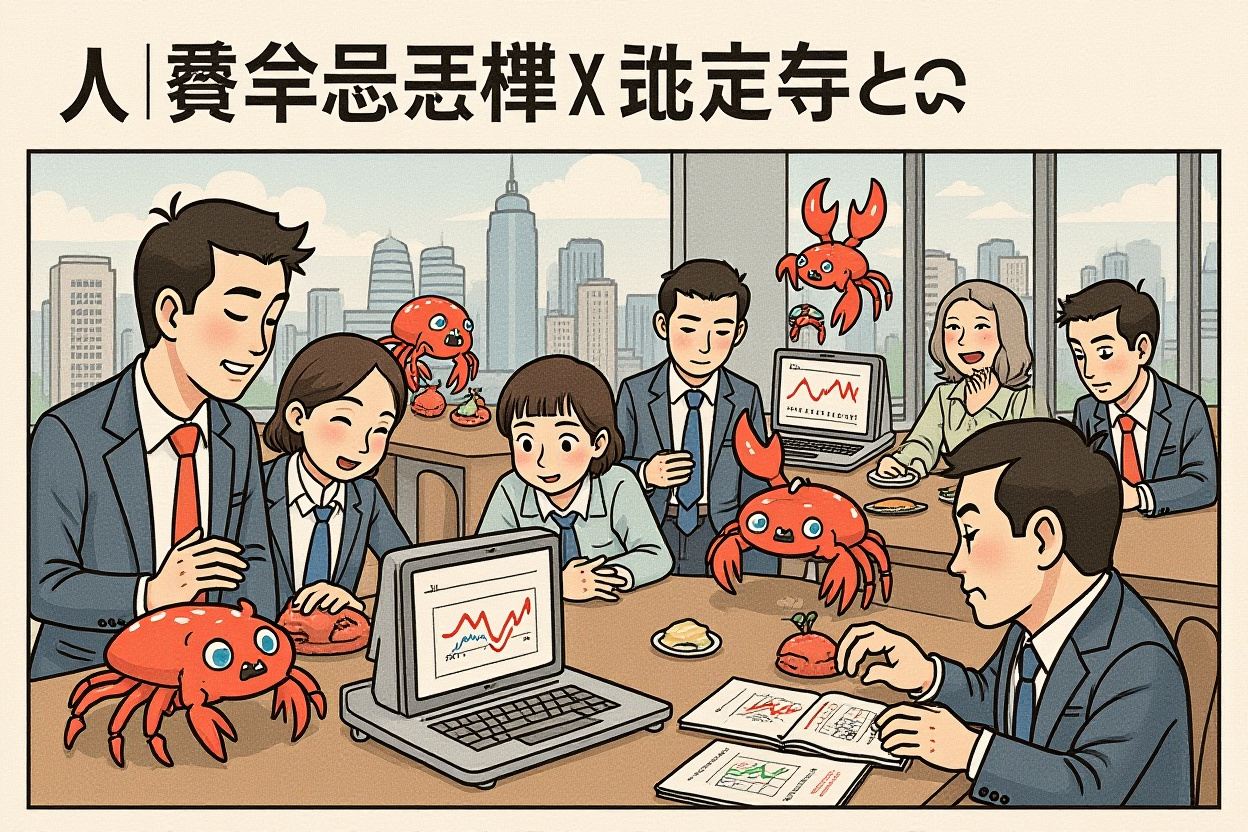
– The current frenzy around AI automation tools, metaphorically termed ‘raising lobsters,’ is sweeping Chinese businesses, but often leads to high costs without revenue gains. – Historical parallels with the long-haired rabbit boom of the 1980s reveal cyclical investment patterns and the risks of speculative adoption without underlying market opportunities. – The core challenge for companies and investors is not the lack of advanced tools, but the absence of real clients and projects—the ‘甲方爸爸 (client)’ that drives sustainable growth. – Regulatory responses and market dynamics highlight the need for a balanced approach, focusing on fundamentals over hype in Chinese equity investments. – Strategic insights urge professionals to evaluate AI investments critically, prioritizing companies with clear competitive advantages and robust client pipelines. In the whirlwind of China’s technological evolution, a new metaphor has captured the entrepreneurial spirit: ‘raising lobsters.’ This phrase, emerging from the viral adoption of AI-driven automation tools, symbolizes the rush to integrate cutting-edge solutions into business operations. From social media management to financial trading, companies are eagerly deploying these ‘lobsters’ in hopes of streamlining processes and boosting profitability. However, beneath the surface of this trend lies a critical lesson for investors and executives in Chinese equity markets: possessing advanced tools is meaningless without the foundational opportunities to leverage them. The phenomenon of raising lobsters underscores a pervasive issue in today’s market—where technological adoption often outpaces strategic vision, leading to financial strain rather than liberation. As we delve into this analysis, we’ll explore why the real key to success isn’t the lobster itself, but the elusive ‘甲方爸爸 (client)’ that provides the projects and revenue streams essential for growth.
The ‘Lobster’ Frenzy: AI Tools Sweep Chinese Businesses
The term ‘raising lobsters’ has become shorthand for the widespread embrace of AI automation platforms, often referred to humorously as ‘OpenClaw’ in tech circles. Initially popularized by startups and small enterprises, these tools are now permeating larger corporations and even government initiatives across China. The driving force behind this trend is the promise of enhanced efficiency—imagine a lobster that can manage a 小红书 (Little Red Book) account, book travel itineraries, or analyze stock market trends with minimal human intervention. For time-pressed professionals in Shanghai’s financial district or Shenzhen’s tech hubs, the allure is undeniable, fueling a全民 ‘whole-nation’ campaign to adopt and master these technologies.
From Social Media to Stock Trading: Diverse Applications
Early adopters have showcased a range of applications for their AI lobsters. In the consumer sector, businesses use them to curate content and engage customers on platforms like 抖音 (Douyin) and 微信 (WeChat), aiming to viralize brands overnight. In finance, some traders have experimented with AI for market predictions, though results are mixed—one anecdote highlights a user who found that ‘raising lobsters’ for炒股 (stock trading) only accelerated losses, while others report modest gains in automated portfolio management. This variability points to a broader truth: the effectiveness of AI tools depends heavily on the context and quality of data inputs, not just the technology itself. Moreover, companies such as 腾讯 (Tencent) and 阿里巴巴 (Alibaba) have rolled out their own AI suites, encouraging integration through tutorials and subsidies, yet the financial burden on smaller firms remains significant.
The Cost of Innovation: Financial Burdens on Early Adopters
While the initial hype suggests that raising lobsters is a path to quick riches, the reality is often a steep financial climb. Industry insiders, like a tech executive who prefers anonymity, report daily expenses exceeding 1,000 RMB for premium AI models, translating to monthly costs that can surpass 20,000 RMB—a ‘poverty line’ for sustaining such tools. This expenditure mirrors historical tech bubbles, where early investment drained resources without guaranteed returns. For instance, a small business owner in Guangzhou shared how deploying an AI lobster for customer service led to a 30% increase in operational costs, with only a marginal boost in sales. These examples underscore that raising lobsters isn’t a silver bullet; without a clear revenue model or client base, it can become a costly indulgence rather than a strategic asset.
Historical Echoes: The Long-Haired Rabbit Boom of the 1980s
To understand the current mania around raising lobsters, we must look back at China’s economic history, particularly the long-haired rabbit craze of the 1980s. During that decade, 兔毛 (rabbit fur) exports dominated international markets, with Shanghai serving as a key hub—over one-fifth of China’s total exports flowed through its ports. Farmers across regions like 浙江 (Zhejiang) and 江苏 (Jiangsu) rushed to raise these rabbits, lured by stories of newfound wealth: ‘家养一群兔,赛过小金库 (Raising a group of rabbits at home is better than a small gold vault).’ This sentiment drove even乡村教师 (rural teachers) to quit their jobs and投身 (devote themselves) to rabbit breeding, creating a temporary economic boom that reshaped local livelihoods.
Economic Impact and Subsequent Bust
The long-haired rabbit phenomenon generated significant short-term gains, with early adopters building new homes and achieving ‘万元户 (ten-thousand-yuan household)’ status. However, the bubble burst when global demand waned and oversupply crashed prices, leaving many farmers in debt. This cycle mirrors today’s raising lobsters trend—both are driven by collective enthusiasm and the fear of missing out, yet both risk imploding without sustainable demand. Key data from the era shows that rabbit fur exports peaked in 1985 before declining sharply by 1990, a cautionary tale for current AI investors. The parallel extends to resource allocation: just as rabbits were fed premium奶粉 (milk powder) during the boom, today’s lobsters consume substantial computational power and capital, highlighting how speculative trends can distort market priorities.
Lessons for Today’s AI Adoption
The long-haired rabbit episode offers vital lessons for modern businesses raising lobsters. First, technological adoption must align with genuine market needs—not just hype. Second, diversification is crucial; relying solely on a single trend, whether rabbits or AI, exposes firms to volatility. Finally, regulatory frameworks have evolved: in the 1980s, lack of oversight exacerbated the bust, whereas today, bodies like 国家互联网信息办公室 (Cyberspace Administration of China) are implementing guidelines for AI ethics and data security. Investors should note that companies with balanced strategies, such as those integrating AI while maintaining core client relationships, are better positioned to weather potential downturns.
The Core Issue: Tools vs. Opportunities in Chinese Markets
At its heart, the raising lobsters metaphor reveals a fundamental disconnect in China’s business landscape: the obsession with tools over opportunities. This is encapsulated in the poignant question from the original article: ‘当年咱爸没当上包工头,是因为咱爸底下缺搬砖的人吗?(Did our father fail to become a contractor because he lacked brick-carrying laborers?)’ The answer, of course, is no—it was the absence of a reliable甲方爸爸 (client) to provide projects. Similarly, in today’s context, raising lobsters without securing profitable engagements is futile. For equity market participants, this means that a company’s valuation should hinge not on its AI capabilities alone, but on its ability to convert those tools into tangible contracts and revenue streams.
The Contractor Metaphor: Why甲方爸爸 (Client) is Key
In China’s construction and tech sectors, the role of the甲方爸爸 (client) is paramount—it represents the source of projects, funding, and sustainability. Without it, even the most advanced tools, like AI lobsters, become liabilities. Consider a mid-sized manufacturer in 东莞 (Dongguan) that invested heavily in automation but struggled to find buyers for its optimized products; its stock price stagnated despite technological prowess. Conversely, firms like 华为 (Huawei) have thrived by coupling innovation with strong client networks, ensuring that their AI developments serve existing market demands. This principle extends to investors: when evaluating Chinese equities, focus on companies with robust client pipelines, such as those in the 沪深300 (CSI 300) index with diversified revenue sources, rather than those merely raising lobsters for show.
Case Studies: Success and Failure Stories
– Success: 美团 (Meituan) has effectively used AI for logistics optimization, but its success stems from a massive client base in food delivery and services, not just the technology. Their recent财报 (financial report) shows a 25% year-on-year revenue increase, attributed to enhanced customer retention through AI-personalized offers. – Failure: A startup in 杭州 (Hangzhou) raised millions to develop an AI lobster for content creation, yet folded within a year due to inability to secure长期合约 (long-term contracts) with advertisers. Its story highlights the peril of raising lobsters without a clear甲方爸爸 (client) strategy. – Mixed: 百度 (Baidu)’s AI initiatives, like its autonomous driving platform, show promise but face challenges in commercial scalability, underscoring that even tech giants must navigate the opportunity gap. These cases illustrate that raising lobsters can aid efficiency, but it’s the underlying business model that determines survival in competitive Chinese markets.
Regulatory and Market Responses
As the raising lobsters trend gains momentum, Chinese regulators and market players are stepping in to shape its trajectory. The 中国证券监督管理委员会 (China Securities Regulatory Commission) has issued warnings about AI-driven trading risks, emphasizing the need for transparency and risk controls. Simultaneously, local governments in tech hubs like 深圳 (Shenzhen) and 北京 (Beijing) are offering subsidies for AI adoption, but with stricter criteria to ensure projects align with economic planning goals. For instance, a policy in Shanghai requires firms to demonstrate client engagement metrics before receiving grants for AI tools—a move that discourages frivolous raising lobsters and promotes sustainable innovation.
Government Policies and Corporate Initiatives
Recent announcements from the 国务院 (State Council) highlight a push for ‘AI +实体经济 (AI + real economy)’ integration, aiming to bridge the tool-opportunity divide. Companies are responding: 字节跳动 (ByteDance) has launched AI training programs for small businesses, focusing on client acquisition skills alongside technical know-how. Moreover, equity analysts note that firms listed on the 科创板 (STAR Market) with clear AI commercialization plans, such as those in healthcare or fintech, are attracting more institutional investment. This regulatory environment signals that raising lobsters must be part of a broader strategy, with policies acting as a check against speculative excesses that could destabilize markets.
Implications for Equity Investors
For global investors eyeing Chinese equities, the raising lobsters phenomenon offers critical insights. First, assess companies based on their client diversification and contract backlogs, not just their AI announcements. Second, monitor regulatory developments, as shifts in AI governance can impact sector valuations—for example, tighter data laws might affect tech stocks reliant on user data for AI training. Third, consider historical precedents: the long-haired rabbit bust serves as a reminder that trends can reverse quickly, so portfolio diversification across sectors like consumer staples and industrials is advisable. Data from 万得 (Wind Information) shows that over the past year, firms with strong client relationships outperformed pure AI plays by 15% in total return, reinforcing the importance of opportunities over tools.
Strategic Insights for Investors and Executives
Navigating the raising lobsters craze requires a disciplined approach for both investors and corporate leaders. In Chinese equity markets, where volatility is often driven by technological narratives, grounding decisions in fundamental analysis is key. This involves looking beyond the hype of AI tools and evaluating whether companies have the strategic vision to convert innovation into lasting profitability. As we’ve seen, raising lobsters can be a double-edged sword—it offers efficiency gains but also financial risks if not coupled with real-world opportunities.
Evaluating AI Investments in Portfolio Companies
When analyzing Chinese stocks, investors should prioritize firms that demonstrate a balance between technological adoption and market execution. Key metrics to watch include: – Client concentration ratios: Companies with over 30% revenue from a single client may be vulnerable, even if they’re raising lobsters effectively. – R&D expenditure vs. revenue growth: A healthy ratio indicates that AI investments are translating into sales, not just costs. – Regulatory compliance: Firms adhering to guidelines from bodies like 中国人民银行 (People’s Bank of China) for fintech AI are lower-risk bets. For example, a fund manager might favor a company like 宁德时代 (CATL), which uses AI for battery optimization but also has secured long-term contracts with automakers worldwide, ensuring that its raising lobsters efforts are anchored in demand.
Risk Management in Tech-Driven Markets
To mitigate the pitfalls of raising lobsters, executives should implement robust risk frameworks. This includes: – Conducting pilot projects before full-scale AI deployment, to test工具 (tools) against real client feedback. – Building partnerships with established甲方爸爸 (clients) to co-develop AI solutions, reducing the chance of misalignment. – Monitoring cash flow closely, as the costs of raising lobsters can escalate quickly; setting budgets tied to projected revenue from new contracts is essential. In the broader market context, investors can hedge by including defensive sectors in their portfolios, such as utilities or healthcare, which are less susceptible to AI hype cycles. The raising lobsters trend, while enticing, should not overshadow the timeless principle that business success hinges on securing and satisfying clients. The journey through China’s raising lobsters phenomenon reveals a consistent truth: in both historical frenzies and modern tech adoption, sustainable growth comes from marrying innovation with tangible opportunities. Whether it’s the long-haired rabbit boom or today’s AI tools, the cycle of hype and disillusionment repeats when tools are prioritized over the甲方爸爸 (client) that fuels real progress. For investors in Chinese equities, this means looking beyond the surface of AI announcements to assess whether companies have the client networks and strategic depth to thrive. As we move forward, let this be a call to action: focus on fundamental business drivers, engage with market data critically, and remember that raising lobsters is merely a means to an end—the end being a robust, opportunity-rich enterprise. By doing so, you can navigate the complexities of China’s dynamic markets with confidence and insight.