



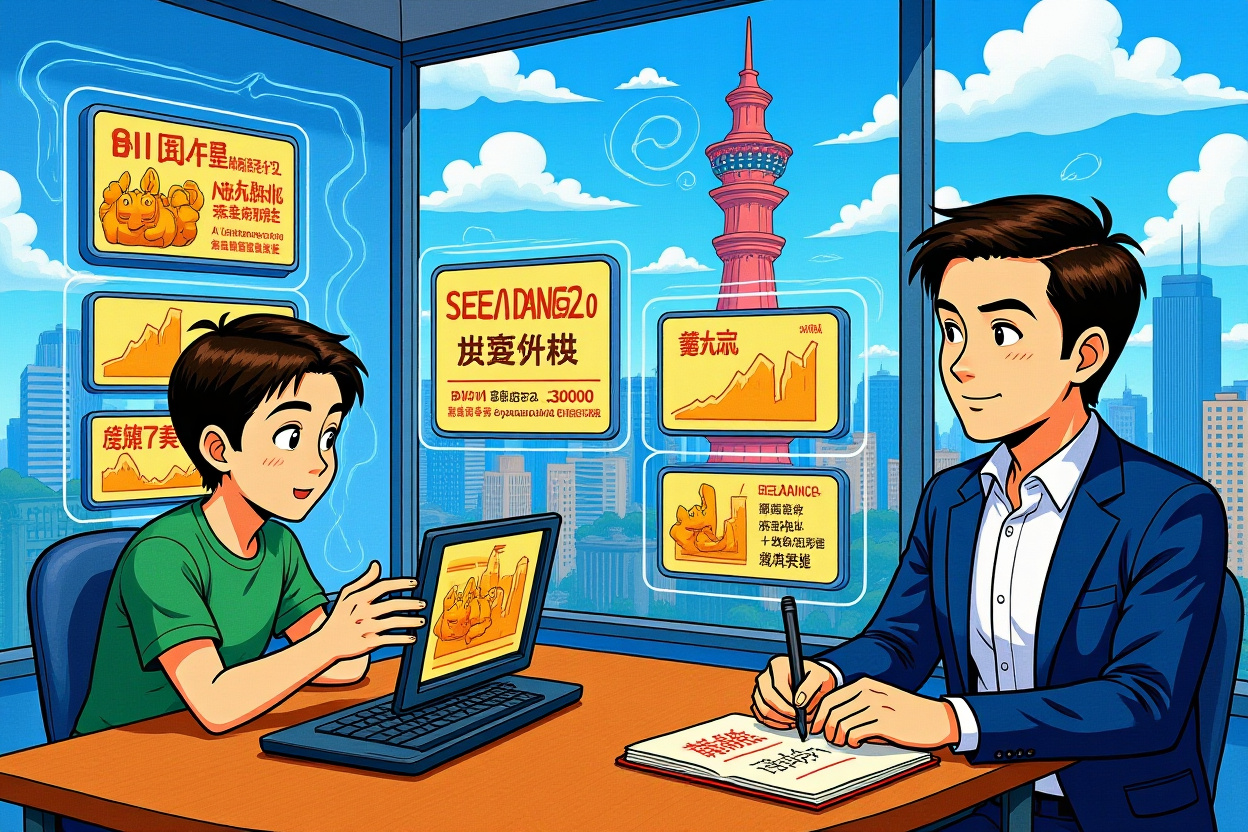
– AI-generated comic dramas are experiencing explosive growth, with platforms like ByteDance’s Red Fruit Comic Drama surpassing 10 million DAU in just months, driven by multimodal AI models.
– Production costs have dropped to as low as hundreds of yuan per minute, enabling vocational school graduates and former factory workers to enter the content creation space, displacing traditional roles like storyboard directors.
– Technological breakthroughs such as Seedance2.0 are accelerating industry transformation, allowing for high-quality AI simulation dramas that compete with traditional short films and attracting massive platform investments from ByteDance, Tencent, and Baidu.
– The market is rapidly evolving from low-quality bulk production to premium content, with AI-generated comic dramas potentially capturing a share of the broader film and TV market, presenting both opportunities and risks for investors.
– Investors should monitor this sector for high-growth potential but remain cautious about technological obsolescence, regulatory shifts, and market saturation in China’s dynamic equity markets.
The Emergence of AI-Generated Comic Dramas in China’s Digital Economy
In a startling disruption of traditional media, vocational school graduates earning just 3000 yuan a month are using artificial intelligence to produce comic dramas that rival content from prestigious Beijing Film Academy directors. This revolution in AI-generated comic dramas is not merely a cultural curiosity; it represents a seismic shift in China’s content creation industry, with far-reaching implications for investors, platforms, and the broader equity markets. Fueled by advancements in multimodal AI models, this sector has exploded from niche to mainstream, creating a new class of content entrepreneurs who operate with minimal costs and maximal scale.
From Viral Sensation to Mainstream Phenomenon
The rise of AI-generated comic dramas can be traced to early 2025, when dynamic comics—a hybrid of static manga and animation—gained traction on platforms like Douyin. These formats tapped into unmet demand among Gen Z audiences, prompting platforms to acquire such content aggressively. For instance, Soy Sauce Animation, founded by Huang Haonan (黄浩南), saw its monthly revenue exceed 50 million yuan by November 2025, catapulting it to the top of the nascent industry. Similarly, ByteDance’s Red Fruit Comic Drama platform achieved over 10 million daily active users within three months, highlighting the viral potential of this AI-driven content. The rapid adoption underscores how AI-generated comic dramas are leveraging existing short-form video ecosystems to achieve scale, much like the真人短剧 (real-person short drama) boom that preceded it.
Technological Enablers: The Role of Multimodal AI Models
The Business Model and Market Dynamics of AI Comic DramasThe business model for AI-generated comic dramas mirrors that of真人短剧 (real-person short dramas), relying heavily on投流 (traffic acquisition) for monetization. Typically, 80% or more of revenue is reinvested into advertising on platforms like Douyin, creating a high-volume, low-margin ecosystem that favors early movers. This has led to a gold rush mentality, with companies racing to scale production and capture market share before the window of opportunity closes.
Low-Cost Production and High Returns: The New Economics
AI-generated comic dramas have slashed production expenses to unprecedented levels. For example, Bai Ze, a former mini-game developer, produced nearly 30 AI dynamic comics in six months at a cost of几十元每分钟 (tens of yuan per minute), selling them to distributors for hundreds of yuan per minute and netting数百万元 (several million yuan) in profit. This cost advantage has attracted diverse entrants, from富二代 (rich second-generation) entrepreneurs in Changsha hiring hundreds of workers to solo creators leveraging AI tools. The allure of quick profits has intensified competition, leading to incidents like the挖人 (poaching) war between Baidu’s subsidiary Qimao and Soy Sauce Animation, where Huang Haonan accused Baidu of offering tenfold salaries to steal talent. Such dynamics highlight the ferocious pace of expansion in AI-generated comic dramas, where speed to market often trumps all other considerations.
Platform Strategies and the Investment Frenzy
Workforce Transformation: Vocational Graduates vs. Traditional DirectorsA defining feature of the AI-generated comic drama boom is its reliance on a low-cost, readily available workforce. Vocational school graduates and former factory workers, often earning平均工资 (average wages) of 3000-4000 yuan per month, are now producing content that garners billions of views, challenging the hegemony of elite film school graduates. This shift is redefining labor dynamics in China’s creative industries and raising questions about the future of skilled professions.
The New Labor Force: Accessibility and Efficiency Gains
Companies like Soy Sauce Animation have embraced a近乎激进的扩张 (near-radical expansion) strategy, growing from dozens to over 1,200 employees in less than half a year. Huang Haonan openly stated that hiring criteria are minimal—anyone over 18 without intellectual disabilities can apply, with training completed in just two to three days using proprietary tools. This approach has turned AI-generated comic drama production into a劳动密集型产业 (labor-intensive industry), albeit one powered by cutting-edge AI. Workers, often with no prior experience in film, input爽文 (wish-fulfillment fiction) plots into AI models to generate分镜 (storyboards) and videos, achieving人效 (human efficiency) rates that traditional studios cannot match. For instance, at Heya Comic Drama in Changsha, employees work overnight shifts to capitalize on cheaper off-peak算力 (computing power), further driving down costs.
Displacement of Skilled Professionals: The End of the Storyboard Director?
Technological Evolution and Future Trends in AI ContentThe rapid iteration of AI models is both a driver and a disruptor for the AI-generated comic drama industry. As tools become more accessible and powerful, the market is shifting from a focus on quantity to an emphasis on quality, with significant implications for long-term sustainability and investment.
Seedance2.0 and Beyond: Accelerating Innovation Cycles
The release of Seedance2.0 marked a turning point, described by Feng Ji (冯骥), producer of “Black Myth: Wukong,” as the end of “AIGC’s childhood era.” This model allows for the generation of coherent 10-second videos with minimal prompting, reducing the need for extensive post-production. For AI-generated comic drama companies, this has meant further精简 (streamlining) of workflows; Huang Haonan and Yang Hao both noted that team sizes per project could be reduced from 8-10 people to just 3. However, this acceleration also brings volatility. As Yang Hao observed, technological problems in漫剧 (comic drama) production can often be solved simply by waiting for the next model update, making it difficult for companies to maintain a competitive edge based solely on technology. This underscores the importance of scalability and content IP in an era of技术平权 (technological parity).
From Quantity to Quality: The Rise of AI Simulation Dramas
The industry is already transitioning from粗糙 (rough) formats like沙雕漫 (silly comics) to more sophisticated AI仿真人剧 (AI simulation dramas), which aim to replicate真人 (real-person) aesthetics with higher consistency and emotional depth. Platforms like Red Fruit Comic Drama are actively acquiring such content, even purchasing 120-minute不分集 (non-episodic) AI simulation dramas to compete with traditional长视频 (long-form video) markets. Early successes, such as Heya Comic Drama’s “盘丝洞素锦传” (“Legend of Pan Silk Cave Sujin”), achieved a 3倍ROI (threefold return on investment) without paid promotion, attracting融资 (financing) and orders. This shift toward精品化 (premiumization) mirrors the evolution of真人短剧 (real-person short dramas), suggesting that AI-generated comic dramas may soon capture a share of the broader千亿市场 (hundred-billion-yuan market) for film and TV. For investors, this represents a potential growth vector, but one fraught with risks from rapid obsolescence and platform policy changes.
Implications for Chinese Equity Markets and Investors
The explosive growth of AI-generated comic dramas has significant ramifications for China’s capital markets, particularly in the technology and media sectors. As this industry matures, it presents both opportunities and challenges for institutional investors and corporate executives monitoring Chinese equities.
Investment Opportunities in AI Content Creation
Risks and Regulatory ConsiderationsNavigating the Future of AI-Driven Content in ChinaThe story of AI-generated comic dramas is a microcosm of larger trends in China’s digital economy: rapid technological adoption, labor market transformation, and intense platform competition. For vocational graduates earning 3000 yuan a month, this represents an unprecedented opportunity for economic mobility, while for traditional film directors, it signals a disruptive threat that demands adaptation. The industry’s evolution from low-cost bulk production to high-quality simulation dramas suggests that content, not just technology, will ultimately determine winners, much like the historical resilience of film after the rise of television.
Looking ahead, investors and professionals should monitor key indicators: advancements in AI video models, platform acquisition strategies, and regulatory developments. Companies that can blend AI efficiency with compelling storytelling—perhaps by hiring those very Beijing Film Academy directors they once displaced—may thrive in this new landscape. As China’s equity markets continue to integrate technological innovations, AI-generated comic dramas offer a compelling case study in disruption, but one that requires nuanced analysis to separate fleeting trends from enduring value. Stay informed by following reports from sources like 36Kr and official platform announcements, and consider diversifying into sectors that leverage AI for sustainable content creation.