



Summary
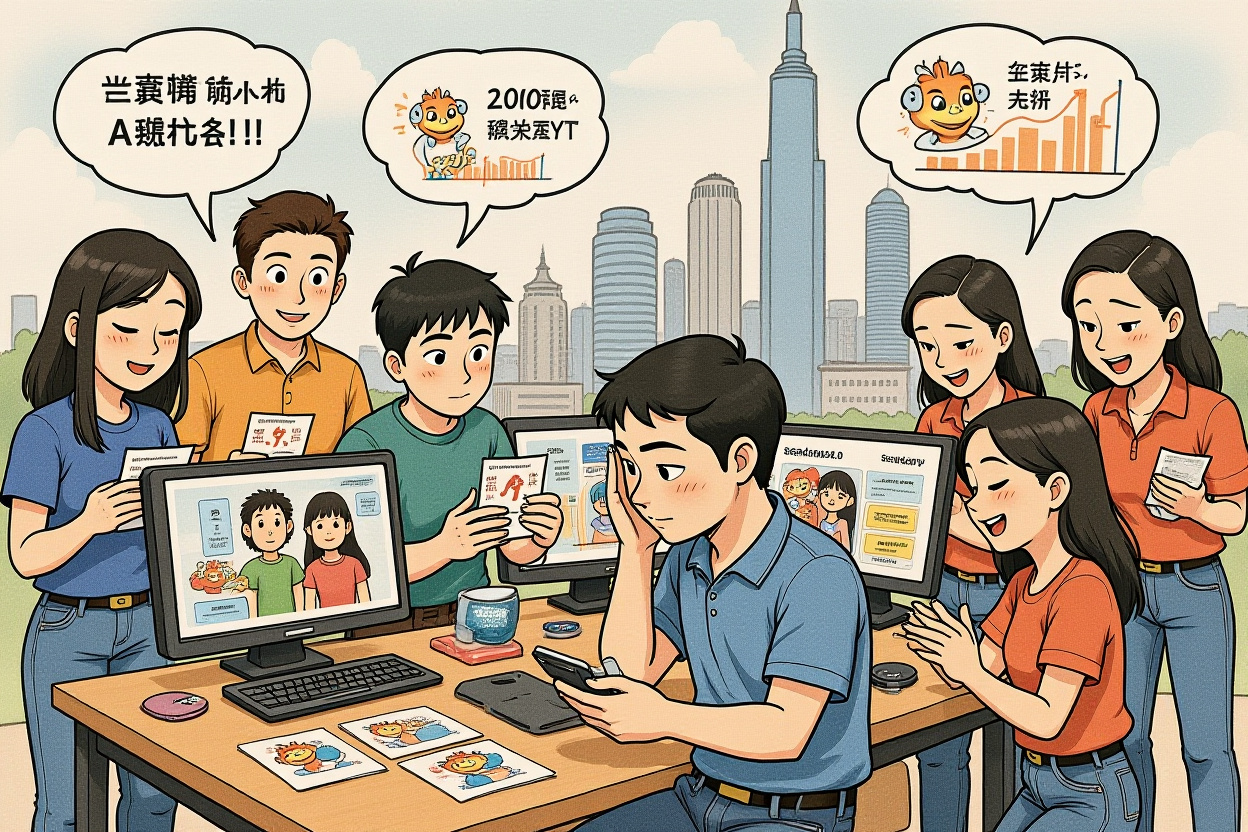
This article delves into the explosive growth of AI comic dramas in China, examining their market impact, technological drivers, and implications for investors and the traditional entertainment sector.
- AI comic dramas have rapidly evolved into a multi-billion-yuan industry, leveraging AI models like Seedance2.0 to slash production costs and enable mass-scale content creation.
- Vocational school graduates, earning as low as 3000 yuan monthly, form the backbone of this labor-intensive yet high-tech industry, displacing roles like Beijing Film Academy-trained directors.
- Major platforms like ByteDance’s Red Fruit Comic Drama (红果漫剧) are aggressively expanding, fueling competition and reshaping investment flows in Chinese digital content.
- The sector faces rapid obsolescence cycles, with a shift from low-quality ‘sand sculpture’ comics to premium AI simulation dramas, mirroring trends in traditional short dramas.
- For investors, AI comic dramas represent a high-growth but volatile opportunity, demanding focus on technological agility and content quality in a fast-paced market.
The Dawn of a Content Revolution: AI Comic Dramas Reshape Entertainment
In the bustling landscape of China’s digital economy, a quiet disruption is unfolding. AI comic dramas, or AI-generated animated series, have surged from obscurity to become a cornerstone of online entertainment, driven by advancements in artificial intelligence. This phenomenon isn’t just a cultural shift—it’s a financial game-changer, creating a market valued at over 200 billion yuan and altering the investment thesis for China’s content sector. For institutional investors and market analysts, understanding this trend is crucial, as it blends technology, labor economics, and consumer behavior into a potent growth narrative. The rise of AI comic dramas exemplifies how innovation can democratize production, but it also raises questions about sustainability and the future of creative industries.
The Emergence of AI Comic Dramas as a Market Force
The ascent of AI comic dramas is rooted in technological breakthroughs and opportunistic entrepreneurship. Over the past year, multimodal AI models have matured, enabling the cost-effective generation of video content from text prompts. This has birthed a new content category that bridges comics and animation, appealing to a broad, digitally-native audience.
Technological Catalysts and Early Adoption
Key AI models like Seedance2.0, developed by leading tech firms, have been instrumental. These tools allow users to generate coherent, multi-second videos with minimal input, drastically reducing the need for traditional production roles. For instance, Seedance2.0 can create a 10-second clip with dialogue and consistent characters for just ten yuan, a fraction of conventional costs. This efficiency has attracted a flood of entrants, from startups to tech giants, eager to capitalize on the low barrier to entry. The rapid deployment of such models has turned AI comic dramas into a scalable business, with platforms like ByteDance’s Red Fruit Comic Drama (红果漫剧) achieving over 10 million daily active users within months.
Case Study: Soy Sauce Anime’s Meteoric Rise
Soy Sauce Anime (酱油动漫), founded by Huang Haonan (黄浩南), a vocational school graduate, epitomizes this trend. Starting with humble beginnings, the company now boasts monthly revenues exceeding 50 million yuan, positioning it as a sector leader. Huang Haonan (黄浩南) attributes success to embracing AI tools and scaling production aggressively, hiring hundreds of low-wage workers to operate AI systems. This model highlights how AI comic dramas have enabled non-traditional players to challenge established studios, leveraging technology to offset limited resources. The company’s ambition to become China’s largest AI影像集团 (AI imaging group) underscores the sector’s growth potential.
Labor and Production: A New Paradigm in Content Creation
The production of AI comic dramas has created a unique labor dynamic, blending high-tech tools with low-cost human capital. This paradigm shift is redefining employment in the creative sector and offering insights into China’s evolving workforce.
Low-Cost Workforce and High Efficiency
Companies like Soy Sauce Anime (酱油动漫) and Heya Comic Drama (鹤芽漫剧) recruit extensively from vocational schools, offering average salaries of 3000 to 4000 yuan per month. These employees, often with minimal formal education, are trained to use AI models for tasks like script input, video generation, and editing. For example, Heya Comic Drama (鹤芽漫剧) expanded its team by 50 people in a month, tapping into talent pools in Changsha, a hub for media professionals displaced by the decline of traditional TV. This approach reduces production costs to hundreds of yuan per minute, compared to thousands for conventional animation, enabling rapid scalability. The efficiency gains are amplified by AI advancements, such as cost reductions in computing power—models like Kling have seen prices drop from 1 yuan per second to 0.5 yuan.
The Impact on Traditional Roles and Industry Disruption
As AI comic dramas gain traction, traditional roles are being phased out. The introduction of Seedance2.0 led companies to lay off storyboard directors, including graduates from prestigious institutions like the Beijing Film Academy (北京电影学院). These professionals, once essential for visual storytelling, are now redundant as AI handles分镜 (storyboarding) with minimal human intervention. This displacement mirrors broader trends in automation, but in the context of AI comic dramas, it accelerates production cycles and lowers operational expenses. For investors, this signals a shift towards asset-light models where human capital costs are minimized, potentially boosting profit margins in content ventures.
Financial Landscape and Growth Metrics of AI Comic Dramas
The financial underpinnings of AI comic dramas reveal a sector in hypergrowth, characterized by substantial revenue streams, intense competition, and strategic investments. This landscape offers valuable pointers for market participants eyeing Chinese equity opportunities.
Market Size, Revenue Projections, and Key Data Points
According to industry data, the AI comic drama market is already valued at over 200 billion yuan, with monthly content output surpassing 13,000 series at its peak—nearing the annual production of traditional short dramas. Revenue models heavily rely on投流 (advertising traffic), where 80% or more of income is reinvested into user acquisition. Success stories abound: for instance, the AI comic drama “兴安岭诡事” (“Strange Affairs of Xing’an Ridge”) garnered over 50 million views on抖音 (Douyin), reportedly generating tens of millions in revenue. Platforms like Red Fruit Comic Drama (红果漫剧) have driven daily advertising spends into the tens of millions, creating a virtuous cycle of content creation and monetization. For fund managers, these metrics highlight the sector’s scalability and its correlation with digital advertising trends in China.
Investment Inflows and Platform Wars Among Tech Giants
Major Chinese tech firms are aggressively investing in AI comic dramas to capture market share. ByteDance, through its番茄系 (Tomato ecosystem) including Red Fruit Comic Drama (红果漫剧), has been particularly proactive, streamlining operations to secure content deals within days. Similarly, Tencent (腾讯), Baidu (百度), and Kuaishou (快手) have entered the fray, offering preferential terms to producers. This competition has led to抢人大战 (talent wars), as seen when Baidu (百度) allegedly poached employees from Soy Sauce Anime (酱油动漫) with tenfold salary offers. For corporate executives, this indicates a battleground where speed and capital deployment are critical, with potential for consolidation as weaker players exit. The involvement of these giants also suggests that AI comic dramas could influence broader market valuations in the tech and media sectors.
Technological Evolution and the Quest for Competitive Edge
The rapid iteration of AI tools is both a boon and a challenge for the AI comic drama industry. Staying ahead requires constant adaptation, making technological prowess a key differentiator in this volatile space.
Key AI Models Driving Change and Efficiency Gains
Beyond Seedance2.0, models like Google DeepMind’s Veo3 and Kling 2.0 have enhanced capabilities such as longer video generation and improved character consistency. These advancements reduce the need for manual editing, further lowering production costs. For example, the ‘抽卡师’ (‘card drawer’) role—workers who generate videos via AI prompts—is becoming less labor-intensive as models yield more predictable results. This evolution supports the shift towards premium AI simulation dramas, which offer higher quality and better monetization. Investors should monitor these technological trends, as they directly impact cost structures and competitive moats in companies producing AI comic dramas.
Speed as the Ultimate Advantage in a Fast-Paced Market
In the AI comic drama sector, timing is everything. Platforms like ByteDance react swiftly to trends, adjusting policies and acquiring content within days to capitalize on hype cycles. As noted by industry insiders, slow decision-making can mean missing entire profit waves. This emphasis on speed extends to production; companies that scale产能 (production capacity) quickly, like Soy Sauce Anime (酱油动漫) aiming for 1,000 series monthly, capture early-mover advantages. For business professionals, this underscores the importance of agile strategies in Chinese digital markets, where regulatory and technological shifts can reshape landscapes overnight.
Future Trajectories and Investment Implications for AI Comic Dramas
As the AI comic drama market matures, it faces inflection points that will determine its longevity and investment appeal. Understanding these dynamics is essential for stakeholders navigating China’s entertainment economy.
From Quantity to Quality: The Shift to Premium AI Simulation Dramas
The initial phase of low-quality ‘sand sculpture’ comics is giving way to premium AI simulation dramas, which offer more realistic visuals and complex narratives. Platforms are now purchasing 120-minute不分集 (non-episodic) series, targeting audiences traditionally served by long-form video. This shift, driven by consumer demand and platform incentives, mirrors the trajectory of真人短剧 (real-person short dramas), where精品化 (premiumization) became key to sustainability. Companies like Heya Comic Drama (鹤芽漫剧) are focusing on this segment, seeing it as a gateway to a broader千亿市场 (trillion-yuan market) encompassing movies and TV. For investors, this suggests opportunities in firms with strong content curation and technological integration capabilities.
Risks, Opportunities, and Strategic Considerations for Investors
The AI comic drama sector presents both high rewards and significant risks. Volatility stems from rapid technological obsolescence—tools like Seedance2.0 can render previous methods outdated in months—and regulatory uncertainties as authorities scrutinize online content. However, opportunities abound in companies leveraging AI for cost leadership or innovative storytelling. As traditional short drama companies like听花岛 (Tinghua Island) diversify into AI comic dramas, FOMO (fear of missing out) is driving further investment. Forward-looking guidance includes focusing on teams with expertise in both AI and content, monitoring platform policies for shifts in monetization, and considering broader bets on China’s AI infrastructure providers, such as火山引擎 (Volcano Engine). Ultimately, the resilience of AI comic dramas may hinge on their ability to evolve beyond technological novelty to deliver enduring, engaging stories.
Navigating the New Era of Content and Capital
The rise of AI comic dramas marks a pivotal moment in China’s digital transformation, blending technological innovation with economic pragmatism. This sector has demonstrated that AI can democratize content creation, enabling vocational graduates to compete with elite directors, while generating substantial market value. For international investors and financial professionals, the key takeaway is the importance of agility and deep market insight—those who understand the symbiotic relationship between AI tools, platform strategies, and consumer trends will be best positioned to capitalize. As the industry consolidates and evolves, staying informed through reliable sources and engaging with expert networks is crucial. We encourage readers to explore further analysis on emerging tech trends in Chinese equities, as the story of AI comic dramas is just one chapter in the broader narrative of AI-driven disruption across global markets.