



Executive Summary
– Over 30 Chinese electric vehicle (EV) manufacturers have gone bankrupt or ceased operations in the past decade, stranding an estimated million vehicles without official support or warranties.
– Abandoned vehicle owners confront voided guarantees, scarce replacement parts, exorbitant insurance premiums, and defunct connectivity services, compelling them to develop DIY repair expertise and form自救 communities.
– A paradoxical market has emerged where deeply discounted orphaned EVs from brands like Gaohé and Weima attract risk-tolerant buyers, creating a niche for bottom-fishing despite known maintenance hurdles.
– Regulatory frameworks like the ‘Automobile Brand Sales Management Implementation Measures’ (《汽车品牌销售管理实施办法》) are insufficient in practice, highlighting urgent needs for consumer protection and dignified exits for failing automakers in China’s volatile EV sector.
– This crisis is inadvertently fostering a grassroots automotive culture in China, with owners evolving into master mechanics and third-party repair networks filling service voids, offering lessons for investors and policymakers.
A Silent Crisis Unfolds in China’s EV Revolution
In the breakneck race to dominate the global electric vehicle market, China’s automotive landscape is littered with casualties—brands that soared on ambition and capital only to crash into insolvency. Behind the headlines of innovation and growth, a profound human and economic story is unfolding: the plight of abandoned vehicle owners. These consumers, who invested in now-defunct automakers, find themselves navigating a post-collapse nightmare of defunct warranties, unavailable parts, and crippling costs. From Nio (哪吒汽车) to Weima (威马) and Gaohé (高合), the failure of these companies has not just erased corporate entities; it has created a legion of master mechanics out of necessity. This article delves into the realities facing these abandoned vehicle owners, exploring their innovative survival strategies, the market anomalies born from this crisis, and the broader implications for China’s EV ecosystem and global investors monitoring this turbulent sector.
The Scale of Despair: Millions of Vehicles Left in Limbo
The past decade has seen over 30 significant Chinese automakers succumb to fierce competition, either declaring bankruptcy or entering de facto paralysis. Brands like Qiantu (前途), Tianji (天际), Leiding (雷丁), Weima (威马), Gaohé (高合), and Jiyue (极越) have vanished from the market, but their vehicles—numbering in the millions—remain on the roads, operated by owners who have effectively become orphans in the automotive world.
Case Study: Nio’s Collapse and the Immediate Fallout
In the first half of 2025, Nio (哪吒汽车) was exposed to have liabilities exceeding 26 billion yuan with minimal cash reserves, leading to bankruptcy reorganization. By its shutdown, Nio had sold approximately 500,000 vehicles. Within a year, owners began experiencing severe issues, such as battery range plummeting to 40% of original capacity in just two-year-old cars. When seeking repairs under promised lifetime warranties for the three-electric systems (三电系统), many found official service centers deserted or demanding out-of-pocket payments. One Beijing owner spent over 20,000 yuan to repair a battery pack where damaged cells posed fire risks. With Nio unable to maintain data centers or pay service providers, connectivity features like remote unlocking failed, leaving abandoned vehicle owners to guess their car’s status or pay for data packages privately.
Broader Patterns: From Weima to Gaohé, a Cascade of Neglect
Weima (威马), which sold around 110,000 units before halting production in 2022, saw its车联网 services cut off due to unpaid bills, voiding all warranties. Insurance companies responded by doubling premiums or refusing coverage altogether, citing an inability to source parts for claims. Gaohé (高合), a luxury EV brand with over 20,000 deliveries, left owners with complex designs like gull-wing doors and advanced electronics that are unrepairable without proprietary tools and parts. Even恒驰 (Hengchi), which delivered only about 1,000 vehicles before its rapid demise, left owners with cars that are essentially unfixable, resorting to makeshift repairs like tape for body damage. These stories underscore a common thread: abandoned vehicle owners face not just financial strain but also safety hazards and functional obsolescence.
From Despair to DIY: The Grassroots Self-Rescue Movement
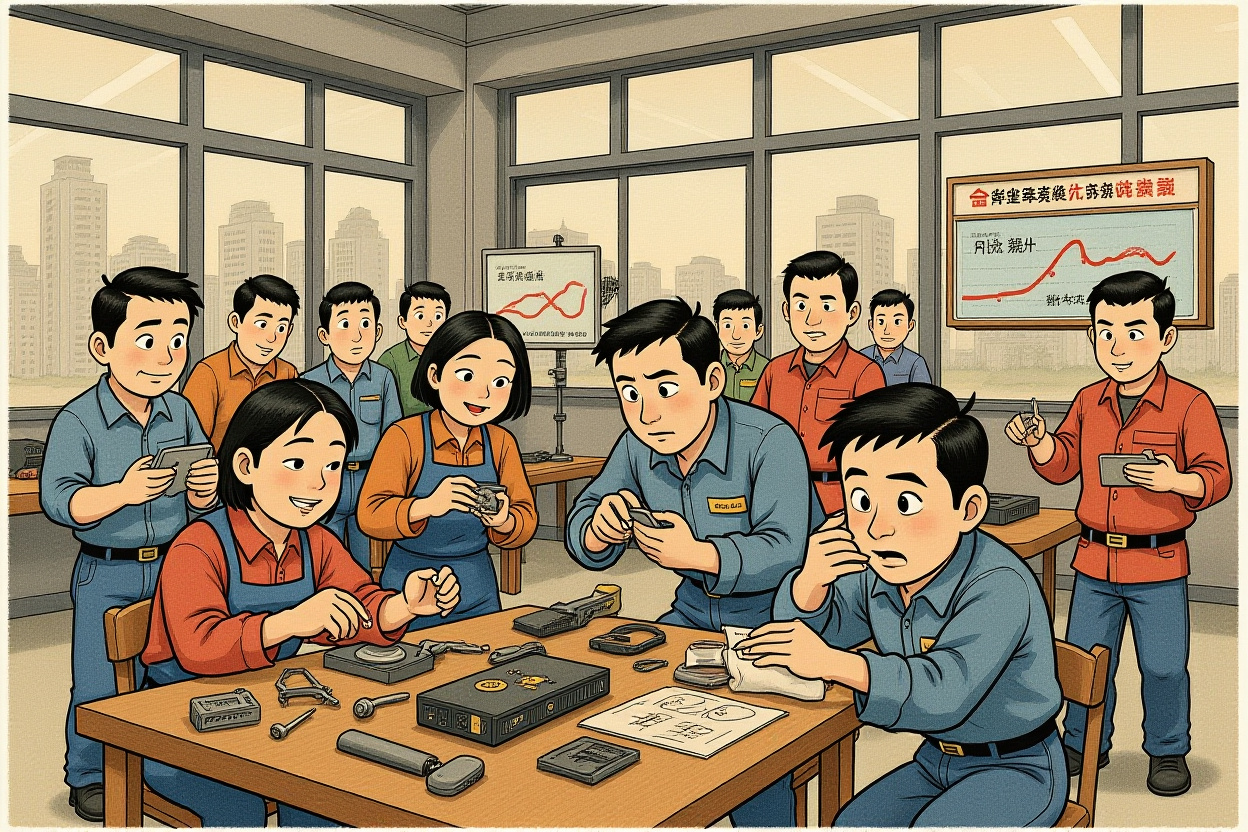
Faced with systemic neglect, abandoned vehicle owners have launched a remarkable self-rescue movement, transforming from passive consumers into active problem-solvers. This shift is giving rise to a unique automotive subculture in China, where collaboration and ingenuity are replacing defunct corporate support.
Online Communities and Knowledge Sharing
Owners have formed extensive online groups on platforms like WeChat and forums, where technically savvy individuals offer free guidance. They create video tutorials for common fixes—such as replacing air filters, manually clearing故障码 (fault codes), or diagnosing minor issues—enabling others to perform basic maintenance themselves. Some experienced owners run virtual ‘clinics,’ providing免费义诊 (free consultations) for疑难杂症 (complex problems). These communities also serve as databases for sharing故障 experiences and solutions, reducing the learning curve for new abandoned vehicle owners. For instance, when official over-the-air (OTA) updates ceased, enthusiasts developed methods to hack车机 systems, installing Android OS to restore functionality, albeit with risks like bricking devices.