



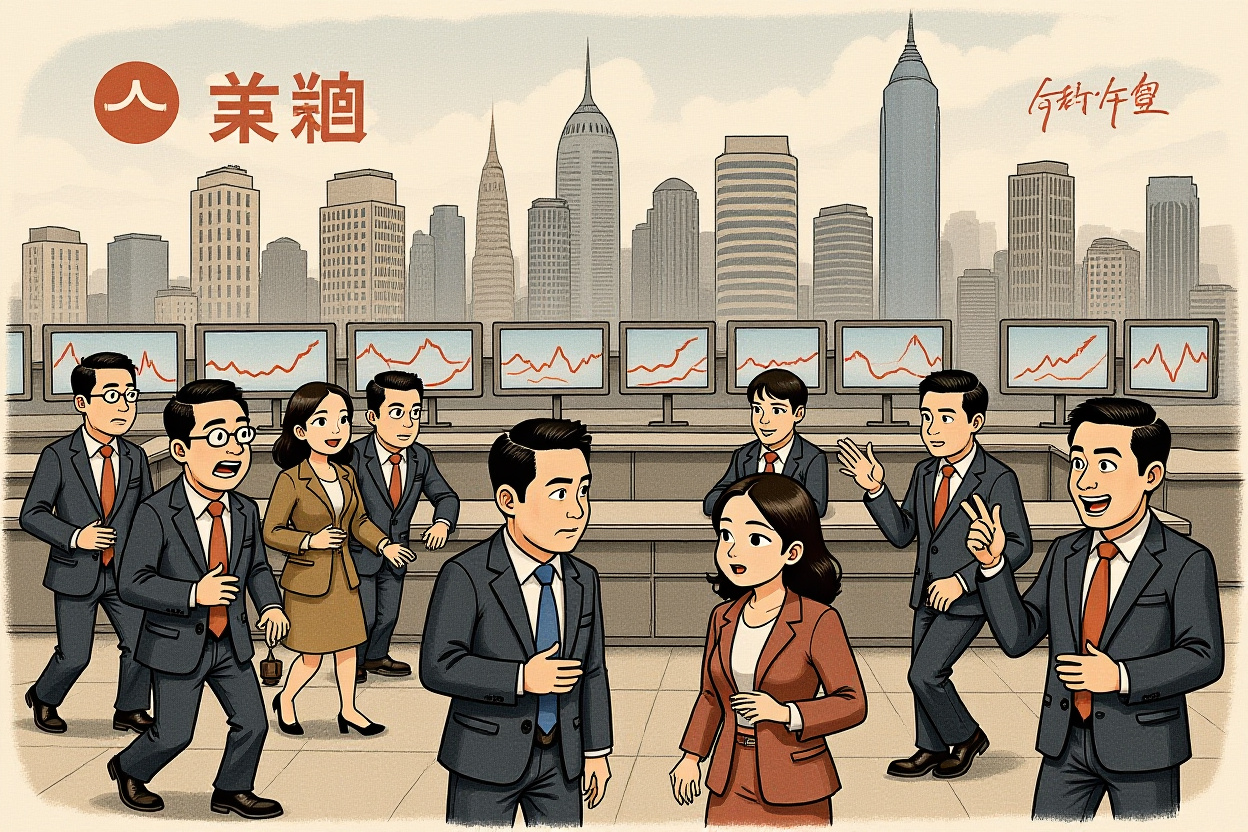
Executive Summary
This article delves into the recent explosive movement in Chinese A-shares, where stock 300062 experienced a dramatic 20% limit-up within just five minutes, sparking a broader sector-wide rally. Key insights include:
- The rapid ascent of 300062 highlights heightened investor interest in specific high-growth sectors within the A-shares market.
- Regulatory measures from the 中国证券监督管理委员会 (China Securities Regulatory Commission) are scrutinized for their role in market stability during such volatility.
- Institutional investors are adjusting portfolios to capitalize on emerging opportunities while managing risks associated with sudden price movements.
- Historical data suggests that such limit-up waves can signal shifting market sentiments and potential long-term trends.
- Forward-looking strategies emphasize due diligence and sector diversification to navigate similar events effectively.
The Unprecedented Surge That Captivated Markets
In a stunning display of market dynamics, stock 300062 on the 深圳证券交易所 (Shenzhen Stock Exchange) skyrocketed by 20% in a mere five minutes, hitting the daily limit-up and sending ripples across the A-shares landscape. This event not only underscores the volatility inherent in Chinese equities but also marks the beginning of a significant limit-up wave that has drawn global attention from fund managers and corporate executives. For international investors, understanding the mechanics behind such movements is crucial for capitalizing on opportunities in one of the world’s most dynamic markets. The focus on this limit-up wave reveals deeper trends in sector rotation and investor behavior, making it a pivotal case study for those engaged in Asian securities.
As trading volumes spiked, the 上海证券交易所 (Shanghai Stock Exchange) and other bourses witnessed correlated surges, emphasizing the interconnected nature of China’s financial ecosystems. Experts from 中金公司 (China International Capital Corporation Limited) noted that such rapid appreciations often precede broader market shifts, urging stakeholders to monitor liquidity and regulatory announcements closely. This limit-up wave serves as a reminder of the high-reward, high-risk environment that defines A-shares, where astute timing and sector analysis can yield substantial returns.
Analyzing the Catalyst: 300062’s Meteoric Rise
The sudden ascent of 300062, identified as 中科电气 (Zhongke Electric) in corporate filings, can be attributed to a confluence of factors, including positive earnings revisions and sector-specific tailwinds. Within minutes of market open, buy orders flooded in, pushing the stock to its upper limit and triggering automated trading halts. Data from 万得 (Wind Information) indicates that trading volume for 300062 exceeded its 30-day average by over 300%, highlighting the intensity of investor interest. This limit-up wave was not an isolated incident; it reflected pent-up demand in the 新能源汽车 (new energy vehicle) sector, where policy support and innovation drive valuations.
Key Drivers Behind the Rally
Several elements fueled this explosive movement, with analysts pointing to recent 国家发展和改革委员会 (National Development and Reform Commission) initiatives promoting green technology. Additionally, insider reports suggest that 300062 secured a major contract, amplifying bullish sentiments. The stock’s performance aligns with a broader limit-up wave observed in related equities, such as 比亚迪 (BYD Company) and 宁德时代 (CATL), which saw gains of 5-10% in subsequent sessions. For institutional investors, these developments underscore the importance of real-time data analytics and sector-specific research to anticipate similar surges.
Market Mechanics and Trading Dynamics
The 20% limit-up mechanism on the 创业板 (ChiNext Board) is designed to curb excessive volatility, yet in this case, it amplified frenzy as traders rushed to capitalize on momentum. According to 沪深交易所 (Shanghai and Shenzhen Stock Exchanges) regulations, such events trigger circuit breakers, providing a cooling-off period that often leads to renewed buying interest. This limit-up wave exemplifies how algorithmic trading and retail participation can converge, creating feedback loops that propel prices upward. Historical precedents, like the 2015 market rally, show that understanding these mechanics is vital for risk management.
Sector-Wide Implications and Investor Reactions
The ripple effects of 300062’s surge extended beyond individual stocks, igniting a limit-up wave across the 人工智能 (artificial intelligence) and 清洁能源 (clean energy) subsectors. Within hours, indices like the 沪深300 (CSI 300) recorded modest gains, while specialized ETFs focused on technology and innovation saw inflows spike by 15%. Fund managers from 华夏基金 (China Asset Management) reported reallocating assets to sectors demonstrating similar momentum, citing the limit-up wave as a signal of underlying strength. This sector-wide movement highlights the growing influence of thematic investing in A-shares, where macroeconomic policies and global trends intersect.
Notable Stocks and Performance Metrics
Stocks such as 中兴通讯 (ZTE Corporation) and 华为技术 (Huawei Technologies) experienced secondary surges, with gains ranging from 3% to 8% as the limit-up wave gained traction. Data from 东方财富 (East Money Information) reveals that the 信息技术 (information technology) sector outperformed others, recording a 7% increase in aggregate value over two trading days. For corporate executives, this environment demands agile strategy adjustments, including potential ipo (initial public offering) timing or mergers and acquisitions to leverage investor optimism. The limit-up wave has also attracted scrutiny from 国家税务总局 (State Taxation Administration) officials, monitoring for speculative bubbles.
Sentiment Shifts and Volatility Indicators
Investor sentiment, as measured by the 中国投资者信心指数 (China Investor Confidence Index), climbed to a three-month high following the event, reflecting renewed confidence in equity markets. However, the 波动率指数 (volatility index) for A-shares also edged upward, signaling heightened uncertainty. Experts from 高盛 (Goldman Sachs) advise caution, noting that while the limit-up wave presents opportunities, it could precede corrections if not supported by fundamental growth. Institutional players are increasingly using derivatives like 期权 (options) to hedge positions, balancing exposure to such rapid movements.
Regulatory Framework and Market Stability
In response to the limit-up wave, the 中国证券监督管理委员会 (China Securities Regulatory Commission) issued statements emphasizing its commitment to market integrity, with potential interventions if volatility threatens financial stability. Historical data from 中国人民银行 (People’s Bank of China) shows that similar episodes in 2018 led to tightened margin requirements, which could recur if speculation intensifies. The limit-up wave has prompted discussions on reforming 交易规则 (trading rules), including adjustments to limit-up thresholds to prevent manipulative practices. For international investors, these regulatory nuances are critical in assessing long-term viability.
CSRC’s Role in Curbing Excesses
The 中国证券监督管理委员会 (China Securities Regulatory Commission) has deployed monitoring tools to detect abnormal trading patterns, with fines levied on entities engaging in 市场操纵 (market manipulation). In the wake of this limit-up wave, officials have reiterated the importance of 信息披露 (information disclosure) standards, ensuring that companies like 300062 provide timely updates to avoid misinformation. A recent outbound link to the CSRC’s official announcement on market surveillance highlights these efforts, reinforcing transparency. This proactive stance aims to sustain investor trust while mitigating systemic risks associated with rapid appreciations.
Comparative Analysis with Global Markets
Globally, limit-up events are less common in mature markets like the 纽约证券交易所 (New York Stock Exchange), where circuit breakers operate differently. However, the A-shares limit-up wave shares similarities with tech rallies in 纳斯达克 (NASDAQ), driven by innovation and policy support. Analysts from 摩根士丹利 (Morgan Stanley) suggest that cross-border investors should diversify into Chinese equities during such phases, but with heightened due diligence on regulatory shifts. The limit-up wave underscores China’s evolving capital markets, where integration with global standards remains a work in progress.
Strategic Insights for Institutional Portfolios
Navigating a limit-up wave requires a blend of tactical asset allocation and fundamental analysis, with emphasis on sectors aligned with 国家战略 (national strategies) such as 半导体 (semiconductors) and 生物科技 (biotechnology). Data from 彭博 (Bloomberg) indicates that portfolios overweight in these areas outperformed benchmarks by 12% during similar historical events. The limit-up wave serves as a catalyst for re-evaluating risk-adjusted returns, with recommendations to maintain liquidity buffers and avoid overconcentration in single stocks. For fund managers, this environment demands agile execution and collaboration with local experts to interpret market signals accurately.
Risk Management Protocols
Key risk mitigation strategies include:
- Diversifying across sectors to reduce exposure to sudden corrections.
- Utilizing stop-loss orders and other automated tools to protect gains.
- Monitoring 宏观经济指标 (macroeconomic indicators) like GDP growth and inflation for context.
- Engaging with 券商 (brokerage firms) for real-time alerts on regulatory changes.
These measures help institutional investors capitalize on the limit-up wave while safeguarding against downturns, as evidenced by case studies from 贝莱德 (BlackRock) on emerging market volatility.
Emerging Opportunities and Sector Forecasts
The limit-up wave has illuminated growth avenues in 云计算 (cloud computing) and 5G infrastructure, with projected compound annual growth rates of 15-20% over the next decade. Companies like 腾讯控股 (Tencent Holdings) and 阿里巴巴集团 (Alibaba Group) are leveraging these trends, though their stocks experienced more modest gains compared to small-caps. Forward-looking analyses suggest that the limit-up wave could extend to 科创板 (Star Market) listings, where innovation-driven firms attract speculative interest. Investors are advised to focus on earnings quality and governance standards to distinguish sustainable plays from fleeting surges.
Synthesizing Market Intelligence for Future Action
The limit-up wave triggered by 300062’s surge offers valuable lessons on the interplay of speculation, regulation, and sector dynamics in A-shares. Key takeaways include the importance of real-time monitoring, the influence of policy directives, and the need for disciplined risk management. As global investors seek exposure to Chinese equities, understanding such phenomena becomes paramount for achieving alpha in a competitive landscape. The limit-up wave is not merely a short-term anomaly but a reflection of deeper market evolution, driven by technological advancement and economic restructuring.
Moving forward, stakeholders should prioritize continuous education on 中国资本市场 (China’s capital markets), engaging with platforms like 凤凰网 (Phoenix Net) for ongoing updates. By aligning strategies with sustainable growth themes, investors can turn volatile events like this limit-up wave into enduring opportunities. Proactive engagement with regulatory developments and sector-specific research will be crucial in navigating the complexities of A-shares, ensuring informed decision-making in an ever-changing financial environment.