



Executive Summary
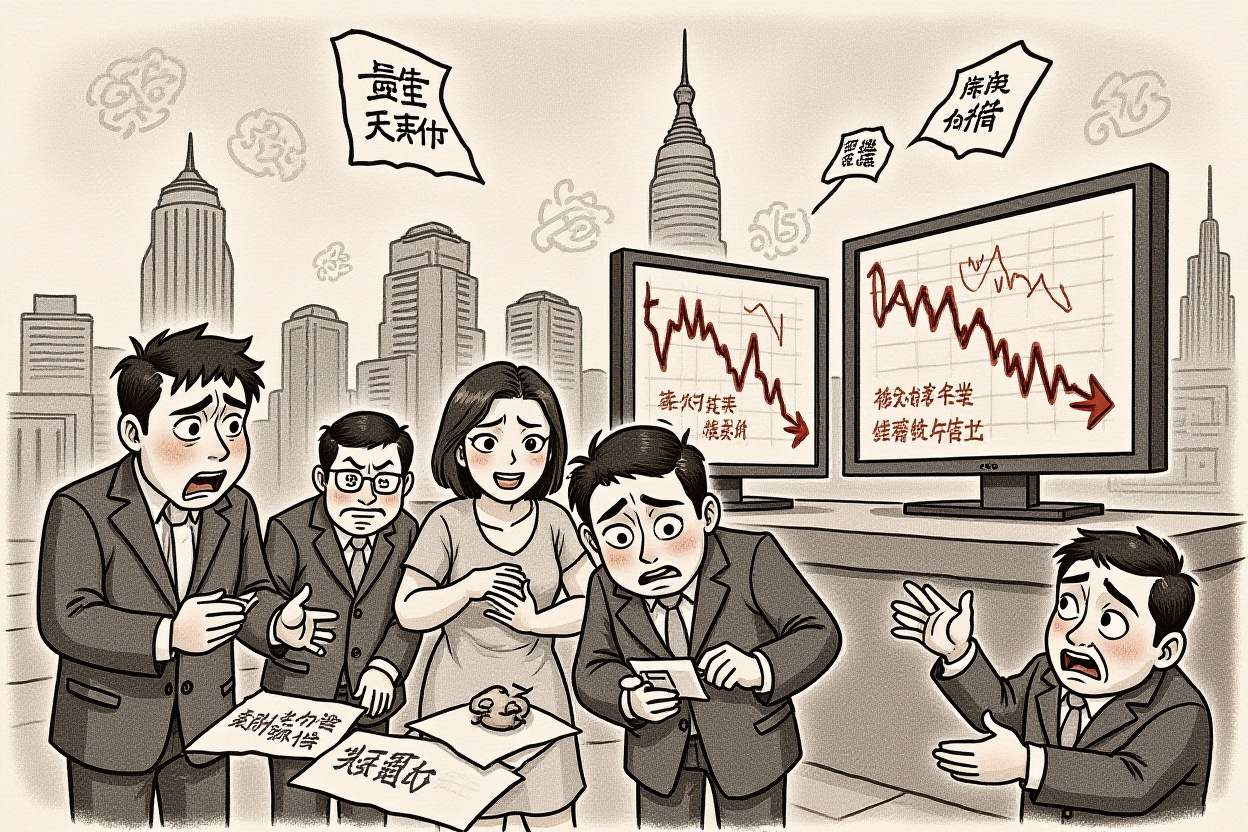
As the earnings season intensifies, a concerning trend is emerging within China’s A-share market. Multiple listed companies have issued downward revisions to their performance forecasts, a move that not only shakes investor confidence but also triggers stringent regulatory scrutiny. This article delves into the implications of these widespread performance forecast revisions, examining the underlying causes, sectoral vulnerabilities, and the direct link to delisting mechanisms. Key takeaways include:
- – A surge in performance forecast revisions across industries, particularly in manufacturing and consumer sectors, indicating broader economic headwinds.
- – The ‘face change’ phenomenon, where abrupt earnings swings meet regulatory definitions for delisting risk, threatening company survival.
- – Detailed analysis of China’s delisting rules under the 上海证券交易所 (Shanghai Stock Exchange) and 深圳证券交易所 (Shenzhen Stock Exchange), highlighting specific triggers like consecutive losses.
- – Actionable insights for investors on navigating portfolio risks and identifying early warning signs amid market volatility.
- – Regulatory perspectives from the 中国证券监督管理委员会 (China Securities Regulatory Commission) on market discipline and future policy directions.
The Unsettling Wave of Performance Forecast Revisions
In recent weeks, the A-share market has witnessed a notable increase in companies issuing corrections to their previously announced earnings guidance. This trend of performance forecast revisions is not merely a routine adjustment but a signal of deeper operational and macroeconomic challenges. For institutional investors, these revisions serve as critical indicators of corporate health and sectoral resilience.
The scope of these downgrades is broad, affecting firms from traditional manufacturing to newer tech ventures. Data from wind资讯 (Wind Information) suggests that over 50 A-share companies have lowered their profit forecasts for the current fiscal quarter, with many citing rising raw material costs, supply chain disruptions, and subdued consumer demand. These performance forecast revisions are often accompanied by sharp stock price declines, eroding market capitalization and investor trust.
Quantifying the Downturn: Sectoral Breakdown and Data Points
A closer look reveals that the consumer discretionary and industrial sectors are among the hardest hit. For instance, companies like 浙江世宝 (Zhejiang Shibao) and 苏宁易购 (Suning.com) have publicly adjusted their earnings expectations downward by margins exceeding 30%. This wave of performance forecast revisions underscores the vulnerability of businesses heavily reliant on domestic consumption and export markets.
Statistical evidence points to a correlation between these revisions and broader economic indicators, such as the slowing Purchasing Managers’ Index (PMI) and persistent deflationary pressures. As 中国人民银行 (People’s Bank of China) Governor Pan Gongsheng (潘功胜) noted in a recent speech, ‘Structural adjustments in the real economy are inevitably reflected in corporate earnings, requiring vigilant monitoring.’ Investors must dissect these performance forecast revisions to gauge underlying sector health rather than viewing them in isolation.
Decoding the ‘Face Change’ in Corporate Earnings
The Chinese market colloquially refers to sudden and severe earnings swings as ‘face change’ (变脸), a term that captures the abrupt deterioration in financial performance. This phenomenon is central to understanding the current risk environment, as such volatility often triggers regulatory thresholds for delisting. When a company’s earnings drastically underperform initial guidance, it raises red flags about governance, transparency, and sustainability.
Several factors contribute to these earnings ‘face changes,’ including aggressive initial forecasting, unexpected regulatory changes, and fraud. The case of 康美药业 (Kangmei Pharmaceutical) serves as a cautionary tale, where accounting irregularities led to massive restatements and eventual delisting. Today’s performance forecast revisions may hint at similar, albeit less extreme, issues brewing within certain listed entities.
Regulatory Definitions and the Threshold for Concern
Under rules set by the 中国证券监督管理委员会 (China Securities Regulatory Commission), a significant negative correction in annual earnings—typically defined as a deviation of over 50% from initial forecasts—can prompt immediate inquiries and potential trading halts. The 沪深交易所 (Shanghai and Shenzhen Stock Exchanges) mandate detailed disclosures for such revisions, requiring companies to explain causes and impacts. These performance forecast revisions are scrutinized to protect retail investors and maintain market integrity.
For example, if a company revises its net profit from a projected gain to a loss, it may breach the ‘continuous loss’ criterion outlined in delisting regulations. This direct link between performance forecast revisions and delisting risk is a key focus for analysts tracking corporate compliance and survival odds. Outbound resources like the CSRC’s official announcement on delisting reforms (available on their website) provide further context on enforcement priorities.
Delisting Mechanisms: From Risk Trigger to Market Exit
China’s delisting framework has evolved significantly in recent years, moving towards a more rigorous system that weeds out underperforming companies. The current regulations, primarily governed by the 上市公司重大资产重组管理办法 (Measures for the Administration of Major Asset Restructuring of Listed Companies) and exchange-specific rules, outline clear pathways for forced exits. Performance forecast revisions often serve as the first domino in this chain, especially when they indicate persistent unprofitability or fraud.
Key delisting triggers include three consecutive years of net losses, audit opinions with disclaimers or adverse findings, and stock prices persistently below face value for extended periods. The recent performance forecast revisions have placed several firms on the brink of these thresholds, with at least 10 A-share companies reportedly at risk of triggering delisting procedures in the coming months. This underscores the high stakes of accurate earnings guidance in a maturing market.
Case Studies: Companies Navigating the Delisting Precipice
Consider 乐视网 (LeEco), which faced delisting after years of losses and failed restructurings, partly precipitated by overly optimistic performance forecasts. Similarly, 保千里 (Baoqianli) saw its stock suspended following earnings revisions that revealed deeper solvency issues. These examples highlight how performance forecast revisions can escalate into existential crises.
In the current cycle, companies like 华谊兄弟 (Huayi Brothers Media) and 众泰汽车 (Zotye Auto) have issued downward revisions, citing industry-specific downturns. Their situations illustrate the sectoral spread of risks; for instance, Huayi Brothers pointed to film production delays and weak box office returns, while Zotye referenced electric vehicle subsidy cuts. Investors monitoring these performance forecast revisions must assess whether challenges are temporary or systemic, influencing delisting probabilities.
Market Implications: Volatility, Sentiment, and Strategic Responses
The cumulative effect of widespread performance forecast revisions is a more volatile and cautious A-share market. Institutional investors, including global fund managers, are recalibrating their Chinese equity exposures, often reducing holdings in sectors with high revision frequencies. This sentiment shift is reflected in trading volumes and valuation multiples, as uncertainty premiums rise.
Data from 东方财富 (East Money Information) shows that sectors with the most performance forecast revisions, such as materials and real estate, have underperformed the broader CSI 300 index by an average of 15% year-to-date. This underperformance is a direct consequence of eroded earnings visibility and heightened delisting fears. As one Hong Kong-based portfolio manager noted, ‘We’re prioritizing companies with conservative guidance and strong cash flows to mitigate the shock of potential performance forecast revisions.’
Institutional Adaptation and Portfolio Defense Strategies
Sophisticated investors are employing several tactics to navigate this environment. First, enhancing due diligence on management credibility and historical guidance accuracy. Second, diversifying into state-owned enterprises (SOEs) and sectors with regulatory support, like green energy, which show fewer performance forecast revisions. Third, using derivatives to hedge against downside risks in volatile stocks.
Quotes from experts like Goldman Sachs analyst 刘炽平 (Martin Lau) emphasize the importance of ‘bottom-up analysis in a top-down risky market.’ He suggests focusing on companies with transparent disclosure practices and robust internal controls, as these are less likely to issue surprising performance forecast revisions. Additionally, resources like the 中国上市公司协会 (China Association of Public Companies) reports offer insights into corporate governance trends that can preempt revisions.
Regulatory Landscape: Enforcement Trends and Future Directions
The 中国证券监督管理委员会 (China Securities Regulatory Commission) has taken a proactive stance on market discipline, viewing performance forecast revisions as a test of disclosure standards. Recent speeches by CSRC officials, including Chairperson 易会满 (Yi Huiman), stress ‘zero tolerance’ for misleading forecasts and fraud. This regulatory rigor is partly driven by China’s push for capital market internationalization, aiming to align with global best practices.
Upcoming regulatory changes may include stricter timelines for forecast updates and enhanced penalties for violations. The focus on performance forecast revisions is likely to intensify, with the CSRC leveraging big data and AI to monitor discrepancies in real-time. As Yi stated, ‘Accurate earnings guidance is foundational to market trust; we will hold companies accountable for material misstatements.’ This signals a future where performance forecast revisions could trigger faster regulatory actions.
Predictions for Further Revisions and Market Evolution
Looking ahead, analysts anticipate more performance forecast revisions in the second half of the year, particularly as global economic slowdowns impact export-oriented firms. Sectors like technology and healthcare, which have seen fewer revisions so far, may not be immune if funding conditions tighten. The key for investors is to track leading indicators, such as inventory levels and order books, to anticipate revisions before they are announced.
The long-term implication is a healthier A-share market, where delisting mechanisms efficiently remove weak players, and performance forecast revisions become rarer due to improved corporate governance. However, in the short term, volatility will persist. Resources like the 国家统计局 (National Bureau of Statistics) monthly economic data can provide context for macro trends influencing revisions.
Synthesizing Risks and Opportunities in a Volatile Market
The trend of performance forecast revisions among A-share companies is a multifaceted issue with significant implications for delisting risks and investment strategies. Key takeaways include the importance of sectoral analysis, the direct link between earnings volatility and regulatory triggers, and the need for enhanced due diligence in stock selection. As the market digests these revisions, investors must balance caution with opportunity, recognizing that some downgrades may present oversold bargains in fundamentally sound firms.
Forward-looking guidance suggests monitoring regulatory announcements from the CSRC and exchange disclosures closely. Engage with expert analysis from platforms like 凤凰网 (Phoenix New Media) for real-time updates, and consider diversifying into ETFs or funds with active risk management. Ultimately, navigating this environment requires a disciplined approach to performance forecast revisions, treating them as critical signals rather than noise in the dynamic landscape of Chinese equities.