



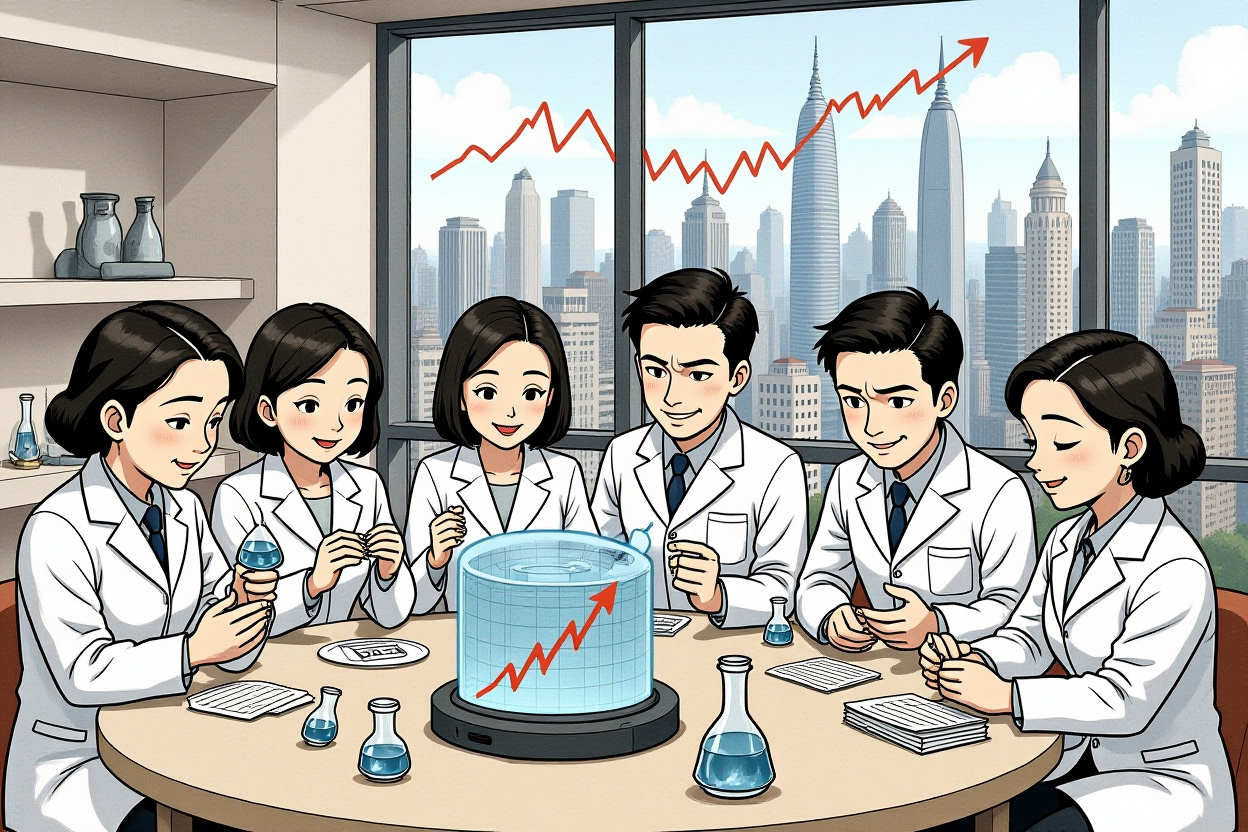
• China’s pharmaceutical sector has emerged as a top-performing industry in 2025, rebounding from previous years of challenges.
• Innovation-driven growth, particularly in novel drug development and overseas licensing deals, is fueling revenue surges and stock appreciation.
• Leading companies like Hengrui Medicine and BeiGene are achieving profitability milestones and dominating global markets with blockbuster drugs.
• Supportive government policies and streamlined regulatory approvals are accelerating the industry’s transformation and international competitiveness.
• Increased R&D investments and strategic global partnerships underline China’s shift from a follower to a leader in pharmaceutical innovation.
In the first half of 2025, China’s pharmaceutical industry has staged a impressive turnaround, shaking off years of stagnation to become one of the most dynamic sectors in the capital markets. This resurgence is anchored in the rise of homegrown innovative drugs, with companies leveraging cutting-edge research, strategic global partnerships, and favorable policy tailwinds. Stocks like Hengrui Medicine, often referred to as the ‘A-share pharmaceutical leader,’ have soared by over 44% this year, reflecting investor confidence in the sector’s long-term growth trajectory. The momentum isn’t limited to a single player—industry-wide innovation is driving revenue growth, profitability, and expansive international footprints.
The Core Driver: Innovation-Driven Growth in Drug Development
At the heart of the pharmaceutical sector’s revival is innovation-driven growth. Companies are pivoting from generic drug production to novel therapeutics, resulting in higher margins and sustainable competitive advantages. This shift is evident in the financial performance of industry giants.
Breakthrough Performers and Their Blockbuster Drugs
BeiGene, for instance, reported its first-ever profit in the first half of 2025, driven by the global success of zanubrutinib (sold under the brand name Brukinsa). The drug generated worldwide sales of approximately RMB 12.5 billion, a 56% year-on-year increase, securing the top position in the BTK inhibitor market both in the U.S. and globally. This innovation-driven growth has enabled BeiGene to upwardly revise its full-year revenue forecast to between RMB 35.8 billion and RMB 38.1 billion.
Similarly, Hengrui Medicine achieved record highs in revenue, net profit, and operating cash flow for the first half of the year. Its net profit surged by 30% year-on-year, largely thanks to recently launched innovative drugs like rezvilutamide and dalpiciclib. Revenue from innovative drugs reached RMB 7.57 billion, and when combined with licensing income, the total climbed to RMB 9.56 billion—accounting for 60.66% of the company’s overall revenue.
Expanding Global Footprints Through Strategic Partnerships
Innovation-driven growth is not confined to domestic sales. Chinese pharmaceutical firms are aggressively pursuing overseas business development (BD) deals to monetize their R&D achievements on a global scale.
Record-Breaking Licensing Agreements
In 2025, Chinese companies have already surpassed last year’s total in overseas BD transaction values. Hengrui Medicine, for example, signed a landmark agreement with GSK worth USD 12.5 billion, setting a new record for single BD deals in China’s pharmaceutical history. Other companies, including 3SBio and CSPC Pharmaceutical Group, have also secured deals exceeding USD 5 billion. These partnerships not only provide immediate financial benefits but also validate the quality and global potential of China’s innovative drugs.
R&D Investment: Fueling Long-Term Innovation-Driven Growth
Sustaining innovation-driven growth requires significant and continuous investment in research and development. Leading pharmaceutical companies have markedly increased their R expenditures, focusing on building robust pipelines that ensure future revenue streams.
Notable R&D Initiatives and Pipeline Developments
Hengrui Medicine invested RMB 3.87 billion in R&D during the first half of 2025, with over 100 self-developed innovative products in clinical development and more than 400 clinical trials underway globally.
Hansoh Pharmaceutical allocated RMB 1.44 billion to R&D, a 20.4% increase year-on-year, as part of its strategy to maintain a pipeline that balances immediate commercial products with longer-term innovations.
Simcere Pharmaceutical dedicated 28.7% of its revenue to R&D, cumulatively investing over RMB 10 billion in the past decade. The company now boasts a global pipeline of more than 60 innovative drugs.
These investments are paying off. According to a report by Citeline, China now accounts for nearly 30% of global drug development, while the U.S. share has declined to about 48%. The ‘developed in China, licensed globally’ model is gaining widespread acceptance.
Policy Support: Creating a Conducive Ecosystem
Government policies have played a pivotal role in fostering innovation-driven growth. In 2025, regulators have introduced measures to simplify market access for innovative drugs, expand insurance coverage, and provide end-to-end support for R&D and commercialization.
Key Policy Initiatives
The ‘Several Measures to Support High-Quality Development of Innovative Drugs,’ issued in June 2025, is particularly noteworthy. It aims to elevate the industry by streamlining clinical trials, accelerating approvals, and encouraging public-private partnerships. Additionally, provincial governments have rolled out health insurance schemes that cover innovative therapies, making them more accessible to patients while ensuring commercial viability for developers.
Capital Markets: Fueling Growth and Innovation
Public markets have provided essential funding for biotech and pharmaceutical companies, especially those yet to turn a profit. The STAR Market (using its fifth set of listing standards) and Hong Kong’s Chapter 18A have enabled loss-making innovative firms to raise capital and accelerate their growth. In the first half of 2025, IPO fundraising in the pharmaceutical sector grew by 40% year-on-year, underscoring robust investor appetite.
Future Outlook: From Followers to Global Leaders
Analysts from institutions like Tianfeng Securities and Industrial Securities believe that China’s pharmaceutical industry has transitioned from quantitative expansion to qualitative leadership. Companies are no longer mere followers but are increasingly setting global standards in drug development and commercialization.
Challenges and Opportunities
While the outlook is optimistic, challenges remain. Intense competition, regulatory hurdles in international markets, and the need for continuous innovation require strategic agility. However, the sector’s commitment to R&D, coupled with supportive policies and growing global recognition, positions it for sustained innovation-driven growth.
China’s pharmaceutical sector exemplifies how innovation-driven growth can transform an industry. With companies like Hengrui Medicine and BeiGene leading the charge, supported by favorable policies and dynamic capital markets, the future looks promising. For investors, industry stakeholders, and policymakers, the key is to sustain this momentum by continuing to prioritize research, embrace global partnerships, and adapt to evolving market needs. Explore emerging opportunities in this sector to capitalize on its growth trajectory.