



Key Takeaways
– Biyi Co. proposes 624M yuan private placement diluting existing shareholders by 15-22%
– Employee stock plan offers 50% discount shares with easily achievable sales targets
– Performance metrics ignore profitability amid declining gross margins
– Cumulative dividend payout ratio stands at just 22% since 2022 IPO
– Minority shareholders face double dilution through placement and discounted shares
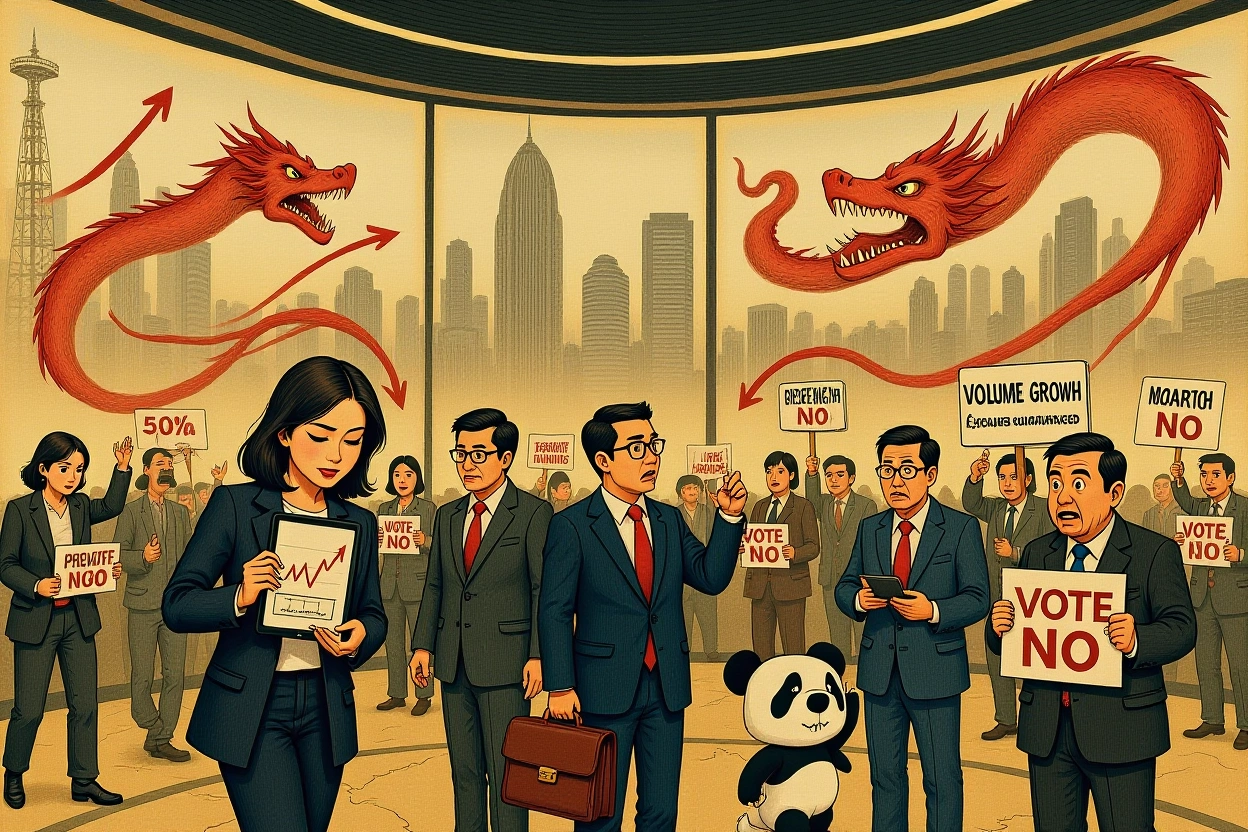
In a controversial one-two punch, kitchen appliance manufacturer Biyi Co. (603215.SH) has simultaneously announced a massive 624 million yuan private placement and deeply discounted employee stock incentives, raising serious corporate governance concerns. The Shanghai-listed company, which specializes in OEM manufacturing of air fryers and kitchen gadgets, claims these moves fund expansion while motivating staff. However, financial analysis reveals both actions disproportionately benefit insiders while threatening minority shareholders’ interests through significant equity dilution and questionable performance metrics. With existing shareholders facing potential 21.67% ownership erosion and management acquiring stock at half market price, these coordinated decisions demand scrutiny regarding fair treatment of minority investors.
The Anatomy of Biyi’s Massive Private Placement
On July 31, 2025, Biyi received Shanghai Stock Exchange acceptance for its proposed private placement targeting up to 35 specific investors. The 624 million yuan capital raise represents one of the most aggressive dilution events in recent Chinese small-cap history relative to the company’s size.
Unprecedented Scale Relative to Company Size
Financial statements reveal the staggering scale of this offering:
– Total Q1 2025 assets: 3.012 billion yuan
– Current net assets: 1.191 billion yuan
– Placement represents 52.4% of existing net assets
– Post-placement equity financing total since IPO: 1.207 billion yuan
For context, Biyi’s entire 2022 IPO raised just 583 million yuan. This secondary offering essentially duplicates their initial public offering size within three years, despite the company’s net assets barely doubling during that period.
Shareholder Dilution Mechanics
Based on July 31 closing price of 17.93 yuan per share, the placement terms create concrete dilution risks:
– Pricing range: 14.70 – 18.37 yuan (80-100% of 20-day average)
– New shares issued: 34 – 42 million
– Current outstanding shares: 188 million
– Post-placement shares: 222-230 million
– Existing shareholder dilution: 15.32% – 21.67%
This dilution occurs without proportional value transfer to existing shareholders. Unlike rights issues that allow participation, private placements selectively benefit new institutional investors who acquire stock below market value.
Questionable Employee Stock Incentives
Just one day before announcing the private placement, Biyi revealed its 2025 Employee Stock Ownership Plan (ESOP), raising eyebrows with its generous terms and minimal performance hurdles.
The “Half-Price” Discount Controversy
The ESOP’s pricing structure presents immediate value transfer concerns:
– Grant price: 9.26 yuan/share
– July 30 closing price: 18.25 yuan
– Effective discount: 49.3%
– Shares granted: 1.84 million
– Beneficiaries: 78 management and core staff
– Total value transfer: approximately 16.5 million yuan
Such deep discounts are exceptionally rare among listed companies, typically reserved for turnaround situations rather than firms at their operational peak. Biyi’s timing—issuing discounted shares immediately before dilutive financing—suggests compensation for anticipated stock price pressure.
Performance Targets Lacking Substance
The ESOP’s performance metrics reveal troubling design flaws:
– 2025 target: 10% sales growth vs. 2024
– 2026 target: 25% sales growth vs. 2024 (not 2025)
– No profitability metrics required
– No return-on-capital thresholds
This structure creates perverse incentives:
– Management can hit 2026 target even with sales decline from 2025
– Volume growth can be achieved through margin-destructive pricing
– Ignores Biyi’s historical 13.51% sales CAGR (2018-2024)
Notably, the targets disregard Biyi’s current capacity expansion that practically guarantees volume growth through 2026.
Low Barriers and Execution Risks
Multiple factors suggest Biyi’s ESOP targets require minimal effort to achieve, essentially guaranteeing management compensation regardless of operational excellence.
Capacity Expansion Guaranteeing Volume Growth
Biyi’s production infrastructure developments practically ensure target achievement:
– Zhongyi Industrial Park: 20 million unit capacity entering production
– Thailand factory: 7 million unit capacity (Phase 1 operational)
– Current production: Approximately 15 million units annually
– Capacity growth: 180% increase
With construction progress evident in financials—evidenced by the 5.38 billion yuan in progress projects as of Q1 2025—these facilities guarantee Biyi can physically manufacture the required volumes regardless of market demand.
Margin Erosion Risks
The sales-volume-only incentive structure creates dangerous motivations:
– Gross margin trend: Downward trajectory since 2022
– Current gross margin: Below 15%
– OEM business model: Naturally low-margin operations
Management could hit targets through price reductions that devastate profitability—particularly concerning given the private placement’s capital allocation to further capacity expansion. This creates a vicious cycle where volume growth comes at the expense of minority shareholders’ interests.
Minority Shareholder Impact Analysis
The combination of massive dilution and discounted insider shares creates compounded negative effects for outside investors.
Double Dilution Effect
Minority shareholders face two-layer value erosion:
1. Private placement: Up to 21.67% ownership reduction
2. ESOP: Additional 0.98% stake transferred at half price
3. Combined ownership transfer: 22.65%+ without participation rights
This occurs while Biyi’s dividend record shows minimal capital return—just 266 million yuan distributed since IPO versus 1.207 billion yuan raised.
Corporate Governance Red Flags
The timing and structure raise governance concerns:
– ESOP announcement strategically precedes dilutive placement
– Performance metrics ignore capital efficiency
– Dividend payout ratio: Just 22.04% since listing
– Board accountability to minority shareholders appears weak
Notably, the company hasn’t explained why expansion requires equity financing rather than debt—especially with interest rates at historic lows. This suggests poor capital stewardship that consistently disadvantages minority shareholders.
Broader Market Implications
Biyi’s actions reflect concerning trends in China’s mid-cap markets where minority shareholder protection remains inconsistent.
Regulatory Scrutiny Landscape
The Shanghai Stock Exchange’s review process faces tests with such proposals:
– CSRC guidelines emphasize fair treatment of all shareholders
– Exchange rules prohibit “obviously unfair” related-party transactions
– Preferential share issuances require rigorous justification
Market participants will watch whether regulators accept Biyi’s sales-only performance metric as legitimate rather than a value transfer mechanism.
Investor Protection Mechanisms
Minority shareholders have limited recourse:
– Collective action hurdles under Chinese securities law
– Shareholder meeting approval likely assured through insider control
– Derivative lawsuits face high evidence thresholds
This case illustrates why institutional investors increasingly demand independent board representatives specifically tasked with protecting minority shareholders’ interests.
Protecting Your Stake as Minority Investor
Shareholders concerned about these developments should consider these protective measures:
Engagement Strategies
– Demand investor conference call participation
– Submit written questions about performance metric rationale
– Request independent valuation of placement terms
– Propose dividend policy improvements
Voting Considerations
Before the upcoming shareholder meeting:
– Scrutinize voting recommendations from proxy advisors
– Coordinate with other minority holders through investor platforms
– Consider voting against related-party transaction approvals
– Support independent director nominations
Document all engagement attempts—these strengthen potential regulatory complaints if voting rights appear disregarded.
Biyi’s dual approach—massively dilutive private placement coupled with deeply discounted insider shares—creates textbook conditions for minority shareholder value destruction. The 624 million yuan capital raise at up to 21.67% dilution, immediately following a 50%-discount ESOP with easily achievable targets, demonstrates concerning prioritization of management and new investor interests over existing shareholders. With gross margins already declining and expansion projects guaranteeing volume growth regardless of incentives, these actions appear designed to transfer value rather than create it. Minority investors should critically examine the upcoming shareholder meeting agenda, demand justification for the unusual performance metrics, and consider collective action to protect their interests. Regulatory authorities at the Shanghai Stock Exchange and CSRC must scrutinize whether these proposals meet fairness standards before setting concerning precedents for China’s capital markets.