



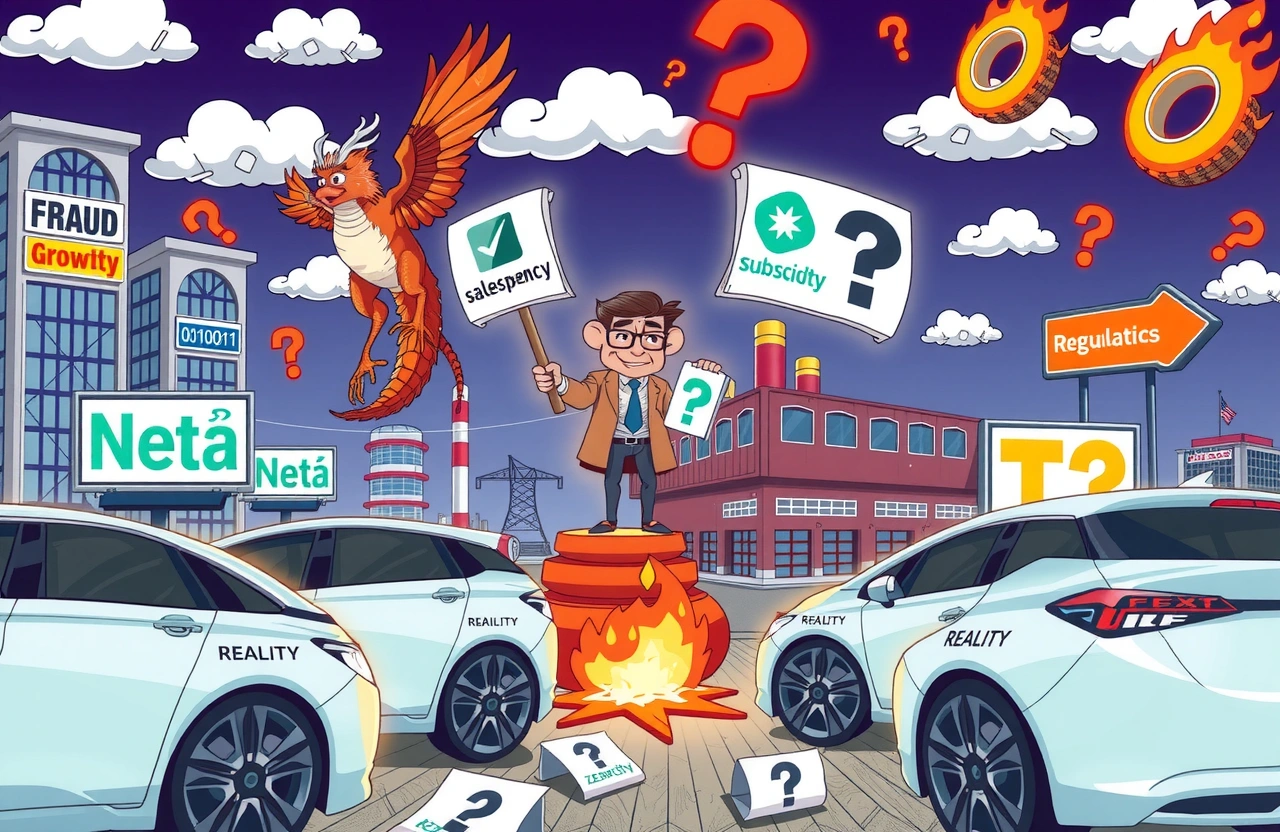
The Cutthroat Reality Behind China’s EV Sales Boom
China’s electric vehicle sector shows glittering growth statistics, but recent allegations pierce this facade. Industry analysts and leaked dealership documents reveal how manufacturers like Neta Auto (哪吒汽车) and Geely’s premium EV subsidiary Zeekr (极氪) appear to have artificially boosted sales numbers through coordinated pre-registration schemes. This practice enabled both companies to report meeting ambitious quarterly targets despite vehicles never reaching consumers.
The pressure to showcase growth in China’s overcrowded EV market has created fertile ground for such tactics. With over 300 domestic EV brands battling for market share amid grueling price wars and chronic overcapacity, the temptation to manipulate metrics becomes pronounced. These inflated sales figures matter enormously – they influence stock valuations, loan approvals, government subsidies, and consumer confidence in emerging automotive brands.
Key Revelations
- Reuters investigation documents over 64,700 pre-registered vehicles at Neta between 2023-2024
- Anonymous dealerships verify systematic insurance registration before customer sales
- Zeekr’s state-owned distributor Xiamen Jianda Auto implicated in identical tactics
- Automakers leveraged industry loopholes to create “zero-mileage second-hand cars”
Inside the Pre-Registration Schemes
The core mechanism enabling inflated sales figures involved exploiting China’s vehicle registration system. Dealers collaborated with manufacturers to insure and register vehicles as “sold” before they ever reached customers. These prematurely registered vehicles – deemed “zero-mileage second-hand cars” 零公里二手车 – artificially counted toward monthly sales targets while physically remaining in inventory.
Neta Auto’s Questionable Metrics
Copies of manufacturer-dealer communications show 64,719 vehicles pre-registered across a 15-month period, representing more than half of Neta’s officially reported 117,000 sales during this timeframe. The Shanghai-based automaker, positioned as a challenger brand offering affordable EVs, faced intense pressure after its sales declined following 2022’s peak.
Zeekr’s Xiamen Operation
Geely’s premium EV arm Zeekr employed identical tactics through Xiamen Jianda Auto (厦门建发汽车) as confirmed by sales receipts verified by Reuters. This state-owned enterprise coordinated pre-registrations in southern China during late 2023 and early 2024. Evidence suggests this tactic surged particularly during fiscal quarter ends when automakers typically accelerate reporting to hit target benchmarks.
The Industry Mechanics Enabling Sales Inflation
Several structural factors explain how Chinese EV makers rationalized these practices:
- Subsidy Race: Local government incentives often track sales volume thresholds
- Investor Expectations: Startups face intense scrutiny from venture capital backers demanding growth
- Capacity Utilization Reports: Factory output metrics influence production subsidies
- Overcrowded Market: Only 10 Chinese EV makers exceeded 100K annual sales in 2023
Li Zhong (李忠), a Shenzhen-based dealership manager with experience across EV brands, reveals: “Manufacturers often absorb pre-registration costs by reimbursing dealers for insurance premiums and registration fees. By Q4, they push inventory onto dealer books as ‘sold’ vehicles.” This creates a toxic cycle where unsold physical inventory accumulates while financial metrics appear robust.
Regulatory Reckoning Emerges
Crackdown Signals
The China Association of Automobile Manufacturers (CAAM) publication recently announced impending regulation changes targeting pre-registrations. Draft measures seen by industry analysts prohibit reselling vehicles within six months of initial registration – directly combating the core inflation tactic. This initiative, supported by the Ministry of Industry and Information Technology (MIIT), reflects official discomfort with deceptive metrics.
Market Reaction
Beijing’s official Economic Daily newspaper criticized zero-mileage resales as “market distortions” last month. Similar concerns emerged when state regulators met with executives from BYD, Tesla China and SAIC this March to discuss concerning practices contributing to irrational competition.
Simultaneously, brokerage analysts began flagging statistically improbable sales patterns as red flags. Morgan Stanley’s latest China Auto Report suggests examining automakers’ retail-to-insurance registration gaps to identify potential inflation.
Domino Effects Across Business Ecosystems
Beyond violating accounting principles, this systematic exaggeration impacts stakeholders:
| Stakehold | Impact |
|---|---|
| Consumers | Used vehicle listings flooded by unsold “new” cars registered months prior |
| Investors | Financial statements misrepresent true demand and revenue streams |
| Dealers | Forced to manage phantom inventory with cash flow consequences |
| Competitors | Distorted market positioning creates unrealistic benchmarks |
Broader Implications for China’s EV Ambitions
China dominates global electric vehicle production with nearly two-thirds of world manufacturing capacity according to IEA data. However, unsustainable domestic dynamics threaten global expansion plans:
- Exports surged to over 1.2 million EVs in 2023 yet represent overflow absorption
- Factory utilization rates average 25-40% across domestic EV makers
- The European Commission launched subsidy investigations targeting Chinese EVs
Le Zhao (乐钊), Auto Analyst at Guangfa Securities states: “Revenue inflation tactics buy time to attract investors but ultimately undermine industrial credibility internationally. Foreign regulators point to such reports as evidence for trade measures.”
The Path Toward Authentic Growth Reporting
Transparent sales reporting remains fundamental for healthy industry development. Concrete steps underway:
Regulatory Reconciliation
The MIIT framework forcing unsold inventories to remain on books longer compels honesty. Tampered metrics inevitably unravel during extended reporting windows – as occurred when unsold pre-registered vehicles accumulated without buyers.
Industry Self-Correction
Several major automakers voluntarily shifted to insurance-based sales reporting visible via China Banking & Insurance Regulatory Commission data. This alternative metric shows actual consumer adoption rather than dealership transfers.
For consumers navigating China’s dynamic EV market, cross-checking official sales figures against provincial insurance registration databases provides reality checks. Similarly, investors should prioritize companies disclosing fleet sales separately from genuine retail demand.
Electric vehicle sales data represents more than spreadsheet numbers – it reflects the trajectory of sustainable transportation’s future. Preserving trust demands transparent metrics unaffected by procedural distortions. Only through rigorously verified numbers can investors accurately allocate capital and governments effectively steer policy. Veterans of China’s automotive journey understand enduring success belongs not to those who merely report targets met, but to those delivering genuine consumer value.