



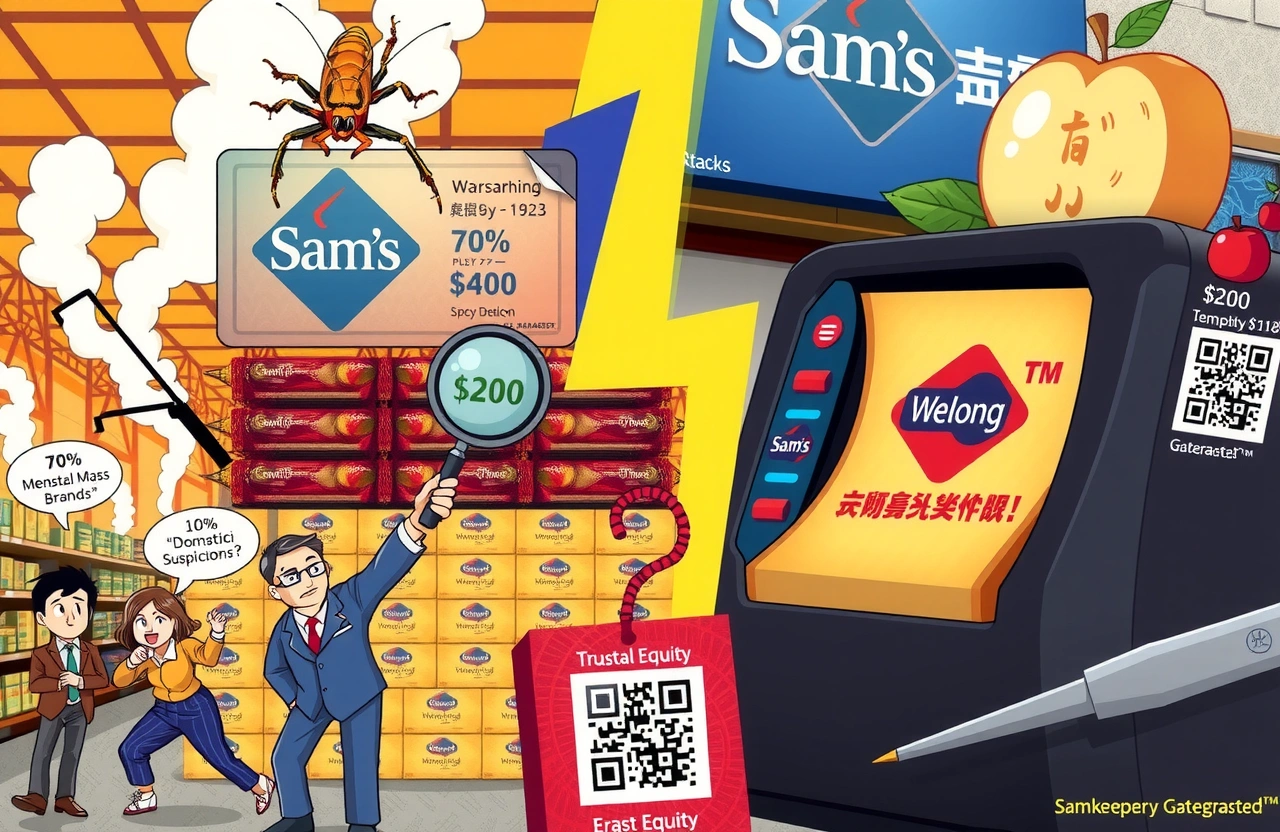
– Sam’s Club removed cult-favorite products like sun cakes and low-sugar egg yolk pastries while adding mass-market brands including Weilong, Panpan, and Haitai, triggering thousands of complaints
– Membership backlash peaked with coordinated email campaigns as members claimed Sam’s violated its core promise of curated premium shopping
– Quality incidents throughout 2024—including foreign objects in food and rotting produce—accelerated disillusionment among China’s 500K premium members
– Suppliers revealed that 70-80% of products now come from domestic mass manufacturers rather than specialized international suppliers
Since July 12th, hundreds of Sam’s Club members across China have sent formal complaints using standardized email templates—a collective revolt demanding answers from the Walmart-owned retailer. This unprecedented backlash follows Sam’s decision to remove cherished exclusive products like low-sugar egg yolk pastries and sun cakes while introducing Chinese mass-market brands including cockroach-logoed Wei Long spicy strips, artificially-sweetened Haitalai pies, domestic Panpan biscuits. The substitutions feel like betrayal to customers paying $97/year for entry-level memberships or $200/year for premium “excellence” memberships expressly marketed as guards against low-quality consumer goods.
This controversy marks a crisis point for Sam’s China operation. Though Walmart China CEO Zhu Xiaojing (朱晓静) announced revenues exceeding 100 billion yuan in Q1 2025 attributed to Sam’s aggressive expansion—with 56 locations now open—its foundation appears unstable. Food safety incidents surged throughout 2024: bullets found in rotisserie chicken, glass shards in meat buns, worms crawling through fruit displays. Meanwhile premium membership perks disappeared—car-wash partnerships cancelled without notice, dental appointments requiring three-month waits. For shoppers like Guangzhou-based premium member Zhang Jiajia who spent $10,000 annually on family groceries, the switch to domestic suppliers signals abandonment: “I paid for curation guaranteed to exclude controversial brands—this betrayal erodes my entire trust in their promise.”
The Tipping Point: Member Revolt Against Product Swaps
Newly-discovered supplier substitutions proved the breaking point for many members:
– Customers identified ChaCheer nut packs sold at premium prices were repackaged ChaCha sunflower seeds available nationally
– French-themed “Panpan” cream puffs turned out manufactured by popular domestic snack company Panpan Food Group
– The “Special Supply” Haitai reduced-sugar pies quietly sourced from the same mass-production lines as regular Haitai products
These revelations—compounded by viral social media comparisons showing minimal ingredient differences between exclusive and common-market versions—devastated Sam’s positioning as middle-class quality gatekeeper. Food analyst Zhu Danpeng (朱丹蓬) explains: “Members accepted premium pricing for cosmopolitan curation—suddenly seeing Wei Long labels where Belgian chocolate stood feels like fraud.”
The Price of Expansion: Warehouse-Scale Compromises
Sam’s rapidly accelerated store growth now clashes with premium positioning:
– Store count exploded from 8 locations in 2013 to 56 by mid-2025
– Strategic push toward cost-efficient domestic suppliers to sustain expansion
– Replacement of international niche producers with manufacturers scaling to national distribution
Industry analysts note unsustainable pressures:
– Sam’s domestic SKUs jumped from <30% to 70-80% within 3 years
- Former niche suppliers voice inability to fulfill 500% increased order volumes
- Logistics coordination struggles causing shelf-life compromises
New leadership under Jane Ewing (former Walmart International Operations VP) prioritized growth velocity but underestimated Asian middle-class sensibilities where aspirational Western standards signify status. Member Li Ping—a Beijing finance manager previously spending over $15,000 annually—captured collective dismay: "Accelerated openings forced quality sacrifices—I rarely find purchase-worthy items today."
The Collapsing Value Proposition
Core membership benefits evaporated alongside quality:
– Elimination of car-wash services (2024)
– Sharp decline in dental appointment availability
– Cancelled partnerships like premium hotel upgrades
Membership evaluations grew stark—members like Hangzhou junior accountant Tang Rong described $200/year Premium membership fee as “no longer justified”.
Membership Trust Fracture
Beyond product swaps, documented safety incidents undermined confidence:
– Metal bullets—discovered inside chicken sold at Shenzhen outlets
– Tooth-like objects in Shanghai pastry purchases
– Scaling reports of produce arrivals with mold/bugs amid Sam’s expansion
Physician Zhang Jiaja canceled automatic renewal citing “eroded assurances” around basic quality controls.
Global Ambitions vs. Local Expectations
Sam’s suffers tension between Walmart’s international strategies and Chinese middle-class preferences:
Leadership Disconnects
Despite rumors attributing quality shifts to Chinese leadership, UK native Andrew Miles (文安德) designed thee premium positioning before Jane Ewing took controls.
Current Chinese leaders Zhang Qing (张青) and Zheng Shuohuai (郑硕怀)—Purchasing/Operations chiefs respectively—implement pragmatic brands targeting affordability.
Market analyst Cheng Wei notes: “Sam’s faces impossible tradeoff—global mandates demand volume scaling while Chinese members want specialty distinctions.”
Salvaging Trust: Sam’s Urgent Crossroads
July 16th saw controversial Haitai “special edition” pies pulled offline—partial concession failing soothe consumers.
Attrition shadows premium memberships generating {#}60% revenue:
– Retention among $200 Premium members drops toward 85%
– Replacement shoppers prioritize affordability over curation
Sam’s China confronts irreversible damage: retaining trust requires reversing relaxed standards or embracing mass-market transformation risking foundation.
Sam’s Club stands at defining juncture: Will retailer realign curation promise for core members risking growth targets? Or sacrifice aspirational exclusivity chasing Walmart’s global volume ambitions? For China’s middle class holding premium cards symbolizing upward mobility, faith evaporates faster than Haitai pies vanish shelves—every ChaCha nut bag exposed as common variant seals their disillusionment. Returning trust requires more selective sourcing and transparent partnerships validating premium fees otherwise pledged.