



Executive Summary
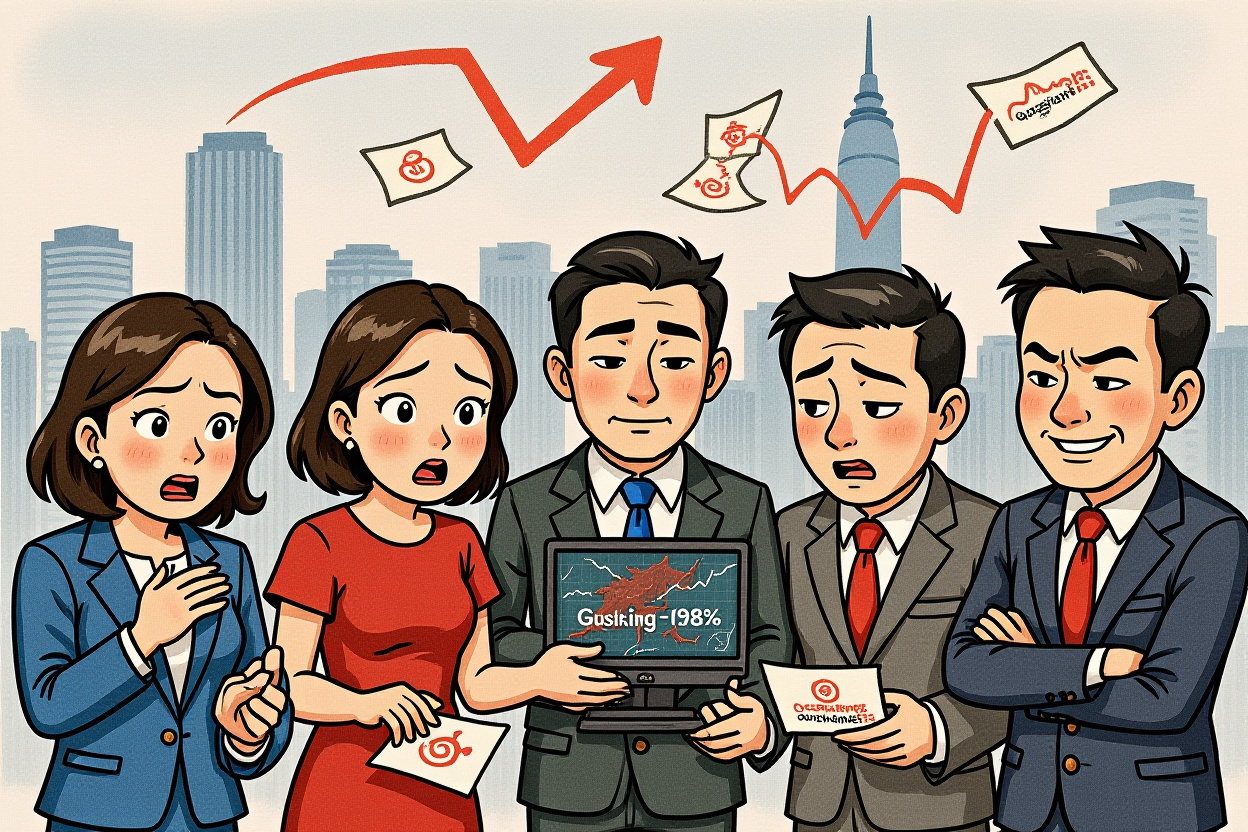
In a startling development for China’s financial sector, Guosheng Securities (国盛证券) has reported a catastrophic 98% year-on-year decline in its first-quarter net profit, leading to an immediate limit-down halt in its stock price upon market opening. This event highlights critical vulnerabilities and interconnected risks within the Chinese equity landscape.
Key takeaways for global investors and professionals include:
- Guosheng Securities’ Q1 performance reveals severe asset quality issues, primarily tied to exposure to the troubled fintech lender Qudian (趣店).
- The incident has triggered heightened regulatory scrutiny from the China Securities Regulatory Commission (CSRC), with potential implications for capital adequacy and risk management rules across brokerages.
- Investor sentiment toward mid-tier Chinese securities firms has soured, prompting a reassessment of portfolio allocations and due diligence processes.
- This case underscores the broader challenges in China’s financial system, where rapid expansion and cross-sector linkages can amplify contagion risks during downturns.
- Proactive risk mitigation, including enhanced scrutiny of counterparty exposures and regulatory filings, is essential for navigating such volatility.
A Sudden Collapse Shakes the Market
The trading session began with a jolt as shares of Guosheng Securities (国盛证券) plummeted to the daily limit-down of 10% within minutes of the opening bell on the Shanghai Stock Exchange. This sharp decline was a direct reaction to the firm’s overnight earnings release, which disclosed a near-total evaporation of profitability for the first quarter. The Guosheng Securities’ Q1 performance, showing a 98% drop in net profit to a mere 5.2 million yuan (approximately $730,000) from 260 million yuan a year earlier, sent shockwaves through institutional circles. For international investors active in Chinese equities, this event is a stark reminder of the opaque risks that can lurk beneath the surface of seemingly stable financial institutions.
The dramatic Guosheng Securities’ Q1 performance isn’t just a number—it’s a symptom of deeper structural issues. The collapse in earnings has immediately raised red flags about the brokerage’s risk management practices and its interconnectedness with other volatile segments of China’s economy, notably the online lending sector embodied by Qudian (趣店). As market participants scramble to adjust their positions, understanding the root causes becomes paramount for informed decision-making in a high-stakes environment.
Dissecting the 98% Net Profit Decline
A closer look at Guosheng Securities’ financial statements reveals multiple pressure points. The primary driver of the profit crash was a massive surge in credit impairment losses, which ballooned to over 150 million yuan for the quarter. This directly correlates with the firm’s significant exposure to distressed assets, including loans and investments tied to Qudian (趣店). Other contributing factors include:
- A sharp decline in brokerage commission income due to subdued trading volumes in the A-share market during the quarter.
- Increased operational costs linked to compliance and regulatory upgrades mandated by the CSRC.
- Write-downs on proprietary trading positions affected by market volatility.
According to analysis from financial data provider Wind Info, Guosheng Securities’ asset impairment ratio jumped to 1.5% in Q1, far above the industry average of 0.8%. This indicates a concentrated risk that has now materialized, catching many investors off guard. The Guosheng Securities’ Q1 performance thus serves as a critical case study in the importance of granular asset quality analysis.
Market Reaction: Limit-Down and Investor Panic
The immediate trading halt for Guosheng Securities triggered a contagion effect across the sector. The CSI Securities Index fell by 2.3% on the day, underperforming the broader Shanghai Composite Index. Key observations from the market reaction include:
- High selling pressure was evident, with over 50 million shares of Guosheng Securities exchanged in the first hour before the limit-down, indicating institutional flight.
- Credit default swap (CDS) spreads for Chinese brokerage firms widened by an average of 15 basis points, reflecting heightened perceived risk.
- Social media platforms and financial forums were abuzz with speculation, further amplifying negative sentiment.
This volatility underscores the sensitivity of Chinese equity markets to earnings surprises, especially when they hint at systemic issues. The Guosheng Securities’ Q1 performance has become a focal point for debates on transparency and risk disclosure standards in China’s capital markets.
Qudian’s Shadow: Unraveling the Connection
At the heart of this crisis lies Qudian (趣店), a once-high-flying online consumer finance platform that has faced severe regulatory headwinds and operational challenges. Guosheng Securities’ extensive ties to Qudian, including underwriting bonds and holding equity stakes, have now turned into a significant liability. The fintech firm’s own struggles with non-performing loans and regulatory crackdowns have directly impacted the brokerage’s balance sheet.
Understanding this connection is crucial for assessing the Guosheng Securities’ Q1 performance. The brokerage had positioned itself as a key financial partner to fintech innovators, but this strategy backfired as the sector came under pressure. This episode highlights the dangers of over-concentration in high-risk, high-growth segments without adequate hedging.
Qudian’s Business Model and Regulatory Woes
Qudian (趣店) operates in the online micro-lending space, providing small consumer loans through digital platforms. However, since 2021, it has faced intense scrutiny from regulators like the People’s Bank of China (中国人民银行) and the China Banking and Insurance Regulatory Commission (CBIRC). Key issues include:
- Allegations of predatory lending practices and excessive interest rates, leading to stricter caps on lending rates.
- Surges in loan defaults amid economic slowdowns, particularly in lower-tier cities.
- A dramatic decline in its stock price on the New York Stock Exchange, eroding market confidence and affecting counterparties like Guosheng Securities.
As Qudian’s financial health deteriorated, Guosheng Securities was forced to provision heavily against its exposures. This directly contributed to the staggering 98% profit drop. The Guosheng Securities’ Q1 performance is, therefore, a direct reflection of the contagion from the fintech sector to traditional finance.
Historical Ties and Financial Exposure
Guosheng Securities has a long-standing relationship with Qudian (趣店), dating back to 2017 when it served as a lead underwriter for Qudian’s initial public offering. Over the years, the brokerage accumulated significant exposure through:
- Holding approximately 3% of Qudian’s outstanding shares as of end-2023, valued at over $50 million at peak but now worth a fraction.
- Providing margin financing and structured products linked to Qudian’s assets, which have soured with the company’s downturn.
- Acting as a market maker for Qudian’s bonds, which have seen yields spike due to credit concerns.
This deep entanglement meant that any negative development at Qudian would inevitably hit Guosheng Securities. The Guosheng Securities’ Q1 performance collapse was not entirely unexpected for close observers, but its magnitude has shocked the broader market. It underscores the need for investors to map out such counterparty risks meticulously.
Regulatory and Market Context in Chinese Securities
The Guosheng Securities debacle occurs against a backdrop of evolving regulatory frameworks in China. The China Securities Regulatory Commission (CSRC) has been actively tightening oversight on brokerages to ensure financial stability, particularly after incidents like the 2022 bond defaults. This event is likely to accelerate regulatory actions, affecting the entire sector.
For international investors, understanding these dynamics is key to navigating the Guosheng Securities’ Q1 performance fallout. Regulatory responses will shape the risk-return profile of Chinese securities firms, influencing investment strategies and asset allocations.
CSRC Regulations and Oversight
The CSRC has emphasized risk containment in recent years, with rules focusing on capital adequacy, liquidity management, and exposure limits. In response to Guosheng Securities’ issues, the regulator is expected to:
- Launch a special inspection into the brokerage’s risk control systems and asset valuation methods.
- Consider imposing higher capital reserve requirements for firms with significant fintech exposures.
- Enhance disclosure mandates for interconnected financial risks, potentially requiring more detailed reporting on counterparty concentrations.
These measures aim to prevent a systemic crisis, but they may also increase compliance costs for brokerages, squeezing profitability further. The Guosheng Securities’ Q1 performance could thus be a catalyst for broader regulatory tightening.
Broader Implications for Chinese Brokerages
The shock from Guosheng Securities has prompted a sector-wide reassessment. Other mid-sized securities firms with similar business models, such as those heavy in proprietary trading or fintech partnerships, are now under the microscope. Key implications include:
- Potential credit rating downgrades for peer firms, increasing their funding costs.
- A shift in investor preference toward larger, state-backed brokerages like CITIC Securities (中信证券) or China International Capital Corporation Limited (中金公司), perceived as safer.
- Increased volatility in the sector’s stocks as analysts adjust earnings forecasts downward.
This environment makes the Guosheng Securities’ Q1 performance a benchmark for risk assessment. Investors are advised to scrutinize quarterly reports for similar red flags, such as sudden spikes in impairment losses or concentrated exposures.
Investor Insights and Risk Management Strategies
For global fund managers and corporate executives, the Guosheng Securities incident offers critical lessons in risk management within Chinese equities. Proactive strategies can help mitigate losses and identify opportunities amidst the turmoil. The Guosheng Securities’ Q1 performance is a wake-up call to enhance due diligence and diversification.
By learning from this case, investors can better navigate the complexities of China’s financial markets, turning crises into informed investment decisions.
Expert Analysis and Quotes
Industry experts weigh in on the situation. Zhang Wei (张伟), a senior analyst at Zhongtai Securities (中泰证券), noted, ‘The Guosheng Securities’ Q1 performance highlights the perils of aggressive expansion into unsecured lending sectors without robust risk buffers. This is a classic case of margin compression meeting credit cycle downturn.’ Similarly, Helen Wang (王海伦), a portfolio manager at a Hong Kong-based hedge fund, stated, ‘We’ve reduced exposure to second-tier Chinese brokerages and are focusing on firms with stronger governance and diversified revenue streams. The Guosheng Securities’ Q1 performance has reset our risk models.’
These insights underscore the importance of expert perspectives in decoding such events. Investors should seek out detailed research reports and earnings call transcripts to gauge management’s response to the crisis.
Recommendations for Portfolio Adjustments
In light of the Guosheng Securities’ Q1 performance, consider the following actionable steps:
- Conduct a thorough review of holdings in Chinese financial stocks, assessing direct and indirect exposures to distressed sectors like online lending.
- Increase allocation to brokerages with strong retail brokerage and wealth management arms, which offer more stable fee-based income.
- Utilize hedging instruments such as put options on sector ETFs or credit default swaps to protect against further downside.
- Monitor regulatory announcements from the CSRC for clues on future policy directions that could impact sector valuations.
- Engage with company managements during investor relations sessions to query their risk management frameworks and contingency plans.
These strategies can help insulate portfolios from similar shocks while positioning for potential rebounds as the market digests the news.
Synthesizing the Crisis for Future Navigation
The Guosheng Securities’ Q1 performance debacle serves as a potent reminder of the fragility inherent in fast-evolving financial markets. Key takeaways include the critical need for enhanced due diligence on counterparty risks, closer monitoring of regulatory developments, and diversification away from concentrated exposures. This event is not isolated; it reflects broader tensions in China’s economic transition, where innovation-driven growth often clashes with stability mandates.
Moving forward, investors should prioritize transparency and resilience in their Chinese equity selections. Stay informed through reliable sources like CSRC filings and financial news outlets, and consider consulting with local experts to navigate cultural and regulatory nuances. By learning from the Guosheng Securities’ Q1 performance, you can turn market volatility into strategic advantage, ensuring your portfolio is robust enough to withstand the next shock. Take action now by reviewing your holdings and adjusting your risk parameters—your vigilance today will define your success tomorrow.