



Here are the key takeaways from our analysis:
- Amidst significant volatility in Chinese equity markets in 2023, a select cohort of actively managed funds has delivered exceptional, market-beating performance.
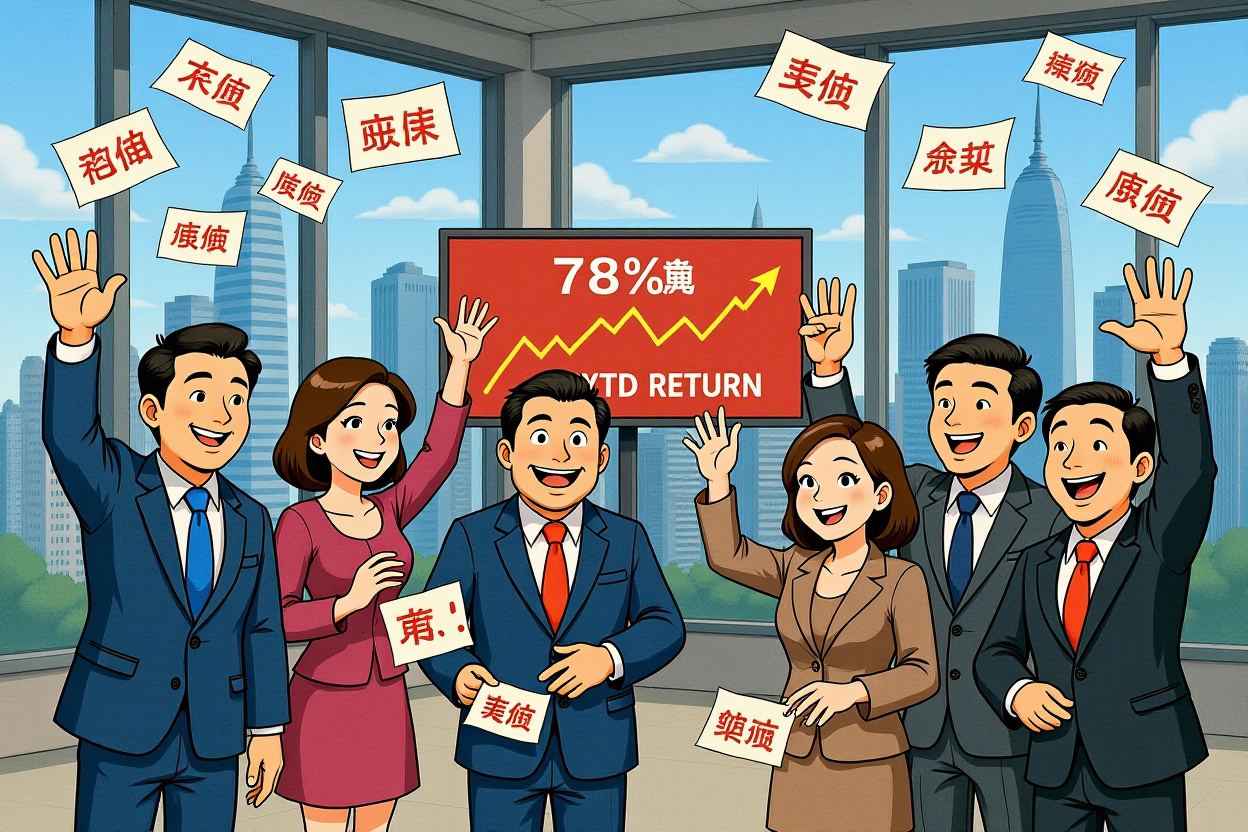
- Several funds have not only weathered the storm but reached new net asset value highs, with the top performer reporting a staggering 78% year-to-date return.
- The success is attributed to concentrated stock-picking, agile sector rotation, and sophisticated risk management frameworks, diverging from broad index trends.
- This performance underscores a growing premium on active management skill and strategic agility in navigating China’s complex regulatory and economic landscape.
- For global investors, these funds represent both a validation of opportunities in Chinese equities and a call to conduct enhanced due diligence on fund strategies and manager track records.
The first half of 2023 has presented a formidable challenge for participants in Chinese equity markets. Geopolitical tensions, domestic economic recalibration, and evolving regulatory directives have fueled pronounced volatility across major indices. Yet, within this turbulent environment, a compelling counter-narrative has emerged, capturing the attention of institutional investors worldwide. A distinct group of equity funds has demonstrated an exceptional ability to not just endure but capitalize on market swings. This article provides a comprehensive examination of those funds that are withstanding volatility and achieving new highs, with the most standout cases boasting year-to-date returns as high as 78%. We dissect the strategies enabling this resilience, profile the leading managers, and distill critical implications for capital allocation decisions.
Navigating the Storm: The 2023 Volatility Landscape in Chinese Equities
To appreciate the feat of these outperforming funds, one must first understand the market context they conquered. The CSI 300 Index, a key benchmark for A-shares, experienced multiple corrections exceeding 10% in the first three quarters, reflecting a cocktail of macroeconomic concerns and sector-specific pressures.
Primary Catalysts of Market Swings and Investor Sentiment
Several interconnected factors drove the turbulence. The protracted adjustment in the property sector, spearheaded by developers like China Evergrande Group (中国恒大集团), continued to weigh on financial and related industrial stocks. Concurrently, global commodity price fluctuations and shifting monetary policy expectations from the U.S. Federal Reserve introduced external volatility. Domestically, strategic policy pivots under frameworks like ‘common prosperity’ and the continued emphasis on technological self-sufficiency created both tailwinds and headwinds for different sectors, keeping investors on edge.
Broad Market Indices Versus the Active Fund Universe
While broad market indices like the Shanghai Composite (上证指数) and the Shenzhen Component (深圳成指) posted muted or negative returns for periods in 2023, the story within the active fund management universe was markedly different. Data from the Asset Management Association of China (中国证券投资基金业协会) reveals a significant performance dispersion. The average equity fund returned a modest single-digit figure, but the top decile soared, with returns clustering between 40% and 78%. This divergence underscores that 2023 was a stock-picker’s market, where blanket exposure was a liability and selective, informed bets were rewarded.
Profiling the Pioneers: The Funds Defying the Downturn
Who are these funds that managed to turn volatility into opportunity? The cohort is diverse, spanning managers specializing in technology, green energy, and consumption, but they share a common outcome: stellar risk-adjusted returns.
A Spotlight on Standout Performers and Their Metrics
Leading the pack are funds from China’s premier asset management houses. For instance, the GF Growth Select Mixed Securities Investment Fund (广发成长精选混合), managed by GF Fund Management (广发基金管理有限公司), reported a verified year-to-date return of 78.3% as of late September. Close contenders include the E Fund Healthcare Industry Hybrid Fund (易方达医疗保健行业混合) and the ChinaAMC New Energy Theme Stock Fund (华夏新能源股票基金), with returns hovering around 60-68%. These figures are not mere rebounds; they represent funds consistently hitting new net asset value highs throughout the year, a true testament to withstanding volatility and achieving new highs.
Identifying Common Strategic DNA Among Leaders
Analysis of portfolio disclosures and manager commentaries points to several non-negotiable strategic pillars among these top performers:
- High-Conviction, Concentrated Portfolios: Unlike broadly diversified index trackers, these funds often hold 30-50 stocks, with the top 10 holdings constituting 50-70% of the portfolio. This allows for meaningful impact from successful picks.
- Dynamic Sector and Theme Rotation: Managers displayed agility in pivoting capital towards policy-supported themes. Early and overweight positions in semiconductors, renewable energy infrastructure, and industrial automation proved lucrative.
- Bottom-Up, Quality-First Stock Selection: Success was rooted in deep fundamental research, targeting companies with robust balance sheets, sustainable competitive moats, and alignment with long-term national strategic goals.
The Mechanics of Market Outperformance: How to Withstand Volatility and Reach New Highs
The exceptional returns are not a product of luck but of engineered investment processes designed to exploit market inefficiencies and manage risk proactively. This section deconstructs the anatomy of their resilience.
Advanced Risk Management: More Than Just Diversification
Top-performing funds employ multi-layered risk frameworks that extend far beyond simple asset class diversification. As explained by risk management head Zhou Feng (周峰) at China Asset Management Co., Ltd. (华夏基金管理有限公司), ‘Our models incorporate factor exposures, liquidity stress tests, and scenario analysis for regulatory shocks.’ Many funds also utilized derivatives for tactical hedging during periods of extreme volatility, protecting gains without fully exiting strategic positions. This disciplined approach to preserving capital during downturns is a cornerstone of their ability to withstand volatility and compound returns over time.
The Contrarian Edge: Capitalizing on Market Pessimism
A recurring tactic was the willingness to act as a contrarian buyer when sentiment reached extreme lows. Several fund managers cited building positions in high-quality consumer and technology names during the sell-off in the first quarter, when fears over regulatory scrutiny peaked. This required not only conviction in their research but also the operational flexibility to deploy cash quickly. Their success in doing so exemplifies a key principle: achieving new highs often requires buying when others are fearful, provided the underlying investment thesis remains intact.
Deep Dive: Anatomy of a 78% Return – The GF Growth Select Fund Case Study
The GF Growth Select Fund’s 78% year-to-date return offers a masterclass in strategic execution. Its performance is a direct result of withstanding volatility and achieving new highs through a consistent, clearly articulated philosophy.
Portfolio Construction and Manager Philosophy
Fund manager Wang Lei (王磊) operates with a mandate to identify ‘structural growth’ companies—businesses whose expansion is driven by secular, long-term trends rather than cyclical economic cycles. In a recent investor call, Wang Lei (王磊) elaborated, ‘We are agnostic to short-term index movements. Our focus is on companies leading in areas like automation, premium branding, and biotech innovation—sectors where China is building global champions.’ The fund’s portfolio is heavily skewed towards industrials, information technology, and healthcare, with minimal exposure to traditional financials and real estate.
Execution and Adaptation Throughout 2023
The fund’s journey through 2023 highlights tactical brilliance. In Q1, it increased its stake in several component suppliers for electric vehicles and renewable energy, anticipating accelerated infrastructure spending. When the market corrected on broader growth concerns, the fund held firm, viewing the dip as a valuation opportunity. By mid-year, as these themes gained momentum, the fund’s holdings soared. This case powerfully illustrates how a clear strategy, combined with the fortitude to withstand volatility, can translate into extraordinary absolute returns, setting a new high-water mark for peer comparison.
Strategic Implications for Global Institutional Investors
The emergence of such stark outperformers carries profound implications for how international allocators should approach the Chinese equity universe. It challenges passive strategies and elevates the importance of manager selection.
Re-evaluating Investment Vehicles and Due Diligence
The dramatic performance dispersion suggests that the ‘set-and-forget’ approach of investing in a broad China ETF may lead to suboptimal outcomes. Institutional investors must now conduct more granular due diligence, focusing on:
- Track Record in Down Markets: How did the fund perform during previous volatile periods, such as the 2015 correction or the 2018 trade war tensions?
- Strategy Clarity and Consistency: Is the investment process repeatable, and is the team stable? High turnover in management can erode strategic edges.
- Risk-Adjusted Metrics: Prioritize funds with strong Sharpe and Sortino ratios, indicating efficient returns per unit of risk taken.
Forward-Looking Allocation and Sector Opportunities
While past performance is no guarantee, the sectors that fueled 2023’s winners offer clues for future allocation. Themes aligned with China’s 14th Five-Year Plan and technological independence, such as advanced semiconductors, artificial intelligence, and clean energy, are likely to remain priority investment channels. However, investors must maintain vigilance regarding policy announcements from bodies like the National Development and Reform Commission (国家发展和改革委员会) and the Ministry of Industry and Information Technology (工业和信息化部). The ability to withstanding volatility and achieving new highs will increasingly depend on interpreting these policy signals correctly and positioning portfolios accordingly.
The narrative unfolding in Chinese equity markets in 2023 is one of dichotomy and opportunity. While broad indices grappled with uncertainty, a cadre of skilled fund managers demonstrated that volatility is not an insurmountable barrier but a landscape to be navigated with expertise. Their success in withstanding volatility and achieving new highs, with pinnacle cases like the 78% returning GF Growth Select Fund, provides a powerful rebuttal to narratives of market uninvestability. It reaffirms that alpha generation in China is alive and well, residing in the hands of those with deep research capabilities, disciplined risk management, and strategic agility. For the global investment community, the path forward is clear: embrace a more selective, active approach. Move beyond passive beta, engage in thorough fund manager evaluation, and consider allocating to those strategies that have proven their mettle in the fire of turbulence. The journey in Chinese equities demands more nuance than ever, but for the informed investor, the potential rewards have never been more compelling.