



Executive Summary
– China’s used car export volume exploded from 4,300 units in 2020 to 436,000 units in 2024, marking a 100-fold increase in just four years, driven by robust international demand. – This China’s used car export boom has attracted a diverse range of players, from individual dealers to major platforms like Shenzhou Zuche (神州租车) and Guazi Used Car (瓜子二手车), all vying for a piece of the lucrative cross-border trade. – Despite appealing price gaps between domestic purchase and overseas sale prices, actual profits are often squeezed by hidden costs, operational risks, and the non-standard nature of used vehicles. – Regulatory crackdowns, particularly on ‘zero-kilometer used cars’ (new cars exported as used), are reshaping the industry, favoring compliant, well-resourced players over smaller, speculative operators. – Key export markets show signs of saturation, urging stakeholders to adopt strategic approaches focused on quality, compliance, and sustainable overseas networks for long-term success.
The Silent Revolution in Tianjin’s Ports
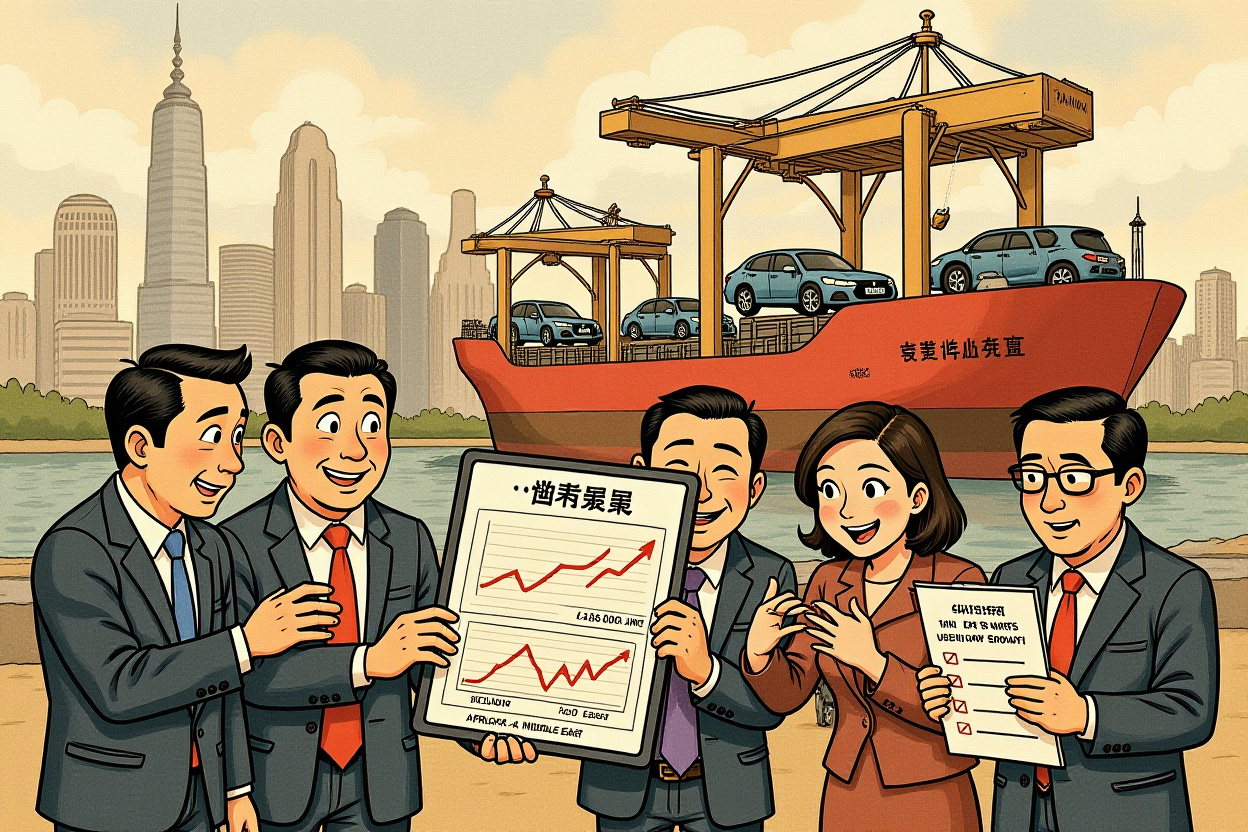
Across China’s major export hubs, from Tianjin to Guangzhou, a quiet transformation is redefining global automotive trade. Fleets of used cars, once destined for domestic resale, are now being loaded onto ships bound for over 160 countries. This isn’t a minor trend; it’s a seismic shift. China’s used car export boom has materialized with stunning speed, growing 100-fold in a mere four years. For savvy dealers and investors, it represents a golden opportunity. For the unprepared, it’s a path to significant losses. The market’s frenetic energy is palpable: domestic buyers are being offered premiums for their vehicles, while overseas buyers in regions like Russia and Africa clamor for affordable, reliable transportation. Yet, beneath the surface of high-stakes deals and touted profits lies a complex web of logistical challenges, regulatory hurdles, and financial risks that every market participant must navigate.
The Meteoric Rise of China’s Used Car Exports
Data from the 中国汽车流通协会 (China Automotive Circulation Association) provides undeniable evidence of this explosive growth. In 2024, China exported 436,000 used vehicles, a staggering 46.5% increase from the previous year. To fully grasp the scale, consider the baseline: in 2020, national used car exports stood at a mere 4,300 units. This leap from thousands to hundreds of thousands in such a short timeframe is unprecedented in the global used car trade and underscores the rapid maturation of China’s used car export boom.
From Niche to Mainstream: A Four-Year Ascent
The journey from 2020 to 2024 charts a classic exponential growth curve. Several converging factors fueled this ascent. Domestically, a saturated new car market with frequent price wars made holding used vehicle inventory risky for dealers, pushing them to seek alternative sales channels. Internationally, rising demand in developing economies for affordable personal and commercial transport created a perfect outlet. The industry rapidly evolved from ad-hoc shipments to a structured ecosystem with dedicated logistics, compliance checks, and overseas distribution networks.
Global Footprint: Reaching Distant Shores
The geographical spread of China’s used car exports is as impressive as the volume. Initially focused on neighboring Southeast Asian markets, the trade routes have expanded dramatically. Today, key destinations include: – The Middle East: Where demand for durable SUVs and pickup trucks remains high. – Russia and Central Asia: Markets that have warmly received Chinese brands and models due to geopolitical shifts and a need for cost-effective vehicles. – Africa: A continent with a growing appetite for rugged, utilitarian vehicles for both passenger and goods transport. – Even Europe and Latin America: Where certain eco-friendly or specific models find niche demand. This global reach demonstrates that China’s used car export boom is not a regional phenomenon but a significant new force in international automotive flows.
The New Gold Rush: Diverse Players in the Export Chain
The promise of high returns has drawn a wide array of participants into the used car export arena. From traditional brick-and-mortar dealers to digital platforms and rental car giants, everyone is looking to capitalize. Anecdotes from the ground floor are telling. As one二手车车主 (used car owner) in Tianjin shared, ‘I’ve received several calls from dealers asking if I want to sell my car. They specifically mentioned that my model is in demand overseas and are willing to offer a better price.’ This domestic pull effect is a direct result of the export-driven demand.
From Local Scouts to Institutional Powerhouses
The player landscape is stratified. At the grassroots level, individual从业者 (practitioners) like a Hebei-based dealer have pivoted. ‘I originally focused on selling joint-venture used cars domestically,’ he told Tech星球 (Tech Planet). ‘Now, I’m targeting the export business, sourcing specific models like the Haval H6 or Volkswagen Golf that are hot overseas.’ These individuals often act as scouts or aggregators, feeding vehicles into larger export pipelines. Higher up the chain, major corporations have made strategic entries. Shenzhou Zuche (神州租车), for instance, leveraged its massive fleet turnover to launch export operations in 2024, establishing 29 domestic vehicle centers and 6 overseas offices. Similarly, Guazi Used Car (瓜子二手车) has been building its export capabilities since 2019. Their scale allows them to ensure consistent quality and volume, which is highly valued by overseas bulk buyers.
The Crucial Role of Enabling Platforms and Export Bases
For smaller players lacking the resources to navigate complex export procedures, a support ecosystem has emerged. Service platforms and dedicated export bases lower the entry barrier. Hubs like the东阳国际汽车城 (Dongyang International Auto City) and the绥芬河汽车出口基地 (Suifenhe Auto Export Base) offer integrated services including资质代办 (qualification agency), logistics coordination,海关清关 (customs clearance), and even overseas buyer matchmaking. As one出口汽车贸易从业者 (export auto trade practitioner) explained, ‘For newcomers, it’s easier to start by just handling the vehicle sourcing downstream. Using these platforms allows for a near-zero-cost entry.’ However, he cautioned that the core challenge remains securing stable overseas sales channels, as foreign buyers prefer dealing with规模化、规范化的主体 (large-scale, standardized entities) due to concerns over vehicle transparency and after-sales support.
Profit Illusions: Why High Price Gaps Don’t Guarantee Gains
On social media and in industry chatter, stories abound of massive margins: buying a used truck for 30,000-50,000 yuan and selling it in Africa for over 100,000 yuan. These tales of a China’s used car export boom creating instant wealth are compelling but often misleading. The reality for many on the ground is far less glamorous. ‘It’s not as easy to make money as imagined,’ a seasoned exporter frankly admitted to Tech星球 (Tech Planet). The tantalizing price differential is systematically eroded by a cascade of costs and risks.
The Anatomy of a Squeezed Margin
Breaking down the profit calculation for a single vehicle reveals the tight margins. After the initial purchase, a series of non-negotiable expenses follow: 1. Refurbishment and Compliance: Each car typically requires about 10,000 yuan for repairs, deep cleaning, and mandatory inspections to meet export standards. 2. International Logistics: Shipping costs, insurance, and port fees vary by destination but form a significant chunk. 3. Overseas Clearance and Taxes: Import duties, value-added taxes, and agent fees in the destination country must be paid. 4. Local Sales Commission: Partner distributors or sales agents take their cut. After all these deductions, the net profit per vehicle often ranges from just a few thousand to twenty thousand yuan—a far cry from the tens of thousands suggested in optimistic宣传 (promotions).
Operational Risks and the ‘Non-Standard’ Problem
The fragile profit margin is acutely vulnerable to operational disruptions. Common pitfalls include: – Cargo Rejection: If a vehicle fails to meet the importing country’s standards upon arrival, it can be refused entry, leading to costly退运 (return shipping) or港口滞留 (port detention). – Shipping Delays and Client Defaults: Unpredictable船期 (ship schedules) or overseas buyers backing out after paying a deposit can tie up capital and inventory. – Exchange Rate Volatility: Transactions settled in local foreign currencies expose exporters to currency risk, which can wipe out profits if the yuan appreciates sharply during the payment cycle. Compounding these issues is the fundamental nature of the product. ‘Every used car is unique,’ an从业者 (practitioner) emphasized. ‘Its condition, configuration, and mileage are different. This requires massive manual effort for inspection and matching, making it hard to achieve标准化规模效应 (standardized economies of scale).’ This labor-intensive process keeps a floor on costs, preventing them from falling even as competition increases.
Regulatory Crackdown: Closing the ‘Zero-Kilometer’ Loophole
For a time, a significant portion of the reported export growth was fueled by a regulatory gray area: the ‘零公里二手车’ (‘zero-kilometer used car’). This term referred to brand-new vehicles that were exported under used car permits, exploiting policy differences to access overseas markets more easily. ‘Last year, zero-kilometer cars were the core增量 (increment) for the entire used car export market,’ one source revealed. This practice covered various brands and powertrains, from燃油车 (internal combustion engine) to新能源汽车 (new energy vehicles), and provided a competitive edge due to their ‘as-new’ condition.
The Policy Shift and Its Immediate Impact
This shortcut could not last. In November 2025, a joint notice from the商务部 (Ministry of Commerce),工业和信息化部 (Ministry of Industry and Information Technology),公安部 (Ministry of Public Security), and海关总署 (General Administration of Customs) titled《关于进一步加强二手车出口管理工作的通知》(‘Notice on Further Strengthening the Management of Used Car Exports’) effectively shut this door. The new rules introduced two critical barriers: 1. The ‘180-Day红线 (Red Line)’: A used car must be registered domestically for at least 180 days before it is eligible for export. 2. Manufacturer售后许可授权 (After-Sales Service Authorization): Exporters must obtain proof from the vehicle’s original manufacturer that售后保障 (after-sales service) will be provided in the destination market. ‘Now, the zero-kilometer二手车 business is increasingly difficult to do,’ an从业者 (practitioner) conceded. These measures make it nearly impossible to export new cars as used, protecting brand integrity and consumer rights overseas.
Weeding Out Speculators, Empowering the Compliant
The regulatory tightening is a double-edged sword. For small-scale operators and teams that relied on this gray-area trade, the new rules likely mean exit. The capital required to hold inventory for 180 days and the complexity of securing manufacturer approvals are prohibitive. ‘If you insist on continuing, the risk of losing money increases greatly,’ another dealer told Tech星球 (Tech Planet), noting the added costs of storage and the fast-changing domestic price environment. However, for established players focused on genuine used car exports, this is seen as a positive development. ‘The new policies倒逼 (force) the industry towards合规 (compliance),’ one optimistic从业者 (practitioner) stated. ‘Companies with strong vehicle sourcing整合能力 (integration capabilities) and overseas service networks will see their advantages become more pronounced.’ Another dealer added, ‘We were already focused on compliant used car business. This industry规范调整 (standard adjustment)恰恰带来了新机会 (precisely brings new opportunities) to expand our overseas client base with优质车源 (high-quality vehicle sources).’
Navigating the Next Phase of Growth
The initial frenzy of China’s used car export boom is giving way to a more mature, albeit more challenging, phase. Market dynamics are shifting, and participants must adapt their strategies to thrive. Signs of saturation are emerging in some of the earliest and hottest markets, such as Russia and parts of Africa, particularly for entry-level models. This increased competition is compressing profit margins further and could lead to destructive price wars among exporters.
Strategic Imperatives for Sustainable Success
To build a resilient and profitable export business in this evolving landscape, stakeholders should consider several key approaches: – Focus on Quality and In-Demand Models: Prioritize sourcing late-model, low-mileage vehicles, especially SUVs, crossovers, and other body types with proven overseas appeal. – Build or Partner for Overseas After-Sales: Establishing reliable repair and service networks in target markets is no longer optional; it’s a critical competitive advantage that builds buyer trust and allows for premium pricing. – Leverage Data and Technology: Utilize digital platforms for更精准的海外买家匹配 (more precise overseas buyer matching), vehicle condition reporting, and supply chain transparency to reduce friction and costs. – Stay Agile on Regulations: Proactively monitor policy changes from both Chinese authorities like the中国人民银行 (People’s Bank of China) on forex rules and destination countries’ import regulations to avoid compliance missteps.
Riding the Wave with Eyes Wide Open
China’s used car export boom is a definitive success story of global trade adaptation, creating a vibrant new industry in record time. The 100-fold growth over four years is a testament to international demand and Chinese entrepreneurial agility. However, the narrative is nuanced. For every dealer securing high prices for export-ready cars, another faces the sobering reality of thin margins and operational hazards. The recent regulatory crackdown on ‘zero-kilometer’ exports signals a necessary maturation, steering the industry toward long-term sustainability over short-term speculation. The future will belong to those who combine robust sourcing capabilities with deep overseas market knowledge, rigorous compliance, and a commitment to building lasting international partnerships. For investors and industry professionals watching this space, the message is clear: the era of easy money in used car exports may be over, but for the strategic and well-prepared, the China’s used car export boom still holds substantial, disciplined opportunity. Engage with trusted platforms, conduct thorough due diligence on costs and partners, and prioritize building a compliant, quality-focused operation to capitalize on this dynamic segment of China’s automotive economy.