



Executive Summary: Key Insights on China’s Used Car Export Boom
Before diving into the details, here are the critical takeaways for investors and industry professionals monitoring the explosive growth of China’s used car exports:
– China’s used car export volume surged from 4,300 units in 2020 to over 436,000 in 2024, marking a 100-fold increase in just four years, according to the China Automobile Dealers Association (中国汽车流通协会).
– The trade is driven by high price differentials, with certain models like the Haval H6 and Volkswagen Golf fetching prices overseas that are thousands of dollars higher than in China’s domestic market.
– Despite attractive margins, profitability is squeezed by hidden costs, regulatory risks, and market saturation, with many small traders facing losses or exit.
– A recent regulatory crackdown on ‘zero-kilometer used cars’—new cars exported as used—has closed a key loophole, pushing the industry toward compliance and consolidation.
– Success in this volatile sector now hinges on scalable operations, robust overseas networks, and adherence to evolving policies from bodies like the Ministry of Commerce of the People’s Republic of China (中华人民共和国商务部).
The Meteoric Ascent of China’s Used Car Exports
In early 2026, social media platforms across China buzzed with a peculiar trend: dealerships and individuals posting urgent requests to purchase used cars aged 3-5 years with under 50,000 kilometers, specifically earmarked for export. This surge in demand isn’t just a fleeting fad—it signals a tectonic shift in the global automotive trade. China’s used car exports have transformed from a negligible trickle into a torrential flow, reshaping markets from Southeast Asia to Africa and beyond. For international investors and corporate executives, understanding this phenomenon is crucial, as it represents both a lucrative opportunity and a complex risk landscape in Chinese equity markets tied to the automotive sector.
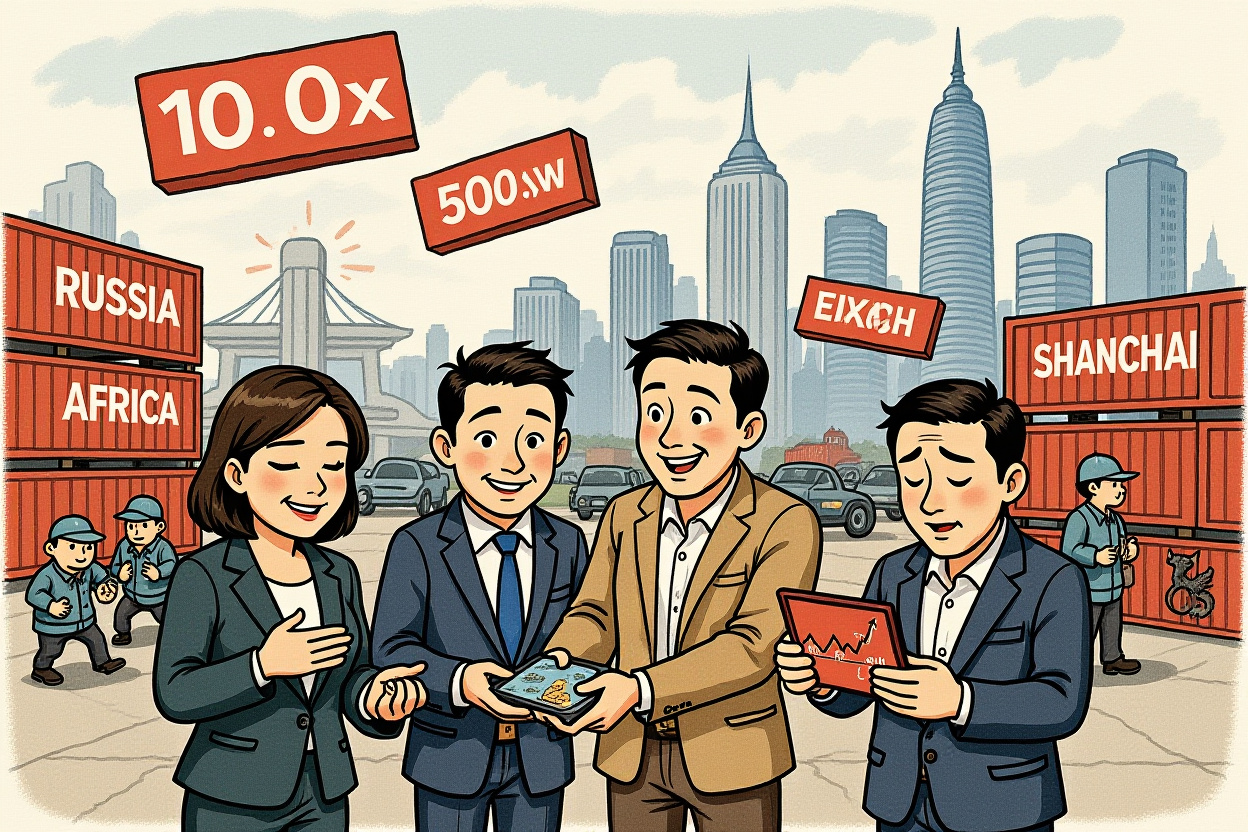
The numbers are staggering. Data from the China Automobile Dealers Association (中国汽车流通协会) reveals that used car exports hit 436,000 units in 2024, a 46.5% year-on-year increase, with coverage expanding to over 160 countries and regions. To put this in perspective, exports stood at a mere 4,300 vehicles in 2020, meaning the volume has multiplied 100 times in four years. This explosive growth is a direct result of China’s maturing automotive industry, where a vast inventory of relatively new, high-quality used vehicles meets burgeoning demand in developing economies. The focus phrase, used car exports, encapsulates this rapid evolution, driven by factors like domestic price wars and global supply chain adjustments.
From Niche to Global Player: The Data Behind the Boom
The trajectory of China’s used car exports isn’t just impressive—it’s unprecedented in the global auto trade. Key markets include Russia, Central Asia, the Middle East, and Africa, where cost-conscious consumers prize the value proposition of Chinese-brand and international models available through this channel. For instance, models like the Haval H6 (哈弗H6) and Mazda3 Axela (马自达3 昂克赛拉) have become hot commodities overseas, often selling at premiums of RMB 10,000 to 30,000 compared to domestic prices. This price arbitrage is the primary engine fueling the export rush, attracting everyone from small-time dealers to major platforms. The used car exports surge reflects a broader trend of China’s ‘going global’ strategy in the automotive sector, complementing the rise of new energy vehicle (NEV) exports.
Drivers of Demand: Why the World Wants China’s Used Cars
Several factors converge to explain the insatiable international appetite for China’s used cars. First, many target markets face infrastructure gaps or economic constraints that make new vehicles unaffordable; used cars from China offer a reliable, budget-friendly alternative. Second, China’s domestic market is saturated with vehicles from rapid sales growth over the past decade, creating a large pool of 3- to 5-year-old cars with modern features. Third, geopolitical shifts, such as trade sanctions on other regions, have redirected demand toward Chinese sources. As one Tianjin-based dealer noted in the original report, ‘Overseas buyers are highly focused on SUVs and off-road vehicles, but domestic sources are fragmented.’ This mismatch has spawned a burgeoning intermediary industry to aggregate and match supply with demand, further propelling used car exports.
The Gold Rush: Who’s Profiting from the Used Car Export Wave?
The promise of high returns has drawn a diverse array of players into the used car exports arena, each vying for a slice of the pie. At the grassroots level, individual dealers and small teams are scouring the country for specific models, often offering premiums of RMB 5,000 to 10,000 above domestic market rates to secure inventory. This has turned low-mileage, well-maintained used cars into prized assets, invigorating China’s domestic二手车 (used car)流通 (circulation) market. However, the ecosystem is stratified, with significant barriers to entry that determine who truly capitalizes on this boom.
For many small operators, involvement is limited to the front-end—acquiring vehicles based on overseas orders. As explained by an export trade professional, ‘After sourcing, cars need to be handed over to specialized inspection companies for refurbishment and testing, then transferred to enterprises with used car export qualifications to handle customs clearance and logistics.’ This complexity means that newcomers often serve as feeders for larger, established players, earning modest fees rather than reaping windfall profits. Platforms like Dongyang International Auto City (东阳国际汽车城) and Suifenhe Automobile Export Base (绥芬河汽车出口基地) have emerged to lower barriers, offering services from资质代办 (qualification agency) to overseas buyer matchmaking, but the core challenge remains securing stable sales channels abroad.
The Rise of Institutional Players: From Rental Giants to Online Platforms
While individuals navigate the fringes, major corporations are diving headfirst into used car exports. Shenzhou Zuche (神州租车), a leading car rental company, entered the fray in 2024, leveraging its scale to establish 29 domestic used car center warehouses, 5 port front warehouses, and 6 overseas direct sales offices. Similarly, Guazi二手车 (瓜子二手车), an online used car transaction platform, has been active since 2019, building an end-to-end export pipeline. These players benefit from economies of scale, standardized processes, and brand trust that alleviate overseas buyer concerns about vehicle condition and after-sales support. Their involvement signals the maturation of used car exports into a legitimate, institutional-grade business stream, attracting attention from fund managers eyeing growth stocks in China’s auto sector.
The Human Element: Stories from the Ground
Behind the statistics are real people navigating this volatile trade. A Hebei-based dealer shared, ‘I was lured by the myth of high profits. With the domestic used car business struggling due to new car price cuts and market fluctuations, the overseas market seemed like a savior.’ Yet, for every success story, there are tales of hardship. Another trader admitted, ‘It’s not as easy to earn as imagined,’ highlighting how slim margins can vanish with a single shipment delay or customs rejection. These anecdotes underscore the personal stakes in used car exports, where fortunes can flip overnight, reinforcing the need for rigorous due diligence by investors considering exposure to this sector.
The Profit Paradox: Why High Margins Often Lead to Low Returns
On social media, enticing claims abound: buy a used truck in China for RMB 30,000-50,000, sell it in Southeast Asia or Africa for over RMB 100,000, and net a profit of RMB 30,000-40,000. Such narratives have captivated struggling domestic dealers, but the reality is far more nuanced. The used car exports business is a game of razor-thin margins after accounting for a cascade of costs and risks. A seasoned operator broke down the economics: per vehicle, profits must cover acquisition, refurbishment (around RMB 10,000), international shipping, overseas清关 (customs clearance) fees, local sales commissions, taxes, and currency exchange losses. What remains is often a modest RMB 2,000 to 20,000—and that’s only if everything goes smoothly.
The non-standard nature of used cars exacerbates these challenges. Each vehicle has unique mileage, condition, and configuration, requiring labor-intensive inspections and matching, which hampers scalability and keeps costs high. Moreover, as competition intensifies, key markets like Russia and Africa are showing signs of saturation, especially for low-end models, triggering price wars that further erode profitability. The focus phrase, used car exports, thus represents a double-edged sword: while volume growth is explosive, individual trader sustainability is precarious.
Hidden Risks: From Currency Fluctuations to Buyer Defaults
Beyond visible costs, used car exports are riddled with latent dangers. Currency volatility is a prime concern; transactions settled in local currencies can see profits wiped out by exchange rate swings during payment cycles. Operational hazards include cargo rejections at foreign ports due to non-compliance, shipping delays, and documentation errors. Perhaps most daunting is buyer default, where overseas clients pay a deposit but abandon the order, leaving traders with stranded assets. One exporter noted, ‘Any of these issues can turn前期投入 (前期投入) into a total loss.’ For institutional investors, these risks highlight the importance of hedging strategies and robust contracts in any used car exports-related venture.
Market Saturation: The Looming Threat to Sustainability
Early movers in used car exports enjoyed first-mover advantages, but the influx of participants is altering the landscape. In popular destinations, supply is catching up with demand, compressing margins and forcing traders to either specialize or exit. Analysts warn that without diversification into value-added services like after-sales support or financing, the race to the bottom could accelerate. This trend mirrors challenges in China’s domestic market, where price wars have squeezed dealer profits, pushing them toward exports as an escape valve. However, if oversupply persists overseas, the used car exports bubble might deflate, impacting related equities and supply chains.
The Regulatory Reckoning: Closing the ‘Zero-Kilometer’ Loophole
Amid the frenzy, a shadowy practice once turbocharged growth: the export of ‘zero-kilometer used cars’—brand-new vehicles disguised as used to bypass restrictions and capitalize on incentives. As one insider revealed, ‘Last year, zero-kilometer used cars were the core增量 (increment) in the entire used car export market.’ This grey-market activity spanned all vehicle types, from燃油车 (fuel cars) to新能源汽车 (new energy vehicles), leveraging policy gaps to flood overseas markets with新车 (new cars) at used-car prices. However, it posed significant risks, including lack of manufacturer warranty and potential brand damage for automakers.
In November 2025, a joint notice from the Ministry of Commerce (商务部), Ministry of Industry and Information Technology (工业和信息化部), Ministry of Public Security (公安部), and General Administration of Customs (海关总署)—titled《关于进一步加强二手车出口管理工作的通知》—cracked down hard. The new rules impose a ‘180-day红线 (red line),’ requiring used cars to be registered domestically for at least 180 days before export, and mandate ‘车企售后许可授权 (automaker after-sales service authorization),’ ensuring exported vehicles have factory-backed support. This regulatory shift aims to sanitize the used car exports ecosystem, eliminating shortcuts that distorted competition.
Impact on the Industry: Weeding Out the Weak
The clampdown on zero-kilometer used cars is reshaping the used car exports landscape dramatically. Small-scale traders reliant on this loophole face imminent obsolescence, as囤积 (hoarding) new cars for export now entails prohibitive costs and risks. As an operator noted, ‘If you insist on continuing, the risk of losses increases greatly.’ Storage expenses, capital tie-ups, and rapid domestic price depreciation can turn speculated gains into deficits. This purification process, however, benefits合规 (compliant) players with established sourcing and overseas networks. For them, used car exports become a game of endurance and expertise, not regulatory arbitrage. The focus phrase, used car exports, now embodies a more stable, albeit challenging, long-term opportunity.
New Opportunities in a Compliant Framework
Paradoxically, the regulatory tightening is spawning fresh prospects. Veteran dealers who always operated within bounds see a chance to expand. One remarked, ‘We originally focused on compliant used car business; the industry adjustment恰好带来了新机会 (恰好带来了新机会).’ By intensifying efforts to acquire quality used car sources, they can better serve overseas clients seeking reliability. Moreover, the emphasis on manufacturer authorization may foster partnerships between exporters and automakers, creating integrated value chains. Investors should monitor companies adapting swiftly to these changes, as they may emerge as leaders in the next phase of used car exports growth.
Strategic Pathways for Success in Used Car Exports
Navigating the future of used car exports demands a blend of agility and rigor. For businesses and investors, several strategies can mitigate risks and maximize returns. First, building scalable operations through technology is key. Platforms that digitize vehicle inspections, logistics tracking, and compliance documentation will gain efficiency edges. Second, developing deep overseas networks—including local partnerships for sales and service—can insulate against market volatility. Third, staying abreast of regulatory updates from authorities like the People’s Bank of China (中国人民银行) on forex policies or the State Administration for Market Regulation (国家市场监督管理总局) on quality standards is non-negotiable.
The used car exports sector is also ripe for innovation. For example, incorporating blockchain for vehicle history transparency or offering subscription-based export services could differentiate players. Additionally, diversifying into emerging markets beyond current hotspots—such as Latin America or Eastern Europe—could alleviate saturation pressures. As the industry consolidates, mergers and acquisitions may accelerate, presenting equity investment opportunities in consolidators.
Leveraging Data and Analytics for Competitive Advantage
In an industry where every vehicle is unique, data becomes a critical asset. Companies that harness analytics to predict overseas demand trends, optimize pricing, and manage inventory will outperform. Partnerships with research firms or access to databases from the China Association of Automobile Manufacturers (中国汽车工业协会) can provide invaluable insights. For instance, tracking which models are trending in specific regions can guide acquisition strategies, reducing the risk of overstocking unsellable units. This data-driven approach transforms used car exports from a speculative trade into a precision business.
The Role of Financial Instruments and Risk Management
Given the exposure to currency and credit risks, sophisticated financial tools are essential. Exporters should consider forward contracts to lock in exchange rates, trade credit insurance to protect against buyer defaults, and supply chain financing to ease cash flow pressures. Institutional investors can explore funds or derivatives linked to used car exports performance, but must assess underlying asset quality carefully. As the market matures, securitization of export receivables or vehicle portfolios could emerge, offering new investment vehicles tied to used car exports.
Synthesizing the Journey: From Boom to Sustainable Growth
The story of China’s used car exports is a microcosm of the nation’s economic evolution—rapid expansion followed by regulatory maturation and market correction. The 100-fold growth in four years highlights both the dynamism of Chinese entrepreneurs and the global appeal of China’s automotive surplus. However, the transition from a wild-west gold rush to a structured industry is underway, driven by policy interventions and competitive pressures. For stakeholders, the key takeaway is that used car exports are no longer a guaranteed jackpot but a complex venture requiring expertise, capital, and compliance.
Looking ahead, the sector’s trajectory will hinge on several factors: the pace of global economic recovery, advancements in international logistics, and continued policy support from Chinese authorities. Companies that adapt to the ‘180-day rule’ and invest in after-sales ecosystems will likely thrive, while speculators may fade away. For international investors, this presents a nuanced play: focus on equities of firms with robust export pipelines, such as major rental companies or online platforms, while avoiding overexposure to small, unlisted traders. The used car exports phenomenon underscores a broader trend—China’s shifting role from the world’s factory to a global trader of pre-owned assets, with all the attendant opportunities and pitfalls.
As you monitor this space, consider conducting thorough due diligence, leveraging local insights, and staying updated on regulatory announcements. Whether you’re a fund manager evaluating automotive stocks or a corporate executive exploring export ventures, the used car exports market offers a compelling, if challenging, frontier. Take the next step: dive deeper into data from the China Automobile Dealers Association (中国汽车流通协会) or engage with industry reports to tailor your strategy in this fast-moving arena.