



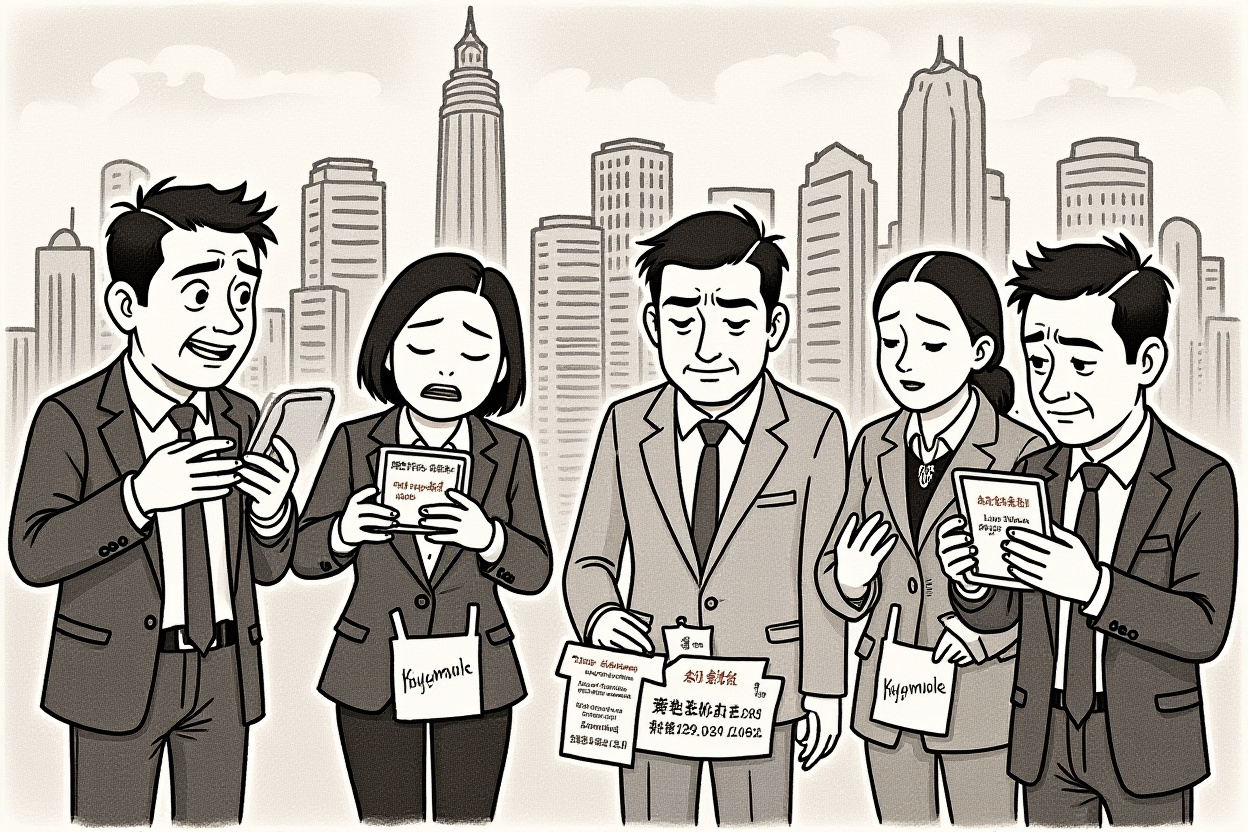
Executive Summary
This analysis delves into the recent live-streaming scandal involving Haihe Milk (海河牛奶), a renowned Chinese time-honored brand, and its broader implications for investors in Chinese consumer equities. Key takeaways include:
– The incident underscores severe governance and brand management risks for legacy companies diving into digital commerce without robust oversight.
– Regulatory scrutiny on online content, especially concerning minor protection, is intensifying, posing compliance challenges for brands reliant on live-streaming sales.
– Financial repercussions may extend beyond Haihe to its parent, Tianjin Food Group (天津食品集团有限公司), affecting investor confidence in state-backed consumer staples.
– The crisis highlights the urgent need for Environmental, Social, and Governance (ESG) frameworks in evaluating Chinese equities, as social responsibility failures can directly impact valuation.
– This time-honored brand crisis serves as a cautionary tale for other Chinese firms navigating the high-reward, high-risk live-streaming ecosystem.
A Viral Storm Erupts: Haihe Milk’s Digital Disgrace
On April 7, 2026, a firestorm of controversy engulfed one of China’s cherished consumer brands, Haihe Milk (海河牛奶), following the exposure of a profoundly vulgar live-streaming session. This incident, initially reported by Phoenix News’ Corporate Research Institute, quickly escalated from a niche online dispute to a national discourse on ethics in e-commerce. For global investors monitoring Chinese equities, the scandal is not merely a public relations mishap but a stark revelation of systemic vulnerabilities within the country’s booming digital sales channels. The core of this time-honored brand crisis lies in the reckless pursuit of traffic at the expense of brand integrity and social responsibility.
According to detailed reports, a live-stream hosted under the banner of “Haihe Milk Flagship Store” on Douyin (抖音) featured a male主播 (host) engaging in explicit sexual innuendo, using phrases like “drinking this won’t lead to pregnancy,” and making obscene gestures. The host, employed by the operator Tianjin Baiyi E-commerce Co., Ltd. (天津市佰意电子商务有限责任公司), completely disregarded the product’s nutritional value to instead peddle soft-core pornography. Alarmingly, the直播 (live-stream) was accessible to minors, with one parent reporting that his sixth-grade niece learned vulgar Tianjin dialect slang, such as “崩锅” (a euphemism for sexual intercourse), from the broadcast. This blatant exploitation for clicks represents a profound betrayal of trust for a brand officially recognized as a “China Time-Honored Brand” (中华老字号) by the Ministry of Commerce in 2024.
The Anatomy of the Controversy: Key Players and Immediate Fallout
The live-stream was operated by Tianjin Baiyi E-commerce Co., Ltd., a company established in May 2019 with legal representative Chen Sitong (陈泗通) and shareholders Sun Liang (孙良) and Chen Sitong. While this entity handled the直播带货 (live-streaming commerce), the brand owner is Tianjin Haihe Dairy Co., Ltd. (天津海河乳业有限公司), a subsidiary wholly owned by the state-backed Tianjin Food Group, with legal representative Zou Yang (邹旸). This separation between operator and brand owner became the epicenter of the ensuing blame game. Following public outcry, Baiyi E-commerce issued a formal apology, stating it had “severely dealt with” the host and would overhaul its直播规范 (live-streaming standards). In contrast, Haihe Dairy’s initial response was tepid, with staff suggesting users report issues in comments, later escalating to a outright disavowal: “It’s not our store, we can’t manage it.” This deflection, amidst evidence that even Haihe’s official flagship store is run by a third-party—Siyang Tuohe E-commerce Co., Ltd. (泗阳拓合电子商务有限公司)—signals a critical governance gap.
Deconstructing the Time-Honored Brand Crisis
The Haihe Milk scandal transcends a single marketing blunder, evolving into a full-blown time-honored brand crisis with multi-faceted implications. For a company founded in 1957, brand equity built over decades is its most valuable intangible asset. This incident has severely tarnished Haihe’s image as a wholesome, family-friendly staple, potentially triggering a long-term decline in consumer loyalty, especially among parents. In financial terms, brand damage directly correlates with revenue risk. As live-streaming commerce contributes an increasingly significant portion of sales for Chinese FMCG (Fast-Moving Consumer Goods) firms—with the sector exceeding RMB 4 trillion in 2025 according to iResearch—any disruption in this channel can materially impact top-line growth. This crisis forces a reevaluation of Haihe’s digital strategy and its reliance on third-party operators who may prioritize viral metrics over brand safety.
Financial Repercussions and Investor Risk Assessment
Investors must scrutinize the potential financial fallout from this time-honored brand crisis. Tianjin Haihe Dairy Co., Ltd., with a registered capital of RMB 310 million, is a key asset under Tianjin Food Group. While not publicly listed itself, its performance influences the valuation of its state-owned parent and signals risks for similar consumer staples in Chinese portfolios. Public risk records on Qichacha (企查查) show Tianjin Haihe Dairy has been involved in multiple lawsuits, including disputes over sales contracts. This new scandal adds operational and reputational risk layers. Key metrics to watch include:
– Short-term sales volatility in Haihe’s product lines, particularly in online channels, as consumers react to the scandal.
– Potential regulatory fines or sanctions from bodies like the Cyberspace Administration of China (国家互联网信息办公室) for violating online content rules.
– Increased marketing and PR expenditures required for brand rehabilitation, squeezing profit margins.
– ESG (Environmental, Social, and Governance) ratings downgrades, which are becoming pivotal for institutional investment decisions in Chinese equities. A failure in social responsibility, such as endangering minor welfare, can lead to exclusion from ESG-focused funds.
This incident serves as a critical case study in how non-financial governance failures can precipitate tangible financial losses, making it essential for fund managers to integrate such crisis audits into their due diligence.
Regulatory Crackdown and the Liability Labyrinth
The Haihe Milk controversy erupts against a backdrop of intensified regulatory scrutiny on China’s internet economy. Authorities have been progressively tightening controls on online content, with a specific emphasis on protecting minors. The Minor Protection Law (未成年人保护法) and regulations from the National Radio and Television Administration (国家广播电视总局) explicitly prohibit the spread of vulgar, violent, or other content harmful to minors. The live-stream in question flagrantly violated these norms, highlighting a systemic enforcement gap. This time-honored brand crisis thus amplifies calls for stricter platform accountability and clearer liability frameworks for brand owners.
Navigating Third-Party E-commerce and Brand Accountability
A central question in this scandal is: where does brand liability end and operator autonomy begin? Haihe Dairy’s attempt to distance itself from the直播 operated by Baiyi E-commerce is legally tenuous but reputationally disastrous. In China’s e-commerce ecosystem, brands often license their names to authorized distributors or cooperate with third-party livestreamers to boost sales. However, as People’s Bank of China Governor Pan Gongsheng (潘功胜) has emphasized in financial contexts, ultimate responsibility cannot be outsourced. For investors, this ambiguity presents a significant risk. Companies must establish rigorous digital governance protocols, including:
– Vetting and continuous monitoring of third-party直播 partners.
– Clear contractual clauses mandating adherence to content and ethical standards.
– Real-time auditing capabilities or AI-driven content moderation for live-streams bearing the brand’s name.
The lack of such measures at Haihe exposes a critical operational vulnerability that could be replicated across the consumer sector, necessitating a sector-wide risk reassessment.
Broader Implications for Chinese Consumer Equities
This time-honored brand crisis is not an isolated event but a symptom of deeper tensions within China’s rapid digital transformation. For international investors with exposure to Chinese consumer stocks, the Haihe scandal offers several cautionary insights. Firstly, the dependency on live-streaming commerce—a channel pioneered by influencers like Li Jiaqi (李佳琦)—carries inherent brand safety risks that may be inadequately priced into valuations. Secondly, state-owned or state-backed enterprises like Tianjin Food Group are not immune to such digital-age scandals, challenging perceptions of their operational conservatism. Finally, the incident reinforces the growing importance of ESG factors in investment analysis for Chinese markets.
Live-Streaming Dependency: A Double-Edged Sword for Legacy Brands
Live-streaming has revolutionized retail in China, but for time-honored brands, it presents a paradox. While it offers access to younger demographics and explosive growth, it also forces these traditional companies into a high-velocity, often unregulated digital arena where their legacy values can be easily compromised. The pressure to generate “traffic” (流量) can lead partners to employ边缘策略 (edge-ball strategies), testing the limits of decency. Alibaba Group (阿里巴巴集团) executive Maggie Wu (武卫) has often highlighted the growth metrics of live-commerce, but this case underscores the associated governance costs. Investors should now demand greater transparency on:
– The percentage of revenue derived from live-streaming channels and the risk controls in place.
– The structure of partnerships with Multi-Channel Networks (MCNs) and live-streaming agencies.
– Contingency plans for brand crises originating in digital marketing.
This recalibration is essential for accurately assessing the sustainability of growth narratives for consumer brands in China.
Charting a Path Forward: Crisis Management and Brand Rehabilitation
For Haihe Milk and similarly positioned brands, navigating out of this time-hornored brand crisis requires a strategic, multi-pronged approach. Immediate damage control must be followed by systemic reforms to rebuild trust. Effective crisis management, as often modeled by global firms, involves transparent communication, accepting responsibility, and outlining concrete corrective actions. Haihe’s initial response fell short on all fronts, but it is not too late for a course correction that could mitigate long-term brand erosion and reassure investors.
Building a Resilient Digital Governance Framework
The ultimate lesson from this scandal is the non-negotiable need for robust digital governance. Time-honored brands must treat their online presence with the same diligence as their product quality controls. This involves:
1. Centralized Brand Oversight: Establishing an internal digital ethics committee to oversee all third-party marketing activities, regardless of the operator.
2. Technology Integration: Leveraging AI moderation tools to monitor live-streams in real-time, flagging inappropriate content for immediate intervention.
3. Stakeholder Engagement: Proactively engaging with regulators, industry associations, and consumer groups to demonstrate commitment to reform. Referencing guidelines from the China Advertising Association (中国广告协会) on live-streaming marketing could be a positive step.
4. Transparent Reporting: For publicly linked entities, disclosing these governance measures in annual reports and ESG disclosures to rebuild investor confidence.
By implementing such a framework, Haihe can transform this crisis into an opportunity to set a new standard for digital responsibility among legacy Chinese brands.
Synthesizing the Scandal: Key Takeaways for the Market
The Haihe Milk live-streaming scandal serves as a potent reminder of the intricate risks embedded in China’s dynamic consumer market. This time-honored brand crisis has exposed fault lines between growth-at-all-costs digital strategies and the preservation of brand legacy, between operator autonomy and brand accountability, and between regulatory intent and enforcement reality. For investors, the implications are clear: due diligence must now extend deep into the digital sales and marketing practices of consumer companies. Brand value, once eroded by such incidents, can take years and significant capital to restore, directly affecting long-term shareholder returns.
Moving forward, market participants should closely monitor Haihe’s response, regulatory actions from bodies like the State Administration for Market Regulation (国家市场监督管理总局), and any shifts in consumer sentiment data. Furthermore, this event should prompt a sector-wide review of live-streaming partnerships among other time-honored brands and listed consumer firms. The call to action for institutional investors is to advocate for stronger corporate governance frameworks that explicitly cover digital channel risks. By prioritizing brands that demonstrate ethical digital stewardship, investors can not only mitigate risk but also champion a more sustainable and responsible growth model for China’s equity markets. The guardianship of brand legacy in the digital age is no longer a marketing concern—it is a fundamental financial imperative.