



Executive Summary
– A large-scale system failure in Wuhan caused hundreds of Baidu Apollo Go (萝卜快跑) autonomous vehicles to stall simultaneously, stranding passengers and crippling traffic, revealing deep-seated autonomous driving technology risks.
– The incident contrasts with Baidu’s recent expansion into Dubai, intended as a global showcase, and underscores the gap between ambitious deployment and robust safety infrastructure.
– Comparisons to similar failures abroad, like Waymo’s in San Francisco, highlight a universal dependency on network stability and the perils of scaling without foolproof contingency plans.
– Public tolerance for technological hiccups is being tested, with citizens bearing the daily costs of disruptions, while emergency responses relied on public resources rather than corporate accountability.
– The event serves as a critical wake-up call for investors and regulators, emphasizing that the path to fully autonomous mobility requires solving systemic risks before achieving commercial scalability.
From Dubai Showcase to Wuhan Breakdown: A Tale of Two Cities
The narrative of Chinese autonomous driving technology took a dramatic turn in late March. On one hand, Baidu’s (百度) Apollo Go, branded as Robo Taxi (萝卜快跑), made a triumphant entry into Dubai, launching full commercial unmanned operations in the opulent emirate. The service, having been personally tested by Dubai’s Crown Prince, was positioned as a pinnacle of China’s tech export—a polished “sample room” for global audiences. This move was underpinned by over 200 million kilometers of domestic testing across nearly 20 Chinese cities and more than 10 million passenger rides, primarily accrued in Wuhan, which boasts the nation’s largest open testing zone for autonomous vehicles.
Paving the Way with Domestic Mileage
Wuhan’s aggressive openness to autonomous testing provided an ideal laboratory. The city’s notoriously challenging driving environment—often described as a baptism by fire for any driver—was seen as the perfect stress test for refining algorithms. Baidu’s leadership, including founder Robin Li (李彦宏), had publicly touted the safety credentials of Apollo Go, claiming an accident rate one-fourteenth that of human drivers. This domestic pedigree was the bedrock for international ambitions, suggesting that the technology was not only ready but superior.
International Ambitions and Local Realities
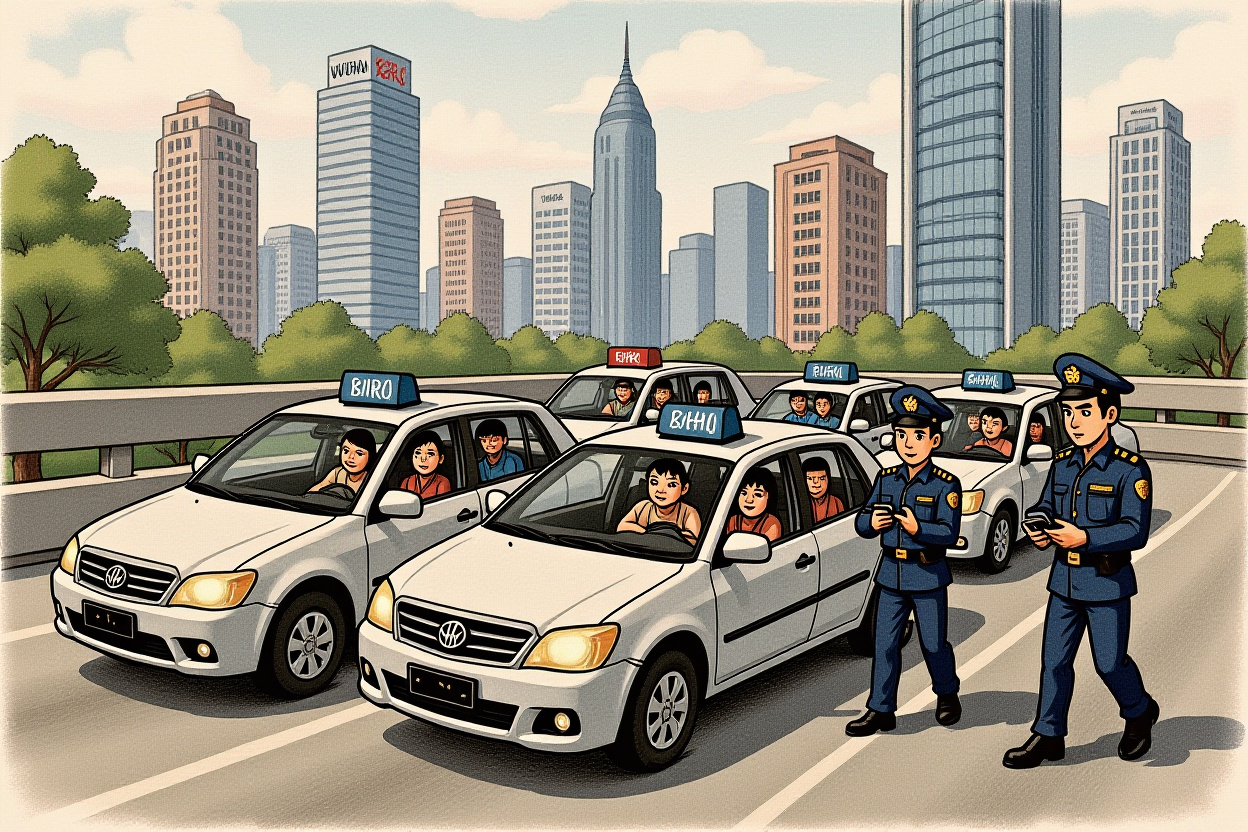
Yet, within a day of the Dubai announcement, the veneer of invincibility cracked. In Wuhan, during the evening of March 31, a cascading system failure caused approximately one hundred Apollo Go vehicles to simultaneously lose power and stall, many on elevated expressway lanes. This wasn’t a minor glitch; it was a full-scale paralysis that turned these robotaxis into immobile hazards, trapping passengers inside while bringing traffic to a standstill. The incident starkly contrasted the glossy international narrative, exposing raw autonomous driving technology risks that transcend borders.
The Wuhan Wobble: Anatomy of a Systemic Failure
The Wuhan incident was more than an isolated technical fault; it was a systemic meltdown that laid bare multiple layers of vulnerability. Initial reports from passengers and later confirmed by local police pointed to a “system failure” linked to network connectivity issues. Vehicles, dependent on constant data exchange with a central cloud platform, effectively experienced collective “brain death” upon losing that link. This dependency represents a fundamental autonomous driving technology risk—one that challenges the very premise of safe, scalable deployment.
Network Dependency and Collective Brain Death
The cars did not simply pull over safely; they became inert obstacles in fast-moving traffic. Passengers reported being unable to reach customer service promptly, with some only connecting via an SOS button after prolonged delays. When contact was made, the solution offered was simplistic: exit the vehicle and receive a refund. This response was grossly inadequate for individuals trapped on a high-speed roadway, where manual exit posed significant danger. The failure highlighted a critical lack of redundant systems. Where was the famed “cloud driver” remote control center, often depicted as a safety net for such scenarios? Its absence in this mass outage suggested that the backup systems themselves were part of the same fragile network architecture.
Passenger Safety and Inadequate Emergency Response
The human cost of this failure was palpable. Stranded passengers experienced fear and confusion, with their safe extraction ultimately reliant on public safety officers—traffic police who manually assisted them off the expressways. No dedicated corporate emergency team arrived on scene in a timely manner. This reliance on public resources underscores a troubling aspect of the current autonomous vehicle rollout: the potential for privatizing profits while socializing risks and rescue costs. For a service that reported 3.4 million orders in Q4 2023 alone, with a weekly peak of 300,000 rides, the absence of a robust, 24/7 incident command center is a glaring omission that magnifies autonomous driving technology risks.
Global Context: Echoes from San Francisco to Silicon Valley
The Wuhan event is not an isolated phenomenon in the global pursuit of driverless cars. It echoes a similar incident in San Francisco in late 2023, when a widespread power outage disabled traffic signals, causing multiple Waymo (a subsidiary of Alphabet) vehicles to become confused and stall at intersections, creating gridlock. That episode prompted Tesla CEO Elon Musk to publicly contrast his company’s approach, noting that Tesla’s current “Robotaxi” tests in the city maintain human safety drivers for oversight. These parallels emphasize that autonomous driving technology risks are universal, centering on edge cases and system dependencies that remain unsolved at scale.
The San Francisco Blackout Parallel
The Waymo incident demonstrated how external infrastructure failures—like power grids—can cripple a fleet that relies on interpreting environmental cues like traffic lights. Similarly, Baidu’s failure in Wuhan stemmed from an internal network vulnerability. Both cases reveal that the operational design domain for these vehicles is still narrowly defined and fragile. The technology often performs well in controlled or predictable scenarios but falters when faced with unexpected systemic shocks.
The Human-in-the-Loop Debate
Musk’s commentary, while self-serving, touches on a core industry debate: the role of human oversight. Baidu’s Apollo Go, in its fully driverless deployment mode, removes the human from the vehicle but theoretically retains remote “cloud drivers.” The Wuhan breakdown questions the reliability of that remote link. If a network failure can disable both the primary vehicle control and the remote assistance channel, then the safety model is fundamentally compromised. This autonomous driving technology risk forces a reevaluation of whether true Level 5 autonomy (no human intervention needed) is premature without near-perfect network resilience and redundant, independent backup systems.
The Cost of Innovation: Who Bears the Burden?
Technological advancement is never free from missteps, but the distribution of costs and consequences is a matter of equity and policy. The Wuhan incident, and the daily friction reported by citizens, suggests that the public is bearing a significant portion of the burden for this innovation. On municipal citizen feedback platforms, complaints about Apollo Go are not uncommon. They cite issues like unexplained sudden stops creating hazards, painfully slow speeds during rush hour that exacerbate congestion, and perplexing maneuvers that block entire lanes. These are the real-world, cumulative costs of living in a large-scale testing zone.
Public Resources as a Safety Net
When the large-scale stall occurred, the first responders were not Baidu’s engineers or a private roadside assistance fleet; they were the city’s traffic police. This effectively represents a cost transfer from a corporate entity to the public purse and public servants. For a technology sector that attracts billions in investment and promises revolutionary efficiency, the expectation should be that it comes with proportional responsibility for its own failures. The current model, where emergency response defaults to public infrastructure, is unsustainable and highlights an ethical gap in the commercialization strategy.
Citizen Complaints and Daily Disruptions
The quantifiable metrics of testing—kilometers driven, zones opened, orders fulfilled—often dominate corporate narratives and investor presentations. However, they can obscure the qualitative degradation of daily life for residents. The “individual feeling in the烟火日常” (smoke-and-fire daily life), as the original article poignantly notes, includes the frustration of delayed commutes, the anxiety of evading erratically behaving vehicles, and the terror of being trapped on a highway at night. These are real costs imposed on society in the name of progress. Acknowledging and mitigating these autonomous driving technology risks is not just a technical challenge but a social imperative.
Regulatory and Market Implications: A Crossroads for China’s AV Leadership
China has positioned itself as a global leader in autonomous vehicle development, with supportive policies and expansive open-road testing regimes. Wuhan is a prime example of this top-down encouragement. However, the recent incident places regulators in a delicate position. How they respond will signal the maturity of the market and influence both domestic consumer confidence and international investor perception.
China’s Openness to Autonomous Testing
Authorities in cities like Wuhan have demonstrated remarkable tolerance, providing the longest open-test roads in the country. This has undeniably accelerated data collection and algorithm refinement. However, tolerance must be balanced with rigorous safety oversight. The incident may prompt regulators to mandate stricter requirements for independent system redundancies, fail-safe operational modes, and certified corporate emergency response capabilities before granting further expansion permits. The autonomous driving technology risks have now been demonstrated at scale; ignoring them is no longer an option.
Investor Confidence and Future Deployments
For the sophisticated institutional investors and fund managers monitoring Chinese equity markets, particularly in the automotive and tech sectors, this event is a material data point. It challenges the narrative of seamless, near-term profitability for robotaxi services. Baidu’s stock (BIDU) and the broader ecosystem of Chinese AV suppliers may face heightened scrutiny regarding their risk management frameworks. The long-touted commercial model for autonomous ride-hailing hinges on removing the cost of the human driver. But if replacing that cost requires immense investment in failsafe technology and liability management, the economic equation changes. Investors will now demand clearer roadmaps for mitigating these autonomous driving technology risks before committing further capital.
Synthesizing the Path Forward from Innovation to Accountability
The journey toward autonomous mobility is fraught with complex challenges. The Wuhan stall is a potent reminder that technological brilliance in controlled environments does not equate to resilient, real-world systems. The core autonomous driving technology risks—network dependency, inadequate contingency planning, and unclear liability structures—must be addressed head-on. This requires a multi-stakeholder approach: companies must invest heavily in safety engineering beyond the minimum viable product; regulators must establish and enforce robust safety standards that evolve with the technology; and the public must be engaged as informed participants, not merely test subjects.
The call to action is clear. For industry executives and engineers, it is to prioritize systemic safety and redundancy as highly as algorithm accuracy. For investors, it is to apply rigorous due diligence on risk mitigation plans alongside growth metrics. For policymakers, it is to craft regulations that incentivize safety and clearly assign accountability. And for all stakeholders, it is to remember that in the race to deploy autonomous driving technology, safeguarding human lives is not a feature—it is the fundamental requirement. The future of mobility depends on learning from these stumbles and building a foundation where trust is as advanced as the technology itself.