



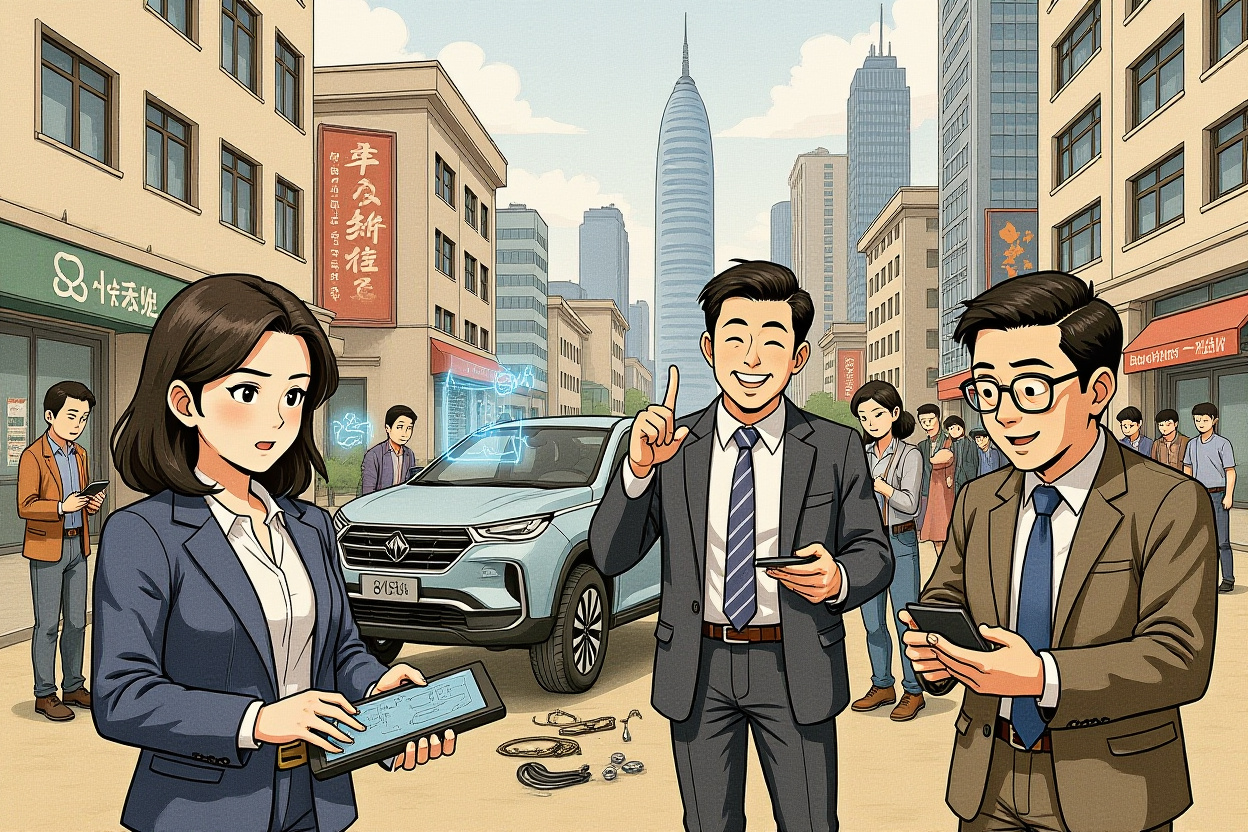
Executive Summary: – Over 30 major Chinese automakers have collapsed in the past decade, creating a cohort of ‘orphaned vehicle owners’ with no manufacturer support. – These owners face voided warranties, exorbitant repair costs, and parts shortages, forcing them into DIY repairs and online communities. – A secondary market for deeply discounted orphaned vehicles has emerged, attracting bargain hunters despite significant risks. – Regulatory measures like the 10-year parts supply rule are often unenforced, highlighting gaps in consumer protection. – The situation underscores the need for investors to assess automaker stability and for policymakers to ensure orderly market exits.
The Scale of the Crisis: Millions of Vehicles Left Behind
In the whirlwind evolution of China’s electric vehicle sector, a stark reality has emerged: the rapid rise and fall of automakers has stranded millions of consumers. Over the past decade, more than 30 large car companies have been eliminated in brutal competition, either declaring bankruptcy or ceasing operations. From 前途汽车 (Qiantu Auto) and 天际汽车 (Skywell Auto) to 雷丁汽车 (Leiding Auto), and more recently, 高合汽车 (HiPhi), 威马汽车 (WM Motor), and 极越汽车 (Jiyue), once-celebrated brands have faded into obscurity. However, the vehicles they sold—numbering in the millions—remain in active use, creating a growing population of orphaned vehicle owners who must navigate a post-manufacturer world. This phenomenon is not just a consumer issue; it reflects deeper volatility in Chinese equity markets, where automotive startups have attracted significant investment only to collapse, leaving investors and customers in the lurch. The plight of orphaned vehicle owners serves as a microcosm of the challenges in China’s EV boom, highlighting risks that extend beyond financial metrics to after-sales sustainability and brand trust.
Case Study: The Collapse of Nezha Auto
In the first half of 2025, 哪吒汽车 (Nezha Auto) was exposed to have liabilities exceeding 26 billion yuan, with mere tens of millions remaining on its books. The company owed substantial debts to suppliers and employees, and its chairman was reportedly cornered in his office by staff demanding unpaid wages, leading Nezha into a paralyzed state awaiting bankruptcy restructuring. By the time production halted, Nezha had sold approximately 500,000 vehicles. Just a year later, orphaned vehicle owners began experiencing severe hardships. For instance, a Beijing resident found her Nezha’s battery range degraded by 60% after only two years and 30,000 kilometers, rendering it unreliable for long trips. When she sought repairs under the official lifetime warranty on three-electric systems, the service center demanded self-payment, as they could no longer reimburse costs from the defunct manufacturer. She ultimately spent over 20,000 yuan to fix the battery pack, a common story among orphaned vehicle owners. This case underscores how promises from new energy vehicle makers can evaporate overnight, leaving consumers to bear the brunt.
Other Bankrupt Brands: A Growing List of Casualties
The issue extends beyond Nezha. 威马汽车 (WM Motor), which ceased production in 2022 after selling around 110,000 vehicles, saw its network services cut off in 2023 due to unpaid fees to service providers, voiding all warranty commitments. 高合汽车 (HiPhi), with over 20,000 deliveries of its luxury EVs, left owners with complex components like gull-wing doors and electronic rearview mirrors that are now nightmares to repair. 恒驰汽车 (Hengchi Auto), with only about 1,000 deliveries, never established a service system, making repairs nearly impossible for orphaned vehicle owners. These examples illustrate the widespread nature of the problem, affecting brands across price segments and technological sophistication.
The Hardships Faced by Orphaned Vehicle Owners
Orphaned vehicle owners encounter a myriad of challenges, from financial burdens to safety risks, as manufacturer support vanishes. With warranties rendered meaningless and parts supplies drying up, maintaining these vehicles becomes a costly and frustrating endeavor. This situation not only impacts daily life but also devalues assets, creating ripple effects in the secondary market and insurance sectors.
Voided Warranties and Skyrocketing Repair Costs
When an automaker collapses, service centers often shut down or refuse to honor warranties due to lack of funding from the parent company. For orphaned vehicle owners, this means paying out-of-pocket for repairs that were once covered. Battery repairs, a common issue in EVs, can cost from 10,000 to 80,000 yuan, depending on the damage. Insurance companies exacerbate the problem by hiking premiums or denying coverage altogether. For example, after WM Motor’s downfall, some owners reported insurance quotes jumping from 3,800 to 6,800 yuan, excluding damage coverage, as insurers cited the inability to source parts for claims. This financial strain forces many orphaned vehicle owners to defer maintenance, potentially leading to safety hazards like battery fires—a risk highlighted in the Nezha case where damaged cells were found during repairs.
Parts Shortages and Technological Complexities
Electric vehicles rely on specialized components, particularly in three-electric systems (battery, motor, and electronic control), which are difficult for aftermarkets to replicate. Brands like HiPhi used proprietary designs for features such as LED front faces and electric spoilers, requiring specific tools and expertise that are no longer available. Orphaned vehicle owners often face months-long waits for simple parts like window regulators or seat ventilation modules. As inventory dwindles, they resort to salvaging parts from scrapped vehicles or seeking generic alternatives, but this is time-consuming and unreliable. The rapid iteration of EV technology means that low-volume models have scant aftermarket support, pushing orphaned vehicle owners to the brink of abandoning their cars altogether.
The Rise of Self-Help and a DIY Automotive Culture
In response to these challenges, orphaned vehicle owners have banded together, fostering a grassroots repair movement that is reshaping China’s automotive landscape. Through online communities and entrepreneurial ventures, they are finding innovative solutions to keep their vehicles running, effectively becoming repair experts out of necessity. This self-reliance highlights a silver lining: the emergence of a DIY culture akin to mature markets in the West, but born from adversity rather than hobbyism.
Online Communities and Knowledge Sharing Platforms
Orphaned vehicle owners have formed groups on social media platforms like WeChat and online forums, where technically savvy individuals offer free guidance. They create tutorials for common fixes, such as replacing air filters, manually resetting fault codes, or diagnosing electrical issues. Some even run ‘online clinics’ where they provide remote diagnostics for fellow owners. This collective knowledge sharing reduces dependency on defunct manufacturers and empowers orphaned vehicle owners to tackle minor repairs themselves. For instance, owners of Jiyue models have shared hacks to bypass defunct server connections by installing third-party Android systems on their infotainment screens, though this carries risks of bricking the device.
Third-Party Repair Shops and Aftermarket Innovation
Entrepreneurial repair shops have seized the opportunity, specializing in specific bankrupt brands. Shops labeled ‘Nezha-specific repair’ or ‘WM Motor repair’ have emerged, often staffed by former manufacturer technicians who acquired equipment during the collapse. These third-party services provide a lifeline for orphaned vehicle owners within regional radii, charging for repairs but offering expertise that is otherwise unavailable. Additionally, owners scour second-hand markets like 咸鱼 (Xianyu) and 陈田 (Chentian) for parts, sourcing from test vehicles or wrecked cars. They also identify cross-compatible components from other models—for example, finding that certain PTC heaters or motor controllers are shared with surviving brands—reducing costs and wait times. This aftermarket ingenuity is a testament to the resilience of orphaned vehicle owners, but it also underscores the systemic failure of manufacturer support.
The Paradox of Discounted Orphaned Vehicles
Despite the hardships, a secondary market has blossomed for vehicles from bankrupt makers, attracting bargain hunters who see value in deeply discounted EVs. This trend reveals a dual narrative: while some orphaned vehicle owners lament their misfortune, others capitalize on the fire sales, creating a niche economy around these abandoned assets. For investors in Chinese equities, this dynamic offers insights into consumer behavior and asset valuation in volatile sectors.
Bargain Hunters and the Fire-Sale Economy
When automakers fail, unsold inventory is liquidated at steep discounts—often 50-70% off original prices. For example, HiPhi models originally priced at 600,000 yuan can be bought for 180,000 to 200,000 yuan, while used WM Motors sell for as low as 30,000-40,000 yuan after a few years. These prices make high-spec EVs accessible to buyers who prioritize features over reliability, betting that the savings offset repair risks. Dealers report steady sales, with one mentioning moving over twenty HiPhi units monthly, mostly to young buyers. Ironically, brands like Jiyue, which struggled to sell 2,000 units monthly while operational, now see increased road presence due to post-bankruptcy liquidations, highlighting a dark humor in market dynamics.
Risks and Rewards for Secondary Market Buyers
Buyers of orphaned vehicles are typically aware of the pitfalls but calculate that enjoying premium features for a few years justifies the gamble. They often plan to use the vehicle until major issues arise, then part it out for salvage, minimizing financial losses. This mindset has fueled demand, with some viewing these purchases as ‘industrial miracles’ at rock-bottom prices rather than ‘industrial garbage.’ However, the lack of manufacturer support means they join the ranks of orphaned vehicle owners, facing the same repair challenges. This secondary market activity also impacts broader automotive valuations, as fire sales can depress prices for competing models, influencing investor perceptions of brand stability in Chinese equity markets.
Regulatory Gaps and Implications for the Chinese EV Sector
Theoretically, orphaned vehicle owners should be protected by regulations, but enforcement is lax, exposing gaps in China’s consumer protection framework. This has broader implications for the automotive industry, investor confidence, and policy development, as the high failure rate of EV startups tests the resilience of market structures. Understanding these regulatory shortcomings is crucial for stakeholders navigating Chinese capital markets.
The 10-Year Parts Supply Rule and Enforcement Challenges
China’s ‘汽车品牌销售管理实施办法’ (Automobile Brand Sales Management Implementation Measures) stipulates that manufacturers must ensure at least 10 years of parts supply and after-sales service after discontinuing a model. However, when companies go bankrupt, compliance becomes virtually impossible. With no assets or accountability, orphaned vehicle owners have little recourse. In the燃油车时代 (fuel vehicle era), this was less problematic due to stable manufacturers and mature aftermarkets, but the EV era’s volatility—with rapid technological迭代 (iteration) and low volumes for many models—exacerbates enforcement issues. Regulatory bodies like 国家市场监督管理总局 (State Administration for Market Regulation) have struggled to hold defunct entities accountable, leaving consumers vulnerable.
Lessons for Investors and Market Sustainability
The plight of orphaned vehicle owners serves as a cautionary tale for investors in Chinese equities, particularly in the automotive sector. When evaluating EV makers, beyond financial metrics like revenue growth or technological innovation, factors such as after-sales commitment, supply chain stability, and regulatory compliance are critical. The high failure rate among new energy vehicle startups—driven by intense competition and capital burnout—underscores the risks in this booming yet chaotic market. For policymakers, ensuring orderly exits and robust consumer protection is essential to maintain trust and sustainable growth. Reforms might include mandatory escrow accounts for warranty liabilities or incentives for aftermarket development. As the market evolves, the resilience of orphaned vehicle owners could inspire a more robust automotive culture, but until systemic changes occur, their struggles highlight the urgent need for investor diligence and regulatory reinforcement. The Rise of Orphaned Vehicle Owners and the Path Forward The saga of orphaned vehicle owners reveals the human and economic costs of China’s EV market shakeout. From DIY repairs to bargain hunting, these consumers are adapting, but systemic issues persist, affecting millions and signaling deeper volatility in the automotive sector. For investors, this underscores the importance of due diligence on manufacturer longevity and after-sales networks when considering Chinese automotive stocks. For consumers, it serves as a warning to research brand stability before purchase. As China continues to lead in EV adoption, addressing the challenges faced by orphaned vehicle owners will be key to building a sustainable and trustworthy market. Consider this dynamic in your investment strategies and consumer choices—stay informed on regulatory updates and market trends to navigate the complexities of China’s automotive revolution effectively.