



Summary: Key Market Insights
– Surging international gold prices, with spot gold exceeding $4,555 per ounce, have directly fueled a dramatic rise in domestic Chinese gold jewelry retail prices, pushing them toward 1,400 RMB per gram. – A cultural and economic trend dubbed the ‘home gold crafting’ movement is gaining rapid popularity among young consumers seeking personalized, cost-effective alternatives to branded gold jewelry. – This trend is revitalizing the traditional goldsmithing profession, attracting a new generation of ‘post-00s’ artisans and creating new entrepreneurial and employment opportunities. – Significant risks accompany the DIY approach, including severe safety hazards from high-temperature operations and potential toxic fume exposure, as well as substantial financial loss due to operational errors and metal wastage. – Industry experts and regulatory bodies urge caution, advising consumers to prioritize professional services for complex work and to thoroughly assess risks before attempting home gold crafting projects.
The Precious Metal Frenzy: Understanding the Global and Domestic Gold Surge
The financial markets witnessed a dramatic overnight surge in precious metals, with spot gold prices breaching the $4,555 per ounce threshold during U.S. trading hours on March 27. This rally is not an isolated event but part of a broader macro narrative involving inflation hedges, geopolitical uncertainty, and central bank buying patterns. For participants in Chinese equity and commodity markets, this international price action has an immediate and tangible impact on domestic consumer behavior and retail investment trends. The subsequent spike in local gold prices has acted as a catalyst, accelerating a unique consumer trend centered on personalization and value retention in gold ownership.
International Benchmarks Set the Stage
The leap in London Bullion Market Association (LBMA) gold prices reflects complex global dynamics. Analysts point to shifting expectations around U.S. Federal Reserve interest rate policy, ongoing currency volatility, and sustained demand from major institutional buyers like the People’s Bank of China (中国人民银行) as key drivers. This creates a high-price environment that makes the intrinsic value of existing gold holdings more salient to retail consumers, prompting them to seek ways to leverage or remodel their assets creatively.
Domestic Retail Prices Approach Historic Highs
On March 28, the ripple effect hit Chinese consumers directly. Major domestic jewelry brands announced significant overnight price adjustments for pure gold jewelry. – Lao Feng Xiang (老凤祥): Quoted 1,396 RMB per gram, a 28 RMB increase from the previous day. – Lao Miao Gold (老庙黄金): Quoted 1,397 RMB per gram, a 32 RMB increase. – Chow Sang Sang (周生生): Quoted 1,391 RMB per gram, a 27 RMB increase. This rapid appreciation has pushed the effective cost of new branded jewelry to near-prohibitive levels for many, creating a fertile ground for alternative consumption models like the burgeoning home gold crafting trend to take root.
Gold Reborn: The Cultural and Economic Drivers Behind the Crafting Craze
Far from a simple price reaction, the movement to personally craft gold jewelry represents a deeper convergence of financial pragmatism and cultural expression. ‘Gold crafting’ or ‘打金’ involves a series of skilled processes—melting, molding, shaping, and polishing—to transform raw gold or old jewelry into new pieces like rings, bracelets, and necklaces. This ancient craft has found a massive new audience on social media platforms, where related topic views have soared past 1.3 billion, signaling a powerful cultural shift.
From Sentimental Value to ‘New National Trend’
For young consumers, this trend offers multiple appeals. Firstly, it provides a cost-effective alternative to buying new. A basic crafting fee ranges from 10 to 40 RMB per gram, compared to the substantial brand premiums and craft charges at retail stores. Secondly, it allows for the renewal and personalization of heirloom or outdated gold pieces, preserving their financial value and sentimental memory while updating their style. This fusion of aesthetics, emotion, and finance is being celebrated as a form of ‘New National Trend’ or ‘新国潮’, where traditional assets are repurposed through modern, hands-on engagement.
The Professional Crafting Ecosystem
The professional side of this trend is also booming. Master goldsmiths report that creating a basic piece takes one to three hours. For more intricate work involving非遗花丝 (intangible cultural heritage filigree) or手工錾刻 (hand engraving), fees can range from tens to hundreds of RMB per piece. Shanghai Gold Jewelry Industry Association (上海黄金饰品行业协会) Secretary-General Wang Huiqun (王惠群) advises consumers to select established workshops, observe the craftsman’s skill, and clarify all terms beforehand. This professional pathway offers a safer, more reliable entry point into the home gold crafting trend’s ethos for those unwilling to take on the DIY risks.
A New Generation of Artisans: The ‘Post-00s’ Reshape an Ancient Trade
The demand fueled by the home gold crafting trend is creating fresh career opportunities. Traditional goldsmithing shops are now staffed with young, creative talent, injecting new vitality into the sector. Shop owners report that teams composed largely of ‘post-00s’ artisans (those born after 2000) bring strong innovation capabilities and a keen understanding of contemporary client desires, from minimalist designs to pop-culture-inspired motifs.
Career Accessibility and Earning Potential
The barrier to entry in this field remains relatively low, with no strict age or formal education requirements, making it an attractive option for recent graduates or career-changers. Compensation reflects skill level. As noted by Zhou Baolin (周宝林), a shop manager in Shanghai’s Huangpu District, base monthly salaries for goldsmiths hover around 10,000 RMB, while highly skilled engravers or specialists can earn upwards of 15,000 RMB monthly. This economic incentive, combined with the creative satisfaction of the craft, is drawing a new demographic to this time-honored profession, further legitimizing and professionalizing the broader home gold crafting ecosystem.
The Allure and Peril of the DIY Approach: Deconstructing Home Gold Crafting
The most disruptive and risky manifestation of this trend is the full-fledged DIY, or home gold crafting, movement. Driven by online tutorials and the promise of ultimate customization and savings, individuals are purchasing toolkits to melt and reshape gold at home. This pursuit of the home gold crafting ideal, however, is fraught with underestimated complexities and dangers that experts are urgently highlighting.
The Toolkit and the Illusion of Simplicity
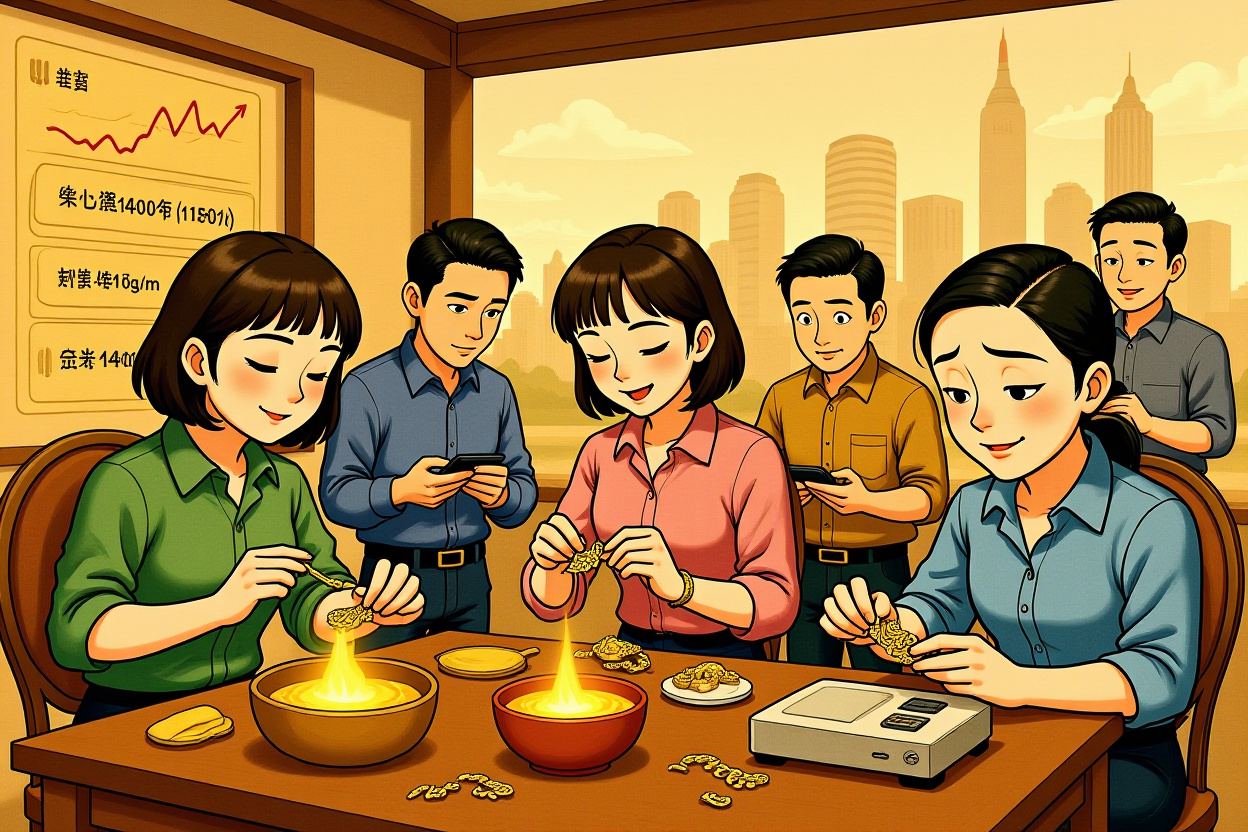
A basic home gold crafting kit—readily available on e-commerce platforms for 100 to 200 RMB—typically includes a crucible, tongs, a blowtorch, borax, carving clay, files, and a digital scale. Detailed video tutorials proliferate on social media, breaking down steps from preparing the mold to pouring the molten metal. Yet, this curated content often creates a false sense of achievability. As professionals note, even meticulously following these guides can lead to failure due to variables like inconsistent metal purity, improper mold preparation, or minor technique errors.
Expert Analysis of Tangible Risks
Wang Chao (王超), Director of the Gold and Jewelry Testing Center at the Ningbo Product Quality Inspection Institute (宁波市质检院), provides a sobering technical analysis. He confirms that while theoretically possible, home gold crafting is laden with risk. – **Safety Hazards:** Gold melts at over 1,000 degrees Celsius. The use of high-temperature torches in a non-industrial setting poses severe burn and fire risks. Inadequate ventilation can lead to the inhalation of toxic fumes if the gold alloy contains volatile metals like mercury. – **Financial Loss:** This is the most common ‘pitfall’ for home crafters. Operational errors often lead to unexpected and significant gold loss. Common issues include: – Improper preparation of石膏模具 (plaster molds) causing castings to shatter. – Incorrect welding or melting leading to metal fracture and irrecoverable residue. – These mistakes not only waste precious metal but typically necessitate costly professional repair, negating any intended savings. Wang Chao stresses that the home gold crafting process is not a simple follow-along activity. The quality of materials, environmental conditions, and individual skill create a high probability of failure for the average person, turning a seemingly frugal project into a financially draining endeavor.
Navigating the Golden Crossroads: Strategic Advice for Consumers and Market Watchers
For financial professionals and investors monitoring Chinese consumer trends, the home gold crafting phenomenon is more than a social media curiosity; it is a microcosm of broader market behaviors. It highlights how asset price inflation can spur innovative, sometimes risky, forms of personal finance management and consumption. The trend also underscores the growing consumer desire for assets that blend utility, personal expression, and store of value—a demand that traditional retail models are struggling to meet fully.
Regulatory and Industry Guidance for Safe Participation
The consensus from industry experts is clear: engagement with gold crafting should be approached with caution and professionalism. For those intrigued by the concept, the recommended pathway is to collaborate with established artisans for custom work, especially for complex pieces. This mitigates the physical and financial risks associated with the home gold crafting trend. Regulatory bodies and industry associations are likely to increase consumer education efforts, emphasizing the technical skills and controlled environments necessary for safe gold working. Investors should note that this trend may indirectly pressure traditional jewelry retailers to adapt their pricing and customization offerings while potentially boosting demand for small-scale refining and repair services.
Synthesizing the Glitter and the Gloom: A Forward-Looking Perspective
The simultaneous surge in gold prices and the DIY crafting movement presents a unique market tableau. On one hand, it demonstrates the enduring appeal of gold as a safe-haven asset and its deep integration into Chinese consumer culture. On the other, it reveals the innovative, if sometimes imprudent, methods individuals employ to optimize their holdings in a high-price environment. The home gold crafting trend, in particular, encapsulates the double-edged sword of democratized access to tools and information—empowering yet potentially hazardous. For market participants, the key takeaway is to recognize this trend as a symptom of broader macroeconomic forces and shifting consumer values. While it opens niche opportunities in e-commerce for tools, professional training, and bespoke crafting services, it also introduces new variables for consumer protection and retail market dynamics. Investors and executives should monitor the longevity of this trend, its impact on traditional jewelry sales, and any regulatory responses it may provoke. As a final call to action, whether you are a consumer drawn to the artistry of gold crafting or an analyst assessing its market implications, prioritize due diligence. Consult with professionals, thoroughly research risks, and remember that the true value of gold lies not only in its market price but in the security and expertise with which it is handled. Engaging with the home gold crafting trend demands respect for both the material’s financial weight and its physical properties.