



Executive Summary
– Global gold prices soared, with spot gold breaking $4,555 per ounce, driving domestic Chinese gold jewelry prices near 1,400 yuan per gram, signaling strong market momentum.
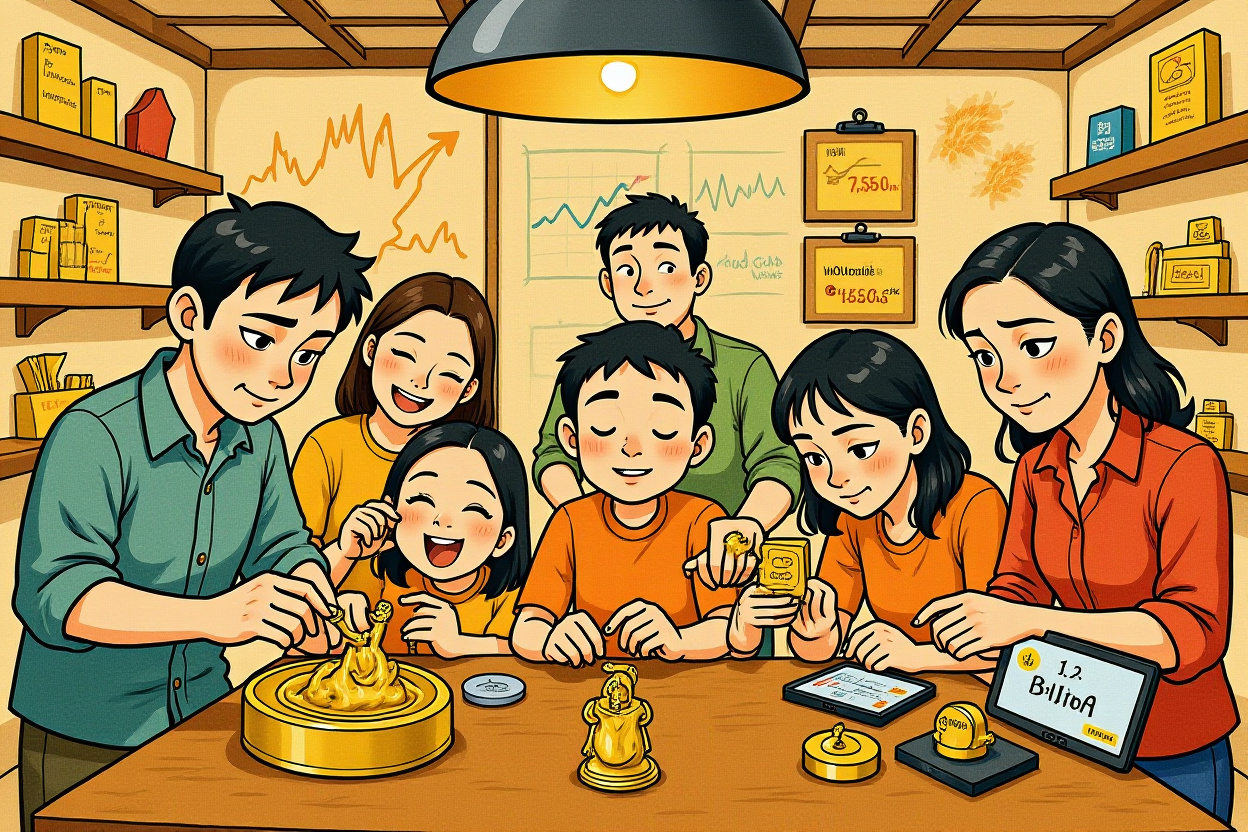
– A resurgence in gold crafting, especially home gold crafting, is captivating young Chinese consumers seeking cost-effective, personalized alternatives to branded jewelry, with social media views exceeding 1.3 billion hits.
– Young artisans, including ’00后’ (post-2000 generation), are entering the gold crafting industry, revitalizing traditional craftsmanship and creating new career opportunities with monthly salaries reaching 15,000 yuan.
– Experts from institutions like the Ningbo Product Quality Inspection Institute warn that home gold crafting poses significant safety hazards, such as toxic fume exposure, and financial risks due to gold loss from operational errors.
– Consumers are advised to prioritize professional services, understand regulatory standards, and exercise caution to mitigate risks while leveraging gold’s investment and aesthetic appeal.
The Unprecedented Gold Surge: Global Catalysts and Domestic Repercussions
The financial world is abuzz as gold prices experience a dramatic uptick, with spot gold surpassing $4,555 per ounce in late March, reflecting heightened geopolitical tensions and inflation concerns. This global surge has swiftly translated into China’s domestic market, where major gold jewelry brands have adjusted prices upward, nearing 1,400 yuan per gram. For instance, Lao Feng Xiang (老凤祥) raised prices to 1,396 yuan per gram, Lao Miao Gold (老庙黄金) to 1,397 yuan, and Chow Sang Sang (周生生) to 1,391 yuan, marking increases of 28 to 32 yuan from previous days. This price movement underscores gold’s dual role as a safe-haven asset and a consumer good, influencing both investment portfolios and everyday spending habits. The ripple effects are particularly evident in the burgeoning trend of home gold crafting, where individuals seek to capitalize on gold’s value through DIY methods.
International Drivers and Market Sentiment
The gold price rally is fueled by a combination of factors, including central bank policies, currency fluctuations, and global economic uncertainty. Institutions like the People’s Bank of China (中国人民银行) have maintained supportive stances on gold reserves, while international events drive demand. Data from the World Gold Council indicates a steady increase in gold holdings worldwide, reinforcing its appeal. In China, consumer sentiment is shifting, with gold not only viewed as a store of value but also as a medium for creative expression, paving the way for innovative trends like home gold crafting.
Domestic Price Adjustments and Consumer Behavior
Chinese consumers are responding to rising prices by exploring alternatives to traditional jewelry purchases. The spike in gold jewelry costs has made branded options less accessible, prompting a search for more affordable avenues. This economic pressure, coupled with a desire for uniqueness, is a key driver behind the home gold crafting phenomenon. Market analysts note that gold’s perceived stability during volatile times enhances its attractiveness, yet the high costs are pushing savvy buyers toward hands-on approaches to manage expenses.
Gold Crafting Renaissance: Blending Tradition with Modernity
Gold crafting, an ancient art involving melting, molding, shaping, and polishing gold into饰品 (jewelry), is experiencing a revival in China. This process, once a niche skill, has gained mainstream popularity, particularly among younger demographics. Social media platforms are flooded with tutorials and showcases, amassing over 1.3 billion views under related hashtags, highlighting the cultural shift. The appeal lies in its cost-effectiveness: professional gold crafting services charge 10 to 40 yuan per gram for basic pieces, compared to steep brand markups in retail stores. Moreover, home gold crafting offers unparalleled personalization, allowing individuals to repurpose old jewelry into modern designs that resonate with contemporary aesthetics.
The Allure of Personalized Gold Consumption
Consumers report that transforming heirloom pieces through gold crafting preserves sentimental value while updating styles, creating a ‘new national trend’ that merges emotional, aesthetic, and financial functions. This trend is part of a broader movement toward experiential consumption, where the process of creation adds value beyond the material itself. For many, home gold crafting represents a hands-on way to engage with a precious asset, fostering a deeper connection to their investments.Economic and Social Drivers
The rise of gold crafting is economically driven by gold’s intrinsic value and socially by a DIY culture amplified through digital platforms. Young professionals, facing economic pressures, see gold crafting as a means to obtain custom jewelry without the high costs of commercial brands. Additionally, the trend aligns with sustainability goals, as it encourages recycling old gold rather than purchasing new, reducing environmental impact. This blend of factors makes home gold crafting a compelling option for those looking to optimize their financial and creative outputs.
The New Generation of Artisans: Youth Infusion into Gold Crafting
The gold crafting boom is not just about consumers; it’s also creating opportunities for a new wave of artisans. Young people, including ’00后’ (post-2000 generation), are entering the field, bringing fresh perspectives and innovation. For example, some gold crafting shops report that their teams consist primarily of individuals under 28, with no strict age or educational barriers to entry. This inclusivity fosters creativity and allows for rapid adaptation to client demands, from非遗花丝 (intangible cultural heritage filigree) techniques to手工錾刻 (hand engraving).Career Prospects and Industry Growth
Gold crafting offers lucrative career paths, with average monthly salaries around 10,000 yuan and skilled artisans earning up to 15,000 yuan. This economic incentive, combined with the craft’s artistic appeal, is attracting graduates and career-changers alike. Industry leaders, such as Zhou Baolin (周宝林), store manager at a gold crafting shop in Shanghai’s Yuyuan area, emphasize that the sector’s growth is fueled by both demand and the entrepreneurial spirit of young artisans. As home gold crafting gains traction, it also spawns related businesses, from tool suppliers to training services, contributing to broader economic activity.
Innovation and Market Adaptation
Young artisans are leveraging technology to enhance traditional methods, using social media for marketing and customer engagement. Their ability to interpret modern design trends ensures that gold crafting remains relevant, appealing to a demographic that values uniqueness over mass production. This innovation is crucial for the industry’s longevity, as it bridges generational gaps and expands the market beyond conventional boundaries.
The DIY Gold Crafting Craze: A Closer Look at Home Gold Crafting
At the heart of this trend is home gold crafting, where individuals attempt to craft gold jewelry in their own spaces using DIY kits. This approach has gained popularity due to its perceived cost savings and the satisfaction of self-creation. Online platforms offer abundant tutorials, and e-commerce sites sell ‘gold crafting sets’ for as low as 100 to 200 yuan, including tools like crucible tongs, torches, and molds. However, the reality of home gold crafting is far more complex than social media snippets suggest, with significant risks that experts are urgently highlighting.
The Process and Its Pitfalls
A typical home gold crafting process involves steps such as preparing molds, melting gold at over 1,000°C, and cooling castings. While tutorials make it seem straightforward, professionals note that even meticulous replication can lead to failure. Common issues include imperfect molds causing casting defects, or welding errors resulting in gold loss. For instance, improper mold preparation can lead to碎裂 (shattering), with gold残留 (residue) that’s difficult to recover, ultimately requiring professional repair at added cost. This underscores why home gold crafting is not a guaranteed money-saver; instead, it often leads to unexpected financial setbacks.
Expert Warnings on Safety and Financial Risks
Wang Chao (王超), Director of the Gold and Jewelry Testing Center at Ningbo Product Quality Inspection Institute (宁波市质检院黄金珠宝检测中心), cautions that home gold crafting involves high temperatures and toxic risks. ‘Gold’s melting point exceeds 1,000°C, posing burn hazards, and if impure gold contains volatile metals like mercury,加热 (heating) can release poisonous fumes in poorly ventilated areas,’ he explains. Additionally,财产损失 (property loss) is a major concern, as操作失误 (operational errors) can cause gold损耗 (loss) beyond expectations. Wang Chao advises that while theoretically feasible for skilled individuals, home gold crafting demands proper safety measures, such as thick gloves and ventilation, and should be approached with realistic expectations of potential failure.Navigating Risks: Safety, Regulatory, and Investment Insights
For investors and consumers engaging with gold, understanding the risks associated with trends like home gold crafting is essential. The Chinese regulatory framework, overseen by bodies like the Shanghai Gold Jewelry Industry Association (上海黄金饰品行业协会), emphasizes professional standards and consumer protection. Secretary-General Wang Huiqun (王惠群) recommends choosing established crafting shops, inspecting artisans’ skills, and clarifying agreements beforehand. This guidance is particularly relevant given the unregulated nature of many DIY endeavors, which lack the safeguards of licensed operations.
Best Practices for Gold Enthusiasts
– Prioritize professional services for complex gold work: Seek out certified gold crafting shops with experienced artisans to minimize risks of loss or injury.
– Educate yourself on gold purity and market dynamics: Understand factors influencing gold prices, such as international benchmarks and domestic policies, to make informed decisions.
– Implement safety protocols if attempting DIY: Use protective gear, work in well-ventilated areas, and start with small projects to gauge skill levels before committing significant resources.
– Monitor regulatory updates: Stay informed about guidelines from authorities like the China Gold Association (中国黄金协会) to ensure compliance and protect investments.
Investment Implications and Market Outlook
The gold crafting trend reflects broader shifts in consumer behavior that can influence gold markets. As demand for raw gold in crafting rises, it may impact supply chains and pricing dynamics. Investors should consider gold not only as a commodity but also as part of a growing consumer sector, with opportunities in related industries like tool manufacturing or artisan services. However, the risks of home gold crafting highlight the importance of diversification and professional advice in gold-related ventures.
Synthesizing the Gold Narrative: Opportunities Amidst Caution
The convergence of rising gold prices and the DIY gold crafting trend presents a unique landscape for Chinese markets. While gold remains a robust investment asset, its consumer appeal is driving innovation and new economic activities. Home gold crafting, in particular, offers a glimpse into how traditional assets can be reimagined for modern audiences, yet it comes with stark warnings. Experts like Wang Chao (王超) stress that the allure of savings and creativity must be balanced with awareness of safety and financial pitfalls.
Key takeaways include the need for consumer education, the value of professional craftsmanship, and the potential for gold to serve dual purposes in portfolios and personal expression. As this trend evolves, stakeholders—from individual artisans to institutional investors—should approach it with a blend of enthusiasm and prudence. For those intrigued by gold crafting, start by consulting professionals or attending workshops to build skills safely. Ultimately, whether for investment or artistry, informed decisions will unlock gold’s true potential while mitigating the risks that accompany its glittering appeal.