



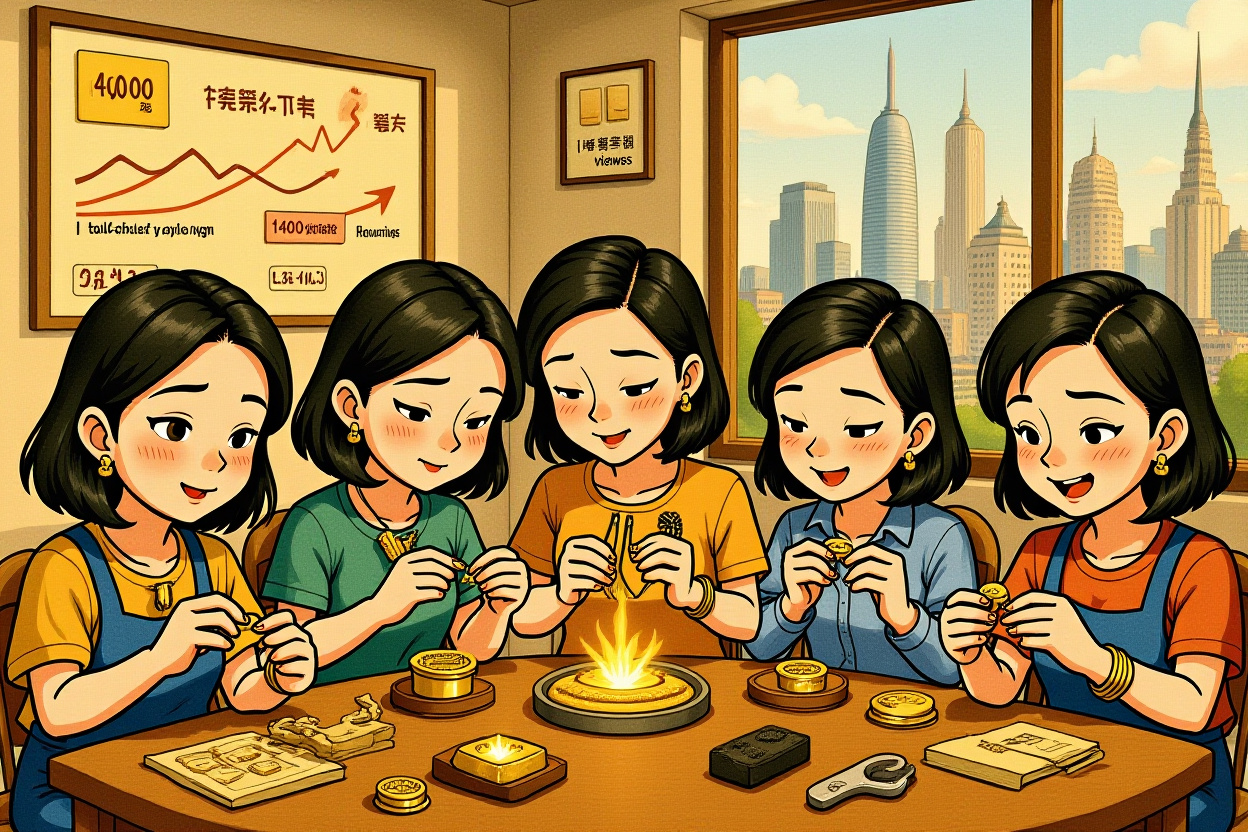
Executive Summary: Key Takeaways for Market Participants
Before diving into the details, here are the critical points from this analysis of the gold market and the emerging DIY trend:
– Gold prices have experienced a sharp upward trajectory, with spot gold briefly exceeding $4555 per ounce and domestic Chinese gold jewelry prices approaching 1400 yuan per gram, driven by global economic uncertainties and robust demand.
– A surge in popularity for DIY gold crafting, often referred to as home gold crafting, is sweeping through China, particularly among younger consumers seeking cost-effective and personalized alternatives to traditional retail jewelry.
– This trend is revitalizing the ancient craft of goldsmithing, with a new generation of artisans, including post-2000s or “00后” goldsmiths, entering the industry and creating innovative career opportunities.
– However, home gold crafting carries significant risks, including safety hazards from high-temperature operations and potential financial losses due to operational errors, leading experts to urge caution and professional oversight.
– For investors and consumers, understanding these dynamics is crucial for making informed decisions in the gold market, whether for investment, consumption, or entrepreneurial ventures.
The Golden Surge: Understanding the Price Rally and Its Implications
On March 27, Eastern Time, global gold and silver markets witnessed a dramatic overnight spike, with spot gold prices momentarily breaking through the $4555 per ounce barrier. This rally sent shockwaves through financial markets, underscoring gold’s enduring appeal as a safe-haven asset amid geopolitical tensions and inflationary pressures. By March 28, the ripple effects were palpable in China, where domestic gold jewelry prices edged closer to the psychological threshold of 1400 yuan per gram, marking a significant uptick from previous levels.
The price increases were reflected across major Chinese jewelry brands, highlighting the immediate impact on consumer markets. For instance, Lao Feng Xiang (老凤祥) reported a price of 1396 yuan per gram, up 28 yuan from the previous day; Lao Miao Gold (老庙黄金) quoted 1397 yuan per gram, a 32 yuan increase; and Zhou Sheng Sheng (周生生) listed 1391 yuan per gram, rising by 27 yuan. These adjustments are not merely statistical blips but signal deeper trends in consumer behavior and investment strategies, setting the stage for the home gold crafting phenomenon.
Global and Domestic Drivers of the Gold Price Rally
The surge in gold prices can be attributed to a confluence of factors, including expectations of monetary policy shifts by central banks like the Federal Reserve and the People’s Bank of China (中国人民银行), as well as heightened demand for physical gold in markets such as China and India. According to data from the World Gold Council, central bank purchases have remained robust, adding to the upward pressure on prices. Domestically, the Shanghai Gold Exchange (上海黄金交易所) has seen increased trading volumes, reflecting both speculative interest and genuine hedging needs among investors.
From a macroeconomic perspective, gold often serves as a barometer for uncertainty, and recent fluctuations in currency markets, particularly the US dollar and Chinese yuan (人民币), have further fueled its appeal. For sophisticated investors, this rally presents both opportunities and challenges, as elevated prices may deter some buyers while encouraging others to seek alternative avenues like home gold crafting to optimize costs.
Impact on Consumer Behavior and Retail Gold Markets
As retail gold prices climb, consumers are increasingly looking for ways to mitigate costs without sacrificing the emotional and financial value associated with gold ownership. This has led to a shift towards more personalized and economical options, with home gold crafting emerging as a viable alternative. The trend is particularly pronounced among younger demographics, who value customization and are tech-savvy enough to explore DIY methods through social media platforms. The rise of home gold crafting represents a disruptive force in the traditional jewelry sector, potentially altering supply chains and consumer expectations in the long term.
The DIY Gold Crafting Revolution: What It Is and Why It’s Booming
Home gold crafting, or “打金” (dǎ jīn) in Mandarin, involves processes such as melting gold, molding, shaping, and polishing to create custom jewelry pieces like rings, bracelets, and necklaces. This ancient craft, once confined to professional workshops, is now gaining traction in living rooms and home studios across China, driven by a desire for affordability and individuality. On social media platforms, topics related to home gold crafting have garnered over 1.3 billion views, indicating widespread interest and engagement.
The appeal lies in its cost-effectiveness: while brand-name gold jewelry carries hefty premiums for design and branding, home gold crafting reduces expenses by minimizing labor costs. Professional goldsmiths typically charge between 10 to 40 yuan per gram for basic pieces, with more intricate designs like non-heritage filigree or hand-engraving costing upwards of 100 yuan per gram. By对比 (comparing) this with retail markups, consumers can save significantly, making home gold crafting an attractive proposition in a high-price environment.
The Process and Economics of Home Gold Crafting
A typical home gold crafting session lasts one to three hours and includes steps such as melting gold with a torch, pouring it into molds, shaping it with tools, and final polishing. The required tools are readily available on e-commerce platforms, with basic kits costing as little as 100 to 200 yuan. These kits often include items like long-nose pliers, brushes, files, agate knives, borax, torches, electronic scales, and refractory boards, enabling amateurs to set up makeshift workshops at home.
However, the economics are not always straightforward. While the initial investment in tools seems low, hidden costs can arise from material wastage or failed attempts. For example, errors in mold preparation or welding can lead to gold loss, which is difficult to recover, ultimately necessitating professional repair and adding to expenses. This underscores why home gold crafting requires careful consideration beyond mere cost savings, blending elements of hobbyism with financial prudence.
The Emotional and Cultural Appeal of Custom Gold Pieces
Beyond economics, home gold crafting taps into deeper cultural currents, often referred to as the “new national tide” or “新国潮” (xīn guócháo). Many consumers use this method to repurpose old gold jewelry, preserving sentimental value while updating designs to suit modern aesthetics. As noted by industry observers, this trend merges tradition with innovation, offering a way to retain gold’s intrinsic worth while expressing personal style. For younger generations, it represents a form of financial literacy and creative expression, aligning with broader shifts towards sustainable and meaningful consumption.
New Artisans, New Opportunities: The Youthful Face of Gold Crafting
The home gold crafting boom is not just about consumers; it’s also fostering a new cohort of artisans who are injecting fresh energy into a time-honored trade. Many of these individuals are from the post-2000s generation, leveraging their creativity and digital skills to build careers in goldsmithing. In cities like Shanghai, gold crafting shops report that their teams increasingly consist of young employees, with some as young as their early twenties, demonstrating the industry’s evolving demographics.
According to Zhou Baolin (周宝林), a store manager at a gold crafting shop in Shanghai’s Huangpu District, entry-level goldsmiths can earn around 10,000 yuan per month, with skilled engravers or craftsmen commanding salaries of 15,000 yuan or more. This income potential, combined with low barriers to entry in terms of age or formal education, makes gold crafting an appealing career path for recent graduates or career changers. The trend highlights how traditional industries can adapt to modern labor markets, offering viable alternatives in an era of economic uncertainty.
How Young Goldsmiths Are Transforming the Industry
Young goldsmiths bring a unique blend of technical skill and innovative thinking, often using social media to showcase their work and attract clients. Their ability to understand contemporary design trends and consumer preferences sets them apart from older generations, enabling them to offer customized services that resonate with today’s market. For instance, some have pioneered techniques that integrate digital tools with handcrafting, streamlining processes and enhancing precision.
This revitalization is not without challenges, however. As more amateurs engage in home gold crafting, professional goldsmiths must differentiate themselves through quality and expertise, emphasizing the value of trained craftsmanship. Industry associations, such as the Shanghai Gold and Jewelry Trade Association (上海黄金饰品行业协会), play a crucial role in setting standards and promoting best practices, ensuring that the craft’s integrity is maintained amid rapid growth.
Navigating the Risks: Why Home Gold Crafting Isn’t for Everyone
While the allure of home gold crafting is undeniable, it comes with significant pitfalls that demand attention. Experts consistently warn that DIY approaches can lead to safety hazards and financial setbacks, making it essential for enthusiasts to proceed with caution. Wang Chao (王超), Director of the Gold and Jewelry Testing Center at the Ningbo Product Quality Inspection Institute (宁波市质检院), points out that gold melts at over 1000 degrees Celsius, posing fire and burn risks in domestic settings. Without proper ventilation and protective gear, such as thick gloves and long tongs, amateurs risk injury or even toxic exposure if impure metals are involved.
Moreover, financial losses are a common trap in home gold crafting. Operational mistakes, such as improper mold preparation or incorrect welding, can result in gold wastage that far exceeds initial estimates. For example, if a石膏模具 (plaster mold) is flawed, the cast piece may shatter, leaving gold residues that are difficult to reclaim. These errors often require professional intervention, negating any intended savings and highlighting the importance of skill and experience in gold working.
Safety Hazards and Health Concerns in Amateur Gold Smelting
The process of melting gold involves high temperatures and potentially hazardous materials. Wang Chao (王超) emphasizes that if gold contains impurities like mercury or other volatile metals, heating can release toxic vapors, leading to poisoning in poorly ventilated areas. This risk is compounded by the use of homemade setups, which may lack safety features found in professional workshops. To mitigate these dangers, experts recommend:
– Always operate in a well-ventilated space, away from flammable materials.
– Use certified tools and equipment, rather than makeshift alternatives.
– Wear appropriate personal protective equipment, including heat-resistant gloves and eye protection.
– Start with small projects to build proficiency before attempting complex designs.
These precautions are crucial for minimizing the inherent dangers of home gold crafting, but they cannot eliminate all risks, underscoring why many advise against amateur attempts altogether.
Financial Pitfalls: When DIY Costs More Than It Saves
Beyond safety, the economic rationale for home gold crafting often falls short in practice. Common errors include:
– Gold loss during melting or molding due to inexperience, which can amount to significant monetary value given current high prices.
– Costs associated with repairing botched attempts, which may exceed the price of buying a finished piece from a reputable jeweler.
– Investment in tools and materials that go unused after initial failures, leading to sunk costs.
Wang Huiqun (王惠群), Secretary-General of the Shanghai Gold and Jewelry Trade Association, advises consumers to thoroughly research before embarking on home gold crafting. She suggests visiting established gold crafting shops, observing craftsmen’s techniques, and clarifying all terms in advance to avoid misunderstandings. This proactive approach can help mitigate financial risks and ensure a more rewarding experience.
Expert Insights and Forward-Looking Guidance
The convergence of rising gold prices and the home gold crafting trend presents a complex landscape for investors and consumers alike. Industry professionals stress the need for balanced perspectives, recognizing both the opportunities and limitations of DIY methods. Wang Chao (王超) notes that while theoretically feasible for those with strong manual skills, home gold crafting is fraught with unpredictability, and success is not guaranteed even with meticulous tutorial following.
From a regulatory standpoint, authorities like the People’s Bank of China (中国人民银行) and market watchdogs monitor gold trading to ensure stability, but DIY activities largely fall outside formal oversight, increasing the onus on individuals to exercise due diligence. For those interested in gold as an investment, alternatives such as gold ETFs, bullion, or savings accounts offered by banks like Industrial and Commercial Bank of China (中国工商银行) may provide safer avenues without the hands-on risks of home gold crafting.
Best Practices for Engaging with the Gold Market
To navigate this evolving sector, consider the following recommendations:
– Consult with certified professionals or associations before attempting home gold crafting, to assess feasibility and risk.
– Diversify gold investments across physical holdings, financial instruments, and jewelry, avoiding over-reliance on any single approach.
– Stay informed about market trends through reliable sources, such as the Shanghai Gold Exchange (上海黄金交易所) or international reports from entities like the World Gold Council.
– If pursuing gold crafting as a hobby or business, seek formal training or apprenticeships to build essential skills and reduce error rates.
By adopting these strategies, market participants can better capitalize on gold’s potential while safeguarding against the pitfalls associated with home gold crafting.
Synthesizing the Gold Rush: Key Takeaways and Next Steps
The surge in gold prices has undeniably sparked a cultural and economic shift, with home gold crafting emerging as a prominent trend among cost-conscious and creative consumers. This phenomenon reflects broader themes of financial innovation and personal empowerment in China’s dynamic market. However, as experts warn, the risks—from safety hazards to financial losses—are real and should not be underestimated.
For investors, the key takeaway is to approach gold with a multifaceted strategy: leverage its safe-haven attributes during volatile periods, but remain cautious of speculative bubbles. For consumers, the appeal of DIY gold crafting must be weighed against the value of professional craftsmanship and the potential for costly mistakes. Ultimately, whether for investment or personal use, informed decision-making is paramount.
As a call to action, we encourage readers to engage with industry experts, participate in educational workshops, or explore certified gold products before diving into home-based ventures. By doing so, you can harness the opportunities of this golden era while minimizing exposure to its inherent dangers. Stay tuned to our platform for ongoing analysis and updates on Chinese equity markets and precious metal trends.