



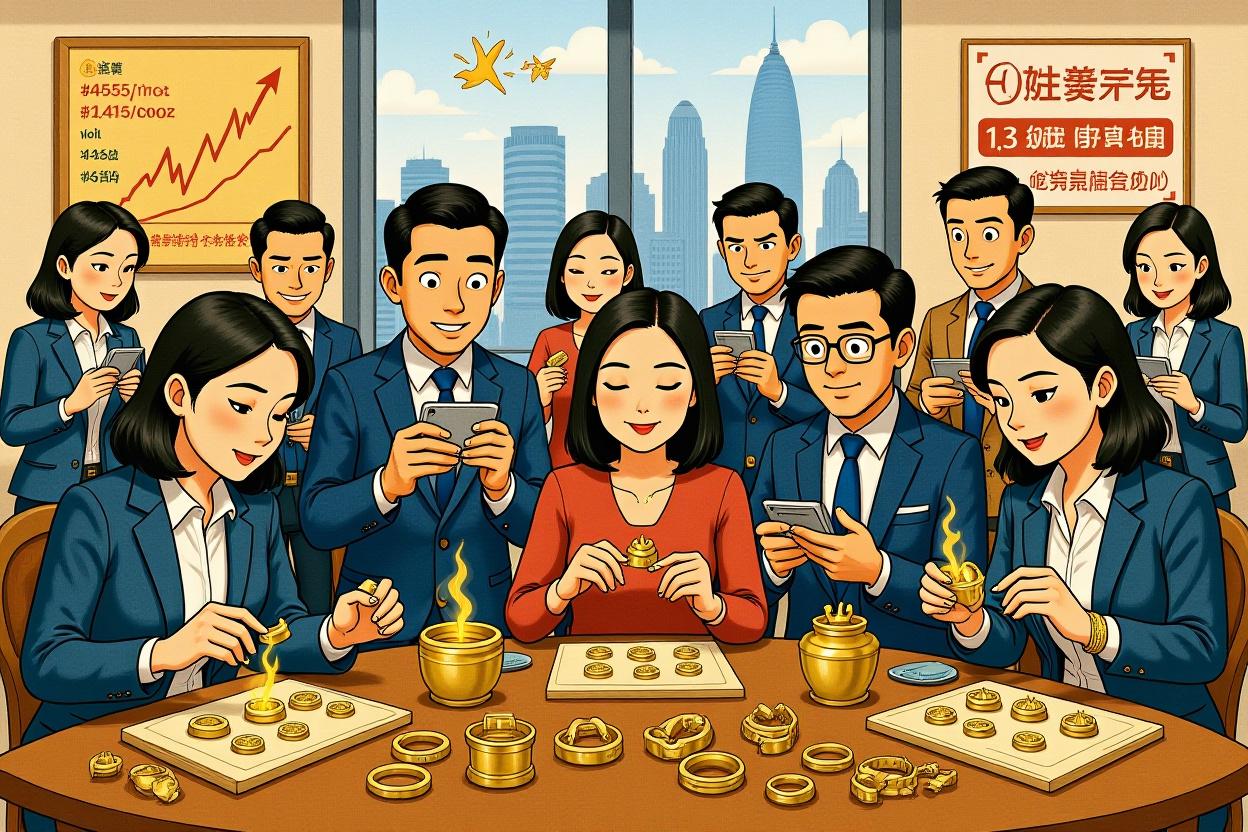
Executive Summary: Key Market Insights
– Global gold prices experienced a sharp rally, with spot gold surpassing $4555 per ounce, directly impacting Chinese domestic gold jewelry prices, which approached 1400 yuan per gram for major brands like Lao Feng Xiang (老凤祥) and Lao Miao Gold (老庙黄金).
– A surge in DIY gold smithing, or “home gold crafting,” has emerged among young Chinese consumers, driven by social media trends and desires for cost savings and personalized jewelry, with related topics garnering over 1.3 billion views on platforms.
– Industry experts, including Wang Huiqun (王惠群), Secretary-General of the Shanghai Gold Jewelry Trade Association (上海黄金饰品行业协会), caution that DIY gold smithing poses significant safety risks, such as fire hazards and toxic fume exposure, alongside substantial financial losses from operational errors.
– The trend is revitalizing traditional craftsmanship, with a new generation of “00后” (post-2000s) goldsmiths entering the field, offering career opportunities with monthly salaries ranging from 10,000 to 15,000 yuan, while also influencing consumer behavior in the gold market.
– For investors and market participants, understanding this DIY gold smithing phenomenon is crucial, as it reflects broader shifts in gold consumption, potential impacts on jewelry retail sectors, and implications for gold investment products in Chinese equity markets.
The dramatic ascent of gold prices has ignited an unexpected cultural and economic movement across China. In recent weeks, as global spot gold breached the $4555 per ounce threshold, domestic consumers witnessed a parallel surge, with major gold jewelry brands in China announcing consecutive price hikes. This financial backdrop has catalyzed a burgeoning trend: DIY gold smithing, where individuals, particularly younger generations, are turning their homes into miniature workshops to craft personalized gold jewelry. This DIY gold smithing craze, while appealing for its creativity and perceived cost-efficiency, carries profound risks that experts urgently highlight. For financial professionals monitoring Chinese markets, this trend underscores evolving consumer sentiments toward gold as both a store of value and a medium of personal expression, with potential ramifications for retail, manufacturing, and investment sectors.
The Global Gold Rally and Its Impact on Chinese Markets
Unprecedented Price Surges in International and Domestic Arenas
On March 27, Eastern Time, gold and silver prices soared overnight, with spot gold momentarily exceeding $4555 per ounce, marking one of the most significant rallies in recent years. This surge was driven by a confluence of factors, including geopolitical tensions, inflationary pressures, and shifts in monetary policy expectations. The ripple effects were immediate in China, where gold is deeply ingrained in both cultural traditions and financial portfolios. By March 28, domestic gold jewelry prices had escalated sharply, with several prominent brands adjusting their rates upward. For instance, Lao Feng Xiang (老凤祥) reported a price of 1396 yuan per gram, a 28-yuan increase from the previous day, while Lao Miao Gold (老庙黄金) quoted 1397 yuan per gram, up by 32 yuan. These adjustments reflect the sensitive transmission of global commodity movements into local consumer markets, highlighting gold’s dual role as a luxury item and an investment asset in China.
Market Implications for Investors and Consumers
The steep rise in gold prices has intensified consumer interest in alternative gold acquisition methods. Traditionally, Chinese households purchase gold through jewelry stores, banks, or exchange-traded products. However, the current price environment has prompted a search for more economical options, fueling the DIY gold smithing trend. From an investment perspective, this behavior indicates a potential shift in demand dynamics. While physical gold holdings remain robust, the move toward self-crafting could affect retail sales volumes for established brands like Zhou Sheng Sheng (周生生) and others. Investors in Chinese equity markets should monitor companies within the gold jewelry and retail sectors, as changing consumer preferences may influence revenue streams and stock performances. Additionally, the increased engagement with gold at a grassroots level could bolster overall market liquidity, but it also introduces new variables, such as fluctuations in raw gold demand from small-scale buyers.
The Rise of DIY Goldsmithing: A Cultural and Economic Phenomenon
What Exactly is DIY Goldsmithing?
Social Media as a Catalyst for the TrendThe DIY gold smithing trend has been amplified by digital platforms, where hashtags related to “打金” (gold smithing) have accumulated over 1.3 billion views. Videos showcase step-by-step guides, from setting up home workshops to finishing polished pieces, often glossing over the complexities involved. This visibility has democratized access to gold crafting knowledge, but it has also led to misconceptions about ease and safety. For market analysts, the social media-driven nature of this trend suggests a broader pattern: younger Chinese consumers are increasingly influencing market trends through online communities, which can have rapid effects on commodity demand and retail behaviors. This DIY gold smithing movement is not just a passing fad; it represents a deeper integration of financial asset utilization into daily life, blending investment with leisure activity.
Economic Drivers and Cultural Significance Behind DIY Goldsmithing
Cost Savings and Personalization Appeals
Emotional Value and the “New National Tide” MovementProfessional Goldsmithing Adapts: Young Artisans Enter the FrayA New Generation of Goldsmiths
The DIY gold smithing trend has spurred interest in professional goldsmithing as a career, attracting young artisans like Zhou Baolin (周宝林), a store manager in Shanghai’s Yuyuan area. Many of these newcomers are “00后” (born after 2000), bringing fresh creativity and technical skills to the trade. For instance, some workshops report employing teams where the oldest member is only 28, highlighting a demographic shift. These young goldsmiths often leverage social media to showcase their work, attracting clients seeking bespoke pieces. Their entry injects innovation into a traditional industry, with potential long-term effects on craftsmanship standards and market offerings. From an employment standpoint, this trend creates opportunities in a sector previously perceived as niche, with salaries for skilled workers reaching up to 15,000 yuan monthly, as noted by industry insiders.
Career Opportunities and Market Evolution
The low barriers to entry in goldsmithing—no strict age or学历 (educational) requirements—make it accessible to diverse backgrounds, including recent graduates and career changers. This influx of talent could enhance the overall quality and diversity of gold products available in China, potentially boosting exports or high-end market segments. For investors, monitoring companies that support this artisan ecosystem, such as tool suppliers or training institutes, may reveal new growth areas. Additionally, the professionalization of DIY gold smithing through formal apprenticeships or certifications could mitigate some risks associated with amateur efforts, aligning with broader regulatory trends in China’s consumer safety frameworks.