



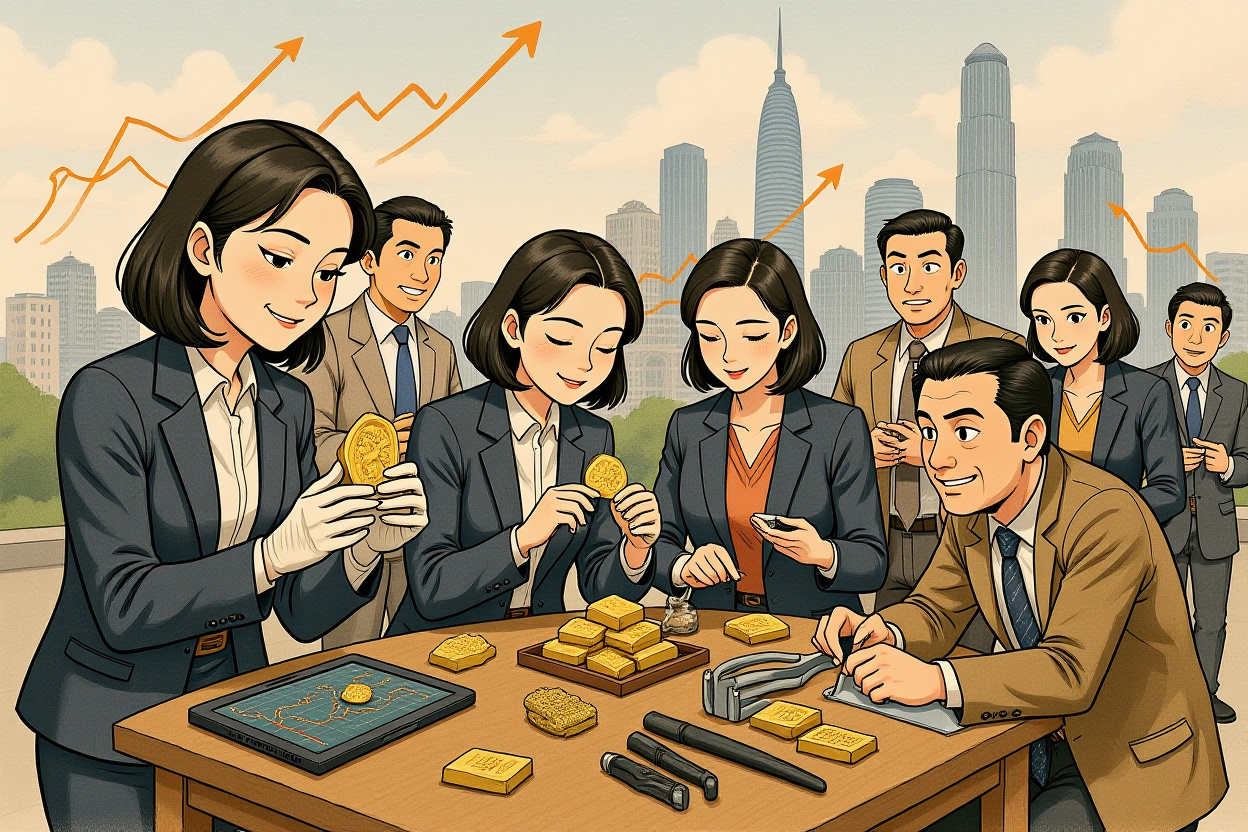
Summary of Key Takeaways:
– Global gold prices have surged to record highs, with spot gold exceeding $4,555 per ounce and leading Chinese jewelry brands raising retail prices to nearly 1,400 yuan per gram.
– A DIY gold crafting trend, driven by social media and cost-conscious youth, is reshaping consumer behavior, with online topic views surpassing 1.3 billion.
– Professional goldsmithing offers personalized, affordable alternatives to branded jewelry, but home-based attempts are fraught with safety hazards and significant financial risks.
– Experts like Wang Chao (王超) from the Ningbo Product Quality Inspection Institute warn of toxic fumes, fire dangers, and unexpected gold loss due to operational errors in DIY gold crafting.
– This phenomenon highlights broader market dynamics, including shifting investment sentiment and the need for consumer education in the volatile gold sector.
As spot gold prices shattered records in late March, breaching the $4,555 per ounce threshold, a parallel and perhaps more grassroots movement began capturing headlines across China. The surge in precious metal values has not only bolstered investment portfolios but also ignited an unexpected consumer trend: DIY gold crafting. This practice, where individuals attempt to melt, mold, and fashion gold jewelry at home, is gaining rapid traction, particularly among younger generations seeking affordability and personalization. However, beneath the allure of creating bespoke pieces lies a web of risks that experts urgently caution against. For investors and market watchers, understanding this DIY gold crafting craze is crucial to gauging its impact on consumer demand, gold market liquidity, and broader economic signals in China’s equity landscape.
H2: The Global Gold Surge and Domestic Price Impact
The recent gold rally is not an isolated event but part of a broader macroeconomic narrative. On March 27, Eastern Time, gold and silver prices experienced a sharp overnight spike, with spot gold momentarily surpassing $4,555 per ounce. This surge translated directly into the domestic Chinese market, where major jewelry brands adjusted their retail prices upward on March 28, bringing per-gram costs perilously close to the 1,400 yuan psychological barrier.
H3: Recent Price Movements and Brand Adjustments
Data from leading Chinese gold retailers illustrates the immediate impact. Lao Feng Xiang adjusted its price to 1,396 yuan per gram, a 28-yuan increase from the previous day. Similarly, Lao Miao Gold quoted 1,397 yuan per gram, up 32 yuan, while Chow Sang Sang set its price at 1,391 yuan per gram, a 27-yuan rise. These adjustments reflect not only international market volatility but also local demand pressures and currency fluctuations. The Shanghai Gold Exchange, a key benchmark, has seen consistent upticks, influencing retail pricing strategies. For investors, this price sensitivity underscores gold’s dual role as a safe-haven asset and a consumer good, with implications for companies listed on Chinese exchanges like the Shanghai Stock Exchange.
H3: Factors Driving the Gold Rally
Several interconnected factors are fueling this gold rally. Geopolitical tensions, inflationary concerns in major economies, and anticipatory moves ahead of central bank policy shifts have all contributed. Notably, the People’s Bank of China (中国人民银行) has been increasing its gold reserves, a signal that resonates with both institutional and retail investors. The weakening of the US dollar and lower real interest rates have further enhanced gold’s appeal. From a market perspective, this environment creates opportunities for equities in the mining and jewelry sectors, but also heightens volatility that requires careful navigation by fund managers.
H2: The Rise of DIY Gold Crafting: A New Consumer Trend
Amid soaring prices, a fascinating consumer behavior shift is unfolding: the renaissance of DIY gold crafting. This practice involves individuals—often young adults—using basic tools to melt down old gold items or raw materials to create new jewelry, bypassing traditional retail channels. The trend has exploded on social media platforms, where hashtags related to DIY gold crafting have garnered over 1.3 billion views, turning a niche hobby into a mainstream phenomenon.
H3: What is DIY Gold Crafting?
DIY gold crafting, or “打金” (dǎ jīn), is a process that includes melting gold, pouring it into molds, shaping, and polishing to produce rings, bracelets, or necklaces. Traditionally a skilled artisan’s trade, it has been democratized through online tutorials and affordable toolkits. A basic DIY gold crafting session can take one to three hours, with labor costs ranging from 10 to 40 yuan per gram for simple designs, and soaring to hundreds of yuan for intricate techniques like filigree or engraving. This contrasts sharply with branded jewelry, where markups often include significant branding premiums. The appeal lies in its perceived cost savings, customization potential, and the sentimental value of repurposing heirloom pieces.
H3: Appeal to Younger Generations
The DIY gold crafting trend is particularly popular among millennials and Gen Z consumers, who value experiences, sustainability, and financial prudence. By refurbishing old jewelry, they retain the intrinsic value and emotional attachment of gold while aligning with contemporary aesthetics—a blend described as “new national chic.” Shanghai Gold Jewelry Association Secretary-General Wang Huiqun (王惠群) notes that this trend reflects a desire for transparency and control over the production process. However, she advises consumers to seek reputable workshops with skilled artisans, highlighting the importance of craftsmanship in ensuring quality and value retention.
H2: Professional Goldsmithing vs. Home-Based Attempts
While professional goldsmithing adapts to this demand, a riskier subset has emerged: entirely home-based DIY gold crafting. This involves purchasing toolkits online and attempting the process without formal training, often lured by social media success stories.
H3: The Art and Business of Traditional Goldsmithing
Professional goldsmithing is experiencing a revival, with young artisans entering the field. For instance, some workshops report employing teams predominantly in their twenties, including “00后” (post-2000 generation) craftsmen who bring innovation and customer-centric designs. Zhou Baolin (周宝林), a shop manager in Shanghai’s Yuyuan area, states that skilled goldsmiths can earn monthly salaries around 10,000 yuan, with expert engravers reaching 15,000 yuan. This professional sector benefits from the DIY gold crafting trend by attracting clients who initially attempt home projects but seek rescue services after failures, thereby creating a new revenue stream.
H3: The Allure and Illusion of Home Kits
Online platforms are flooded with DIY gold crafting kits, available for as little as 100 to 200 yuan. These typically include tools like crucible tongs, torches, files, and molds. Tutorials promise simplicity, but reality is more complex. A standard process involves using a fire-resistant board, heating molds with a torch, and pressing gold into oil-based clay or plaster. However, as experts note, even meticulously following videos does not guarantee success. Many attempters face failed casts, cracked molds, or improper melting, leading to frustration and additional costs when seeking professional repairs. This highlights the gap between perceived accessibility and the technical skill required for effective DIY gold crafting.
H2: Hidden Risks and Financial Pitfalls of DIY Gold Crafting
The DIY gold crafting trend is not without significant dangers, which experts emphasize to prevent both personal harm and financial loss. Wang Chao (王超), Director of the Gold and Jewelry Testing Center at the Ningbo Product Quality Inspection Institute, outlines several critical concerns that consumers often overlook.
H3: Safety Hazards and Health Concerns
DIY gold crafting involves working with extreme temperatures—gold melts at over 1,000 degrees Celsius—posing severe fire and burn risks. Wang Chao (王超) advises operating in well-ventilated areas, wearing protective gloves, and using long-handled tools to minimize danger. A more insidious risk involves toxic fumes: if the gold alloy contains volatile metals like mercury, heating can release poisonous vapors, leading to potential poisoning in confined spaces. These safety issues make DIY gold crafting a hazardous endeavor for untrained individuals, contrasting with regulated professional environments that adhere to safety standards.
H3: Property Loss and Operational Errors
Beyond safety, financial loss is a common pitfall in DIY gold crafting. Errors in mold preparation, improper welding, or inaccurate temperature control can result in gold being lost as residue or fragments, often irrecoverable. Wang Chao (王超) explains that such losses can far exceed expectations, negating any intended savings. For example, a botched attempt might lose 10-20% of the gold’s weight, requiring costly professional intervention to salvage the material. This underscores the economic fallacy of DIY gold crafting for many, where upfront tool costs and hidden losses outweigh the benefits. Investors should note that this trend could indirectly affect gold recycling streams and consumer spending patterns, influencing market dynamics.
H2: Market Implications and Investment Perspectives
The convergence of gold price surges and the DIY gold crafting trend offers valuable insights for financial professionals. It reflects evolving consumer sentiment, potential shifts in gold demand, and broader economic indicators relevant to Chinese equities.
H3: Impact on Gold Jewelry Industry
The DIY gold crafting movement may pressure traditional jewelry retailers by diverting some demand to custom workshops or home production. Brands might respond by enhancing customization services or leveraging marketing around craftsmanship. Data from the China Gold Association indicates that while overall gold consumption remains robust, the share going to jewelry fabrication could see nuanced changes. For companies listed on the Shenzhen Stock Exchange (深圳证券交易所) or Hong Kong markets, such as Chow Tai Fook or Luk Fook, monitoring this trend is essential for strategic planning. The rise of DIY gold crafting also highlights the growing importance of experiential consumption, which could drive innovation in retail models and supply chains.
H3: Insights for Investors and Traders
From an investment standpoint, the DIY gold crafting phenomenon signals several key points. First, it demonstrates gold’s enduring appeal as both an investment and a consumable, potentially supporting prices amid volatility. Second, it may indicate a broader trend of disintermediation in luxury goods, relevant for equities in the retail and manufacturing sectors. Investors should watch for companies that adapt to this shift, such as those offering gold investment products or toolkits. Additionally, the risks associated with DIY gold crafting underscore the need for consumer education, which could create opportunities for financial advisory services or insurance products. As gold continues to play a critical role in portfolio diversification, understanding these grassroots trends can provide a competitive edge in navigating China’s dynamic markets.
The DIY gold crafting craze, fueled by record-high gold prices, is a multifaceted development with profound implications for consumers, investors, and the broader economy. While it empowers individuals with creative and cost-saving aspirations, the risks—from safety hazards to substantial financial losses—cannot be overstated. Experts like Wang Chao (王超) provide crucial warnings that should guide consumer behavior. For market participants, this trend offers a lens into changing demand patterns, potential disruptions in the jewelry sector, and the interplay between commodity prices and consumer innovation. As gold remains a cornerstone of global finance, staying informed through authoritative sources and professional advice is paramount. Whether you’re an investor analyzing equity opportunities or a consumer considering a DIY gold crafting project, prioritize due diligence and risk management to navigate this glittering yet precarious landscape effectively.