



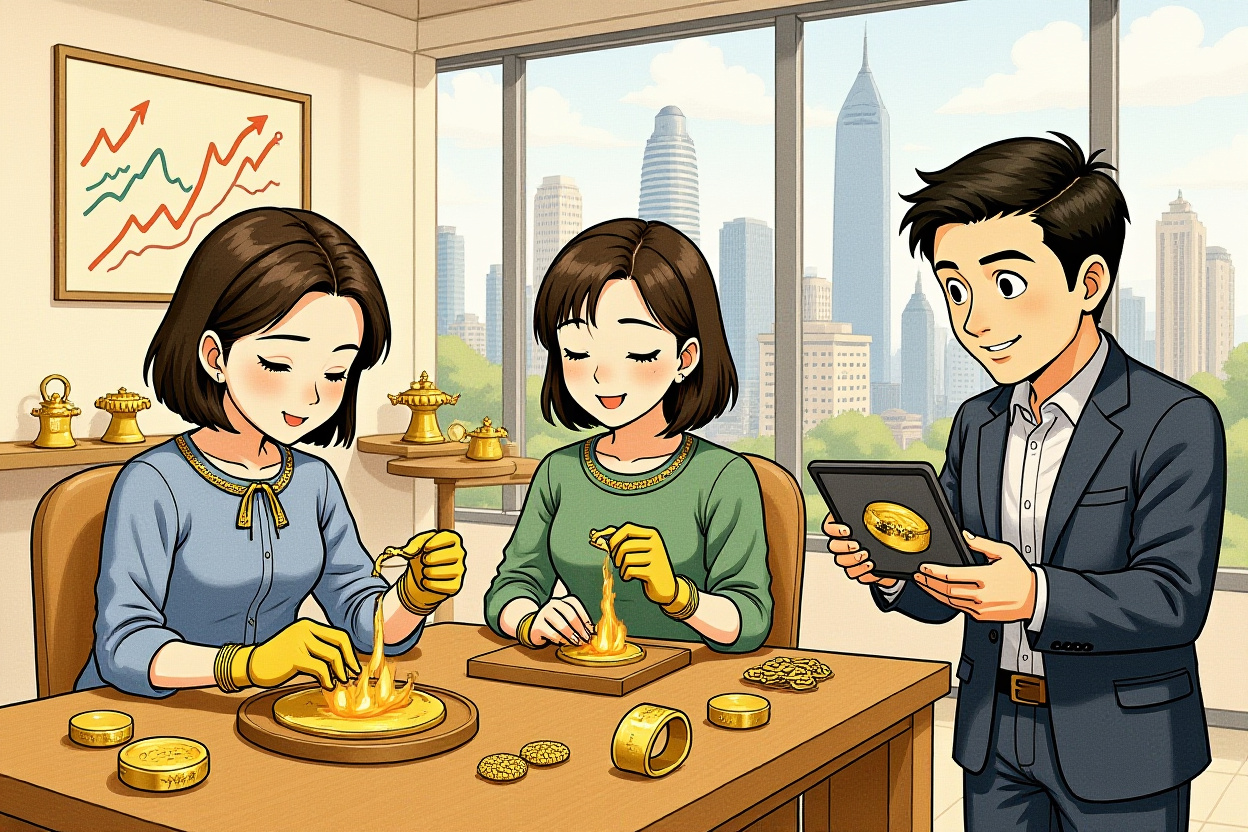
Executive Summary: Key Takeaways from the Gold Crafting Phenomenon
– Gold prices experienced a sharp surge, with spot gold exceeding $4,555 per ounce and domestic jewelry prices nearing 1,400 yuan per gram, driven by global market dynamics.
– A DIY gold crafting trend, known as “dǎ jīn”, is rapidly gaining popularity among young Chinese consumers, offering a cost-effective and personalized alternative to brand-name jewelry.
– Expert warnings highlight significant risks in home gold crafting, including safety hazards like toxic fumes and financial losses from operational errors that can lead to unexpected gold depletion.
– The revival of traditional goldsmithing is creating new career opportunities for young artisans, with wages ranging from 10,000 to 15,000 yuan per month, injecting vitality into an ancient craft.
– Investors and consumers should approach this trend with caution, balancing the creative appeal with practical considerations to avoid pitfalls in the burgeoning gold market.
The Meteoric Rise of Gold Prices: A Market in Flux
In a dramatic overnight move, gold and silver prices skyrocketed, capturing the attention of global investors and domestic consumers alike. On March 27, Eastern Time, spot gold breached the $4,555 per ounce threshold, signaling a robust rally in precious metals. This surge has immediate repercussions for China’s retail gold market, where prices for branded jewelry have climbed precipitously, nearing record highs. The DIY gold crafting trend is emerging as a direct response to these price escalations, as savvy consumers seek more affordable ways to acquire and customize gold assets.
Global Catalysts and Domestic Price Adjustments
The overnight spike in gold prices can be attributed to a confluence of factors, including geopolitical tensions, inflationary pressures, and shifts in monetary policy. As global uncertainty persists, gold’s status as a safe-haven asset has been reinforced, driving demand upward. Domestically, this translated into significant price hikes for gold jewelry. On March 28, major Chinese brands adjusted their prices upward, with Lao Feng Xiang (老凤祥) quoting 1,396 yuan per gram, up 28 yuan from the previous day; Lao Miao Gold (老庙黄金) at 1,397 yuan per gram, a 32 yuan increase; and Chow Sang Sang (周生生) at 1,391 yuan per gram, rising by 27 yuan. These adjustments underscore the rapid transmission of global market movements to local consumers, fueling interest in alternative gold acquisition methods like the DIY gold crafting trend.
Consumer Behavior in the Face of Soaring Costs
The DIY Gold Crafting Revolution: From Ancient Art to Modern HobbyGold crafting, or “dǎ jīn”, is an age-old technique involving melting, molding, shaping, and polishing gold to create jewelry such as rings, bracelets, and necklaces. Recently, this craft has experienced a resurgence, becoming a viral sensation on social media platforms. The DIY gold crafting trend has garnered over 1.3 billion views online, transforming from a niche skill into a mainstream hobby. This revival is driven by young consumers who value both the economic savings and the emotional connection to handcrafted items, making it a symbol of “new national chic” that merges aesthetics, sentiment, and financial utility.
Understanding the Gold Crafting Process
The process of gold crafting typically involves several meticulous steps: melting the gold, pouring it into molds, shaping it with tools, and finishing with polishing. Professional goldsmiths can complete a basic piece in one to three hours, with labor costs ranging from 10 to 40 yuan per gram for simple designs, and up to hundreds of yuan for intricate techniques like非遗花丝 (intangible cultural heritage filigree) or手工錾刻 (hand engraving). Compared to the steep markups in retail stores, this offers a compelling value proposition. As Wang Huiqun (王惠群), Secretary-General of the Shanghai Gold Jewelry Industry Association, advises, “Gold crafting involves specific processing techniques and environmental requirements. It’s crucial to choose larger-scale workshops, observe the craftsman’s skills, clarify any uncertainties upfront, and reach an agreement.” This guidance highlights the importance of expertise in ensuring quality and safety, a key consideration amidst the DIY gold crafting trend.
Social Media’s Role in Fueling the Craze
Platforms like Xiaohongshu (Little Red Book) and Douyin (TikTok) are awash with tutorials and success stories about gold crafting, making it accessible to novices. Videos demonstrate step-by-step processes, from setting up tools to final polishing, often glamorizing the DIY gold crafting trend as an easy and rewarding endeavor. However, this portrayal can be misleading, as many users overlook the technical challenges and risks involved. The viral nature of these posts has created a feedback loop, encouraging more people to experiment, but also amplifying the potential for mishaps. This digital ecosystem is central to the trend’s growth, yet it necessitates a critical eye from participants to avoid common pitfalls.
Young Artisans Reinventing a Traditional Craft
The DIY gold crafting trend is not only attracting consumers but also inspiring a new generation of artisans. Young goldsmiths, often from the “00后” cohort (born after 2000), are entering the field, bringing fresh perspectives and innovative designs. These individuals are leveraging their creativity to meet client demands for modern, personalized jewelry, thereby revitalizing a traditional industry. Their involvement signals a shift in career preferences, where hands-on craftsmanship is valued alongside digital skills, offering viable economic opportunities in a competitive job market.
Economic Incentives and Career Pathways
Innovation and Client-Centric ApproachesYoung goldsmiths excel in innovation, often using digital tools to design custom pieces and incorporating contemporary aesthetics into traditional forms. This client-centric approach allows them to tap into the DIY gold crafting trend by offering services that bridge the gap between home experimentation and professional craftsmanship. For instance, some workshops provide consultations for those attempting home projects, helping to mitigate risks while capitalizing on the trend’s popularity. This adaptability is crucial for the industry’s evolution, ensuring it remains relevant in a fast-changing market.
The Dark Side of Home Gold Crafting: Risks and Realities
Operational Challenges and Common FailuresHome gold crafting requires precise steps: preparing molds, heating gold to over 1,000 degrees Celsius, and carefully cooling the cast. Even with detailed video tutorials, replicating these processes is fraught with difficulty. Common errors include improper mold preparation causing fractures, welding mishaps leading to metal loss, and inadequate ventilation resulting in toxic fume exposure. Wang Chao (王超), Director of the Gold and Jewelry Testing Center at the Ningbo Product Quality Inspection Institute, explains, “Gold’s melting point exceeds 1,000 degrees Celsius, and high-temperature operations pose risks at home. It’s advisable to work in ventilated areas with protective gear like thick gloves and long tongs to minimize danger.” He adds that success depends heavily on individual skill, and failures are common among those with limited hands-on ability. This reality tempers the optimistic portrayal of the DIY gold crafting trend in online spaces.
Financial Pitfalls and Gold Depletion
Beyond safety, property loss is a major concern in home gold crafting. Operational mistakes can lead to gold being trapped in molds or vaporized during heating, with losses far exceeding expectations. For example, impurities in low-quality gold can vaporize and release harmful substances like mercury, posing health risks. Wang Chao (王超) warns, “If the metal purity is low and contains volatile elements like mercury, heating can produce toxic vapors, especially in poorly ventilated spaces, leading to poisoning.” Additionally, failed attempts often require professional intervention to recover or repair the gold, adding extra costs that negate any initial savings. This underscores the importance of weighing the DIY gold crafting trend against potential financial setbacks.
Expert Insights and Regulatory Perspectives
Guidance from Industry AssociationsThe Shanghai Gold Jewelry Industry Association, through figures like Wang Huiqun (王惠群), advocates for consumer education. They recommend visiting reputable workshops, assessing craftsmen’s expertise, and establishing clear agreements before proceeding. This advice is crucial for those tempted by the DIY gold crafting trend, as it redirects enthusiasm toward safer, more reliable channels. Associations also monitor market developments to update standards, ensuring that craftsmanship quality keeps pace with demand, which is vital as home experimentation increases.
Technical Assessments from Quality Institutes
Institutes like the Ningbo Product Quality Inspection Institute provide scientific analysis of home gold crafting risks. Wang Chao (王超) points out that模具 (molds) used in DIY projects may have defects, leading to imperfect final products. He stresses, “Home gold crafting isn’t as simple as following tutorials; it requires rational assessment of its possibilities and limitations.” These insights are backed by testing data, such as measurements of gold purity and melting behaviors, which reveal the technical hurdles involved. By sharing this information, authorities aim to curb reckless attempts and promote safer practices within the DIY gold crafting trend.
Market Implications and Strategic Considerations for Investors
The DIY gold crafting trend has broader ramifications for China’s gold market and investment landscape. As consumers shift toward personalized, cost-effective options, traditional jewelry retailers may face pressure to adapt, while demand for raw gold and crafting tools could rise. Investors should monitor these developments closely, as they signal evolving consumption patterns and potential opportunities in ancillary sectors, such as equipment manufacturing or training services for goldsmiths.
Impact on Gold Demand and Retail Dynamics
The surge in gold crafting is contributing to increased demand for physical gold, particularly in smaller, more accessible forms like granules or recycled jewelry. This could support gold prices in the long term, even as it disrupts traditional retail models. Brands may respond by offering more customizable services or lowering markups to compete with the DIY gold crafting trend. For investors, this suggests a need to diversify portfolios to include companies involved in gold processing tools or online platforms facilitating craft tutorials, as these areas may see growth fueled by the trend.
Forward-Looking Advice for Stakeholders
Consumers should balance creativity with prudence, considering professional services for complex projects to avoid losses. Investors might explore sectors linked to the DIY gold crafting trend, such as e-commerce for crafting supplies or gold-backed financial instruments that benefit from heightened interest. Regulators could enhance safety standards for home crafting kits, mitigating risks while fostering innovation. Ultimately, the DIY gold crafting trend represents a microcosm of larger economic shifts—blending tradition with modernity, and individual initiative with market forces—requiring astute navigation for all involved.
Navigating the Gold Crafting Landscape with Informed Caution
The DIY gold crafting trend is a multifaceted phenomenon driven by gold price surges and cultural shifts among China’s youth. While it offers exciting possibilities for personalization and savings, it comes with notable risks that demand attention. Experts like Wang Chao (王超) and industry associations provide valuable guidance to mitigate hazards, emphasizing the importance of skill and proper tools. As this trend continues to evolve, stakeholders—from consumers to investors—should stay informed, prioritize safety, and seek professional advice when needed. Embrace the creativity of gold crafting, but do so with eyes wide open to the realities of this ancient art turned modern craze.