



Executive Summary
Here are the key takeaways from this in-depth analysis of the gold market surge and the emerging DIY gold crafting trend:
- Gold prices have surged globally, with domestic Chinese jewelry brands like Lao Feng Xiang (老凤祥) seeing prices approach 1400 yuan per gram, driven by economic uncertainty and inflationary pressures.
- A DIY gold crafting trend, known as “home gold crafting,” has gained popularity among young consumers seeking cost savings and personalization, with social media views exceeding 1.3 billion.
- Young artisans, particularly “00后” (post-2000s generation) goldsmiths, are revitalizing the traditional craft, offering new career paths with monthly salaries ranging from 10,000 to 15,000 yuan.
- Home gold crafting poses significant risks, including safety hazards from high-temperature operations and financial losses due to operational errors, with experts urging caution.
- This trend has implications for gold demand, consumer behavior, and investment strategies, requiring informed decision-making for market participants.
The Meteoric Rise of Gold Prices and Its Market Impact
On March 27, Eastern Time, gold and silver prices soared overnight, with spot gold briefly surpassing $4555 per ounce. By March 28, domestic gold jewelry prices in China neared 1400 yuan per gram, reflecting a sharp upward trajectory. This surge is not isolated; it underscores broader economic trends that are reshaping investment portfolios and consumer habits worldwide. For professionals engaged in Chinese equity markets, understanding this gold rally is crucial, as it influences commodity-linked stocks, inflation hedges, and currency dynamics. The home gold crafting trend emerges directly from this price escalation, as consumers seek alternative ways to engage with the precious metal.
Domestic Gold Jewelry Prices Approach 1400 Yuan per Gram
Data from March 28 shows that major Chinese gold jewelry brands have adjusted their prices upward. For instance, Lao Feng Xiang (老凤祥) quoted 1396 yuan per gram, up 28 yuan from the previous day. Similarly, Lao Miao Gold (老庙黄金) reported 1397 yuan per gram, a 32 yuan increase, while Chow Sang Sang (周生生) listed 1391 yuan per gram, rising by 27 yuan. This price hike is attributed to global factors such as geopolitical tensions and monetary policy shifts, but domestically, it has fueled consumer interest in more affordable gold engagement methods, including home gold crafting. For investors, this price movement signals potential volatility in related sectors, from mining to retail.
Global Economic Drivers Behind the Gold Rally
The gold price surge is fueled by multiple factors: inflationary concerns, currency fluctuations, and safe-haven demand amid economic uncertainty. Central banks, including the People’s Bank of China (中国人民银行), have been increasing gold reserves, as noted in recent reports from the World Gold Council. This global context makes gold a strategic asset, but it also trickles down to consumer behavior, where the home gold crafting trend offers a hands-on approach to capitalizing on gold’s value. For institutional investors, monitoring these drivers is essential for portfolio adjustments, especially in Chinese markets where gold consumption is culturally significant.
The DIY Gold Crafting Revolution: A Youth-Driven Phenomenon
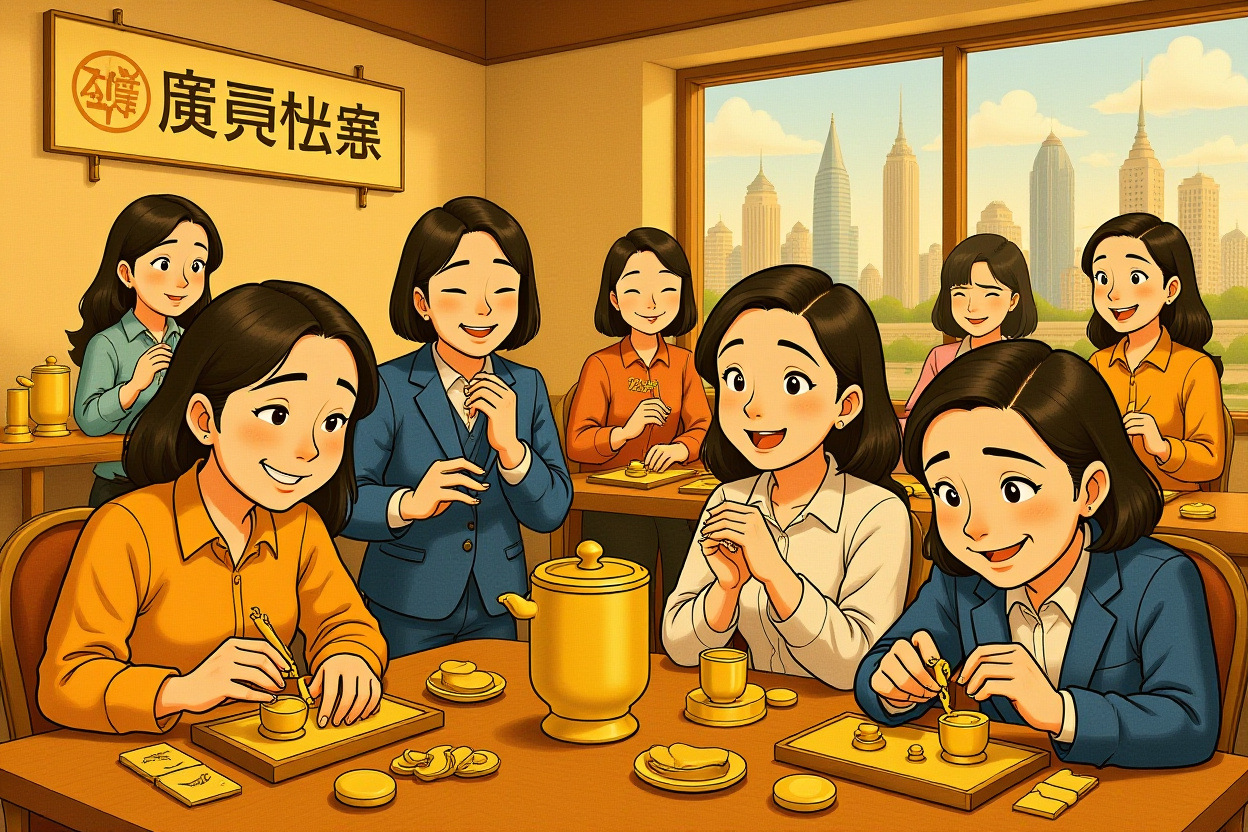
Gold crafting, or “打金” (da jin), involves processes like melting, molding, shaping, and polishing to create jewelry such as rings, bracelets, and necklaces. Recently, this ancient craft has resurged, particularly among young people, with social media topics on “打金” amassing over 1.3 billion views. The home gold crafting trend represents a shift towards personalized, cost-effective consumption, bypassing traditional retail markups. This movement is not just a fad; it reflects deeper trends in consumer preferences, where value, creativity, and emotional connection drive purchasing decisions. As gold prices rise, the appeal of home gold crafting grows, offering a practical outlet for engagement with the asset class.
Understanding the Gold Making Process and Costs
According to industry experts, crafting a gold piece typically takes one to three hours, involving steps like melting, casting, and polishing. Basic jewelry incurs a labor cost of 10 to 40 yuan per gram, while complex styles, such as非遗花丝 (intangible cultural heritage filigree) or手工錾刻 (hand engraving), can cost几十元至上百元 (tens to hundreds of yuan). Compared to brand premiums in retail stores, which often add significant markups, home gold crafting provides a more economical alternative. For example, consumers can repurpose old jewelry into new designs, preserving sentimental value while aligning with modern aesthetics. This cost-saving aspect is a key driver of the home gold crafting trend, making it accessible to a wider audience.
Why Young Consumers are Embracing This Trend
Young consumers, especially millennials and Gen Z, are drawn to home gold crafting for its blend of affordability, customization, and sustainability. As Wang Huiqun (王惠群), Secretary-General of the Shanghai Gold Jewelry Industry Association (上海黄金饰品行业协会), advises, selecting reputable workshops and clarifying terms is crucial. However, the DIY aspect allows for greater control, with tools available online for as low as 100-200 yuan. This trend taps into the “新国潮” (new national trend), where traditional elements are reinvented for contemporary tastes. For financial professionals, this signals a shift in gold demand patterns, potentially affecting retail sales and investment product offerings.
A New Generation of Goldsmiths: Youth Infusing Innovation into Tradition
The home gold crafting trend has spurred a wave of young artisans, often “00后” (post-2000s generation), who are entering the goldsmithing profession. These individuals bring fresh perspectives, leveraging technology and social media to market their skills. For instance, some workshops report that their goldsmiths are mostly under 28, with the oldest being 28 years old, highlighting the industry’s youth appeal. This influx is revitalizing a traditional sector, creating new career opportunities and economic niches. From an investment standpoint, this could lead to growth in small businesses and craft-based enterprises, aligning with broader trends in the gig economy and creative industries.
The Rise of “00后” Goldsmiths and Their Impact
Young goldsmiths, like those mentioned in reports from央视财经 (CCTV Finance), are using innovation to meet client demands. Zhou Baolin (周宝林), store manager at a gold crafting shop in Shanghai’s Yuyuan area, notes that salaries range around 10,000 yuan monthly, with skilled engravers earning up to 15,000 yuan. This earning potential, coupled with low entry barriers—no strict age or学历 (educational background) requirements—makes it an attractive career path. For corporate executives and fund managers, this trend underscores the importance of supporting vocational training and small-scale entrepreneurship in China’s economic landscape. The home gold crafting movement is not just about consumption; it’s also about job creation and skill development.
Career Opportunities and Market Evolution
The gold crafting industry is evolving, with online platforms facilitating tool sales and tutorial sharing. This accessibility lowers barriers to entry, allowing more people to participate in home gold crafting. However, as the trend grows, it may lead to increased competition and standardization needs. Investors should watch for companies that supply tools or offer training services, as they could benefit from this surge. Additionally, the integration of digital tools, like 3D modeling for designs, could further modernize the craft, creating opportunities for tech-savvy entrepreneurs. The home gold crafting trend thus represents a microcosm of larger economic shifts towards customization and digital integration.
The Risks of Home Gold Crafting: Safety, Financial, and Regulatory Concerns
While home gold crafting offers benefits, it comes with significant risks that experts urgently highlight. The process involves high temperatures, with gold melting at over 1000 degrees Celsius, posing safety hazards if not handled properly. Moreover, financial losses from operational errors are common, as amateurs often underestimate the complexity. For sophisticated investors and business professionals, understanding these risks is vital, as they can affect consumer confidence and market stability. The home gold crafting trend, if mismanaged, could lead to regulatory scrutiny or insurance claims, impacting related industries. Thus, a balanced view is necessary to navigate this emerging phenomenon.
Safety Hazards and Health Concerns in DIY Operations
Wang Chao (王超), Director of the Gold and Jewelry Testing Center at Ningbo Product Quality Inspection Institute (宁波市质检院黄金珠宝检测中心), warns that home gold crafting carries risks like exposure to toxic fumes if impure metals are heated. For example, mercury vapor can be released in poorly ventilated spaces, leading to poisoning. He advises precautions such as wearing thick gloves, using long tongs, and operating in well-ventilated areas. These safety issues underscore the need for public awareness, especially as the home gold crafting trend gains traction. From a regulatory perspective, authorities might consider guidelines for safe practices, similar to those for other DIY activities. Investors should monitor any policy changes that could affect this sector.
Financial Losses and Common Pitfalls
Beyond safety, financial pitfalls are rampant in home gold crafting. Errors like improper mold preparation or焊接 (welding) mishaps can cause gold loss, often exceeding expectations. Many DIY enthusiasts find themselves seeking professional repair, adding costs instead of saving money. As Wang Chao notes, success is not guaranteed, even with detailed tutorials; factors like模具质量 (mold quality) and individual skill play crucial roles. For consumers, this means that home gold crafting may not be as economical as perceived, and for investors, it highlights potential demand for repair services or insurance products. The home gold crafting trend thus requires a cautious approach, emphasizing education and risk management.
Market Implications and Strategic Guidance for Investors
The confluence of rising gold prices and the home gold crafting trend has broader implications for Chinese equity markets and global investment strategies. This movement affects demand for physical gold, retail jewelry sales, and related sectors like tool manufacturing. For institutional investors and fund managers, analyzing these trends can inform decisions on commodity funds, consumer stocks, and innovation-driven enterprises. The home gold crafting phenomenon is not just a consumer trend; it’s a market signal reflecting shifts in value perception and economic behavior. By understanding its dynamics, professionals can better position their portfolios in a volatile environment.
Impact on Gold Demand and Price Volatility
The home gold crafting trend could subtly influence gold demand, as consumers may purchase raw gold instead of finished jewelry, affecting traditional retailers. However, overall demand might increase due to heightened engagement, supporting gold prices in the long term. According to data from the China Gold Association (中国黄金协会), gold consumption patterns are evolving, with DIY segments gaining share. Investors should track these metrics through reports and market analyses. Additionally, the trend may spur innovation in gold-related financial products, such as ETFs linked to craft gold or platforms for trading DIY kits. The home gold crafting movement thus presents both challenges and opportunities for market participants.
Recommendations for Safe and Informed Participation
For those interested in home gold crafting, experts recommend starting with small projects, using high-quality tools, and consulting professionals. Wang Huiqun suggests visiting established workshops to assess craftsmanship. From an investment angle, diversifying into companies that support this trend, like those selling安全工具 (safety tools) or offering educational content, could be strategic. Moreover, staying informed about regulatory updates from bodies like the National Financial Regulatory Administration (国家金融监督管理总局) is crucial. As the home gold crafting trend continues, a proactive approach—balancing enthusiasm with caution—will yield the best outcomes for consumers and investors alike.
Synthesizing Insights for Forward-Looking Action
The gold price surge and the accompanying home gold crafting trend highlight a dynamic intersection of finance, culture, and technology. Key takeaways include the need for vigilance against risks, the potential for youth-driven innovation, and the importance of adaptive investment strategies. As gold remains a cornerstone asset in global markets, understanding these nuances is essential for making informed decisions. Whether you’re a corporate executive assessing consumer trends or a fund manager optimizing portfolios, this analysis provides a roadmap for navigating the complexities. Embrace the opportunities presented by the home gold crafting movement, but always prioritize safety and due diligence to mitigate pitfalls in this evolving landscape.