



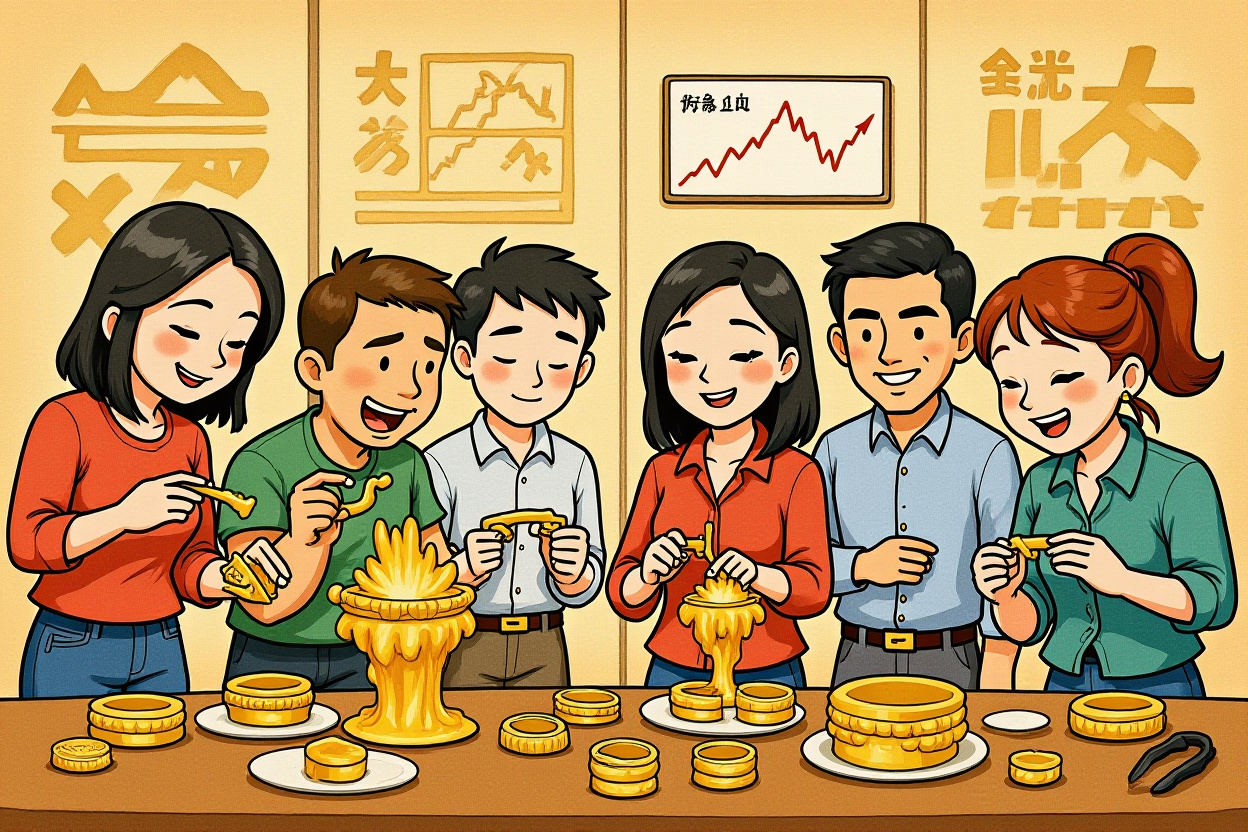
Executive Summary: Key Takeaways from the Gold Crafting Phenomenon
– Gold prices have surged globally, with Chinese domestic brands like Lao Feng Xiang (老凤祥) nearing 1,400 yuan per gram, driven by market volatility and economic factors.
– A DIY gold crafting trend, known as ‘home gold crafting’, is gaining rapid popularity among young consumers seeking personalized, cost-effective jewelry alternatives to traditional retail.
– Experts, including Wang Chao (王超) of the Ningbo Quality Inspection Institute, warn of significant safety hazards—such as toxic fumes from melting metals—and financial risks like unexpected gold loss during amateur attempts.
– This trend is revitalizing the goldsmithing industry, with young artisans entering the field and creating new economic opportunities, but it also poses challenges for consumer protection and market stability.
– For investors and professionals, understanding this home gold crafting trend is crucial for assessing gold demand shifts, consumer sentiment, and potential regulatory responses in Chinese equity markets.
The Global Gold Rally and Its Resonance in Chinese Markets
The recent surge in gold prices has captured global attention, with spot gold briefly surpassing $2,555 per ounce in late March—a milestone that reverberated through Chinese financial hubs. This rally, fueled by geopolitical tensions, inflation concerns, and central bank policies, has directly impacted domestic markets, where gold is both a cherished asset and a cultural staple. For international investors focused on Chinese equities, this price movement underscores the interconnectedness of commodity markets and consumer-driven sectors, offering insights into broader economic trends.
Record Highs in International and Domestic Gold Prices
On March 27, Eastern Time, gold and silver prices spiked dramatically, with现货黄金 (spot gold) reaching unprecedented levels. By March 28, this global wave translated into Chinese retail markets, where major jewelry brands reported sharp increases. For instance, Lao Feng Xiang (老凤祥) priced足金首饰 (pure gold jewelry) at 1,396 yuan per gram, up 28 yuan from the previous day, while Lao Miao Gold (老庙黄金) and Chow Sang Sang (周生生) followed suit with similar hikes. These figures highlight how the home gold crafting trend is emerging against a backdrop of soaring costs, prompting consumers to seek alternatives to expensive branded pieces.
Economic Indicators Driving Gold Demand in China
The Resurgence of Gold Crafting: From Ancient Art to Modern DIYGold crafting, or打金 (da jin), involves melting, molding, shaping, and polishing gold into items like rings and bracelets—a practice dating back centuries in China. Recently, this ancient craft has been reimagined through a modern lens, with social media platforms like Douyin and Xiaohongshu propelling it into the mainstream. The hashtag #打金 has amassed over 1.3 billion views, signaling a cultural shift where young consumers embrace hands-on creation over passive consumption. This home gold crafting trend merges tradition with innovation, appealing to those who value both aesthetic customization and financial prudence.
Process and Popularity of Home Gold Crafting
The typical home gold crafting process includes several steps: using a crucible and torch to melt gold, pouring it into石膏模具 (plaster molds), and finishing with tools like files and polishers. Enthusiasts often purchase affordable kits from e-commerce platforms, with basic ‘打金套装’ (gold crafting sets) costing 100-200 yuan. These kits contain items such as长嘴钳 (long-nose pliers),硼砂 (borax), and耐火板 (fireproof boards), enabling amateurs to experiment. However, as the home gold crafting trend gains traction, professionals caution that success rates vary widely; a single misstep in模具制备 (mold preparation) or焊接 (welding) can lead to substantial gold loss, negating any intended savings.
Social Media’s Role in Fueling the Trend
Online tutorials and success stories have democratized access to gold crafting, but they also downplay complexities. Videos on platforms like Bilibili showcase seamless transformations of old jewelry into new pieces, often omitting the risks. For instance, one blogger detailed a meticulous process involving油泥王 (oil-based clay) and冷水中淬火 (quenching in cold water), yet even replicating these steps can result in failure due to variables like metal purity or tool quality. This highlights how the home gold crafting trend is both enabled and obscured by digital content, requiring consumers to approach with caution.
Economic and Cultural Drivers Behind the Home Gold Crafting Trend
The rise of DIY gold crafting is not merely a fad; it reflects deeper economic and cultural currents in China. As gold prices climb, consumers—especially millennials and Gen Z—are seeking value retention and personal expression through customizable assets. This home gold crafting trend aligns with the broader ‘新国潮’ (new national tide) movement, where traditional elements are reinvented for contemporary tastes. By repurposing heirloom pieces or raw materials, individuals can preserve emotional value while adhering to modern aesthetics, creating a hybrid of investment and artistry.
Cost Savings and Personalization Appeal
Compared to retail gold jewelry, which often carries high margins, home gold crafting offers significant savings. Professional goldsmiths charge工费 (labor fees) ranging from 10-40 yuan per gram for basic designs, rising to hundreds for intricate techniques like非遗花丝 (intangible cultural heritage filigree). In contrast, DIY attempts can cut these costs, though they introduce other expenses. For example, a consumer might spend 200 yuan on tools but risk losing gold worth thousands due to errors. This cost-benefit analysis is central to the home gold crafting trend, as enthusiasts weigh financial incentives against potential pitfalls.
Emotional Value and the ‘New National Tide’ Phenomenon
Risks and Challenges in the Home Gold Crafting TrendWhile the DIY approach offers allure, experts unanimously warn of hazards that could undermine its benefits. The home gold crafting trend involves handling黄金熔点 (gold’s melting point) of over 1,000 degrees Celsius, posing fire and burn risks in non-professional settings. Moreover, improper ventilation can lead to exposure to toxic fumes—for instance, if alloys contain volatile metals like mercury. Wang Chao (王超), Director of the Gold and Jewelry Testing Center at the Ningbo Quality Inspection Institute (宁波市质检院黄金珠宝检测中心), emphasizes that ‘家庭操作肯定有风险’ (home operations definitely carry risks), urging precautions such as thick gloves and long tools.
Safety Hazards: From High Temperatures to Toxic Exposure
A primary concern in the home gold crafting trend is the use of open flames and高温材料 (high-temperature materials). Amateurs often overlook safety protocols, increasing the likelihood of accidents. For example, heating黄金 (gold) in confined spaces can release harmful vapors if the metal contains impurities. Wang Chao (王超) explains that ‘如果它里面混有其他的,比如易挥发的金属’ (if it mixes with other, volatile metals), toxic gases like mercury vapor may form, posing poisoning risks. Thus, enthusiasts must prioritize通风的环境 (ventilated environments) and protective gear, though many tutorials neglect these aspects.
Financial Pitfalls: Unexpected Gold Loss and Increased Costs
Beyond safety, financial losses are a common ‘坑’ (pitfall) in the home gold crafting trend. Errors such as improper mold casting or over-polishing can cause黄金损耗 (gold loss) exceeding 5-10% of the original weight, far above the 1-2% typical in professional settings. This not only diminishes the asset’s value but may require costly repairs by experts. Data from Beijing-based gold shops indicate a rise in customers seeking fixes after failed DIY attempts, with additional charges averaging 200-500 yuan per incident. Consequently, what begins as a cost-saving endeavor can escalate into a net loss, highlighting the need for realistic expectations.
Market Implications and Professional Insights on Gold Crafting
The proliferation of home gold crafting is reshaping segments of the Chinese gold industry, from retail to artisan sectors. Traditional jewelers face pressure to adapt, as consumers bypass stores for DIY options, while new business models emerge around crafting services and education. For investors monitoring Chinese equities, this trend signals potential shifts in demand for gold-related stocks, such as those of major brands like周大福 (Chow Tai Fook) or mining companies. Understanding the home gold crafting trend is essential for anticipating market movements and regulatory responses.
Impact on the Traditional Gold Jewelry Industry
Opportunities for Young Artisans and New Business ModelsThe trend is fostering a new generation of goldsmiths, with many ’00后’ (post-2000s) individuals entering the field. For example, Zhou Baolin (周宝林), a shop manager in Shanghai’s豫园街道 (Yuyuan Street), notes that skilled craftsmen can earn monthly salaries of 10,000-15,000 yuan, attracting career changers and fresh graduates. This influx of young talent注入新活力 (injects new vitality) into the industry, driving creativity in designs like手工錾刻 (hand engraving). Entrepreneurs are capitalizing by opening dedicated打金店 (gold crafting shops), which cater to both DIY enthusiasts and those seeking professional services, illustrating how the home gold crafting trend is spawning economic opportunities.
Regulatory and Consumer Protection Perspectives
As the home gold crafting trend gains momentum, regulatory bodies and industry associations are stepping in to mitigate risks. The Shanghai Gold Jewelry Trade Association (上海黄金饰品行业协会) advises consumers to choose reputable shops and clarify terms before engaging in crafting. Meanwhile, agencies like the宁波市质检院 (Ningbo Quality Inspection Institute) emphasize the importance of metal purity testing to prevent health hazards. For global investors, these developments underscore the need for vigilance in Chinese markets, where consumer trends can quickly influence regulatory frameworks and investment landscapes.
Expert Recommendations for Safe and Informed Practices
Wang Huiqun (王惠群) recommends that participants in the home gold crafting trend ‘参观一下打金师傅的手艺’ (observe the craftsman’s skills) and ‘达成协议’ (reach an agreement) on processes and costs. Additionally, consumers should verify the quality of tools and materials, as substandard products can exacerbate risks. Outbound links to resources like the China Gold Association (中国黄金协会) website or regulatory announcements from the国家市场监督管理总局 (State Administration for Market Regulation) can provide further guidance, though actual links should be added in WordPress based on availability.
The Role of Industry Associations in Shaping Standards
Organizations like the Shanghai Gold Jewelry Trade Association (上海黄金饰品行业协会) are developing guidelines for DIY gold crafting, focusing on safety protocols and consumer education. These efforts aim to balance innovation with protection, ensuring that the home gold crafting trend does not lead to widespread incidents. For professionals in financial markets, monitoring such initiatives offers insights into potential regulatory shifts that could affect gold-related investments, from jewelry stocks to commodity futures.
Synthesizing the Gold Crafting Phenomenon: Insights for Global Professionals
The convergence of soaring gold prices and the DIY crafting movement presents a multifaceted narrative for Chinese equity markets. The home gold crafting trend reflects broader themes of consumer empowerment, cost sensitivity, and cultural revival, but it is fraught with risks that demand careful navigation. For institutional investors and corporate executives, key takeaways include the potential for increased gold demand in raw forms, shifts in retail dynamics, and emerging opportunities in ancillary industries like tool supply or online training.
To capitalize on this trend while mitigating risks, stakeholders should consider diversifying portfolios to include gold mining or crafting service providers, staying updated on regulatory changes, and consulting experts for market analysis. As gold continues to play a pivotal role in global finance, understanding localized phenomena like home gold crafting will be crucial for informed decision-making in Chinese and international markets. Embrace this insight by subscribing to specialized reports or engaging with industry forums to stay ahead of evolving trends.