



Summary of Key Insights
– Spot gold prices surged past $4,555 per ounce in late March, driving domestic Chinese gold jewelry prices toward 1,400 yuan per gram, reflecting heightened global safe-haven demand.
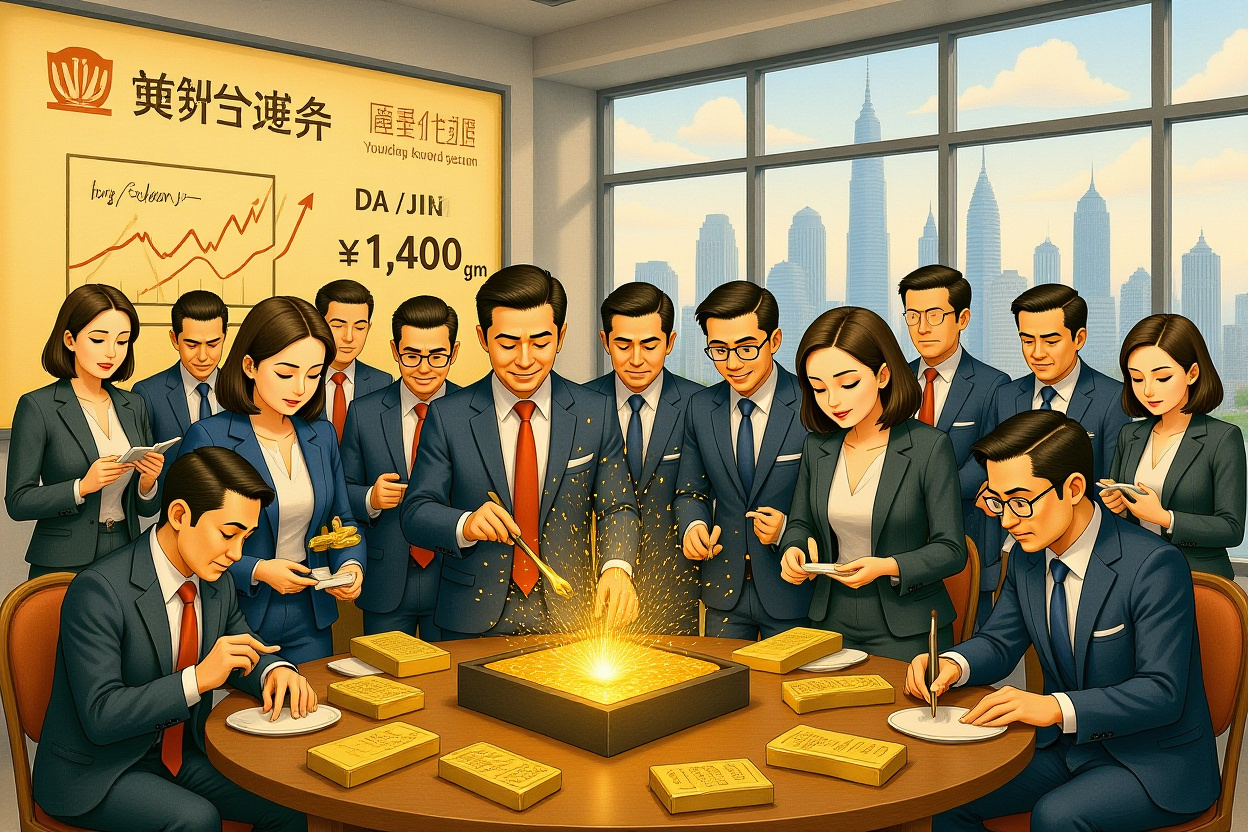
– A burgeoning trend of DIY home gold crafting, or ‘da jin’ (打金), has captivated young consumers seeking personalized, cost-effective alternatives to branded jewelry, with social media views exceeding 13 billion.
– Industry experts warn that home gold crafting poses significant safety hazards, including fire risks and toxic fume exposure, alongside substantial financial loss from operational errors and gold wastage.
– The rise of young, post-2000 generation goldsmiths is injecting innovation into traditional craftsmanship, creating new career paths but also highlighting skill gaps.
– Investors should monitor this consumer behavior shift for impacts on gold jewelry retailers, craftsmanship sectors, and broader commodity market dynamics in China’s equity landscape.
The Precious Metals Frenzy: Unpacking the Global and Domestic Gold Rally
In a dramatic late-night surge on March 27 EST, gold and silver prices skyrocketed, with spot gold momentarily breaching the $4,555 per ounce barrier. This rally, fueled by geopolitical tensions and inflationary concerns, has sent shockwaves through global markets, but its most pronounced impact is being felt in China, where retail gold prices are scaling unprecedented heights. For sophisticated investors tracking Chinese consumer trends, this isn’t just a commodity story—it’s a window into shifting economic behaviors with potential equity market ramifications.
International Benchmark Surges and Their Ripple Effects
The abrupt spike in gold prices underscores its enduring role as a safe-haven asset. Factors such as central bank buying, currency fluctuations, and macroeconomic uncertainty have converged to propel this rally. For international investors focused on Chinese markets, this global context is crucial, as it influences domestic gold demand, which in turn affects related sectors like jewelry retail, mining, and financial services. The surge has immediate liquidity implications, potentially diverting capital from equities to precious metals, a trend worth monitoring in portfolio allocations.
Chinese Retail Gold Prices Approach Historic Highs
On March 28, the domestic response was swift: multiple leading gold jewelry brands in China adjusted their prices upward, bringing per-gram costs perilously close to the 1,400 yuan psychological threshold. Key data points illustrate this climb:
– Lao Feng Xiang (老凤祥) quoted 1,396 yuan per gram, up 28 yuan from the previous day.
– Lao Miao Gold (老庙黄金) reached 1,397 yuan per gram, a 32 yuan increase.
– Chow Sang Sang (周生生) priced at 1,391 yuan per gram, rising by 27 yuan.
These adjustments reflect not only input cost pressures but also robust consumer appetite, setting the stage for the DIY home gold crafting phenomenon that has captured the youth market.
The Renaissance of Gold Crafting: From Ancient Art to Modern Consumer Craze
As prices soar, a fascinating counter-trend has emerged: the revival of gold crafting, or ‘da jin’ (打金), an ancient technique involving melting, molding, shaping, and polishing raw gold into custom jewelry. This practice, once the domain of specialized artisans, is now gaining traction as a mainstream hobby and cost-saving measure, particularly among younger demographics. The DIY aspect of home gold crafting is central to its appeal, blending creativity with financial pragmatism in a high-price environment.
Understanding the ‘Da Jin’ Process and Its Allure
The process transforms gold bars or old jewelry into new pieces like rings, bracelets, and necklaces. A typical session lasts one to three hours, with labor costs ranging from 10 to 40 yuan per gram for basic designs, and soaring to hundreds of yuan for intricate styles like非遗花丝 (non-heritage filigree) or手工錾刻 (hand-carving). Compared to the hefty brand premiums and craftsmanship fees at established retailers, this offers a compelling value proposition. Social media platforms have amplified this trend, with the ‘da jin’ hashtag amassing over 13 billion views, driven by tutorials and success stories that make home gold crafting seem accessible and rewarding.
Social Media Fueling a Billion-View Trend
Platforms like Douyin and Xiaohongshu are awash with content showcasing gold crafting, from step-by-step guides to aesthetic showcases of finished products. This digital ecosystem not only educates but also communities enthusiasts, fostering a sense of participation. However, experts caution that this online portrayal often glosses over complexities, leading to unrealistic expectations about the ease of home gold crafting. For market observers, this viral trend signals a deeper shift in consumer preferences toward customization and value retention, which could disrupt traditional retail models.
Economic Drivers: Why Young Chinese are Embracing DIY Gold Crafting
The embrace of home gold crafting isn’t merely a fad; it’s underpinned by several economic and cultural factors. In a market where gold is both a luxury item and a store of value, young consumers are seeking ways to optimize their spending while preserving emotional and financial worth. This DIY movement reflects broader trends in China’s consumption landscape, including the rise of ‘xin guo chao’ (新国潮 or new national trend), which blends heritage with modernity.
Cost Savings and Personalization in a High-Price Environment
With brand jewelry often carrying margins of 20-30% or more, DIY approaches can significantly reduce costs. Consumers report saving hundreds of yuan by repurposing old family heirlooms or buying raw gold directly. Moreover, personalization allows for unique designs that mass-produced items lack, enhancing sentimental value. This rational economic choice is a direct response to soaring prices, making home gold crafting an attractive alternative for budget-conscious yet style-savvy individuals.
Emotional Value and the ‘New National Trend’ Phenomenon
Many enthusiasts highlight the emotional resonance of transforming inherited gold into contemporary pieces, preserving family memories while updating aesthetics. This aligns with the ‘xin guo chao’ movement, where traditional crafts are reimagined for modern tastes, creating products with dual appeal—cultural pride and investment utility. As Shanghai Gold Jewelry Industry Association Secretary-General Wang Huiqun (王惠群) notes, ‘Consumers should select reputable workshops and clarify terms beforehand,’ emphasizing the need for quality in this blend of old and new.
Professional Insights: Industry Adaptation and the Influx of Young Talent
The gold crafting boom isn’t confined to amateurs; it’s also revitalizing the professional sector. A new generation of goldsmiths, predominantly from the post-2000 cohort, is entering the field, bringing fresh perspectives and technical skills. This influx is reshaping industry dynamics, from labor markets to consumer engagement strategies, offering insights for investors eyeing related equities in craftsmanship and retail.
Quotes from Industry Leaders on Standards and Growth
Wang Huiqun (王惠群) of the Shanghai Gold Jewelry Industry Association (上海黄金饰品行业协会) advises caution, stressing that gold crafting requires specific工艺和环境要求 (craftsmanship and environmental conditions). She recommends choosing larger establishments and vetting artisans’ skills—a reminder that professional oversight remains vital even as DIY trends grow. This guidance underscores the importance of regulatory frameworks and quality assurance in maintaining market integrity.
The Rise of the ‘Post-00s’ Goldsmiths
Young professionals are carving out lucrative careers in this niche. As reported, shops are increasingly staffed by ’00后’ (post-2000) goldsmiths, with some earning monthly salaries around 10,000 yuan, and skilled artisans like engravers reaching 15,000 yuan. Zhou Baolin (周宝林), store manager at a Huangpu District workshop in Shanghai, confirms that ‘the industry welcomes diverse backgrounds, from graduates to career changers.’ This talent pipeline not only sustains traditional crafts but also drives innovation, potentially boosting valuation metrics for companies invested in skilled labor and artisanal brands.
The Allure and Perils of Home Gold Crafting: A Deep Dive into Risks
While the DIY approach promises savings and creativity, it conceals substantial risks that experts urgently highlight. The trend of home gold crafting, facilitated by easily accessible toolkits online, is fraught with dangers that extend beyond mere inconvenience to serious safety and financial threats. For investors, understanding these pitfalls is key to assessing the sustainability of this trend and its impact on consumer protection and related market segments.
Tools, Tutorials, and the Illusion of Simplicity
E-commerce platforms offer ‘da jin tao zhuang’ (打金套装 or gold crafting kits) for as little as 100-200 yuan, containing items like tongs, files, torches, and molds. Tutorials proliferate, but as Wang Chao (王超), Director of the Ningbo Quality Inspection Institute Gold Jewelry Testing Center (宁波市质检院黄金珠宝检测中心主任), warns, ‘even replicating steps exactly can lead to failure.’ Common issues include improper mold preparation causing breakage or welding errors leading to gold loss. The reality is that home gold crafting demands precision and expertise often overstated in social media clips, making it a risky endeavor for novices.
Expert Warnings: Safety Hazards and Financial Pitfalls
Wang Chao (王超) outlines critical concerns:
– Safety Risks: Gold melts at over 1,000 degrees Celsius, posing fire and burn hazards. Inadequate ventilation can lead to toxic fume exposure, especially if impure metals like mercury vaporize. He advises protective gear and controlled environments, but home settings rarely meet these standards.
– Financial Loss: Operational mistakes frequently result in gold wastage exceeding expectations. For instance, errors in casting or polishing can leave residual gold unrecoverable, forcing owners to seek professional repairs at added cost. Wang Chao坦言 (candidly states), ‘home gold crafting isn’t as simple as following tutorials; its limitations should be acknowledged.’ This cautionary note is vital for consumers and, by extension, for investors gauging potential liability issues in retail or insurance sectors.
Market Implications and Investment Considerations for Chinese Equities
The convergence of soaring gold prices and the home gold crafting trend presents nuanced implications for China’s financial markets. From jewelry retailers to craftsmanship firms and commodity traders, multiple sectors stand to be affected. International investors should analyze this through lenses of consumer behavior, regulatory oversight, and macroeconomic indicators to inform strategic decisions in Chinese equity portfolios.
Impact on Gold Jewelry Retailers and the Craftsmanship Sector
Traditional brands like Chow Sang Sang (周生生) or Lao Feng Xiang (老凤祥) may face margin pressures if DIY alternatives erode sales, but they could also adapt by offering crafting services or premium custom lines. Conversely, companies supplying tools or raw materials might see demand spikes. The growth of professional goldsmithing startups could attract venture capital, highlighting opportunities in small-cap equities. Key metrics to watch include same-store sales growth, online engagement rates for crafting content, and shifts in gold import-export data, all of which signal broader market health.
Regulatory and Consumer Protection Perspectives
As home gold crafting gains popularity, regulatory bodies like the State Administration for Market Regulation (国家市场监督管理总局) may enhance scrutiny on tool safety and consumer fraud. Investors should monitor announcements for compliance costs or new standards that could impact related stocks. Additionally, this trend underscores the importance of financial literacy—consumers treating gold as an investment must weigh DIY risks against potential gains, a dynamic that could influence gold-backed financial products or ETFs listed on exchanges like the Shanghai Stock Exchange (上海证券交易所).
Synthesizing Insights for Forward-Looking Market Strategy
The gold price surge and subsequent DIY crafting wave reveal a complex interplay of global finance and local consumer innovation in China. While home gold crafting offers a novel outlet for personal expression and cost management, its risks—from safety hazards to financial loss—demand careful consideration. For the sophisticated investor, this trend is more than a cultural curiosity; it’s a indicator of adaptive consumer behavior in a high-inflation environment, with ripple effects across equity sectors.
Moving forward, stakeholders should prioritize education and risk mitigation. Consumers are advised to consult professionals before attempting home gold crafting, while investors might explore opportunities in companies bridging traditional craftsmanship with modern retail. As gold continues to shine in portfolios, staying attuned to these grassroots movements will be key to navigating China’s dynamic market landscape. Consider diversifying into sectors that support this trend, such as e-commerce platforms for tools or artisanal brands, and always factor in expert warnings to balance innovation with prudence in investment decisions.