



Executive Summary: Key Market Takeaways
– Gold prices surged globally, with spot gold briefly exceeding $4,555 per ounce and major Chinese brands like Lao Feng Xiang (老凤祥) nearing 1,400 yuan per gram domestically.
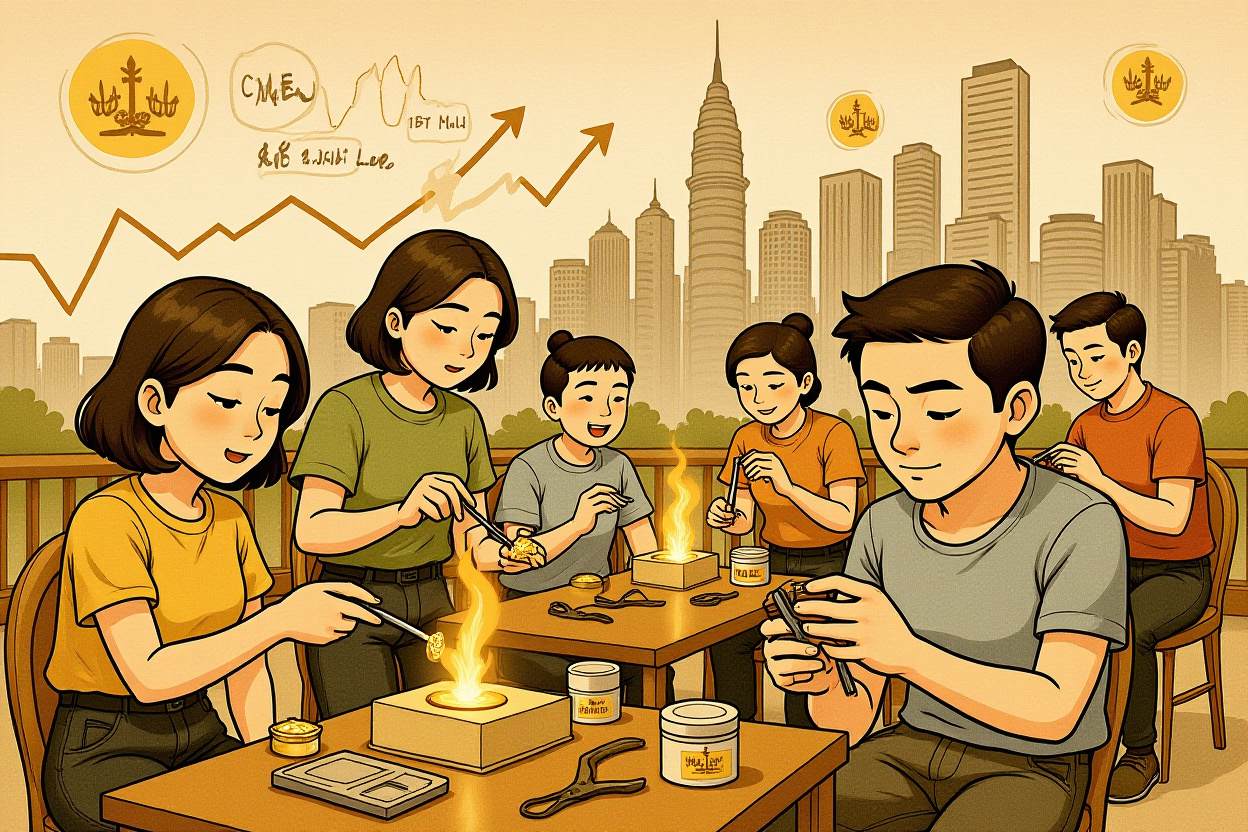
– A DIY gold crafting trend, or ‘home-based goldsmithing’, is gaining rapid popularity among young Chinese consumers seeking personalized jewelry and cost savings.
– Experts, including Wang Huiqun (王惠群) of the Shanghai Gold Jewelry Trade Association (上海黄金饰品行业协会), warn of significant safety hazards and potential financial losses from amateur goldsmithing.
– The trend is revitalizing traditional crafts and creating new career paths for young ’00后’ goldsmiths, with monthly salaries reaching up to 15,000 yuan for skilled artisans.
– Investors should monitor how gold price volatility influences consumer behavior and the broader precious metals market in China.
The Precious Metals Frenzy: Understanding the Gold Price Surge
Global financial markets witnessed a dramatic rally in precious metals on March 27, Eastern Time, with spot gold and silver prices soaring overnight. This upward momentum has direct and profound implications for the Chinese equity and commodity markets, where gold holds significant cultural and investment weight. The DIY gold crafting phenomenon is emerging as a direct consumer response to these price movements, highlighting the intricate link between asset prices and grassroots economic activity.
International Catalysts and Domestic Price Adjustments
The spike in gold prices is attributed to a confluence of factors including geopolitical tensions, inflationary pressures, and shifts in central bank policies. For Chinese investors, this translates into immediate adjustments in domestic retail markets. On March 28, leading domestic gold jewelry brands announced substantial price hikes. Lao Feng Xiang (老凤祥) quoted 1,396 yuan per gram, a 28-yuan increase from the previous day. Similarly, Lao Miao Gold (老庙黄金) reached 1,397 yuan/gram, and Chow Sang Sang (周生生) hit 1,391 yuan/gram. This rapid appreciation underscores gold’s role as a safe-haven asset and its sensitivity to global macroeconomic indicators.
Market Implications for Chinese Equities and Consumer Sentiment
The soaring price of gold influences sectors beyond jewelry, impacting listed companies in mining, retail, and finance on exchanges like the Shanghai Stock Exchange (上海证券交易所). For institutional investors, understanding this DIY gold crafting trend provides a unique lens into consumer sentiment—a move towards value retention and customization in the face of rising costs. This behavior can signal broader economic caution or a shift in discretionary spending patterns among the younger demographic.
DIY Gold Crafting: Deconstructing the Consumer-Led Boom
The ancient art of goldsmithing, involving processes like melting, molding, shaping, and polishing, is experiencing a modern renaissance. On social media platforms, topics related to ‘打金’ or DIY gold crafting have garnered over 1.3 billion views. This surge is not merely a fad but a calculated response by cost-conscious consumers to high brand premiums at traditional jewelry stores. The DIY gold crafting movement represents a blend of aesthetic desire, financial pragmatism, and cultural nostalgia, forming what many term a ‘new national trend’.
The Allure of Customization and Perceived Value
For young consumers, DIY gold crafting offers a compelling proposition: transforming old, inherited gold pieces into contemporary designs. This process preserves the intrinsic value and emotional memory of the gold while updating its style. The cost structure is a key driver. Professional goldsmiths charge a basic fee of 10 to 40 yuan per gram for simple pieces, with complex techniques like非遗花丝 (intangible cultural heritage filigree) commanding higher rates. Compared to the hefty markups at branded retailers, DIY gold crafting presents a significantly more economical path to ownership. This pursuit of value is a critical consideration for investors analyzing consumer discretionary trends in China.
The Logistics of At-Home Goldsmithing
Aspiring home goldsmiths are turning to e-commerce platforms to purchase starter kits. Searching for ‘打金套装’ (goldsmithing kit) reveals packages ranging from 100 to over 200 yuan, containing tools like long-nose pliers, torches, borax, electronic scales, and refractory boards. Tutorials proliferate online, detailing steps from preparing oil-based clay molds to melting gold with a torch. However, the apparent simplicity of these videos often belies the technical complexity involved. The DIY gold crafting process requires precision, proper equipment, and a controlled environment to avoid common pitfalls.
Navigating the Pitfalls: Expert Warnings on Safety and Finance
While the DIY gold crafting trend captivates many, industry experts and regulatory bodies are issuing stern cautions. The risks extend beyond mere inconvenience to encompass serious safety threats and substantial financial loss. For investors and market observers, these warnings highlight the potential for consumer backlash and regulatory scrutiny that could affect related market segments.
Inherent Safety Hazards in Home Workshops
Wang Chao (王超), Director of the Ningbo Product Quality Inspection Institute Gold and Jewelry Testing Center (宁波市质检院黄金珠宝检测中心主任), emphasizes the primary danger: high temperatures. Gold melts at over 1,000 degrees Celsius, posing significant burn and fire risks in domestic settings. He advises, ‘It is recommended to operate in a well-ventilated environment with protective measures like thick gloves and long tongs.’ Furthermore, Wang Chao (王超) warns of toxic fume risks if impure gold containing volatile metals like mercury is heated, leading to potential poisoning in poorly ventilated spaces. These safety concerns are paramount for anyone considering DIY gold crafting.
The Financial ‘Traps’ of Amateur Goldsmithing
Beyond safety, property loss is the most frequent ‘pitfall’ for home goldsmiths. Operational errors can lead to gold wastage far exceeding expectations. Common mistakes include improper preparation of石膏模具 (plaster molds) causing castings to shatter, or incorrect welding leading to metal fracture. These errors result in gold residue or loss that is difficult to recover. Wang Chao (王超) notes that many unsuccessful DIY practitioners ultimately seek professional help for repair, incurring additional costs that negate any intended savings. The DIY gold crafting endeavor, therefore, carries a hidden cost of failure that consumers often underestimate. This aspect is crucial for financial professionals assessing consumer risk appetite and potential demand for insurance or professional services.
Industry Transformation: Young Talent and Economic Opportunities
The DIY gold crafting boom is not just reshaping consumer habits; it’s revitalizing a traditional industry and creating new vocational pathways. A new generation of goldsmiths, predominantly ’00后’ (post-2000 birth), is entering the field, bringing fresh creativity and digital savvy. This influx is altering the industry’s labor dynamics and business models.
The New Face of Goldsmithing: Creativity Meets Commerce
Shop owners report that young teams excel in innovation and understanding client desires. For instance, a shop manager in Shanghai’s Huangpu District, Zhou Baolin (周宝林), notes that skilled goldsmiths can earn monthly salaries around 10,000 yuan, with master engravers or錾刻师 (chasing craftsmen) reaching 15,000 yuan. The barrier to entry is relatively low, with no strict age or学历 (educational background) limits, making it an attractive option for graduates and career changers alike. This labor market shift is a positive indicator for small businesses and the creative economy within China’s consumer sector.
Professional Guidance for Consumers
Wang Huiqun (王惠群), Secretary-General of the Shanghai Gold Jewelry Trade Association (上海黄金饰品行业协会), offers prudent advice for consumers drawn to gold crafting: ‘选择规模比较大的打金店,参观一下打金师傅的手艺,不了解的问题事先问清楚,达成协议。’ This translates to selecting larger, established workshops, observing the craftsman’s skill, clarifying all uncertainties beforehand, and reaching a formal agreement. This guidance underscores the importance of due diligence, a principle equally vital for investors evaluating companies in this niche.
Investment Outlook and Strategic Considerations
The interplay between soaring gold prices, the DIY gold crafting trend, and expert warnings presents a multifaceted picture for global investors focused on Chinese markets. This phenomenon is more than a social media trend; it is a microcosm of larger economic forces at play.
Gold as a Dual-Purpose Asset: Jewelry and Investment
Gold’s unique position as both a decorative item and a financial store of value means price movements directly affect consumer behavior. The current DIY gold crafting craze can be seen as a hedge against high retail prices, with consumers taking production into their own hands. For investors, this suggests potential pressure on the profit margins of traditional jewelry retailers but may buoy demand for raw gold and basic crafting tools. Monitoring companies in the gold supply chain, from refiners to tool manufacturers, becomes essential.
Forward-Looking Market Guidance
The DIY gold crafting trend is likely to persist as long as gold prices remain elevated and consumer desire for personalized value stays strong. However, increased incidence of accidents or financial losses could lead to regulatory warnings or a consumer shift back to professional services. Savvy investors should track announcements from bodies like the People’s Bank of China (中国人民银行) regarding gold reserves and import policies, as well as consumer protection alerts from organizations like the China Consumers Association (中国消费者协会). Diversification within the precious metals and consumer discretionary sectors is advised to mitigate risks associated with such volatile trends.
Synthesizing the Gold Rush Narrative
The dramatic rise in gold prices has undeniably sparked a widespread interest in DIY gold crafting across China. This trend encapsulates a search for value, personal expression, and connection to tradition among younger consumers. However, the enthusiastic embrace of home-based goldsmithing must be tempered by the stark realities pointed out by experts: significant safety risks from high-temperature operations and toxic materials, coupled with the high probability of financial loss due to technical errors. For the financial professional, this trend offers critical insights into consumer resilience, market adaptation, and the evolving landscape of the gold industry. It serves as a reminder that grassroots movements can have tangible impacts on market segments and investment theses. As you navigate the complexities of the Chinese equity and commodity markets, consider how consumer-driven phenomena like DIY gold crafting reflect broader economic sentiments and opportunities. Stay informed through reputable sources, consult with market analysts, and always weigh the potential risks against the allure of emerging trends in your investment decisions.