



Executive Summary: Key Takeaways from the Gold and Crafting Surge
- International gold prices skyrocketed, with spot gold briefly exceeding $4555 per ounce, propelling domestic Chinese jewelry prices to near 1400 yuan per gram for major brands like Lao Fengxiang (老凤祥) and Chow Sang Sang (周生生).
- A viral social media trend, home gold crafting, is captivating young Chinese consumers seeking cost savings, personalization, and emotional value by reshaping old jewelry into new designs.
- Experts, including Wang Chao (王超) from the Ningbo Product Quality Inspection Institute, warn of severe safety hazards like toxic fumes and fire risks, as well as significant financial losses due to operational errors in DIY attempts.
- The industry is witnessing an influx of young goldsmiths from the ’00后’ generation, revitalizing traditional craftsmanship with creativity and offering new career opportunities with monthly wages reaching 15,000 yuan for skilled artisans.
- This trend reflects broader shifts in China’s gold market, blending investment, consumption, and cultural elements, necessitating cautious engagement from both consumers and investors.
The Precious Metal Frenzy: Understanding the Gold Price Surge
The global financial landscape witnessed a dramatic shift as gold prices embarked on a steep ascent, sending ripples through markets worldwide. On March 27, Eastern Time, spot gold and silver surged overnight, with gold briefly piercing the $4555 per ounce barrier. This international rally immediately translated into substantial gains within China, highlighting the interconnected nature of commodity markets and setting the stage for a unique consumer response.
International Benchmarks Fuel Domestic Momentum
The surge in gold prices is attributed to a confluence of factors, including geopolitical tensions, inflationary pressures, and shifts in central bank policies. For Chinese investors and consumers, this global movement serves as a critical indicator, often prompting adjustments in asset allocation and purchasing behavior. The rapid price increase underscores gold’s enduring role as a safe-haven asset, even as new trends like home gold crafting emerge among retail participants.
Chinese Retail Prices Approach a Psychological Threshold
By March 28, the impact was palpable in Chinese retail outlets. Major gold jewelry brands reported sharp increases in their domestic足金首饰 (pure gold jewelry) prices, edging closer to the 1400 yuan per gram mark. This price movement is not merely a statistic but a catalyst for behavioral change among cost-conscious consumers.
- Lao Fengxiang (老凤祥) quoted 1396 yuan per gram, up 28 yuan from the previous day.
- Lao Miao Gold (老庙黄金) priced at 1397 yuan per gram, a rise of 32 yuan.
- Chow Sang Sang (周生生) set its price at 1391 yuan per gram, increasing by 27 yuan.
These figures represent a significant premium over international benchmarks, incorporating brand value, craftsmanship, and retail margins, which in turn fuels the appeal of alternative approaches like home gold crafting.
The DIY Revolution: Home Gold Crafting Takes Center Stage
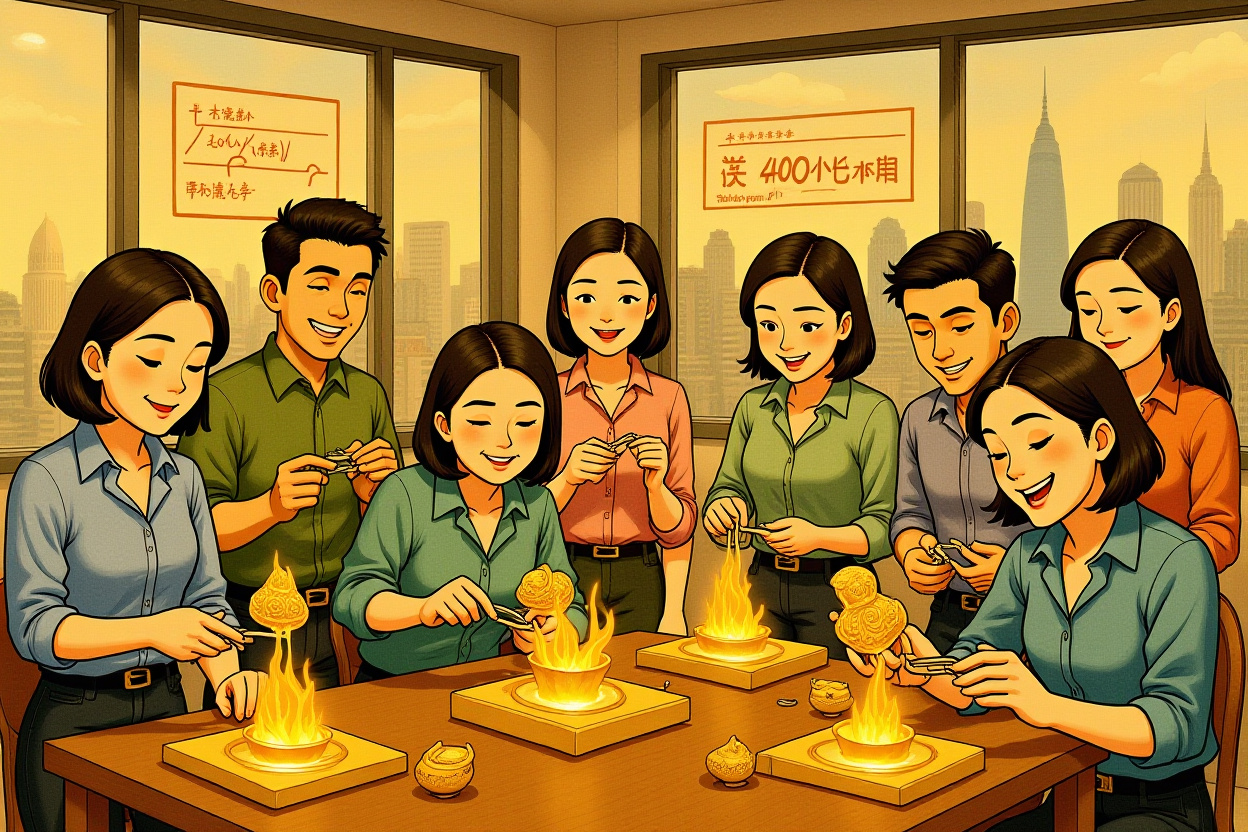
As gold prices climb, a parallel narrative is unfolding in living rooms and social media feeds across China. The ancient art of goldsmithing, known as 打金 (dǎ jīn), is experiencing a modern resurgence, driven by a generation keen on blending tradition with innovation. This home gold crafting trend involves processes like熔金 (melting gold), 倒模 (pouring molds), and 抛光 (polishing) to create personalized jewelry, offering a stark contrast to conventional retail purchases.
From Social Media Virality to Hands-On Practice
The term home gold crafting has amassed over 1.3 billion views on Chinese social platforms, transforming from a niche hobby into a mainstream phenomenon. Tutorials and success stories flood the internet, presenting an enticing vision of financial prudence and creative fulfillment. Young consumers, particularly those looking to repurpose old family heirlooms, are drawn to the perceived savings—with professional crafting fees ranging from 10 to 40 yuan per gram for basic designs, compared to higher brand markups in stores.
This movement is more than a cost-cutting exercise; it embodies a cultural shift where gold is viewed not just as a store of value but as a medium for personal expression. As noted by industry observers, revitalizing old金饰 (gold jewelry) preserves emotional memories while aligning with contemporary aesthetics, creating a 新国潮 (new national trend) that merges finance with sentiment.
The Economic Drivers: Why Home Gold Crafting Appeals to the Youth
The allure of home gold crafting lies in its promise of customization and control. In an era of mass production, the ability to design unique pieces resonates with younger demographics seeking individuality. Moreover, the rising cost of retail gold jewelry makes DIY alternatives appear economically rational, even if the hidden risks are often overlooked. This trend reflects a broader consumer behavior pattern in China, where financial awareness and digital literacy converge to reshape traditional markets.
Navigating the Pitfalls: Expert Warnings on Safety and Financial Loss
While the home gold crafting trend offers apparent benefits, it is fraught with dangers that experts urgently highlight. The enthusiasm for DIY approaches must be tempered with a realistic assessment of the hazards involved, both to personal safety and financial well-being. Understanding these risks is crucial for anyone considering entering the world of amateur goldsmithing.
Safety Hazards: The High-Stakes Reality of Home Workshops
Gold melting requires temperatures exceeding 1000 degrees Celsius, posing serious fire and burn risks in non-professional settings. Wang Chao (王超), Director of the Gold and Jewelry Testing Center at the Ningbo Product Quality Inspection Institute, emphasizes that home environments often lack proper ventilation and safety equipment. He warns, “If the gold contains impurities like mercury, heating can release toxic vapors, leading to poisoning in poorly ventilated spaces.” This underscores why home gold crafting should not be undertaken lightly, despite the abundance of online tutorials.
Additionally, the use of tools like torches and molds purchased from e-commerce platforms—where kits cost as little as 100 to 200 yuan—increases the likelihood of accidents. Experts recommend stringent precautions, such as wearing thick gloves, using long tongs, and operating in well-ventilated areas, but even these measures may not suffice for inexperienced individuals.
Financial Traps: How Operational Errors Erode Gold Value
Beyond safety, the financial implications of home gold crafting can be devastating. Common mistakes, such as improper mold preparation or faulty welding, often result in黄金损耗 (gold loss) that far exceeds expectations. For instance, errors during casting can cause gold to fragment or become trapped in molds, rendering it unrecoverable without professional intervention. Wang Chao (王超) notes that many DIY enthusiasts end up seeking help from certified craftsmen after failed attempts, incurring additional costs that negate any initial savings.
This risk is amplified by the variable quality of materials and the steep learning curve involved. The property loss aspect of home gold crafting is a critical consideration, as gold’s high value means even minor errors can lead to substantial monetary setbacks. Therefore, approaching this trend with caution is not just advisable but essential for protecting one’s assets.
Market Evolution: The Rise of Young Goldsmiths and Industry Dynamics
The home gold crafting craze is not only changing consumer behavior but also transforming the professional landscape. A new cohort of young artisans is entering the field, bringing fresh perspectives and skills that are reshaping traditional craftsmanship. This infusion of talent highlights the dynamic interplay between trend-driven demand and sustainable industry growth.
A New Generation of Artisans: ’00后’ Inject Creativity into Goldsmithery
In cities like Shanghai, gold crafting workshops are increasingly staffed by individuals from the ’00后’ generation, with the oldest often no more than 28 years old. These young goldsmiths leverage their digital nativity and aesthetic sensibilities to meet client demands for innovative designs. As reported by Zhou Baolin (周宝林), a store manager in Shanghai’s Huangpu District, entry-level wages hover around 10,000 yuan monthly, while skilled錾刻师 (engravers) can earn up to 15,000 yuan, making it an attractive career path.
This trend demonstrates how home gold crafting is spawning professional opportunities, with many young people transitioning from hobbyists to certified craftsmen. The absence of strict age or educational barriers facilitates this shift, contributing to a revitalized artisan economy that blends heritage with modernity.
Regulatory and Quality Assurance Considerations
As the trend grows, regulatory bodies and industry associations are emphasizing the importance of standards. Wang Huiqun (王惠群), Secretary-General of the上海黄金饰品行业协会 (Shanghai Gold Jewelry Trade Association), advises consumers to select established crafting shops, evaluate artisans’ skills, and clarify all terms beforehand. This professional guidance contrasts sharply with the unregulated nature of home gold crafting, underscoring the value of expertise in preserving gold’s integrity and value.
For investors monitoring China’s gold market, this evolution signals a maturation where quality control and consumer protection become increasingly relevant. Tracking announcements from bodies like the中国人民银行 (People’s Bank of China) can provide insights into broader regulatory trends affecting precious metals.
Strategic Insights for Consumers and Investors in a Volatile Market
The convergence of soaring gold prices and the home gold crafting trend presents both opportunities and challenges for market participants. Whether you are a consumer looking to customize jewelry or an investor assessing gold’s role in a portfolio, a strategic approach is vital to navigating this complex environment.
Investment Perspectives: Gold as a Dual-Purpose Asset
Gold’s price surge reinforces its status as a hedge against economic uncertainty, but the home gold crafting phenomenon adds a consumption layer that complicates traditional analysis. For institutional investors, this trend may indicate shifting demand patterns in China, where gold is increasingly viewed through a lifestyle lens. Monitoring data from the上海黄金交易所 (Shanghai Gold Exchange) can help gauge domestic sentiment and price trajectories, informing asset allocation decisions.
Moreover, the cultural resonance of gold in China—as seen in its integration into trends like home gold crafting—suggests that its market dynamics will remain influenced by both global factors and local consumer behavior. This duality makes gold a multifaceted asset class worthy of close attention.
Practical Guidance: Balancing DIY Aspirations with Professional Expertise
For those intrigued by home gold crafting, experts recommend a measured approach. Start by consulting with certified goldsmiths or visiting reputable workshops to understand the complexities involved. If proceeding with DIY attempts, invest in high-quality tools and prioritize safety measures, but be prepared for potential failures. As Wang Chao (王超) advises, “理性看待 (view rationally) the possibilities and limitations of home gold crafting” to avoid unnecessary risks.
Consumers should also consider the total cost of ownership, factoring in potential gold loss and repair expenses, which often make professional services more economical in the long run. Engaging with industry resources, such as the中国黄金协会 (China Gold Association), can provide additional educational support.
Synthesizing the Golden Narrative: Key Takeaways and Forward Outlook
The dramatic rise in gold prices and the accompanying home gold crafting craze encapsulate a pivotal moment in China’s financial and cultural landscape. This trend highlights how economic forces can spur innovative consumer behaviors, blending investment logic with personal creativity. However, the warnings from experts serve as a crucial reminder that the allure of DIY approaches must be balanced against tangible risks to safety and finances.
For market professionals, this phenomenon underscores the importance of monitoring consumer trends as indicators of broader economic sentiment. As gold continues to play a central role in both portfolios and personal expression, staying informed through reliable sources and expert analyses is essential. Consider exploring further insights on gold market dynamics from authoritative financial platforms to enhance your decision-making. Whether you are crafting jewelry or crafting investment strategies, let prudence guide your golden pursuits in these volatile times.