



Executive Summary: Key Takeaways from the Mall Dining Crisis
The dramatic shift in China’s mall dining sector offers critical insights for investors and industry stakeholders. Here are the essential points:
– Mall dining closures soared to 15,000 in 2025, with the average brand survival period plummeting to just 15 months, down from 25 months a decade ago. – A fundamental role reversal is underway: dining has shifted from being a mall’s anchor tenant to a disposable traffic tool, leading to rapid turnover and instability. – The valuation of mall floors has inverted; basement (B1/LG) levels are now prime real estate, while upper-floor dining areas suffer from high vacancy and low foot traffic. – Profit margins are being squeezed by a dual threat: soaring fixed costs (rent, labor,装修) and the disruptive rise of food delivery, which now accounts for nearly 30% of total餐饮收入 (dining revenue). – Both malls and餐厅品牌 (restaurant brands) are pursuing divergent survival strategies: malls are reducing餐饮面积 (dining space) for experiential retail, while brands are fleeing to社区店 (community stores).
The Erosion of a Golden Era: From Cash Cow to Cost Center
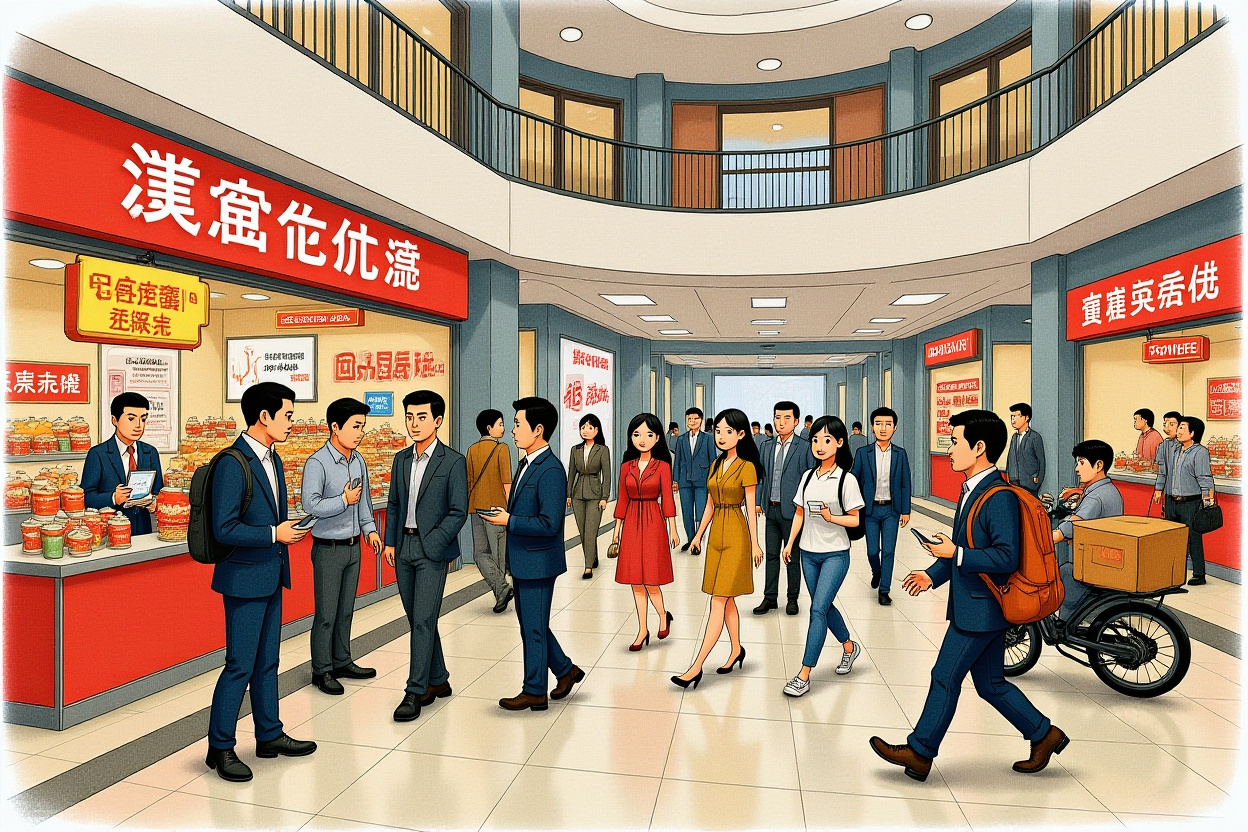
Entering a Chinese shopping mall today presents a jarring contrast. The basement food courts buzz with activity as年轻人 (young people) queue for affordable奶茶 (bubble tea) and snacks, while the upper-floor正经餐厅区 (proper dining zones) often lie eerily quiet, dotted with closed signs or ‘under renovation’ notices that mask permanent exits. This visual dichotomy is the most immediate evidence of the great mall dining retreat, a structural upheaval redefining the relationship between retail space and food service. For years, securing a spot in a major商场 (shopping mall) was considered a ticket to guaranteed success for餐饮品牌 (dining brands), offering built-in客流 (foot traffic) and prestige. That era has decisively ended.
The data paints a stark picture of the sector’s distress. According to不完全统计 (incomplete statistics) from industry platform WinShang.com (赢商网), mall dining alone witnessed approximately 15,000 store closures in 2025. More alarmingly, the average operational lifespan for a mall-based restaurant brand has collapsed to just 15 months, a near halving from the 25-month average seen in 2015. This accelerated churn rate transforms restaurants into快消品 (fast-moving consumer goods), with brands often planning their exit strategy before the grand opening ribbons are cut. The great mall dining retreat is not a temporary slump but a fundamental reassessment of a once-lucrative business model.
The Shift from Symbiosis to Short-Termism
The underlying logic of mall dining has been utterly transformed. Historically, malls and restaurants enjoyed a共生共荣 (symbiotic and mutually prosperous) relationship. Dining acted as a crucial anchor, drawing customers for extended visits and supporting other retailers. Today, that dynamic has been replaced by a transactional, short-term approach. Malls now frequently view餐饮业态 (dining formats) as convenient流量工具人 (traffic tools), prioritising brands that can generate immediate buzz and crowd-pulling hype, regardless of their long-term viability or contribution to a balanced tenant mix.
This shift is powerfully illustrated by the strategies of certain brands. For instance, brands like Ou Ji Da Pai Dang (欧记大排档) have mastered the art of the ‘hit-and-run’ mall entry. They leverage网红产品 (internet-famous products) and aesthetic marketing to achieve rapid payback within 3-6 months of opening in a high-traffic mall like Beijing’s Chaoyang Joy City (朝阳大悦城), only to promptly withdraw and replicate the model elsewhere. Conversely, brands focusing on社区 (community) locations, such as Dong Fang Yi Chuan (东方一串), which locates 60% of its stores in residential areas, report more stable daily客流 (foot traffic) and lower closure rates by relying on product quality and customer loyalty over transient mall流量 (traffic).
The Inverted Mall: How Basement Floors Became the New Prime Real Estate
A central feature of the great mall dining retreat is the dramatic revaluation of physical space within shopping centers. The once-neglected basement levels connected to地铁 networks (subway networks) have emerged as the uncontested champions of footfall, while traditional upper-floor dining hubs have become commercial dead zones. This inversion is reshaping rental markets, consumer behavior, and brand strategies across the industry.
B1/LG floors have successfully reinvented themselves from mere transit corridors into vibrant destinations. By combining网红餐饮 (internet-famous F&B),潮流零售 (trendy retail), and IP体验 (IP experience) zones, these levels cater perfectly to the fast, fragmented消费习惯 (consumption habits) of modern youth. Data from WinShang.com (赢商网) indicates that in 2025, adjustments (openings and closings) on B1/B2 floors accounted for over 22% of all mall changes, making them the most active and汰换率最高的楼层 (highest turnover floors).餐饮占比 (The dining proportion) on these levels remains high at around 45%, but retail and entertainment have grown to 35%, creating a potent traffic mix.
The Rent Spiral and the Squeeze on Mid-Tier Brands
The success of basement levels has triggered a self-reinforcing cycle with negative consequences for many餐饮运营商 (dining operators). As B1 foot traffic surges,租金 (rents) inevitably climb, in some地铁商场 (subway malls) now exceeding those on the second or third floors. This creates a harsh dichotomy: the basement offers high客流 (foot traffic) but at prohibitively high rents, while upper floors offer lower rents but insufficient customer flow to sustain a business.
The result is a market bifurcation. Prime B1 spaces are captured by deep-pocketed连锁网红品牌 (chain internet-famous brands) and头部零售品牌 (leading retail brands), pushing中小餐饮 (small and medium-sized dining ventures) out. These smaller players are forced to retreat to less desirable higher floors or abandon malls altogether. This exodus then exacerbates the problem for upper floors: fewer brands lead to poorer offerings, which further reduces foot traffic, leading to more vacancies and even lower rents—a vicious cycle that is a core symptom of the great mall dining retreat.
The Profitability Crisis: Dual Pressures Crushing Mall Restaurant Margins
The flourishing B1 scene ironically highlights the broader profitability crisis engulfing mall-based dining. The sector is caught in a perfect storm of structural cost pressures and evolving consumer preferences, turning many locations from现金流砥柱 (cash flow pillars) into significant loss-makers. The great mall dining retreat is, at its heart, a flight from unsustainable economics.
The cost structure for a typical mall店 (store) is daunting. Industry analyses, such as those from联商网 (Linkshop.com), show that租金成本 (rental costs) can consume 20%-30% of revenue, compared to around 10% for a community shop.人工成本 (Labor costs) are similarly elevated at 25%-35% of revenue due to higher service standards and staffing requirements, versus 15% in more streamlined community operations. Furthermore, the装修 (fit-out) standards demanded by upscale malls can push initial单店投资 (single-store investment) well into the millions of RMB, a barrier community stores avoid.
The Delivery Dilemma and the ‘Ghost Kitchen’ Phenomenon
Compounding the fixed cost problem is the seismic shift toward外卖 (food delivery). In 2025, China’s total餐饮收入 (catering revenue) reached 5.8 trillion RMB, of which the外卖市场规模 (food delivery market size) accounted for nearly 2 trillion RMB, or roughly 30%, as reported by First Financial Daily (第一财经). This trend has directly cannibalized堂食客流 (dine-in traffic), as more consumers opt for the convenience of eating at home.
In response, mall restaurants have been forced to embrace delivery to survive. However, this comes at a steep price. Delivery platforms typically charge commissions around 20%, and when combined with食材 (ingredient) and包装 (packaging) costs, they erode already thin margins. Many mall restaurants have effectively become外卖后厨 (delivery kitchens), with staff outnumbering dine-in customers. Yet, the revenue from外卖订单 (delivery orders) often fails to cover the high fixed costs of the mall location, locking them in a cycle of双线亏损 (dual-line losses) from both depressed dine-in and low-margin delivery.
Strategic Pivots: How Malls and Restaurants Are Adapting to Survive
Faced with the relentless pressures of the great mall dining retreat, both property operators and food brands are experimenting with innovative business models and strategic redirections. These adaptations signal the future shape of China’s consumer landscape, moving away from the traditional mall-dining nexus.
On the mall side, a clear trend toward去餐饮化 (‘de-dining’) is underway. Developers are actively压缩餐饮面积 (compressing dining space) to make room for higher坪效 (sales per square foot) experiential formats. In Q2 2025,餐饮新开店占比 (the proportion of new dining openings) in premium malls was around 30%, with some properties reducing their F&B footprint by 15-20%. The transformation of Guangzhou’s Tianhe City (广州天河城) B1 floor is a prime example. By introducing 34 new brands and 10首店 (first-in-city stores) focused on潮流零售 (trendy retail) and休闲餐饮 (casual dining), the mall boosted客流 (foot traffic) by over 20% and significantly increased overall坪效 (productivity).
Embracing Community Stores and Flexible Leases
For restaurant brands, the path to survival increasingly leads out of the mall and into the neighborhood. The社区店 (community store) model offers compelling advantages: lower investment, reduced rent (often half of mall rates), flexible labor, and deeper customer connections that drive复购率 (repurchase rates). Notable brands are leading this charge. Xi Bet (西贝) announced plans to close 102 mall stores in 2026 due to unsustainable costs. Meanwhile, hot pot chain珮姐老火锅 (Peijie Old Hotpot) has made community stores its core strategy since 2025, with单个门店 (individual stores) achieving monthly profits of around 70,000 RMB through轻量化运营 (lightweight operations).
Innovative partnership models are also emerging within malls. Some landlords, like Beijing’s合生汇 (Hopeshop), are testing租金+佣金 (rent + commission) hybrid models. They charge a lower base rent plus a small percentage (e.g., 5%) of外卖流水 (delivery turnover), sharing risk with tenants and lowering the barrier to entry. Brands themselves are innovating with全时段运营 (all-day operations), serving breakfast,下午茶 (afternoon tea), and夜宵 (late-night supper) to maximize revenue from their space, as seen with Haidilao’s (海底捞) community ‘全能店’ (all-purpose store) in Beijing’s Changping district.
The Future Landscape: From Co-Dependence to Strategic Realignment
The great mall dining retreat signifies more than just a sectoral downturn; it marks the decoupling of a long-standing商业联盟 (commercial alliance). Malls and餐饮品牌 (dining brands) are moving from互相成就 (mutual achievement) to各自安好 (finding their own paths), each prioritizing financial sustainability over symbiotic tradition. This does not spell the end of mall dining, but it does herald its transformation into a more niche, experiential, and strategically selected component.
Top-tier商圈 (shopping districts) and flagship malls will retain their symbolic value. For established brands, maintaining a presence in a location like Beijing’s Sanlitun Taikoo Li (三里屯太古里) serves as a powerful brand showcase and customer acquisition tool, as demonstrated by the queues at阿嬷手作 (Auntie Handmade) Beijing debut store. For these premium properties, flagship餐饮 (dining) remains a客流引导者 (traffic driver). However, for the vast majority of malls and brands, the future lies in specialization and separation.
Malls will continue to evolve into混合用途的体验中心 (mixed-use experience centers), emphasizing retail, entertainment, and services. Dining will likely be concentrated in high-traffic zones like food courts, with fewer large-format, full-service restaurants. The餐饮的主战场 (main battlefield for dining) is decisively shifting back to the streets and communities, where lower costs and stronger neighborhood ties offer a more resilient model. This return to人间烟火 (the烟火气 of everyday life) represents a recalibration towards fundamentals.
Navigating the New Dawn in China’s Consumer Market
The great mall dining retreat is a powerful case study in structural economic change. Triggered by消费降级 (consumption downgrading),成本暴涨 (soaring costs),外卖分流 (delivery diversion), and业态重构 (format restructuring), it reflects the end of an era of easy growth built on captive mall traffic. The closure of 15,000 stores is a painful but necessary correction, forcing both property developers and restaurateurs to innovate or perish.
For international investors and market observers, the implications are clear. Due diligence on Chinese retail real estate must now heavily scrutinize tenant mix, floor-by-floor performance, and adaptability to experiential trends. Investment in餐饮品牌 (dining brands) should favor those with proven社区店 (community store) models, operational efficiency, and strong digital integration. The crisis also unveils opportunities in sectors like food delivery logistics, kitchen-as-a-service infrastructure, and technologies enabling smaller-format, low-CAPEX stores.
The golden age of mall dining may be over, but a more nuanced and sustainable chapter is beginning. By understanding the drivers behind this retreat, stakeholders can position themselves to thrive in the reshaped landscape of China’s vast consumer economy. The call to action is for proactive adaptation: closely monitor these evolving trends, reassess investment theses around traditional retail-F&B synergies, and seek out the agile players building the future of food service beyond the mall’s walls.