



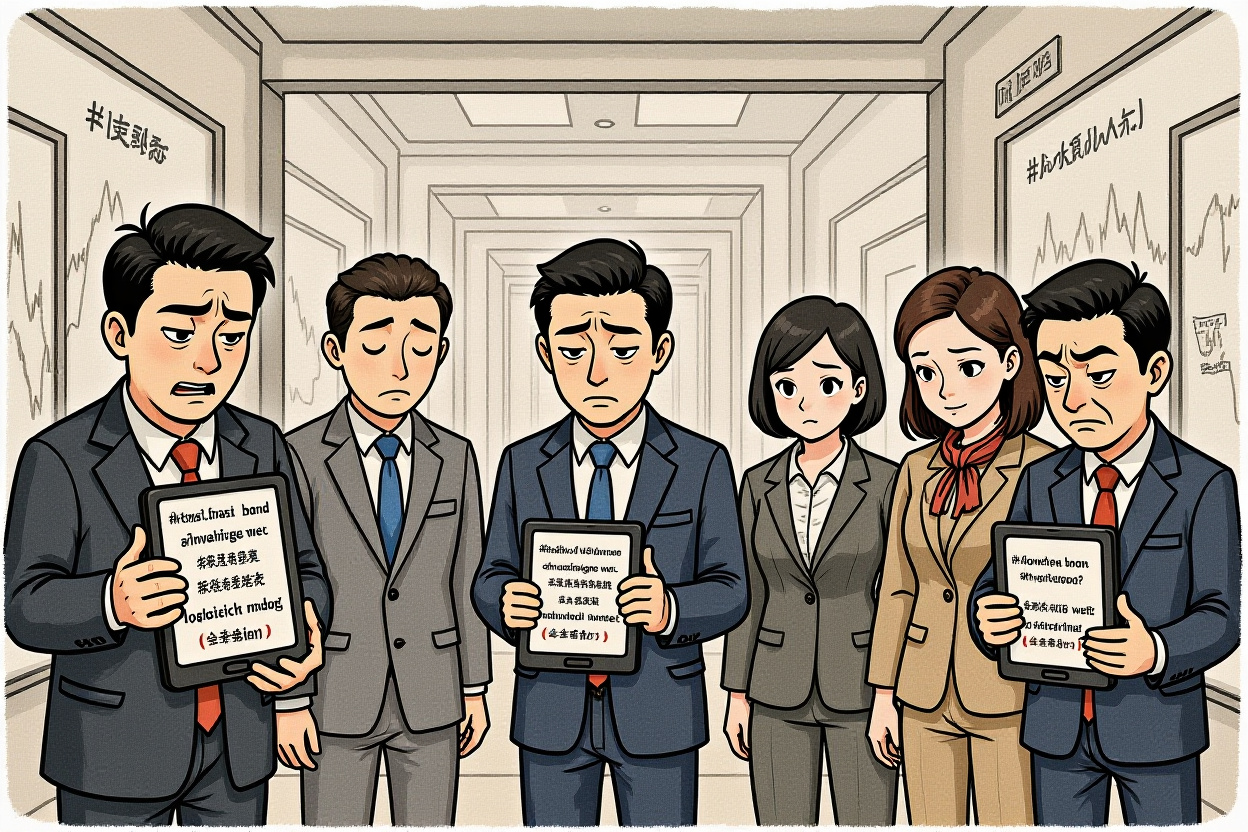
– Logitech’s promotional video comparing consumers to dogs has ignited widespread anger in China, leading to calls for boycotts and damaging brand reputation.
– The company’s apology, blaming a third-party agency, has been perceived as insincere, exacerbating the crisis and raising questions about corporate governance.
– China is a critical market for Logitech, contributing significantly to its global revenue and growth, making this misstep particularly costly for financial performance.
– This incident highlights the importance of cultural sensitivity and robust crisis management for international brands operating in China.
– Investors should closely monitor consumer sentiment and brand accountability as key factors in evaluating Chinese equity investments.
In the dynamic landscape of Chinese consumer markets, brand reputation is a fragile asset, easily shattered by a single misstep. The recent brand reputation crisis involving Logitech, a perennial favorite in the peripherals market, underscores this volatility with stark clarity. A promotional video from Logitech’s official flagship store on Chinese e-commerce platforms sparked nationwide outrage after it derisively suggested that降价抢购 consumers “run over like dogs.” This incident not only ignited a social media firestorm but also raised serious questions about Logitech’s commitment to its Chinese consumer base—a base that has been instrumental in driving its recent financial resurgence. For international investors eyeing Chinese equities, this brand reputation crisis serves as a potent case study in the risks associated with consumer sentiment and corporate governance in one of the world’s most lucrative markets. The fallout from this event could reshape investment strategies and brand evaluations across the sector.
The Ad That Sparked Nationwide Outrage
On March 26, a routine sales promotion turned into a public relations nightmare for Logitech. A video posted on its official Tmall flagship store featured voiceover text that blatantly insulted consumers: “When I lower the price, don’t you just come running over like dogs?” This phrase, perceived as a direct attack on consumer dignity, quickly截取 and spread across Chinese social media platforms. The ad was part of a discount campaign, but its文案旁白 crossed a critical line in a market where respect for consumers is paramount, governed by laws like the Consumer Rights Protection Law (消费者权益保护法). Such language not only offended individual shoppers but also violated cultural norms that emphasize mutual respect in commercial interactions.
Details of the Controversial Video
The video, intended to promote price reductions, used language that mocked consumers for their price sensitivity. In China, where e-commerce is highly competitive, discounts are common, but brands typically emphasize value and appreciation rather than derogation. The ad’s tone implied that consumers are passive and undignified, which clashes with the empowered self-image of modern Chinese shoppers. This misalignment highlights a failure in content审核, as such messages should have been flagged during production or review stages. For instance, brands like Huawei or Xiaomi often focus on consumer empowerment in ads, avoiding any semblance of disrespect. Logitech’s oversight suggests a deeper issue in its localization strategy, potentially alienating its core audience.
Public Reaction and Social Media Firestorm
The backlash was instantaneous and severe. Hashtags like #罗技侮辱消费者# (Logitech insults consumers) topped trending lists on Weibo, amassing millions of views and discussions. Users expressed fury, with comments ranging from personal anecdotes of loyalty to vows of permanent boycott. Many shared screenshots of the video, amplifying its reach. This collective action demonstrated the power of digital activism in China, where consumers can rapidly mobilize to hold brands accountable. The incident also drew attention from state media, with outlets like People’s Daily commenting on the need for consumer respect, adding regulatory pressure. Such reactions underscore how quickly a brand reputation crisis can escalate in China’s interconnected digital ecosystem, impacting market perceptions overnight.
Logitech’s Response and the Apology Fallout
Faced with mounting pressure, Logitech and its代运营 agency scrambled to contain the damage. However, their responses fell short of public expectations, deepening the brand reputation crisis. The apology was seen as inadequate, fueling further discontent and highlighting the pitfalls of poor crisis management in sensitive markets like China.
Official Statements and代运营 Accountability
Logitech issued an apology statement on its social media channels, attributing the video to an unauthorized release by an employee of its third-party operator, Shanghai Best Electronic Co., Ltd. The company claimed that the video was published without proper review and had been taken down. Disciplinary actions were announced, including warnings and performance deductions for the involved staff. Shanghai Best Electronic Co., Ltd. echoed this sentiment, citing internal management failures and promising stricter controls. However, the public remained skeptical, as such explanations often appear to deflect blame rather than address systemic issues. For example, in past scandals involving brands like Dolce & Gabbana in China, similar blame-shifting exacerbated losses, leading to long-term market exclusion.
Public Perception of the Apology
The apology was widely criticized as “甩锅” (shifting blame) or “形式化” (perfunctory). On Weibo, comments pointed out that official flagship店 content typically undergoes multiple approvals, making it unlikely for a single employee to act alone. Many called for more transparent investigations and substantive reforms, such as independent audits or consumer redress programs. This perception gap exacerbated the brand reputation crisis, as trust eroded further. For instance, some users compared it to past apologies from other brands that failed to regain consumer confidence, suggesting long-term repercussions. Investors should note that insincere apologies can signal weak corporate governance, a red flag in equity analysis for Chinese consumer stocks.
Logitech’s Deep Roots in the Chinese Market
To understand the gravity of this misstep, one must appreciate Logitech’s longstanding ties to China. The company entered the Chinese market in 1991, establishing a joint venture in Shanghai, and set up production facilities in Suzhou by 1994. Over three decades, Logitech has become a household name, with its mice, keyboards, and headphones integral to the daily lives of millions. This history is not just about presence; it’s about deep integration into China’s economic fabric, making the current brand reputation crisis even more significant for its financial stability.
Historical Presence and Strategic Importance
China is not just another market for Logitech; it is a cornerstone of its global strategy. As Logitech CEO Hanneke Faber (汉内克・法贝尔) noted in a December 2025 interview, the company had reversed previous market share declines in China, achieving consecutive quarters of growth. She emphasized that Chinese consumers have unique preferences, such as a focus on color, material, and customization, which Logitech has catered to through localized teams and product development. This localization effort has been key to its success, but the recent ad controversy threatens to undermine it by revealing a disconnect in cultural understanding. Brands that fail to align with local values risk triggering a brand reputation crisis, as seen in this case.
Financial Performance and China’s Contribution
The numbers tell a compelling story. In Logitech’s latest earnings report for the first three quarters of fiscal year 2026 (ending December 31, 2025), global revenue reached $3.755 billion, a 5.94% year-over-year increase, with net income up 16.6% to $568 million. The third quarter alone saw revenue of $1.421 billion, up 6.06%, and net income soaring 25.43% to $251 million. Crucially, the Asia-Pacific region, led by China, posted a 15% increase in net sales at constant exchange rates. The report explicitly credited strong performance in China across gaming peripherals, tablet accessories, video collaboration devices, and office pointing devices. Notably, the popularity of domestic games like “Black Myth: Wukong” (黑神话:悟空) boosted demand for gaming mice, driving Logitech’s China revenue growth over 20% for three consecutive quarters. This data underscores how dependent Logitech is on Chinese consumers for its financial health, making any brand reputation crisis a direct threat to investor returns.
The Dichotomy: Profiting from China While Insulting Consumers
This incident lays bare a troubling contradiction: Logitech relies heavily on Chinese consumers for profit yet failed to afford them basic respect. This brand reputation crisis stems from a disconnect between market dependence and consumer engagement. It raises questions about whether international brands truly value their Chinese customer base beyond mere revenue figures, a critical consideration for equity investors assessing long-term sustainability.
Market Dependence vs. Consumer Respect
China is Logitech’s second-largest market globally and a key driver of its recent recovery. The financial data underscores how integral Chinese sales are to the company’s bottom line.然而, the ad controversy reveals a potential complacency or oversight in managing consumer relations. In an era where brand loyalty is earned through consistent respect and value delivery, such insults can have lasting repercussions. For example, consumer trust, once lost, is difficult to regain, and competitors like local brands or other international players may capitalize on this weakness. Investors should monitor consumer sentiment indices and sales data post-crisis to gauge the impact of this brand reputation crisis on Logitech’s market position.
Long-term Implications for Brand Loyalty
Consumer trust is not infinite. The outrage expressed online suggests that Logitech may face sustained backlash, impacting future sales and market share. Studies in consumer behavior indicate that negative incidents can lead to reduced purchase intent and word-of-mouth damage. For investors, this brand reputation crisis signals a need to reassess the resilience of consumer brands in China. Companies that take their customer base for granted risk alienating them, leading to eroded margins and competitive disadvantages. Monitoring tools like net promoter scores (NPS) or social sentiment analysis can provide early warnings, helping investors make informed decisions in volatile Chinese equity markets.
Lessons for International Brands in China
The Logitech saga offers critical insights for other foreign companies operating in China. Navigating this market requires more than just product localization; it demands cultural empathy and robust crisis protocols. This brand reputation crisis could have been mitigated with better practices, serving as a cautionary tale for brands and investors alike.
Importance of Cultural Sensitivity and Localization
Chinese consumers are increasingly assertive about their rights and dignity. Brands must ensure that all communications, from advertising to customer service, align with local values. This includes thorough vetting of content created by third-party agencies. Logitech’s failure to do so highlights a governance gap that can precipitate a brand reputation crisis. Best practices include:
– Employing local marketing teams who understand cultural nuances.
– Conducting regular training on consumer protection laws, such as China’s Consumer Rights Protection Law (消费者权益保护法).
– Implementing multi-layer content审核 systems with both automated and human checks.
For example, companies like Apple have invested heavily in local teams to avoid similar missteps, demonstrating that proactive measures can safeguard brand reputation and investor confidence.
Crisis Management Best Practices
When a crisis hits, the response must be swift, sincere, and substantive. Apologies that deflect blame or appear tokenistic can worsen the situation. Instead, companies should:
– Acknowledge fault publicly and take full responsibility.
– Outline concrete corrective actions, such as process reforms or compensation for affected consumers.
– Engage directly with consumers through platforms like Weibo to rebuild trust.
– Provide regular updates on progress to demonstrate commitment.
For instance, after the D&G racism scandal in China, the brand’s slow response led to permanent damage, whereas companies like Starbucks have recovered from missteps by acting quickly and transparently. Investors should favor brands with established crisis management frameworks to mitigate risks in Chinese equities.
Investment Implications and Market Outlook
For institutional investors and fund managers focused on Chinese equities, this brand reputation crisis has broader ramifications. It underscores the importance of monitoring non-financial metrics like consumer sentiment and brand health. In the context of Chinese markets, where consumer-driven growth is pivotal, such crises can signal underlying risks that impact stock performance and portfolio strategy.
Impact on Logitech’s Stock and Investor Sentiment
While immediate stock price movements may be muted, long-term investor confidence could waver if sales in China decline. Analysts should watch for updates in upcoming earnings calls regarding the crisis’s impact. A sustained drop in consumer trust might lead to downgrades or reduced valuations, affecting portfolio decisions. Investors can access data from sources like Bloomberg or local exchanges to track performance, but also consider qualitative factors from social media trends. This brand reputation crisis highlights how intangible assets like reputation can directly influence financial metrics, making them crucial for equity valuation in Chinese markets.
Broader Lessons for Equity Investors in Chinese Consumer Stocks
This incident reinforces that in China’s consumer-driven economy, brand reputation is a critical intangible asset. Investors should incorporate reputation risk assessments into their due diligence, looking at factors like:
– Social media sentiment indices from platforms like Weibo or Douyin.
– Customer complaint trends on consumer protection websites.
– Corporate governance scores from rating agencies.
– Historical crisis management performance of the company.
Companies with strong crisis management frameworks may be better positioned to weather such storms, making them more attractive investment targets. For instance, brands that have invested in local community engagement or sustainability initiatives often have more resilient reputations. As Chinese consumers become more discerning, investors must adapt their strategies to account for these dynamics, ensuring that their portfolios are resilient to brand reputation crises.
The Logitech ad controversy serves as a stark reminder that in today’s interconnected markets, consumer dignity is non-negotiable. This brand reputation crisis has exposed vulnerabilities in Logitech’s approach to its most vital market, with potential consequences for its financial performance and investor appeal. For market participants, the key takeaway is clear: sustainable success in China hinges on genuine respect for consumers and proactive reputation management. As you evaluate Chinese equity opportunities, prioritize companies that demonstrate cultural competence and robust accountability mechanisms. Stay informed by following regulatory updates and consumer trends, and consider diversifying holdings to mitigate reputation-related risks. In the fast-paced world of Chinese equities, vigilance and insight are your greatest assets. Take action now by reviewing your investment portfolios for exposure to brands with weak crisis management records, and engage with market analysts to stay ahead of emerging risks in this dynamic landscape.