



Executive Summary
Key takeaways from the rapid evolution of AI-generated content in China:
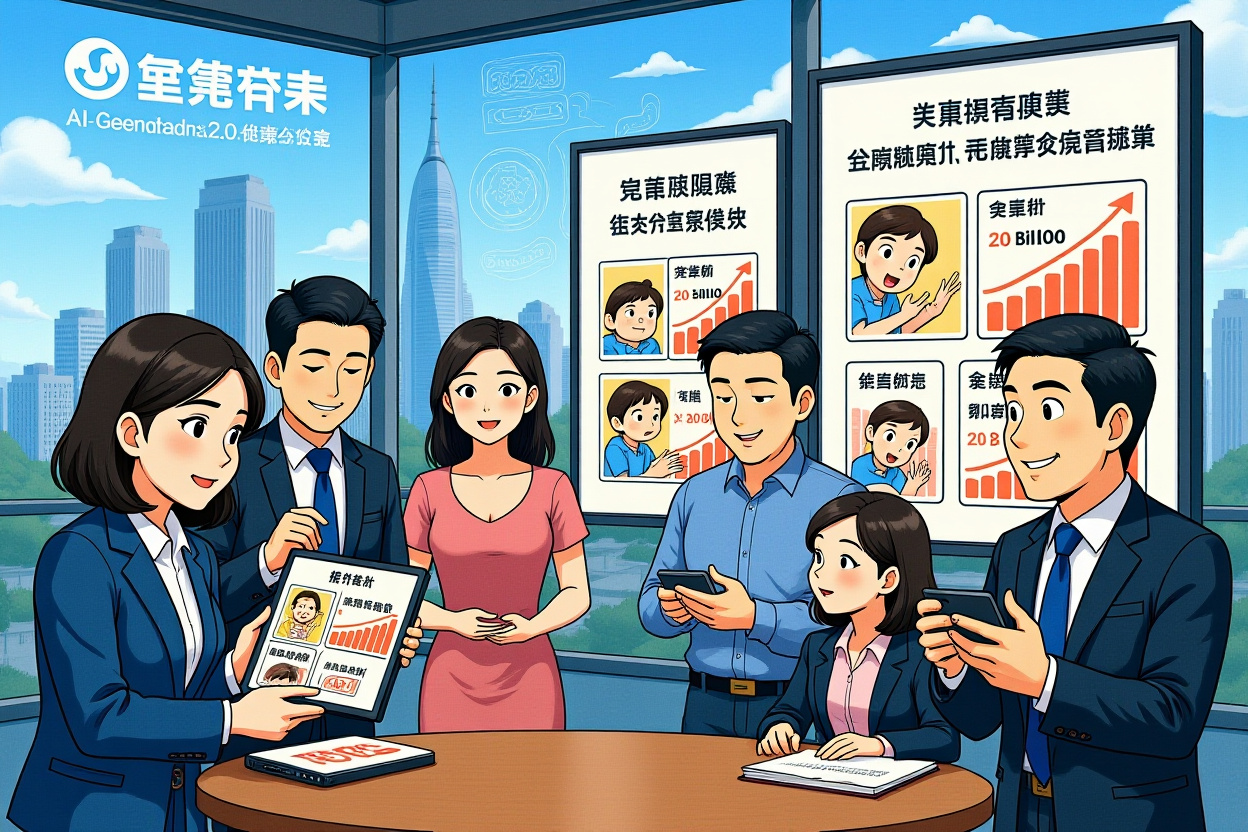
- AI漫剧 (AI-generated comic-drama) has exploded into a market exceeding 20 billion yuan, driven by low-cost production and high demand on platforms like ByteDance’s Hongguo Manju.
- Vocational school graduates and former factory workers are now producing viral content using AI tools, displacing roles traditionally held by Beijing Film Academy-trained directors.
- Technological advancements, such as Seedance2.0, are slashing production costs and times, enabling mass-scale content creation and attracting investments from tech giants.
- This shift is reshaping China’s digital content industry, with implications for equity markets in tech, media, and entertainment sectors.
- Investors should monitor companies leveraging AI for content generation, as this trend signals both disruption and growth opportunities in Chinese markets.
The Dawn of a New Content Era: AI漫剧 Takes Center Stage
Imagine a world where the most viral video content isn’t crafted by seasoned filmmakers but by vocational school graduates using artificial intelligence. This isn’t science fiction; it’s the reality of China’s burgeoning AI漫剧 (AI-generated comic-drama) industry. In less than a year, this niche has ballooned into a multi-billion yuan market, challenging traditional media production and creating ripples across investment portfolios. The focus phrase, AI漫剧 (AI-generated comic-drama), encapsulates a revolution where technology democratizes content creation, turning low-wage workers into key players in a high-stakes digital economy. For global investors eyeing Chinese equities, understanding this shift is crucial to capitalizing on the next wave of tech-driven growth.
The catalyst for this change lies in the convergence of accessible AI tools and insatiable consumer demand for short-form, engaging content. Platforms like ByteDance’s 抖音 (Douyin) and its subsidiary 红果漫剧 (Hongguo Manju) have seen daily active users surge, with Hongguo Manju reportedly surpassing 10 million DAU in just three months. This explosive growth isn’t just a cultural phenomenon; it’s a financial one, drawing capital from venture firms and corporate giants eager to stake their claim. As AI漫剧 (AI-generated comic-drama) continues to evolve, it offers a lens into how technological innovation can rapidly reshape industries, presenting both risks and rewards for astute market participants.
From Obscurity to Overnight Success: The AI漫剧 Gold Rush
Stories of rapid wealth creation abound in this sector. Take Huang Haonan (黄浩南), founder of 酱油动漫 (Soy Sauce Animation), who transitioned from obscure short-drama producer to industry leader with monthly revenues exceeding 50 million yuan by late 2025. His mantra—”If you weren’t born with a Rolls-Royce, you’ll likely never have one”—underscores a relentless pursuit of trends, from online literature to AI-driven content. Huang’s aggressive expansion, hiring over 1,200 employees at average salaries of 3,000-4,000 yuan monthly, highlights how AI漫剧 (AI-generated comic-drama) has become a labor-intensive yet highly scalable business. For investors, this signals a new model where human capital is augmented by AI, potentially boosting margins for companies that master the balance.
The financial implications are stark. Early entrants like Bai Ze, a solo developer, generated hundreds of thousands of yuan in profit by producing low-cost AI动态漫 (AI dynamic comics) sold to distributors. This democratization of production has lowered barriers to entry, but it also intensifies competition. As reported by 36氪, the market saw over 13,000 AI漫剧 (AI-generated comic-drama) titles launched monthly in late 2025, nearing the annual output of traditional真人短剧 (real-person short dramas). For equity analysts, this surge in supply could pressure pricing, but it also reflects robust demand, making companies like ByteDance and Baidu key beneficiaries due to their platform dominance and investment in content acquisition.
Market Dynamics: The Shift from Traditional to AI-Driven Content
The rise of AI漫剧 (AI-generated comic-drama) is closely tied to the maturation and subsequent struggles of China’s真人短剧 (real-person short drama) industry. By early 2025, over 90% of traditional short-drama companies faced losses, as noted in industry reports, leading to layoffs and a pivot toward AI solutions. This transition mirrors broader trends in Chinese tech equities, where innovation often springs from market saturation. Companies that failed to gain traction in真人短剧 (real-person short dramas), such as those转型 (transitioning) to AI漫剧 (AI-generated comic-drama), found a lifeline, demonstrating the sector’s resilience and adaptability. For fund managers, this highlights the importance of tracking industry cycles and technological adoption rates in media-related stocks.
Platform strategies have accelerated this shift. ByteDance’s 番茄系 (Tomato ecosystem), encompassing 红果短剧 (Hongguo Short Drama) and 番茄小说 (Tomato Novel), quickly integrated AI漫剧 (AI-generated comic-drama) into its offerings, leveraging existing distribution networks. According to insiders, ByteDance’s efficient contract processes and data-driven content curation have set a high bar, forcing competitors like Tencent and Alibaba to follow suit. This consolidation of power among tech giants underscores the investment potential in companies with strong platform ecosystems. As AI漫剧 (AI-generated comic-drama) evolves, platforms that control both creation and distribution are poised to capture significant market share, making them attractive targets for institutional investors seeking exposure to China’s digital content boom.
The Role of Investment and Corporate Moves
Corporate investments are fueling the AI漫剧 (AI-generated comic-drama) expansion. In early 2026, 鹤芽漫剧 (Heya Manju) founder Yang Hao (杨浩) secured a 10-million-yuan annual agreement with 火山引擎 (Volcano Engine), ByteDance’s cloud service, to access advanced AI APIs. This move reflects a broader trend where companies are locking in technological advantages through strategic partnerships. Similarly,百度 (Baidu) and its subsidiary七猫 (Qimao) have actively recruited talent from rivals, sparking controversies but highlighting the fierce competition for expertise. For corporate executives and investors, these dynamics suggest that mergers, acquisitions, and partnerships will be critical in shaping the landscape, offering opportunities in both public and private equity markets.
Data from industry trackers like DataEye-ADX reveal that AI漫剧 (AI-generated comic-drama) consumption peaked in late 2025, with monthly uploads exceeding 13,000 titles. This volume not only strains traditional production models but also creates new revenue streams for tech infrastructure providers, such as cloud computing and AI model developers. Companies like 阿里巴巴达摩院 (Alibaba Damo Institute) and its spin-offs, led by experts like Jiang Yiqi (姜奕祺), are at the forefront, reducing costs for video generation from 1 yuan per second to 0.5 yuan. This cost efficiency translates to higher profitability for content creators, potentially boosting valuations for related stocks. Investors should monitor earnings reports from Chinese tech firms for insights into AI漫剧 (AI-generated comic-drama)-driven growth segments.
Technological Foundations: How AI is Reshaping Production
At the heart of the AI漫剧 (AI-generated comic-drama) revolution are breakthroughs in multimodal large language models. The release of tools like Seedance2.0 in early 2026 marked a turning point, enabling users to generate 10-second videos with coherent dialogue, scenes, and character consistency from simple text prompts. As Feng Ji (冯骥), producer of “Black Myth: Wukong,” remarked, “The childhood era of AIGC has ended.” This technological leap has reduced reliance on skilled labor, such as分镜导演 (storyboard directors), and slashed production times from weeks to hours. For technology investors, this underscores the value of companies investing in AI research and development, as those with proprietary models may gain competitive edges in content-driven markets.
The evolution from粗糙的 (rough) AI content like沙雕漫 (silly comics) to sophisticated AI仿真人剧 (AI simulated-person dramas) illustrates rapid iteration. Initially plagued by issues like unsynced lip movements and the “uncanny valley” effect, AI仿真人剧 (AI simulated-person dramas) now achieve near-human quality, attracting platform investments. For instance, ByteDance’s Hongguo Manju has begun acquiring 120-minute AI仿真人剧 (AI simulated-person dramas), aiming to capture长视频 (long-form video) audiences. This progression highlights how AI漫剧 (AI-generated comic-drama) is not a fleeting trend but a scalable content format with applications beyond short-form media. Equity analysts should assess companies based on their technological adaptability, as those slow to integrate AI risk obsolescence in fast-moving sectors.
Cost Structures and Efficiency Gains
The economic appeal of AI漫剧 (AI-generated comic-drama) lies in its dramatic cost reductions. Traditional动态漫 (dynamic comics) cost 8,000-10,000 yuan per minute to produce, but AI has lowered this to hundreds of yuan. This efficiency is amplified by cloud computing advancements, where companies like 字节跳动 (ByteDance) and 腾讯 (Tencent) offer scalable AI services. For example, Seedance2.0 charges around 10 yuan per video, making it accessible even to small studios. This democratization has enabled a surge in content volume, but it also raises questions about sustainability. As supply grows, platforms may tighten quality standards, favoring companies with advanced AI capabilities. Investors should look for firms with robust cost-control measures and innovative production pipelines, as these factors will influence profitability in the crowded AI漫剧 (AI-generated comic-drama) space.
- Production Cost Breakdown: AI tools reduce labor and time expenses by over 80%, compared to traditional methods.
- Platform Incentives: ByteDance and others offer revenue sharing models, with top AI漫剧 (AI-generated comic-drama) creators earning millions in monthly ad revenue.
- Technological Dependencies: Reliance on models like Seedance2.0 creates partnerships opportunities but also concentration risks for investors.
Labor and Industry Disruption: The Human Element
The rise of AI漫剧 (AI-generated comic-drama) is reshaping China’s labor market, particularly in media and entertainment. Vocational school graduates, once relegated to low-wage factory jobs, are now employed as”抽卡师” (card drawers), generating AI content with minimal training. This shift has displaced traditional roles, such as directors from prestigious institutions like the北京电影学院 (Beijing Film Academy), who are seen as less adaptable to AI workflows. In one instance, Heya Manju laid off storyboard directors after Seedance2.0’s release, citing efficiency gains. For business professionals, this highlights a broader trend of skill displacement in tech-driven industries, with implications for workforce development and corporate training investments in Chinese equities.
However, new opportunities are emerging. Companies like Soy Sauce Animation hire at scale, offering entry-level positions that require only basic AI proficiency. This creates a dual-edged sword: while it lowers employment barriers, it also depresses wages, with average salaries around 3,000-4,000 yuan monthly. From an investment perspective, this labor arbitrage can enhance profit margins for content producers, but it may also lead to social scrutiny and regulatory changes. Investors should consider environmental, social, and governance (ESG) factors when evaluating companies in this sector, as labor practices could impact long-term sustainability and stock performance.
Case Studies: Success and Struggle in the AI漫剧 Ecosystem
Consider the journey of Liu Wei (刘伟), founder of 鸣鹿动画 (Minglu Animation), who transitioned from真人短剧 (real-person short drama) production to AI漫剧 (AI-generated comic-drama) amid industry layoffs. By hiring displaced投手 (advertising投放 specialists) at reduced salaries, he built a competitive team, showcasing how AI漫剧 (AI-generated comic-drama) can absorb talent from declining sectors. Conversely, traditional film professionals face obsolescence if they fail to adapt. For institutional investors, this underscores the importance of due diligence on management teams—those with agility and tech-savvy may outperform in volatile markets. Additionally, the FOMO (fear of missing out) driving companies like听花岛 (Tinghua Island) to diversify into AI漫剧 (AI-generated comic-drama) signals a defensive strategy that could stabilize revenues in media portfolios.
The human cost is palpable. Workers like the AI中台 (AI middle-platform) employee at Minglu Animation, who spent nights refining content only to see it rendered obsolete by Seedance2.0, embody the rapid pace of change. Yet, this efficiency also fuels growth, as reduced labor costs allow companies to scale production exponentially. For corporate executives, balancing innovation with employee welfare will be key to maintaining morale and productivity. In terms of market implications, companies that invest in upskilling programs may gain a reputation advantage, attracting both talent and investor interest in a socially conscious investment landscape.
Investment Implications and Future Outlook
For sophisticated investors, the AI漫剧 (AI-generated comic-drama) boom presents a multifaceted opportunity. Firstly, direct exposure through equities of platform companies like ByteDance (though privately held, its affiliates may impact publicly traded partners),百度 (Baidu) (BIDU), and腾讯 (Tencent) (0700.HK) is viable, as these firms dominate content distribution and AI infrastructure. Secondly, ancillary sectors, such as cloud computing and semiconductor providers, stand to benefit from increased demand for processing power. Data from the中国证监会 (China Securities Regulatory Commission) suggests growing regulatory interest in AI content, which could lead to policy shifts affecting market valuations. Thus, a diversified approach, blending tech and media stocks, may mitigate risks while capturing growth from the AI漫剧 (AI-generated comic-drama) trend.
Looking ahead, the industry faces challenges like content oversaturation and technological parity. As AI tools become more accessible, the competitive edge may shift from production capacity to创意 (creativity) and IP ownership. Historical parallels, such as Hollywood’s adaptation to television in the mid-20th century, suggest that content quality will ultimately prevail. For forward-looking guidance, investors should monitor:
- Platform Policies: Changes in revenue sharing or content acquisition strategies on apps like Hongguo Manju.
- Technological Innovations: Advances in AI models from companies like Google DeepMind or domestic players.
- Regulatory Developments: Guidelines from the国家广播电视总局 (National Radio and Television Administration) on AI-generated content.
The call to action for fund managers and corporate executives is clear: integrate AI漫剧 (AI-generated comic-drama) analysis into your China market strategies. By tracking key players, technological trends, and labor dynamics, you can identify undervalued assets and hedge against disruption. As this sector evolves from a niche to a mainstream force, early movers may reap significant rewards in one of the world’s most dynamic equity markets. Stay informed through reliable sources and consider partnerships with tech innovators to stay ahead in the race defined by AI漫剧 (AI-generated comic-drama).