



Executive Summary
– The rise of AI-generated comic dramas has created a 200 billion yuan content风口 (content windfall), democratizing production and disrupting traditional media hierarchies. – Vocational school graduates earning 3000 yuan monthly are now producing content that competes with Beijing Film Academy directors, leveraging AI tools like Seedance2.0 to slash costs from 8000-10000 yuan per minute to hundreds. – ByteDance’s 红果漫剧 (Hongguo Manju) platform has seen DAU surge past 10 million in three months, driving rapid market expansion and platform wars among tech giants. – The industry is evolving from low-quality ‘sand sculpture’ content to精品化 (premium) AI仿真人剧 (AI simulation human dramas), with technology迭代 (iterations) accelerating every three months. – Investors and professionals must adapt to this volatile landscape, where speed and scalability trump traditional expertise, signaling a paradigm shift in content creation and investment strategies.
The Disruption Begins: AI-Generated Comic Dramas Reshape Entertainment
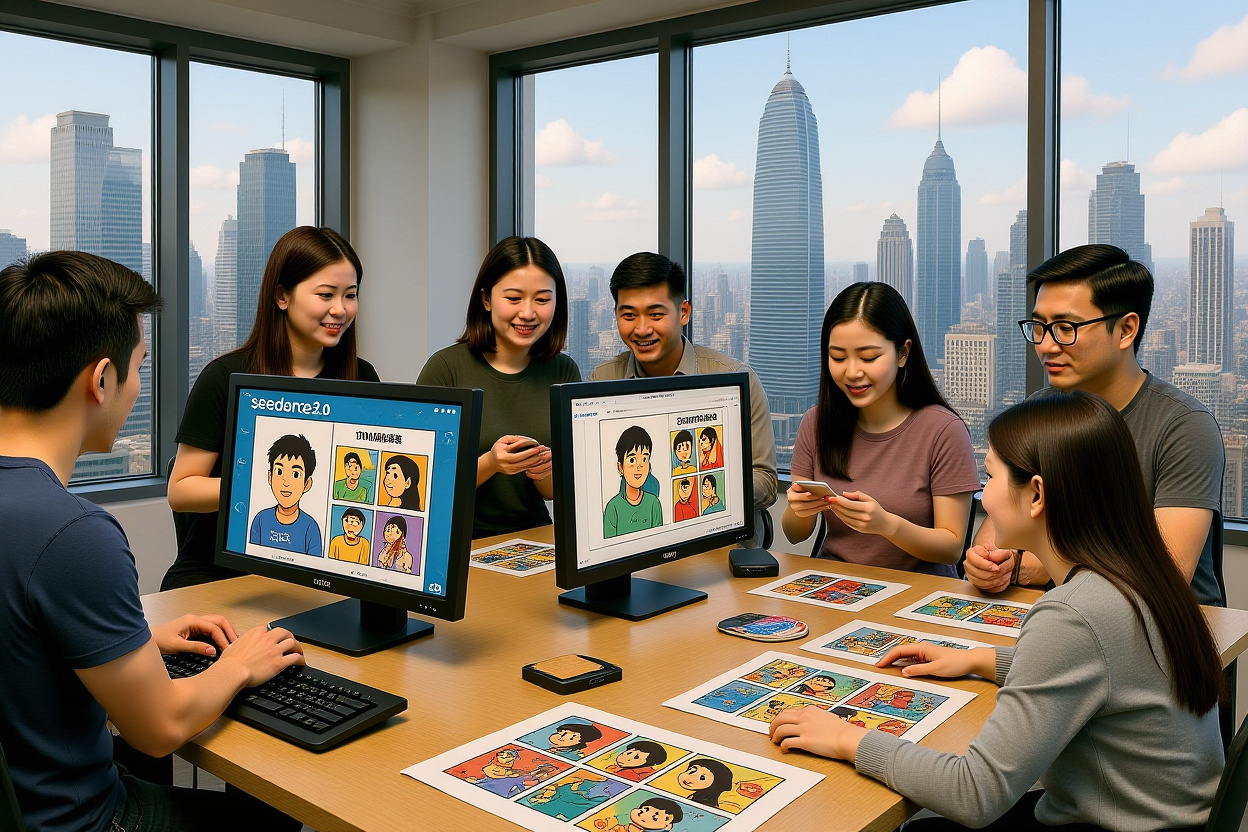
In China’s hyper-competitive digital content arena, a quiet revolution is underway. AI-generated comic dramas, or AI漫剧 (AI manju), have emerged from niche obscurity to become a multi-billion yuan industry, challenging the very foundations of traditional filmmaking. What started as a low-cost alternative to真人短剧 (live-action short dramas) has blossomed into a full-blown content ecosystem, powered by vocational school graduates and fueled by cutting-edge artificial intelligence. This shift isn’t just about new technology—it’s a fundamental rethinking of who creates value in the entertainment sector, with月薪3000的职校生 (vocational school students earning 3000 yuan a month) now outproducing and outearning seasoned professionals from prestigious institutions like the北京电影学院 (Beijing Film Academy). The focus phrase AI-generated comic dramas encapsulates this transformation, where accessibility meets innovation, creating both unprecedented opportunities and existential threats.
From Obscurity to Overnight Success
The story of酱油动漫 (Soy Sauce Animation) and its founder Huang Haonan (黄浩南) epitomizes this rapid ascent. With a background in vocational education and no family support, Huang embraced风口 (windfalls) in web novels and short dramas before pivoting to AI漫剧. By November 2025, his company’s monthly revenue exceeded 50 million yuan, making it a sector leader. Huang’s strategy was straightforward: leverage AI to lower production barriers while aggressively scaling manpower. He famously stated that anyone over 18 without intellectual disabilities could be trained in days to use AI tools, paying average salaries of 3000-4000 yuan—a fraction of traditional media wages. This approach allowed酱油动漫 to increase monthly output from 10 to over 100 titles, with ambitions to reach 1000 per month by year-end, rivaling the entire live-action short drama industry.
The Production Engine: Low-Cost Labor Meets High-Tech AI
Paradoxically, AI-generated comic dramas have become a labor-intensive industry, but one built on廉价人力 (cheap labor) and advanced technology. Companies like酱油动漫 and鹤芽漫剧 (Hoya Manju) have deployed armies of low-skilled workers to operate AI models, creating a new class of digital factory workers. These individuals, often fresh from vocational schools or factories, input爽文 (wish-fulfillment literature) into multimodal大模型 (large models), generating content that garners billions of views. Meanwhile, the technological backbone has evolved rapidly, with tools like Seedance2.0 reducing the need for expensive分镜导演 (storyboard directors) and streamlining post-production.
The Role of Video Generation Models
The proliferation of video generation models has been crucial. In 2025, models like Google DeepMind’s Veo3,可灵 (Kling) 2.0, and Seedance 1.0 enabled basic AI漫剧 production. By 2026, Seedance2.0 revolutionized the field by allowing users to generate 10-second coherent videos with consistent characters and dialogue from simple prompts, costing as little as 10 yuan. This slashed production timelines and costs, making AI-generated comic dramas accessible to even solo entrepreneurs. For instance, an independent developer named白泽 (Baize) produced nearly 30 AI动态漫 (AI dynamic comics) in six months with under 1000 yuan in costs, earning hundreds of thousands of yuan by selling to distributors at几十元/分钟 (tens of yuan per minute). The efficiency gains are staggering: where traditional dynamic comics cost 8000-10000 yuan per minute, AI versions now cost hundreds, democratizing content creation.
Market Dynamics: Platform Wars and Investment Frenzies
The AI-generated comic dramas boom has triggered fierce competition among China’s tech titans, each vying for dominance in this nascent market. ByteDance, through its番茄小说 (Tomato Novel) and红果短剧 (Hongguo Short Drama) ecosystems, has been particularly aggressive. Under the leadership of Zhang Chao (张超), the company quickly integrated AI漫剧 into its短剧版权中心 (Short Drama Copyright Center), leveraging existing expertise from红果’s success. By early 2026,红果漫剧’s DAU surpassed 10 million, and the platform began acquiring精品 (premium) content like AI仿真人剧, aiming to capture长视频 (long-form video) market share. Other players, including腾讯 (Tencent),百度 (Baidu), and快手 (Kuaishou), have followed suit, leading to a feeding frenzy for content and talent.
Investment and Acquisition Strategies
The rush to secure产能 (production capacity) has led to dramatic scenes, such as百度 (Baidu) employees allegedly poaching staff from酱油动漫 with promises of tenfold salaries. Meanwhile, traditional短剧 (short drama) companies, facing a market where 90% were unprofitable by 2025, pivoted to AI-generated comic dramas as a lifeline. For example,鸣鹿动画 (Minglu Animation) founder Liu Wei (刘伟) capitalized on layoffs in the短剧 sector to hire skilled投手 (ad投放 specialists) at below-budget rates. This transition mirrors the earlier真人短剧 boom but with accelerated cycles—industry insiders note that trends now shift every three months, forcing companies to move at breakneck speed. ByteDance’s efficiency is a key advantage; its teams use electronic contracts that close in days, unlike competitors relying on weeks of纸质合同 (paper contract) negotiations. In this environment, hesitation means missing entire红利 (profit waves), making agility a core competency.
Technological Evolution: From Sand Sculpture to Simulation
The quality and sophistication of AI-generated comic dramas have progressed rapidly, driven by relentless technological迭代. Early formats like沙雕漫 (sand sculpture comics)—low-quality, humorous content—were popular but short-lived, fading within months as platforms demanded better production values. The current vanguard is AI仿真人剧, which uses AI to create near-realistic human characters, representing the技术上限 (technical ceiling) of AI-generated comic dramas. These productions aim to bridge the gap between short-form content and traditional film, with platforms like红果 even acquiring 120-minute不分集 (non-episodic) AI仿真人剧 to compete in longer formats.
The Impact of Seedance2.0
The release of Seedance2.0 in February 2026 was a watershed moment. Jiang Yigi (姜奕祺), former AI expert at阿里达摩院 (Alibaba DAMO Academy) and CEO of三生清影 (Sansheng Qingying), noted that it solved key issues like音画同步 (audio-visual synchronization) and character consistency, effectively ending the ‘childhood era of AIGC.’ For producers, this meant drastic operational changes.杨浩 (Yang Hao) of鹤芽漫剧 immediately裁掉 (laid off) his北京电影学院-trained分镜导演, retaining only one总镜头导演 (chief lens director). Similarly,刘伟’s team discarded a week’s work because regenerating content with Seedance2.0 was cheaper and higher quality than polishing existing outputs. This technology also threatened新兴职业 (emerging professions) like抽卡师 (card drawers)—workers who manually generated AI videos—by making their roles obsolete overnight. The focus phrase AI-generated comic dramas now implies a landscape where human input is increasingly automated, raising questions about long-term job security in creative fields.
Broader Implications: Disruption Beyond Entertainment
The rise of AI-generated comic dramas signals deeper shifts in China’s digital economy, with ramifications for labor markets, investment trends, and content consumption. For vocational graduates, this industry offers a pathway to economic mobility, albeit with low wages and high turnover. For traditional filmmakers, it presents an existential challenge; as Huang Haonan boldly stated, he might one day compete with renowned director张艺谋 (Zhang Yimou). Moreover, the sector’s volatility affects investment, with venture capitalists growing cautious due to rapid technological changes. Entrepreneurs like悠悠 (Youyou) struggle to secure funding unless they can demonstrate unique value in a技术平权 (technologically egalitarian) era.
Historical Parallels and Future Trajectories
This disruption echoes past media revolutions, such as television’s impact on Hollywood in the mid-20th century. Initially, movies fought back with gimmicks like立体电影 (3D films), but ultimately, content quality prevailed through movements like the法国新浪潮 (French New Wave). Similarly, AI-generated comic dramas may eventually stabilize, with attention returning to narrative excellence. Industry veteran小川 (Xiao Chuan) plans to wait for the market to cool before focusing on content-centric production. In the meantime, platforms continue to innovate; for example,字节跳动’s剪映 (Jianying) recently launched小云雀Agent (Xiao Yunque Agent), a user-friendly tool that lowers entry barriers further, though it risks creating new bottlenecks with queuing issues.
Navigating the New Landscape: Strategies for Stakeholders
For investors and professionals in Chinese equity markets, understanding the AI-generated comic dramas sector is crucial. This isn’t just a tech trend—it’s a microcosm of broader shifts in China’s content industry, with implications for companies listed on exchanges like the深圳证券交易所 (Shenzhen Stock Exchange) and上海证券交易所 (Shanghai Stock Exchange). The rapid growth highlights the importance of monitoring regulatory developments from bodies like the国家广播电视总局 (National Radio and Television Administration), which may impose guidelines on AI-generated content. Additionally, the sector’s reliance on投流 (advertising投放) means that changes in platform algorithms or policies, such as红果’s tightened保底政策 (guarantee policies), can swiftly alter profitability.
Actionable Insights for Market Participants
– Monitor technological advancements: Tools like Seedance2.0 are reducing costs, but staying ahead requires continuous learning. Companies should invest in API access, as杨浩 did with火山引擎 (Volcano Engine), signing a 10-million-yuan annual contract for优先接口 (priority interfaces). – Focus on scalability and speed: In a three-month trend cycle, production capacity and rapid adaptation are key.酱油动漫’s aggressive hiring and酱油文化’s tool development show how to leverage low-cost labor without sacrificing output. – Prioritize content quality: As platforms shift to精品化, investing in better scripts and AI仿真人剧 can yield higher returns.鹤芽漫剧’s ‘盘丝洞素锦传’ (Pansidong Sujin Zhuan) achieved a 3x ROI without投流, demonstrating the value of premium content. – Watch platform strategies: ByteDance’s dominance in红果漫剧 suggests that aligning with leading platforms can provide稳定订单 (stable orders). However, diversifying across腾讯,百度, and others mitigates risk. – Consider ethical and regulatory risks: The use of AI for content creation may face scrutiny over知识产权 (intellectual property) and真实性 (authenticity). Engaging with policymakers early can prevent disruptions.
Embracing the Future of Content Creation
The AI-generated comic dramas revolution is more than a fleeting trend—it’s a testament to how technology can democratize industries and reshape economic landscapes. From月薪3000的职校生 to seasoned investors, stakeholders must recognize that the old rules no longer apply. Success in this domain hinges on embracing change, leveraging AI tools, and prioritizing agility over tradition. As the sector evolves from its labor-intensive roots toward more automated, quality-driven models, opportunities will abound for those who can innovate. For global investors eyeing Chinese markets, this represents a compelling niche within the broader technology and media sectors, offering insights into consumer behavior and digital transformation. The call to action is clear: stay informed, adapt quickly, and look beyond the hype to the underlying content and technological drivers that will define the next phase of AI-generated comic dramas.