



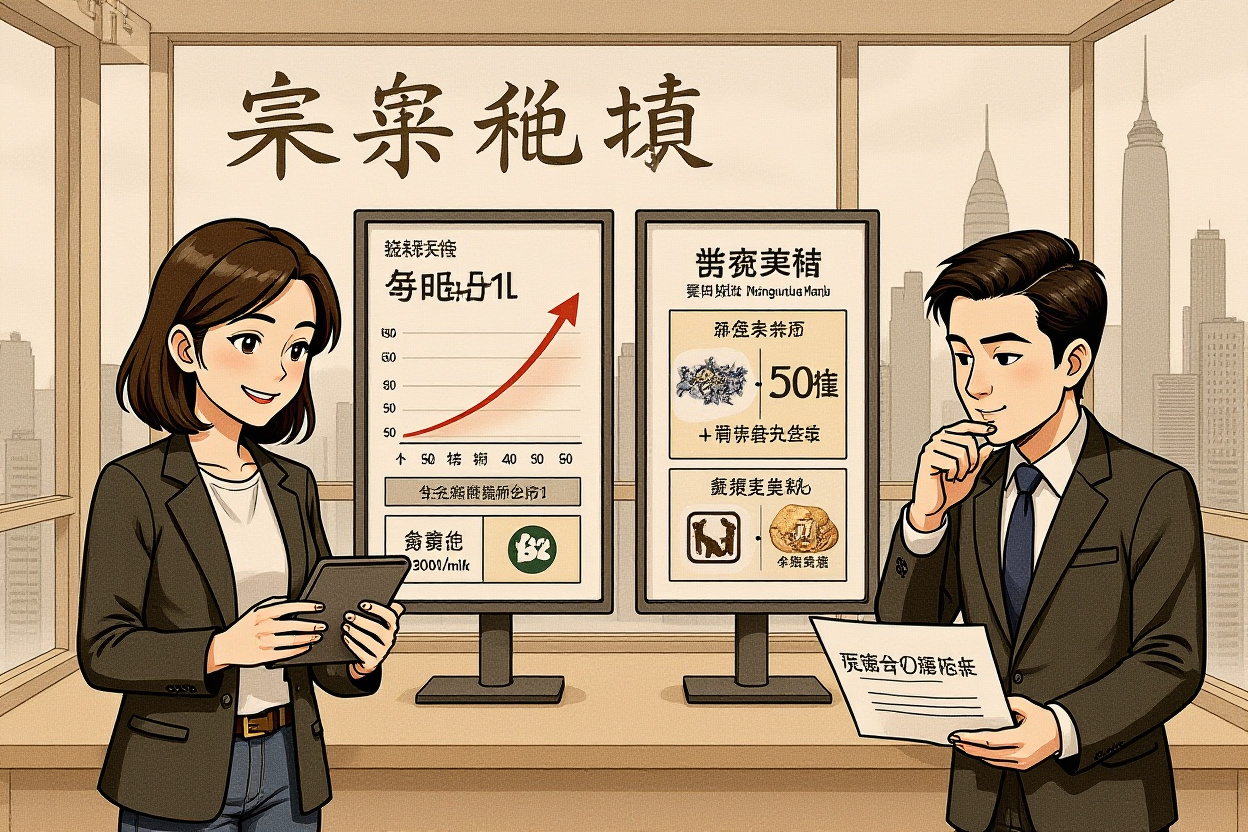
The content creation landscape in China is undergoing a seismic shift, driven by the explosive growth of AI-generated comic dramas. Vocational school graduates, earning as little as 3,000 yuan per month, are now leveraging artificial intelligence to produce content that rivals traditional film directors from prestigious institutions like the Beijing Film Academy. This revolution is not just a technological curiosity; it represents a fundamental change in production economics, market dynamics, and investment opportunities within the Chinese digital content sector. The focus on AI-generated comic dramas highlights how innovation is democratizing content creation while disrupting established hierarchies.
Executive Summary: Key Takeaways from the AI-Generated Comic Drama Boom
– The AI-generated comic drama market has surged from obscurity to a multi-billion yuan industry in under two years, fueled by advancements in video generation models like Seedance2.0 and reduced production costs to as low as 500 yuan per minute.- Traditional roles such as分镜导演 (storyboard directors) are being rendered obsolete, leading to significant cost savings for production companies, while creating new job opportunities for vocational school graduates with minimal training.- Major platforms like ByteDance’s 红果漫剧 (Hongguo Manju) are aggressively acquiring content and adjusting monetization strategies, driving a shift from low-quality, quantity-focused productions to premium AI simulation human dramas.- The sector is attracting intense investment interest, but rapid technological迭代 (iteration) and market saturation pose risks, necessitating careful due diligence for investors and adaptability for entrepreneurs.- Lessons from historical technology disruptions in Hollywood suggest that while AI-generated comic dramas are transforming the industry, long-term success will depend on balancing innovation with compelling storytelling and content quality.
The Dawn of a New Content Era: AI-Generated Comic Dramas Take Center Stage
In late 2025, the Chinese digital content market witnessed an unprecedented phenomenon: AI-generated comic dramas, or AI漫剧 (AI manju), exploded onto platforms like抖音 (Douyin) and红果漫剧 (Hongguo Manju), amassing billions of views and generating substantial revenue. This was not a gradual evolution but a disruptive leap, enabled by the convergence of accessible AI tools and a hungry audience for serialized, engaging content. The focus on AI-generated comic dramas underscores a broader trend where technology lowers barriers to entry, allowing newcomers to challenge incumbents.
From Obscurity to Dominance: The Meteoric Rise of AI漫剧
The story begins with entrepreneurs like Huang Haonan (黄浩南), founder of酱油动漫 (Soy Sauce Animation), who capitalized on this trend. With a background in vocational education and no formal training in film, Huang Haonan embraced AI to produce comic dramas at scale. By November 2025, his company reported monthly revenues exceeding 50 million yuan, positioning it as a leader in the AI-generated comic drama space. Similarly, ByteDance’s红果漫剧 (Hongguo Manju) platform achieved over 10 million daily active users within months of launch, indicating massive consumer appetite. This rapid growth mirrors earlier cycles in short-form video and web novels, but with a technological twist that reduces reliance on traditional production expertise.
Financial Windfalls: How Low Costs Are Driving High Profits
The economics of AI-generated comic dramas are transformative. Traditional dynamic漫画 (dongtai manhua) production costs ranged from 8,000 to 10,000 yuan per minute, involving teams of artists and directors. With AI, costs have plummeted to 600 yuan per minute or less, as seen in cases like白泽 (Bai Ze), a solo developer who produced nearly 30 AI漫剧 in six months with minimal investment. This cost efficiency translates directly to profitability, especially when paired with aggressive投流 (touliu, or traffic acquisition) strategies. Platforms typically allocate 80% of revenue to advertising, but the low production overhead allows for positive returns even at modest viewership levels. For instance, early hits like《兴安岭诡事》(Strange Tales of Xing’an Mountains) reportedly generated millions in revenue, showcasing the lucrative potential of AI-generated comic dramas.
Technology as the Great Equalizer: AI Models Empowering Mass Production
The backbone of the AI-generated comic drama revolution is the rapid advancement of multimodal large models. In 2025 and 2026, tools like Google DeepMind’s Veo3,可灵 (Keling), and especially Seedance2.0 have made video generation more accessible and affordable. These models enable users to create coherent, animated scenes from simple text prompts, bypassing traditional production pipelines. The focus on AI-generated comic dramas is intrinsically linked to these technological breakthroughs, which are reshaping content creation workflows across China.
Seedance2.0 and the End of Traditional Storyboarding
Seedance2.0, launched in February 2026, was a game-changer. It allows for the generation of 10-second videos with consistent characters, dialogue, and action sequences from brief text inputs, at a cost of around 10 yuan per video. This eliminated the need for分镜导演 (storyboard directors), a role traditionally filled by graduates from elite institutions like the Beijing Film Academy. Companies like鹤芽漫剧 (Heya Manju) immediately裁掉 (laid off) their storyboard teams, citing efficiency gains. As Liu Wei (刘伟), founder of鸣鹿动画 (Minglu Animation), noted, ‘The technology has made what once required years of skill accessible in days, forcing us to rethink our entire production process.’ This shift highlights how AI-generated comic dramas are democratizing content creation but also displacing established professionals.
Cost Efficiency: From 10,000 to 500 Yuan Per Minute
The financial implications are staggering. According to industry data, the cost of generating AI video content has dropped from approximately 1 yuan per second in early 2025 to 0.5 yuan per second by late 2026, thanks to competition among model providers like字节跳动 (ByteDance) and百度 (Baidu). This reduction enables production at scale; for example,酱油动漫 (Soy Sauce Animation) expanded from dozens to over 1,200 employees in months, focusing on low-wage, high-throughput operations. The average salary for these workers is 3,000 to 4,000 yuan per month, compared to the six-figure incomes of traditional directors. This labor arbitrage, combined with AI efficiency, fuels the profitability of AI-generated comic dramas, making them attractive to investors seeking high-growth opportunities in China’s technology sector.
Market Evolution: From Sand Sculpture漫 to Simulation Human Dramas
The AI-generated comic drama market is not static; it has rapidly evolved from粗糙 (rough) formats like沙雕漫 (shadiao man, or ‘silly comics’) to sophisticated AI仿真人剧 (AI fangzhen ren ju, or simulation human dramas). This progression reflects both technological maturation and strategic shifts by major platforms. The focus on AI-generated comic dramas now emphasizes quality over quantity, as platforms seek to capture broader audience segments and compete with traditional video content.
The Platform Push: ByteDance’s Strategic Moves
ByteDance has been at the forefront of curating this market. Through红果漫剧 (Hongguo Manju) and its parent短剧版权中心 (Short Drama Copyright Center), the company has aggressively acquired premium AI-generated comic dramas, often signing contracts within days via electronic systems. As Xiao Chuan (小川), a former short-form video executive, explained, ‘ByteDance’s speed is unmatched; they identify trends and execute swiftly, which forces the entire industry to adapt or be left behind.’ This platform dominance ensures that AI-generated comic dramas receive ample distribution and monetization support, but it also centralizes power, with implications for smaller producers. For instance, ByteDance’s recent tightening of保底 (baodi, or minimum guarantee) policies for traditional short dramas has pushed many companies toward AI-generated comic dramas as a more viable alternative.
Quality Over Quantity: The Shift to Premium Content
By early 2026, the market had pivoted toward AI仿真人剧 (simulation human dramas), which use AI to create realistic human characters and narratives. These productions, such as鹤芽漫剧’s (Heya Manju)《盘丝洞素锦传》(Legend of Pan Si Dong Su Jin), achieve higher engagement and revenue per view, with some reporting return on investment multiples of 3x without paid promotion. This shift is driven by platform incentives; for example,红果漫剧 (Hongguo Manju) now purchases 120-minute不分集 (un-episodic) AI仿真人剧 to attract viewers from long-form video platforms. The evolution from low-cost bulk production to premium AI-generated comic dramas signals a maturing market where content quality and audience retention are becoming critical success factors.
The Human Element: Vocational School Graduates vs. Elite Directors
A striking aspect of the AI-generated comic drama boom is the human resource transformation. Traditional content creation relied on highly trained professionals from institutions like the北京电影学院 (Beijing Film Academy), but AI tools have empowered individuals with minimal formal education. This shift has profound implications for employment, training, and industry dynamics in China’s creative sectors.
Job Creation and Displacement in the AI Age
The rise of AI-generated comic dramas has created new roles such as抽卡师 (chouka shi, or ‘card drawers’), who specialize in generating optimal AI video outputs through prompt engineering. However, it has also led to widespread displacement of traditional positions. For instance, after Seedance2.0’s release, many分镜导演 (storyboard directors) found their skills obsolete, as noted by Yang Hao (杨浩) of鹤芽漫剧 (Heya Manju), who裁掉 (laid off) his team of北影 (Beiying, or Beijing Film Academy) graduates. This dichotomy reflects a broader trend in AI-driven industries: while technology creates efficiency, it can exacerbate inequality if workforce retraining is neglected. The focus on AI-generated comic dramas here highlights the tension between innovation and job security, a key consideration for policymakers and investors monitoring China’s labor market trends.
The New Workforce: Training and Efficiency Gains
Companies like酱油动漫 (Soy Sauce Animation) have capitalized on this shift by recruiting vocational school graduates and factory workers, providing brief training on AI tools to enable rapid production. Huang Haonan (黄浩南) boasts that his team can produce a comic drama in days with minimal cost, thanks to standardized workflows and AI assistance. This approach boosts人效 (renxiao, or human efficiency); where 8-10 people were once needed per production, now 3 suffice. The average monthly wage of 3,000 yuan for these workers is a fraction of traditional导演 (daoyan, or director) salaries, which can exceed 1 million yuan annually. This cost advantage fuels the scalability of AI-generated comic dramas, but it also raises questions about sustainability and content depth, as noted by experts like Jiang Yigi (姜奕祺), former AI specialist at阿里达摩院 (Alibaba DAMO Academy) and CEO of三生清影 (Sansheng Qingying).
Investment Landscape: Where the Smart Money Is Flowing
The financial potential of AI-generated comic dramas has attracted significant attention from venture capital, corporate investors, and even traditional media giants. However, the sector’s rapid evolution presents unique risks and opportunities, requiring nuanced analysis for stakeholders in Chinese equity markets and beyond.
Venture Capital and Corporate Backing
Major players like腾讯 (Tencent),百度 (Baidu), and快手 (Kuaishou) have entered the fray, acquiring content and investing in production companies. For example,百度 (Baidu) through its subsidiary七猫 (Qimao) attempted to poach talent from酱油动漫 (Soy Sauce Animation), highlighting the competitive intensity. Investors are drawn to the sector’s growth metrics; according to DataEye-ADX, AI-generated comic drama releases surged to over 13,000 per month in late 2025, nearing the annual output of traditional short dramas. This influx of capital is accelerating innovation but also leading to market saturation, as seen in the淘汰 (taotai, or淘汰) of low-quality producers. For institutional investors, the key is identifying companies with sustainable models, such as those focusing on premium AI仿真人剧 (simulation human dramas) or proprietary technology stacks.
Assessing Risks in a Fast-Evolving Sector
The volatility of the AI-generated comic drama market cannot be overstated. Technological advancements can render business models obsolete overnight, as evidenced by the rapid adoption of Seedance2.0. Entrepreneurs like You You (悠悠), a serial founder, report challenges in securing investment due to this uncertainty. Additionally, regulatory scrutiny from bodies like国家广播电视总局 (National Radio and Television Administration) could impact content standards and monetization. Investors must consider factors such as platform dependency, intellectual property rights, and the potential for技术平权 (jishu pingquan, or technology democratization) to erode competitive moats. The focus on AI-generated comic dramas here serves as a case study in high-risk, high-reward sectors within China’s technology ecosystem, where agility and foresight are paramount.
Looking Ahead: Sustainability and Lessons from History
As the AI-generated comic drama market matures, questions arise about its long-term viability and broader implications for the content industry. Historical parallels, particularly from Hollywood’s adaptation to television, offer valuable insights into how innovation and tradition can coexist.
Hollywood’s Parallel: Technology Disruption and Adaptation
In the mid-20th century, the rise of television threatened Hollywood’s dominance, leading to a period of experimentation with new formats and technologies. Similarly, AI-generated comic dramas are challenging traditional film and短剧 (duanju, or short drama) production in China. However, as Hollywood eventually found equilibrium through content innovation (e.g., the French New Wave), the future of AI-generated comic dramas may lie in blending technological efficiency with artistic depth. Experts like Feng Ji (冯骥), producer of《黑神话:悟空》(Black Myth: Wukong), caution that while AI tools are powerful, enduring success requires a return to storytelling fundamentals. This perspective suggests that AI-generated comic dramas must evolve beyond mere novelty to offer substantive value to audiences and investors alike.
The Future of Content: Balancing Innovation with Artistry
The trajectory of AI-generated comic dramas points toward continued integration with mainstream media. Platforms are already exploring hybrid models, such as using AI for pre-production or enhancing traditional films with generated elements. For market participants, the imperative is to stay adaptable; as Xiao Chuan (小川) advises, ‘Focus on content quality while leveraging AI for efficiency, and wait for the industry to stabilize.’ The call to action for investors and professionals is clear: monitor this space closely, but prioritize companies and projects that demonstrate resilience through content excellence and strategic partnerships. The AI-generated comic drama revolution is not just a fleeting trend—it’s a harbinger of broader shifts in global content creation, with China at the forefront. By understanding these dynamics, stakeholders can navigate the opportunities and pitfalls in this exciting, fast-paced market.