



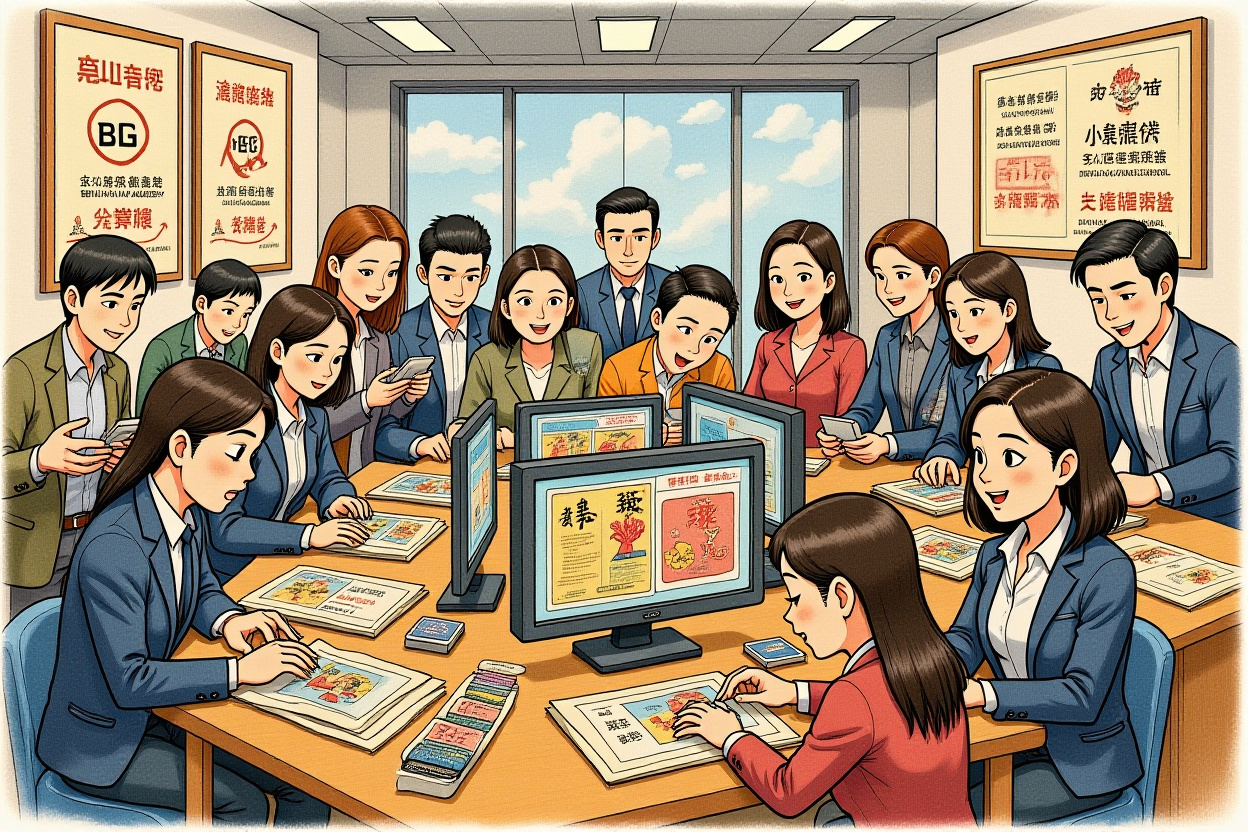
The film and entertainment industry in China is undergoing a seismic shift, driven by the explosive growth of AI comic dramas. These AI-generated narratives are not just a niche trend; they represent a fundamental transformation in how content is produced, distributed, and consumed. With vocational school graduates earning modest salaries leveraging cutting-edge AI tools to outpace Beijing Film Academy-trained directors, this phenomenon underscores a broader disruption where technology democratizes creativity and reshapes market dynamics. The focus on AI comic dramas highlights a new era where efficiency and scalability trump traditional expertise, forcing industry players to adapt or risk obsolescence. This article delves into the mechanics, market forces, and implications of this revolution, offering actionable insights for investors, creators, and executives navigating China’s rapidly evolving digital landscape.
The Meteoric Rise of AI Comic Dramas: From Obscurity to Market Dominance
In late 2024, AI comic dramas, or AI漫剧, emerged from the shadows of China’s short-video ecosystem, quickly evolving into a lucrative content frontier. Initially a byproduct of advancements in multimodal AI models, these dramas combine elements of comics, animation, and live-action through AI generation, catering to a vast, underserved audience on platforms like Douyin (抖音). The market’s growth has been staggering; by late 2025, monthly revenues for top players like Jiangyou Animation (酱油动漫) exceeded 50 million yuan, with daily active users on ByteDance’s Hongguo platform (红果漫剧) surpassing 10 million in just over three months. This rapid ascent is fueled by a perfect storm of technological innovation, platform support, and entrepreneurial hustle, positioning AI comic dramas as a cornerstone of the next content wave.
The Early Pioneers and Viral Success Stories
The journey began with individuals like Huang Haonan (黄浩南), founder of Jiangyou Animation, who leveraged his background in web literature and short dramas to capitalize on this new opportunity. With a mantra focused on seizing trends, Huang transformed his company from an unknown entity into an industry leader, driven by a relentless push for scale. Early viral hits, such as The Mysterious Affairs of Xing’an Ridge (《兴安岭诡事》), demonstrated the potential, racking up over 50 million views on Douyin and sparking rumors of million-yuan revenues. These successes attracted a flood of entrants, from former game developers to traditional short-video companies seeking refuge from a saturated market. For instance, Bai Ze, a former mini-game developer, produced nearly 30 AI comic dramas in six months, selling them at low prices and turning a profit of hundreds of thousands of yuan from a minimal investment. This gold-rush mentality underscores how AI comic dramas have become a beacon for those chasing the next big thing in China’s digital economy.
Platform Catalysts and Strategic Moves
Platforms like ByteDance (字节跳动) have been instrumental in accelerating the AI comic drama boom. By integrating these contents into their ecosystems—through apps like Hongguo (红果) and leveraging existing user bases—they’ve created a virtuous cycle of demand and supply. Zhang Chao (张超), head of ByteDance’s Tomato Novel (番茄小说) and Hongguo, applied lessons from the success of free short dramas to quickly scale AI comic drama acquisitions. The platform’s efficient, no-nonsense approach to contracts, often settled within days via electronic signatures, contrasts with slower competitors, highlighting how speed is a critical competitive advantage. As one industry insider noted, “In this industry, if you’re slow by even a quarter, you miss the entire红利 (红利,红利).” This agility has enabled ByteDance to shape market standards, from content quality to pricing models, making it a dominant force in the AI comic drama space.
The Production Revolution: How AI Tools Are Democratizing Content Creation
At the heart of the AI comic drama phenomenon lies a radical democratization of production. Traditionally, creating dynamic content required skilled directors, expensive equipment, and lengthy timelines, with costs often exceeding 8,000 yuan per minute. AI has slashed these barriers, enabling production at a fraction of the cost—sometimes as low as 600 yuan per minute—while dramatically increasing output. This shift is powered by a suite of AI tools that automate key steps, from scriptwriting and storyboarding to video generation and editing. The result is a new production paradigm where vocational graduates, rather than film school elites, are at the forefront, challenging the very notion of creative expertise.
The AI Toolkit: From Text to Video in Minutes
The production pipeline for AI comic dramas is remarkably streamlined, relying on pre-trained models that handle complex tasks with minimal human intervention. It typically involves: – Script Generation: Using AI models to adapt popular web novels or create original scripts based on trending tropes. – Image Generation: Tools like Stable Diffusion or Midjourney produce storyboard frames from text prompts, eliminating the need for manual drawing. – Video Synthesis: Models such as Seedance2.0 or Kling (可灵) transform static images into animated sequences, adding motion, dialogue, and sound effects. – Post-Production: AI-assisted剪辑 (剪辑, editing) and dubbing tools finalize the content for platform release. This process reduces the time per episode from weeks to days, allowing companies like Jiangyou Animation to ramp up monthly output from 10 to over 100 dramas. As Huang Haonan (黄浩南) boasts, “We’ve built our own tools, so anyone can be trained and productive in two to three days.” This efficiency has turned AI comic dramas into a scalable, labor-intensive yet low-skill operation, where the primary input is prompt engineering rather than artistic vision.
The Human Workforce: Vocational Talent in the Driver’s Seat
Contrary to the image of high-tech automation displacing jobs, AI comic dramas have created a new class of employment for vocational school graduates and factory workers. Companies like Jiangyou Animation and Heya Manju (鹤芽漫剧) recruit aggressively from non-traditional backgrounds, offering average salaries of 3,000 to 4,000 yuan per month—a stark contrast to the six-figure incomes of top短剧 (短剧, short drama)投手 (投手,投手). These employees, often with minimal formal education, are trained to operate AI models,输入 (输入, input) prompts, and curate outputs, sitting in modern office spaces to churn out content viewed billions of times. Liu Wei (刘伟), founder of Minglu Animation (鸣鹿动画), explains, “We’ve tapped into a talent pool that was previously overlooked, using AI to bridge the skills gap.” However, this reliance on廉价 (廉价, cheap) labor also raises questions about sustainability and the long-term value of human input as AI tools evolve.
Technological Leaps and Market Evolution: The Race for Superiority
The AI comic drama market is characterized by breakneck technological迭代 (迭代, iteration), with each advancement reshaping competitive dynamics. In early 2026, the launch of Seedance2.0 by ByteDance marked a watershed moment, enabling users to generate 10-second, coherent video clips from simple text prompts at a cost of just 10 yuan. This model addressed previous limitations in character consistency, lip-sync, and scene continuity, effectively rendering many manual tasks obsolete. As Feng Ji (冯骥), producer of Black Myth: Wukong (《黑神话:悟空》), remarked, “The childhood era of AIGC is over.” Such developments accelerate market consolidation, favoring players who can quickly integrate new tools and pivot strategies.
From Rough Drafts to Premium Content: The Shift to AI仿真人剧 (AI仿真人剧, AI Simulation Drama)
Initially, AI comic dramas were粗糙 (粗糙,粗糙) in quality, often dubbed “沙雕漫” (沙雕漫, silly comics) for their simplistic animations and inconsistent visuals. However, demand for精品化 (精品化, premiumization) has driven a rapid evolution toward AI simulation dramas, which use AI to create near-realistic human characters and scenes. This shift is pushed by platforms like Hongguo, which seek to capture audiences from traditional long-form video markets. Yang Hao (杨浩) of Heya Manju saw early potential, investing in AI simulation dramas despite initial technical hurdles like the “uncanny valley” effect. His bet paid off with hits like Pan Si Dong Su Jin Zhuan (《盘丝洞素锦传》), which achieved a 3x ROI without paid promotion, attracting investor interest and platform orders. The transition from quantity to quality underscores how AI comic dramas are maturing, mirroring the lifecycle of真人短剧 (真人短剧, live-action short dramas) but at an accelerated pace.
Cost Dynamics and Competitive Pressures
As AI models compete, the cost of算力 (算力, computing power) has plummeted, further fueling the AI comic drama boom. For example, the price per second for using Kling (可灵) dropped from 1 yuan in early 2025 to 0.5 yuan by late 2025, making high-volume production more affordable. This cost reduction, combined with平台 (平台, platform) subsidies and流量 (流量, traffic)扶持 (扶持, support), has created a fertile ground for growth. Data from DataEye-ADX shows that monthly releases of AI comic dramas surged to over 13,000 by October 2025, nearly matching the annual output of live-action short dramas. However, this膨胀 (膨胀, expansion) also intensifies competition, forcing companies to continuously innovate in content and technology to maintain edge. Jiang Yiki (姜奕祺), former AI expert at Alibaba DAMO Academy (阿里达摩院) and CEO of Sansheng Qingying (三生清影), notes, “When you can’t access底层模型 (底层模型, underlying models), core competitiveness hinges on产能 (产能, production capacity) and成本 (成本, cost).”
Industry Disruption and the Human Cost: Job Losses and New Opportunities
The rise of AI comic dramas is not without its casualties. Traditional roles in filmmaking, particularly for分镜导演 (分镜导演, storyboard directors) and后期 (后期, post-production) specialists, are being eroded by AI efficiency. Seedance2.0’s capabilities, for instance, allowed companies like Heya Manju to lay off北京电影学院 (Beijing Film Academy)-trained directors who were deemed too slow or critical of AI outputs. Similarly, the role of “抽卡师” (抽卡师, card drawers)—workers who generate and sift through AI video outputs—is diminishing as models become more predictable. This displacement reflects a broader trend where technology redistributes labor, creating low-skill jobs while eliminating high-skill ones, and raising ethical questions about the future of creative professions.
Case Studies: Organizational Restructuring and Efficiency Gains
In response to technological advances, AI comic drama companies are constantly restructuring to maximize efficiency. After Seedance2.0’s release, Yang Hao (杨浩) cut his分镜 (分镜, storyboard) team, retaining only one lead director, and reduced production teams from 8-10 people to 3 per drama. Liu Wei (刘伟) of Minglu Animation faced a similar reckoning when his team discarded a week’s work because重新生成 (重新生成, regenerating) with Seedance2.0 was cheaper and higher quality than manual refinement. These moves highlight how AI comic dramas are driving a relentless pursuit of lean operations, where human input is minimized in favor of algorithmic precision. However, this also fosters uncertainty; as one从业者 (从业者, practitioner) lamented, “What took years to master can now be done by anyone in minutes.”
The Investment Landscape: FOMO and Strategic Bets
The fear of missing out (FOMO) is palpable across the industry, attracting capital from传统影视 (传统影视, traditional film) companies and互联网巨头 (互联网巨头, internet giants). ByteDance, Tencent (腾讯), Baidu (百度), and Kuaishou (快手) are all acquiring AI comic drama content to secure market share, with年框协议 (年框协议, annual framework agreements) worth millions of yuan becoming common. For instance, Yang Hao signed a 10 million yuan deal with Volcano Engine (火山引擎) for API access to Seedance2.0, betting on its temporary领先 (领先,领先). Meanwhile, traditional短剧 (短剧, short drama) giants like听花岛 (听花岛, Tinghua Island) are diversifying into AI comic dramas to hedge against market saturation. This influx of capital accelerates innovation but also creates bubbles, as investors grapple with the rapid pace of change. Xiao Chuan (小川), a former短剧 (短剧, short drama) executive, observes, “The industry needs to cool down before we refocus on content quality over technological hype.”
Looking Ahead: The Future of AI Comic Dramas and Broader Implications
As AI comic dramas mature, they offer lessons for the global entertainment sector. The trajectory suggests a future where AI-generated content coexists with traditional forms, much like television and电影 (电影,电影) evolved post-World War II. While technology enables奇观 (奇观, spectacle) at low cost, enduring value may lie in narrative depth and emotional resonance—areas where human creativity remains irreplaceable. For stakeholders, this means balancing investment in AI tools with a commitment to storytelling, ensuring that the AI comic drama wave doesn’t culminate in a race to the bottom.
Strategic Recommendations for Investors and Creators
To navigate this dynamic market, consider the following actionable steps: – Monitor Platform Policies: Stay abreast of changes in分成系数 (分成系数, revenue-sharing ratios) and acquisition strategies on key platforms like Hongguo and腾讯视频 (腾讯视频, Tencent Video). – Invest in Tool Development: Companies that build proprietary AI pipelines or integrate cutting-edge models like Seedance2.0 will gain competitive advantages in cost and quality. – Focus on Niche Content: As the market saturates, opportunities may emerge in specialized genres or cross-media adaptations, leveraging AI for customization. – Upskill Talent: Train teams in prompt engineering and AI literacy to enhance productivity and adapt to technological shifts. – Assess Long-Term Viability: Evaluate business models beyond投流 (投流, traffic buying), exploring subscriptions, IP licensing, or global expansion to mitigate reliance on platform algorithms.
A Call to Action: Embrace Adaptation and Innovation
The story of AI comic dramas is a testament to the transformative power of technology in China’s equity markets and beyond. For institutional investors, fund managers, and corporate executives, this sector represents both risk and opportunity—a chance to capitalize on disruption while navigating its uncertainties. By understanding the interplay of AI tools, market forces, and human capital, professionals can make informed decisions that drive growth. As the industry evolves, remember that the most resilient players will be those who blend technological prowess with creative insight, ensuring that AI comic dramas enrich rather than diminish the art of storytelling. Stay tuned to regulatory developments from the国家广播电视总局 (National Radio and Television Administration) and economic indicators like digital content consumption to guide your strategies in this fast-paced arena.